The Consumer Electronics Show (CES), the world's largest personal electronics event, is set to kick off on Tuesday in Las Vegas, bringing together tech entrepreneurs from around the globe to unveil an array of groundbreaking tech products, including several exciting innovations from Chinese firms.
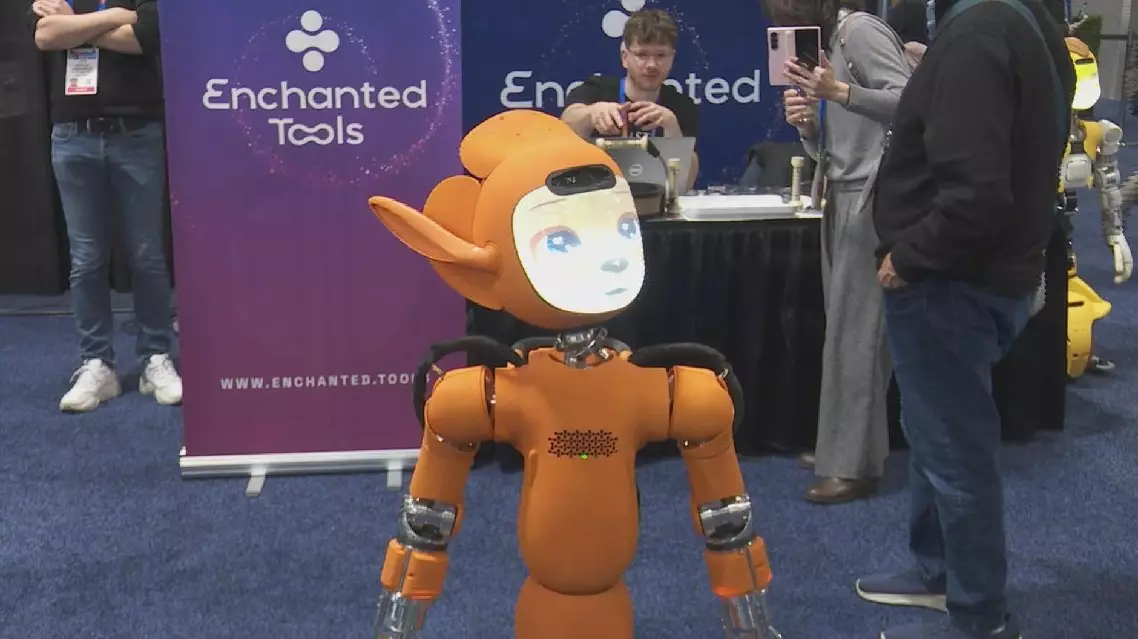
Ahead of the event's official opening, reporters were given a sneak peek at some of the cutting-edge products making their international debut. Among them was Miroka, a companion robot not only capable of moving around and speaking in response to questions, but using its arms to gesture, wave, or even pick up small objects.
According to the engineers behind the technology, the adorable companion is designed to assist in everyday tasks and add an extra touch of happiness to users' lives.
"We can create something really useful, but also bring magic, bring storytelling, bring smiles everywhere. So we want to show that a robot can be something that's more just than the machine," said Richard Malterre, Head of Communications at Enchanted Tools, the robot's developer.
New innovations at the show come in all different shapes, sizes, and sounds. Singer Susie Cruz isn't proficient with a guitar, but quickly managed to pick up playing the first ever string-less smart guitar, called Liberlive.
"It is really so that you can back yourself up vocally and have that sound of the guitar without having to learn guitar," she said.
Inventors in China's Hong Kong designed the instrument, which uses sampling and frequency simulation tech with the goal of making guitar playing effortless.
"When you're listening to the guitar sounds here, it's very similar and close to the original sound of the guitar. So everyone can enjoy the music at ease with just playing with one finger or two fingers," said Yuan Zhuang, spokesperson for Liberlive.
A number of other Chinese startups also made their mark at the preview show. Linyo, a company from the Chinese city Shenzhen, was introducing the Hydrin 1, which can wash a car with just two liters of water and recover the wastewater.
"We have the algorithm for washing all the cars, so we can calculate that," said Lin Xiran, the company's chief marketing officer.
While Lin is excited to be at the show, she's the only one from her nine-person company that managed to secure a visa to get here.
In fact, the high number of visa rejections for Chinese companies was acknowledged by the organizers of CES, who in December sent Chinese attendees a statement saying they "encourage the U.S. government to expedite and approve visas for individuals who are traveling to the U.S. for legitimate business reasons."
CES Show Director John Kelley said he wasn't sure of how this year's Chinese presence will compare to years past, but still hopes the show can serve as a bridge between the two countries.
"We want the U.S. and China to find common ground, our governments to find common ground wherever that may be. The success of this industry, it's not one country that's going to lead this industry. Look around CES. Every country has a role in this industry, and it's important for every country to be reflected here at CES," said Kelley.
The show officially opens to the public on Tuesday and runs through Friday.
Consumer Electronics Show 2025 showcases game-changing innovations from world round