LAS VEGAS--(BUSINESS WIRE)--Jan 8, 2025--
Subheadline of release dated January 7, 2025 should read: virtual development environment (instead of virtual design environment). First paragraph, second sentence should read: Intel® Automotive Virtual Development Environment (VDE) (instead of Intel® Automotive Virtual Design Environment (VDE)).
This press release features multimedia. View the full release here: https://www.businesswire.com/news/home/20250107157568/en/
The updated release reads:
INTEL ACCELERATES SOFTWARE-DEFINED INNOVATION WITH WHOLE-VEHICLE APPROACH
At CES 2025, Intel unveils new adaptive control solution, next-gen discrete graphics and AWS virtual development environment.
What’s New: At CES, Intel unveiled an expanded product portfolio and new partnerships designed to accelerate automakers’ transitions to electric and software-defined vehicles (SDVs). Intel now offers a whole-vehicle platform, including high-performance compute, discrete graphics, artificial intelligence (AI), power management and zonal controller solutions alongside the Intel® Automotive Virtual Development Environment (VDE) co-developed with Amazon Web Services (AWS). Intel’s approach addresses automakers’ cost and performance scalability challenges, enabling faster, more efficient and more profitable SDV development and deployment.
“Intel automotive is bringing innovative solutions that reduce cost in the SDV revolution. Our whole-vehicle approach, combined with cloud integration, delivers a complete solution that drives down total cost of development and deployment while empowering automakers to build the future of mobility faster, more efficiently and more profitably.”
-- Jack Weast, Intel Fellow, vice president and general manager of Intel Automotive
Why a Whole-Vehicle Platform Matters: Intel’s whole-vehicle platform reduces inefficiencies of traditional fragmented approaches to vehicle architectures. By optimizing the entire vehicle’s electrical/electronic architecture, Intel drives significant cost reductions and performance improvements.
Supporting this platform, Intel introduced the availability of the Adaptive Control Unit (ACU), designed for electric vehicle (EV) power trains and zonal controller applications.
About the Adaptive Control Unit: The ACU U310 is a new kind of processing unit that supports the consolidation of multiple real-time, safety-critical and cybersecure functions, applications and domains (X-in-1) into a single chip. Traditional time and sequential processing-based micro and zonal controllers struggle to handle multiple workloads due to limited deterministic processing capabilities. In contrast, Intel’s new family of ACU devices integrates a flexible logic area that offloads real-time control algorithms from the CPU cores, ensuring reliable performance, freedom from interference (FFI) and deterministic data delivery even when consolidating multiple microcontroller workloads into a single zonal MCU. This dual-brain approach enables greater workload consolidation, lowers cost, and enhances safety, cybersecurity and performance.
When used in an electric vehicle power train, the ACU U310 supports advanced algorithmic solutions that reduce vehicle energy demand from the battery, automatically adapting high voltage and control frequencies to individual driver styles and road conditions. The ACU reduces cost per kilowatt and enhances energy efficiency, allowing the vehicle to reclaim up to 40 percent of the power train system energy losses, delivering a 3% to 5% efficiency boost during the Worldwide Harmonized Light Vehicles Test Procedure (WLTP). This translates to increased range, faster charging and a more responsive driving experience while significantly reducing per-vehicle bill of materials (BOM), electric motor size and battery costs compared to traditional approaches.
The ACU’s programmability allows it to serve as a first-of-its-kind software-defined zonal controller, adapting to different vehicle topologies and applications. This flexibility streamlines the transition to software-defined vehicles, simplifies supply chains and reduces the complexity of the vehicle BOM.
How Next-Gen Architecture is Enhanced with AI Inside: Building on Intel’s first-generation AI-enhanced SDV system-on-chips (SoCs), Intel announced the upcoming second-generation Intel ® Arc™ B-series Graphics for Automotive set for production by the end of 2025. This solution provides the high-performance compute needed for more advanced in-vehicle AI workloads, next-generation human-machine interface (HMI) engines, and immersive in-vehicle experiences and AAA PC gaming. Paired with an Intel AI-enhanced SDV SoC, it delivers scalable performance for complex AI tasks, supported by the vast Intel AI ecosystem.
How Intel and AWS Revolutionize Automotive Software Development: Intel and AWS introduced the Intel Automotive Virtual Development Environment on AWS, a groundbreaking approach that ensures true hardware and software parity from cloud to car. This new offering addresses challenges throughout the vehicle development life cycle, enabling engineers to seamlessly switch between virtual and physical hardware setups. It integrates Intel ® Xeon ® processor-based Amazon EC2 instances and, for the first time, incorporates Intel’s Automotive SDV SoCs within the AWS environment, eliminating the need for expensive electronic control unit (ECU) simulators or developer boards. This collaboration provides a unified solution that accelerates innovation, reduces R&D costs and speeds time-to-market.
About Intel’s System-Level Advantage: Intel's whole-vehicle approach delivers numerous benefits to automakers, including cost reductions, enhanced vehicle performance, streamlined development, improved energy efficiency, seamless AI integration and faster time-to-market – all supported by Intel’s globally balanced supply chain.
More:Intel at CES 2025 | Intel Auto Keynote Explores Software-Defined Future (Video)
About Intel
Intel (Nasdaq: INTC) is an industry leader, creating world-changing technology that enables global progress and enriches lives. Inspired by Moore’s Law, we continuously work to advance the design and manufacturing of semiconductors to help address our customers’ greatest challenges. By embedding intelligence in the cloud, network, edge and every kind of computing device, we unleash the potential of data to transform business and society for the better. To learn more about Intel’s innovations, go to newsroom.intel.com and intel.com.
© Intel Corporation. Intel, the Intel logo, and other Intel marks are trademarks of Intel Corporation or its subsidiaries. Other names and brands may be claimed as the property of others.
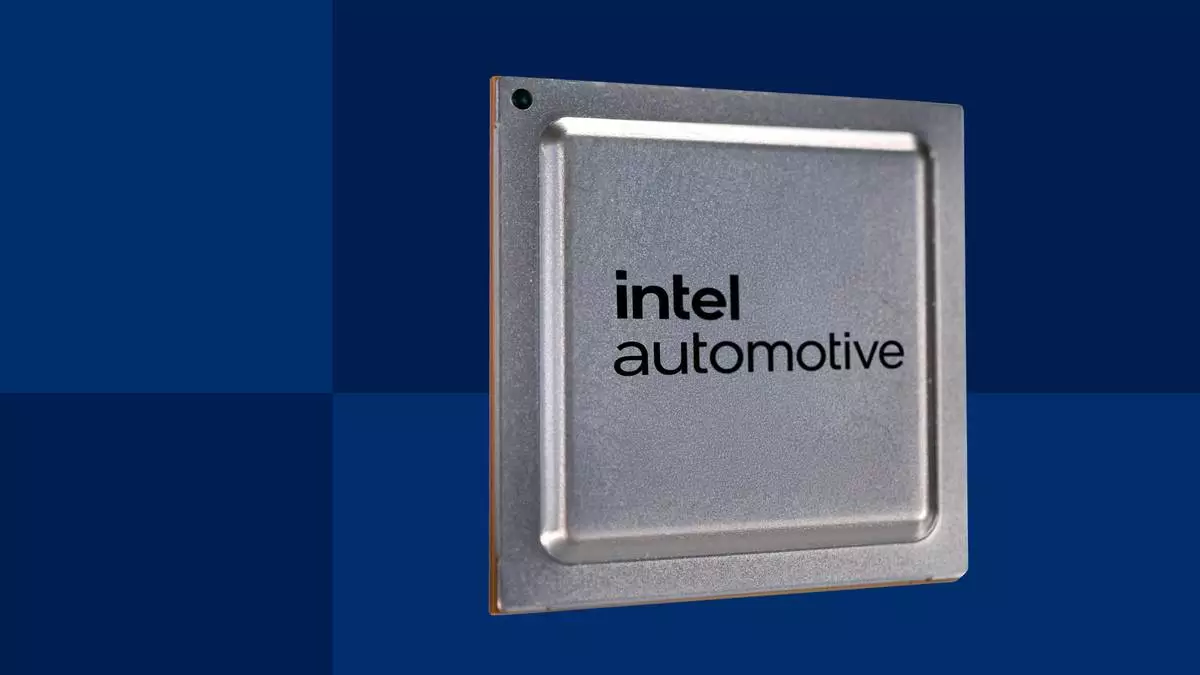
At CES on Tuesday, Jan. 7, 2025, Intel introduced the availability of the Adaptive Control Unit (ACU), designed for electric vehicle (EV) power trains and zonal controller applications. The ACU U310 is a new kind of processing unit that supports the consolidation of multiple real-time, safety-critical and cybersecure functions, applications and domains (X-in-1) into a single chip. (Credit: Intel Corporation)