The rail network in east China's Yangtze River Delta handled a record 890 million passengers in 2024, a 10-percent increase from 2023, as new high-speed rail lines enhanced regional connectivity, cutting travel times across Shanghai, Jiangsu, Zhejiang, and Anhui to under three hours, according to railway authorities on Thursday.
The expansion of high-speed rail lines has been a key driver behind the growth, with four new lines -- Chizhou-Huangshan, Hangzhou-Wenzhou, Xuancheng-Jixi, and Shanghai-Suzhou-Huzhou -- making the region one of China's most connected.
The network now covers over 15,000 kilometers, including more than 7,700 kilometers of high-speed rail, ensuring seamless travel between major cities.
Shanghai Hongqiao Station, one of China's busiest, saw up to 737 high-speed trains daily, with a peak of 412,800 passengers on its busiest day in 2024.
The rail system has also embraced a flexible, market-driven model, optimizing schedules to meet passenger needs.
The number of daily trains between Shanghai and Nanjing has increased to 649, with departures every two minutes during peak hours. Similarly, commuter services from Suzhou to Shanghai have grown, with 20 early-morning trains, nearly all fully booked.
The Yangtze River Delta's rail network continues to meet diverse travel demands, offering a combination of high-speed and regular trains, ensuring efficient and reliable connections across the region.
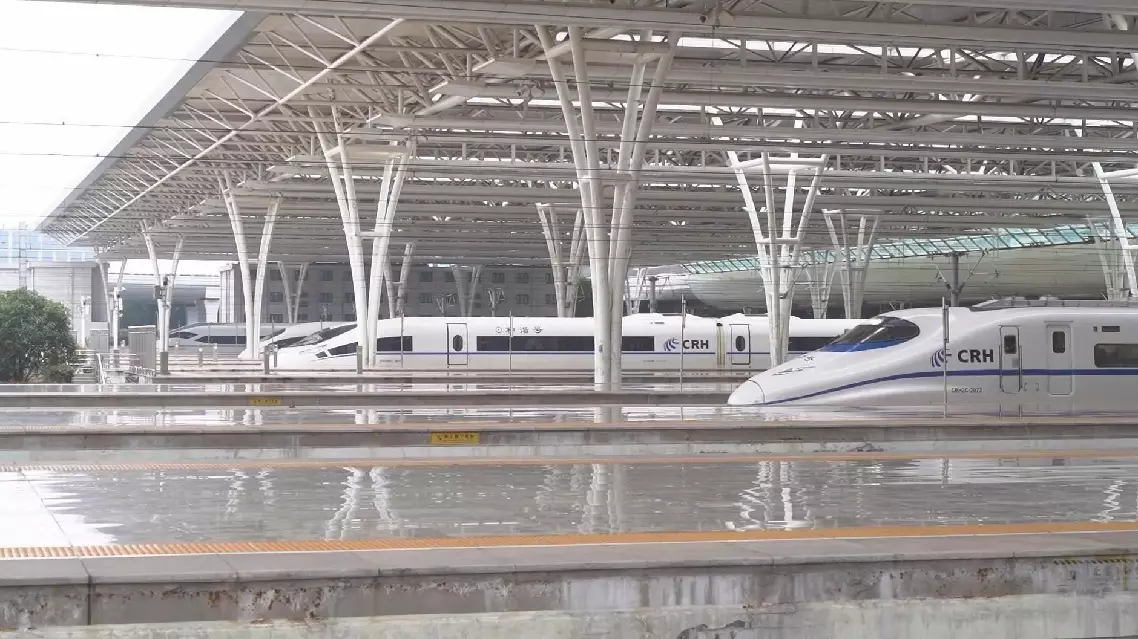
Yangtze River Delta railways handle record 890 million passengers in 2024
Merchants in Hangzhou, the capital city of east China’s Zhejiang Province, have innovatively added new elements to scented sachets, which are traditionally worn during the upcoming Dragon Boat Festival.
As the festival approaches, shops on the famous Hefang Street, a lively ancient thoroughfare that has been the heart of Hangzhou for centuries, are filled with a dazzling array of cultural products, including sachets. There are traditional zongzi (sticky rice dumpling)-shaped designs, as well as plush toys and traditional Chinese-style pendants that appeal to younger generations.
"For me, a pleasant fragrance is all that matters. Some might have a hint of lavender, which I would prefer," said Wang Yunhan, a local citizen.
Fang Huichuntang, a time-honored traditional Chinese medicine brand, has launched plush-style scented sachets that combine cartoon images with Chinese medicinal herbs and innovative flavors. In the past month, this series accounted for 47 percent of total sachet sales at the street stores.
"We collected hundreds of medicinal herbs, selected those with pleasant aromas, and had the (traditional Chinese medicine) director help us make several formulas based on their efficacy. The resulting powdered formulas will have a more refreshing and pleasant aroma, appealing to consumers," said Gou Lulu, cultural and creative product director of Fang Huichuntang.
Many sachets incorporating traditional cultural elements are also selling well, among them one with Dunhuang-mural-inspired colors is particularly eye-catching.
"We found this color very eye-catching, and at the same time, we looked for photos of the costumes of the flying apsaras in Dunhuang on social media platforms to see if our color design could create a similar effect," said Jiang Lingxia, deputy general manager of Hangzhou Hu Qing Yu Tang, another traditional Chinese medicine brand that launched the new sachet.
In addition to purchasing ready-made products, primary and secondary schools in the city have recently organized hands-on activities, leading students to experience the traditional festival culture through the process of making sachets by hand.
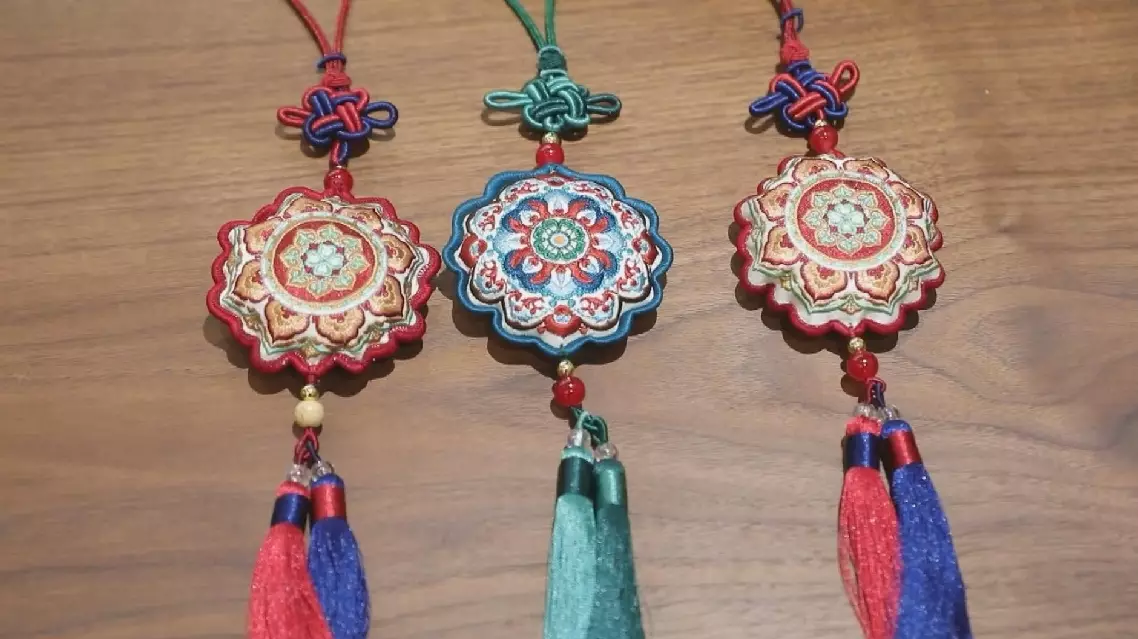
Traditional scented sachets refreshed with creative elements for Dragon Boat Festival