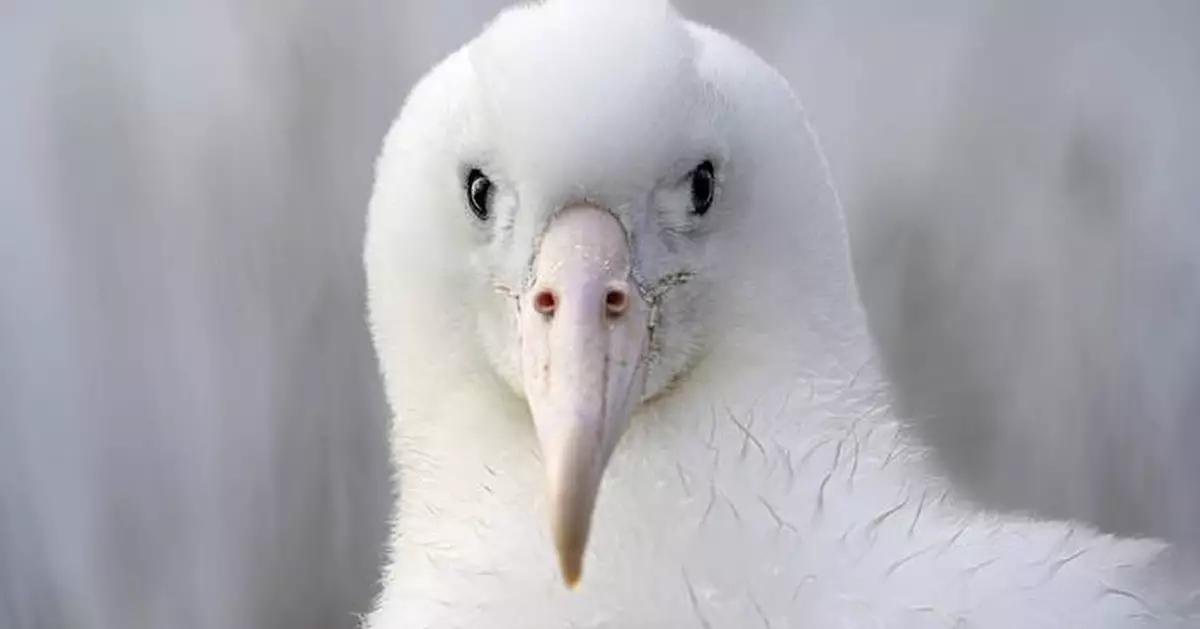
WELLINGTON, New Zealand (AP) — It’s a reality show about a loving couple waiting to welcome their new arrival, watched by thousands of ardent fans. But the stars of Royal Cam, now in its 10th season, aren’t socialites or hopefuls in love but northern royal albatrosses — majestic New Zealand seabirds with 10-foot (3-meter) wingspans.
The 24-hour livestream of the birds’ breeding season at Taiaroa Head — a rugged headland on New Zealand’s South Island — was established to raise awareness of the vulnerable species, numbers of which have grown slowly over decades of painstaking conservation measures.
Click to Gallery
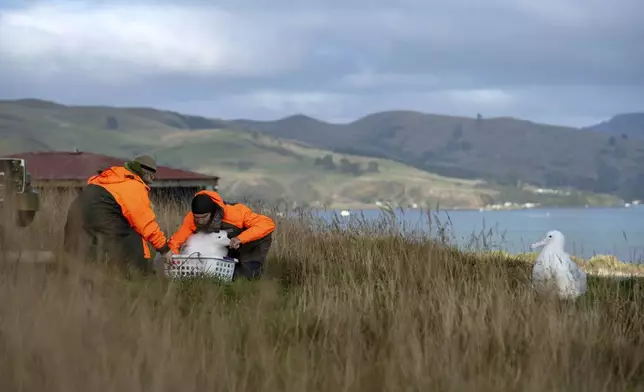
Conservation rangers Sharyn Broni, left, and Colin Facer prepare to weigh an albatross at Taiaroa Head, New Zealand on June 18, 2024. (Michael Hayward/New Zealand Department of Conservation via AP)
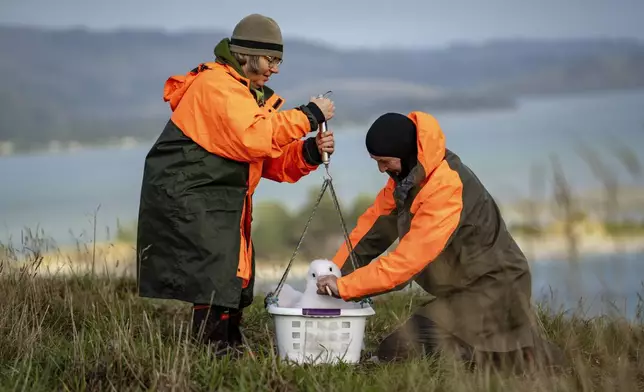
Conservation rangers Sharyn Broni, left, and Colin Facer weigh an albatross at Taiaroa Head, New Zealand on June 18, 2024. (Michael Hayward/New Zealand Department of Conservation via AP)
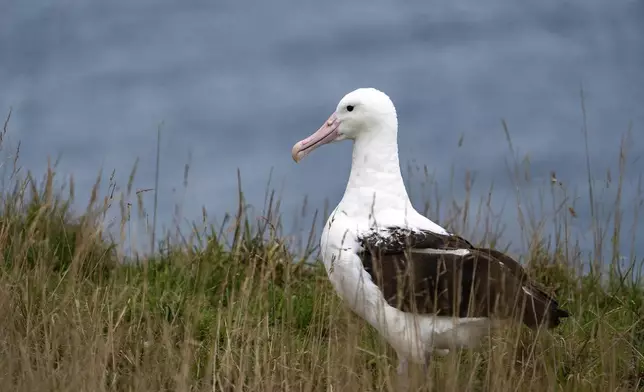
An albatross nests at Taiaroa Head, New Zealand on June 18, 2024. (Michael Hayward/New Zealand Department of Conservation via AP)
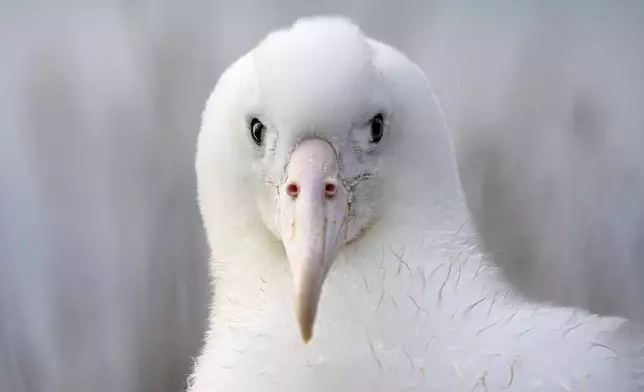
An albatross looks at the camera while nesting at Taiaroa Head, New Zealand on June 18, 2024. (Michael Hayward/New Zealand Department of Conservation via AP)
Millions have watched the stream since it began in 2016.
“Before that, it was very difficult to follow an albatross’ life cycle because they’re only on land 15% of the time,” said Sharyn Broni, a Department of Conservation ranger who has worked with the birds for nearly three decades. “You’d have to travel a long way to see one.”
But Royal Cam's popularity exploded during the coronavirus pandemic. On a busy comments page hosted by New Zealand’s Department of Conservation, devoted fans track the birds’ locations on an app, discuss significant moments and even create art inspired by the albatross.
The show's premise is simple: Each season, conservation rangers select an albatross couple as that year’s stars. A camera on the remote headland follows the chosen birds as they lay and incubate an egg, before their chick hatches around February, grows to adult size, and finally takes flight.
Unlike human reality shows, drama is rare: Royal albatrosses usually mate for life. Rangers selecting the birds to follow each “season” avoid anything controversial: no first-time parents and no aggressive or grumpy personalities.
This year’s stars are RLK, a 12-year-old male, and GLG, a 14-year-old female, who have raised two chicks before. Their names are derived from the colors on bands that rangers attach to their legs.
“They’re a youngish pair, but not so young that they don’t know what they’re doing,” Broni said.
Action unfolds slowly, which for many fans is the joy of it. Clouds drift by, ships pass in the distance and the sun sets in glowing pinks and peaches. During January, incubation season, an albatross sits on an egg.
But regular watchers anticipate certain moments: About once every 10 days, the second bird in the pair returns from feeding at sea to relieve the parent looking after the nest. Other fan highlights include albatross crash landings, mating dances and the appearances of rangers or the feathered stars of previous seasons.
France Pillière, an artist who lives in Montreal, has never visited New Zealand. But during the pandemic she discovered Royal Cam, fell in love with the “mysterious” creatures, and became a daily viewer.
“You see the birds and all their adventures and their lives, struggling to raise their chicks,” she said.
Pillière stayed, too, for the global community of posters. Unlike much of the internet, the nearly 75,000 comments on the Royal Cam viewing page are uniformly encouraging and educational.
“We care about these people,” Pillière said of her fellow posters. “If one is on a flight to New Zealand, everyone is waiting to hear their comments.”
The past two breeding seasons were the birds’ most successful ever, with 33 chicks each year. There are more than 60 breeding pairs at the colony — conservation measures began in 1937 with one pair.
Progress is unhurried because the northern royal albatross lives long and slowly; after their first flight, chicks stay at sea for 4 to 10 years — traveling up to 118,000 miles a year — then spend about three years choosing a mate. They live until around 40.
The New Zealand mainland colony — one of four sites — is home to 1% of the 17,000 birds worldwide. While breeding measures have proved a success, Broni said, the birds are more threatened than before by plastic pollution, fisheries and warming seas.
Pillière said the death of a chick from ingesting plastic in 2023 had prompted her to drastically reduce her household’s plastic use. The royal albatross has also crept into her work as a sculptor of animals.
The livestream of Taiaroa Head is "a real soothing place,” Pillière said. “The only thing you see is positive. The chatters will often say it’s their best place to be.”
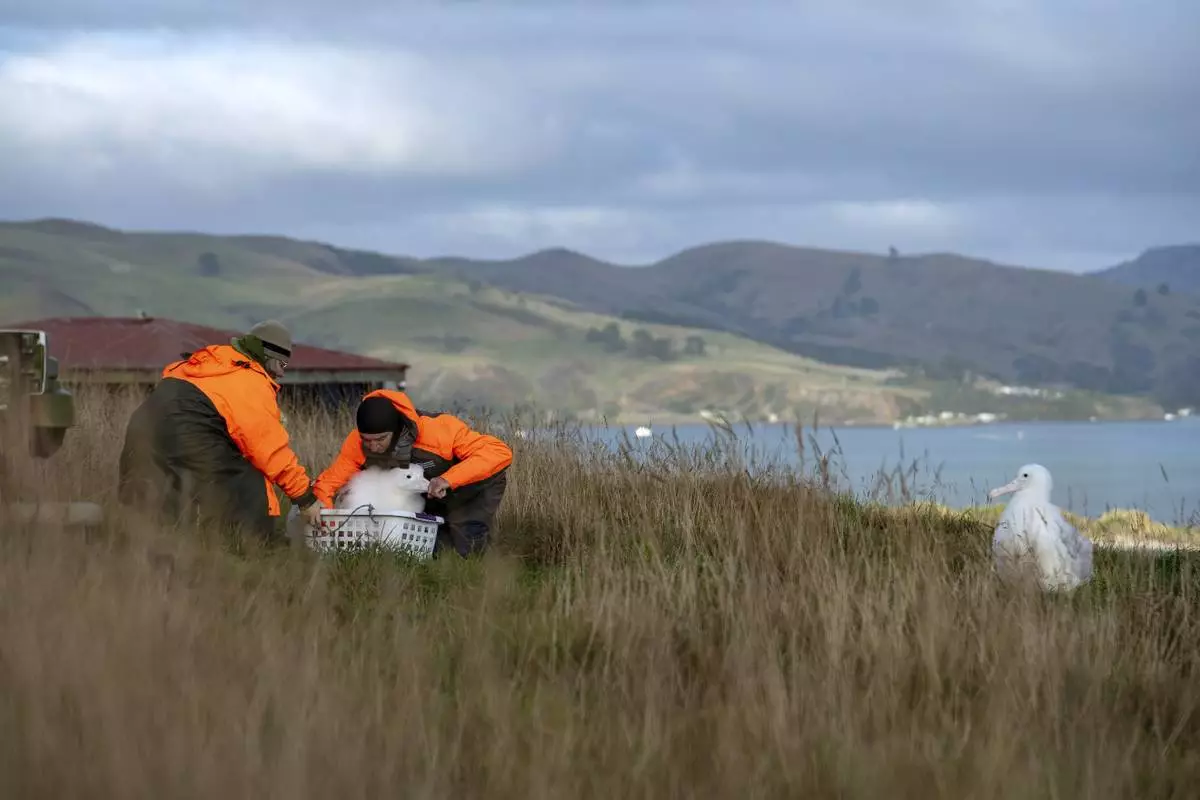
Conservation rangers Sharyn Broni, left, and Colin Facer prepare to weigh an albatross at Taiaroa Head, New Zealand on June 18, 2024. (Michael Hayward/New Zealand Department of Conservation via AP)
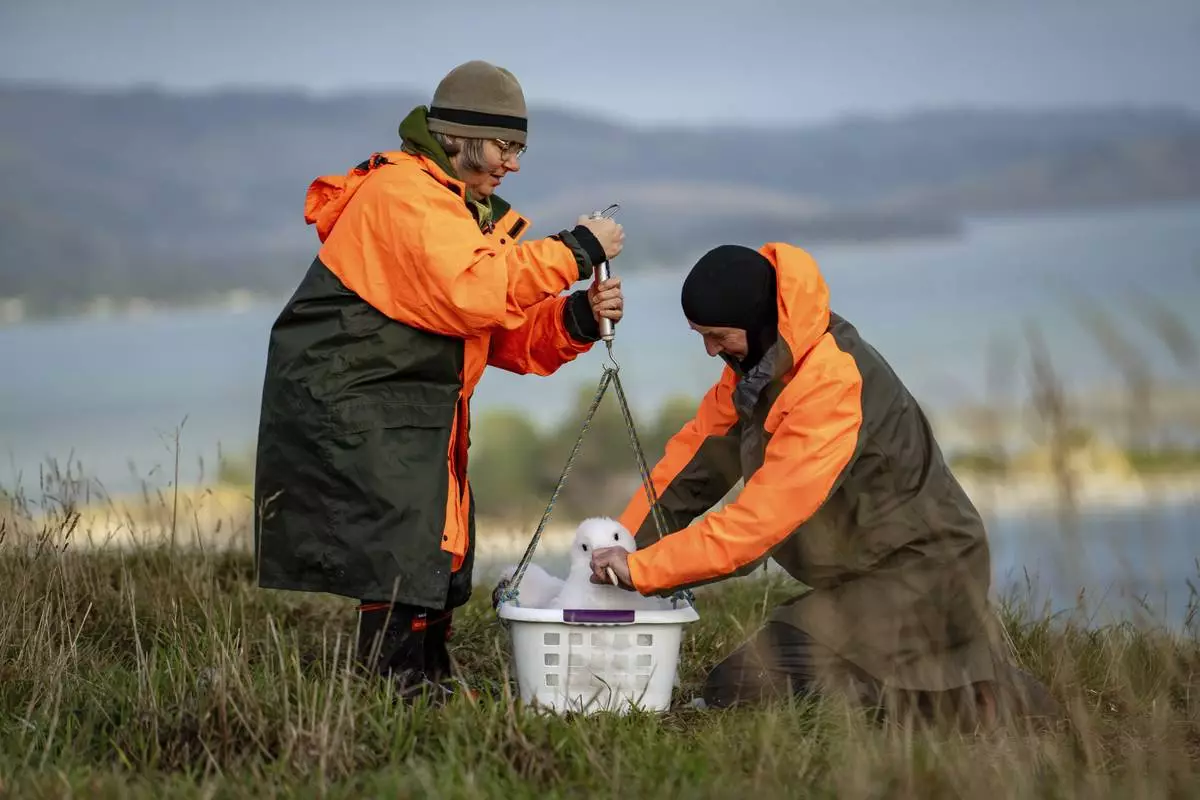
Conservation rangers Sharyn Broni, left, and Colin Facer weigh an albatross at Taiaroa Head, New Zealand on June 18, 2024. (Michael Hayward/New Zealand Department of Conservation via AP)
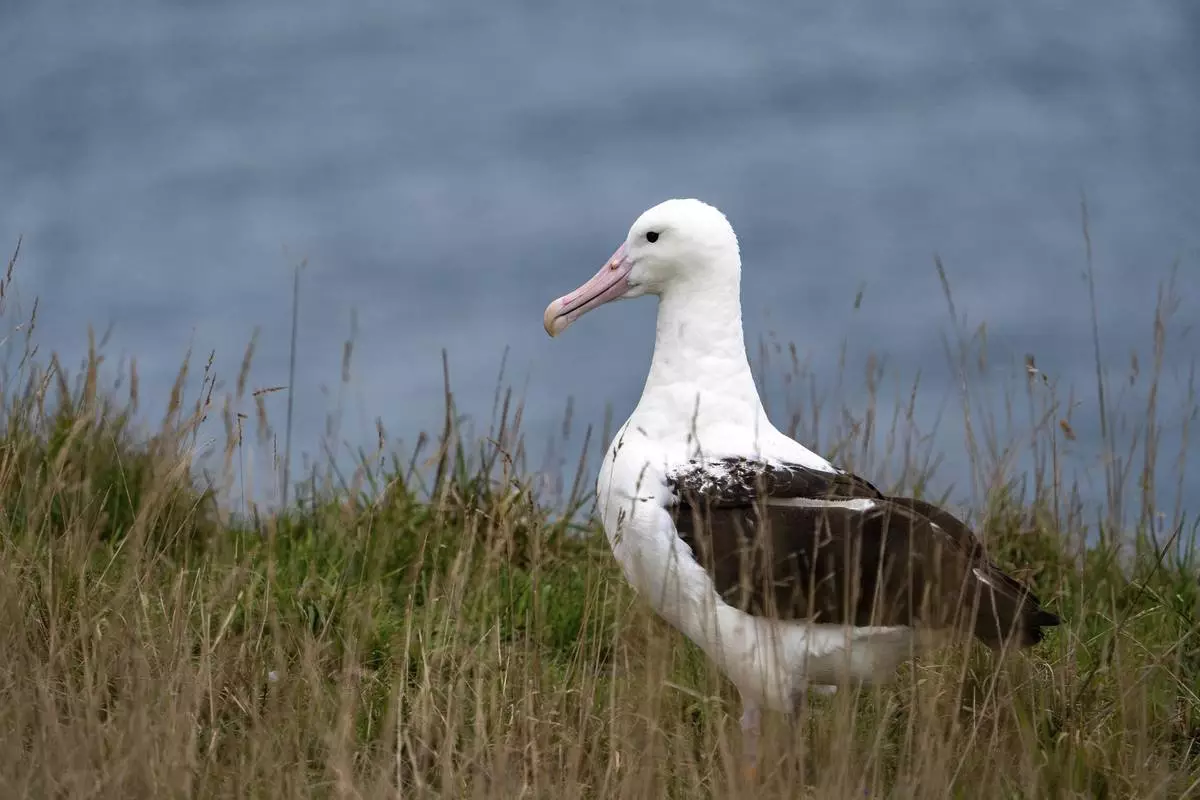
An albatross nests at Taiaroa Head, New Zealand on June 18, 2024. (Michael Hayward/New Zealand Department of Conservation via AP)
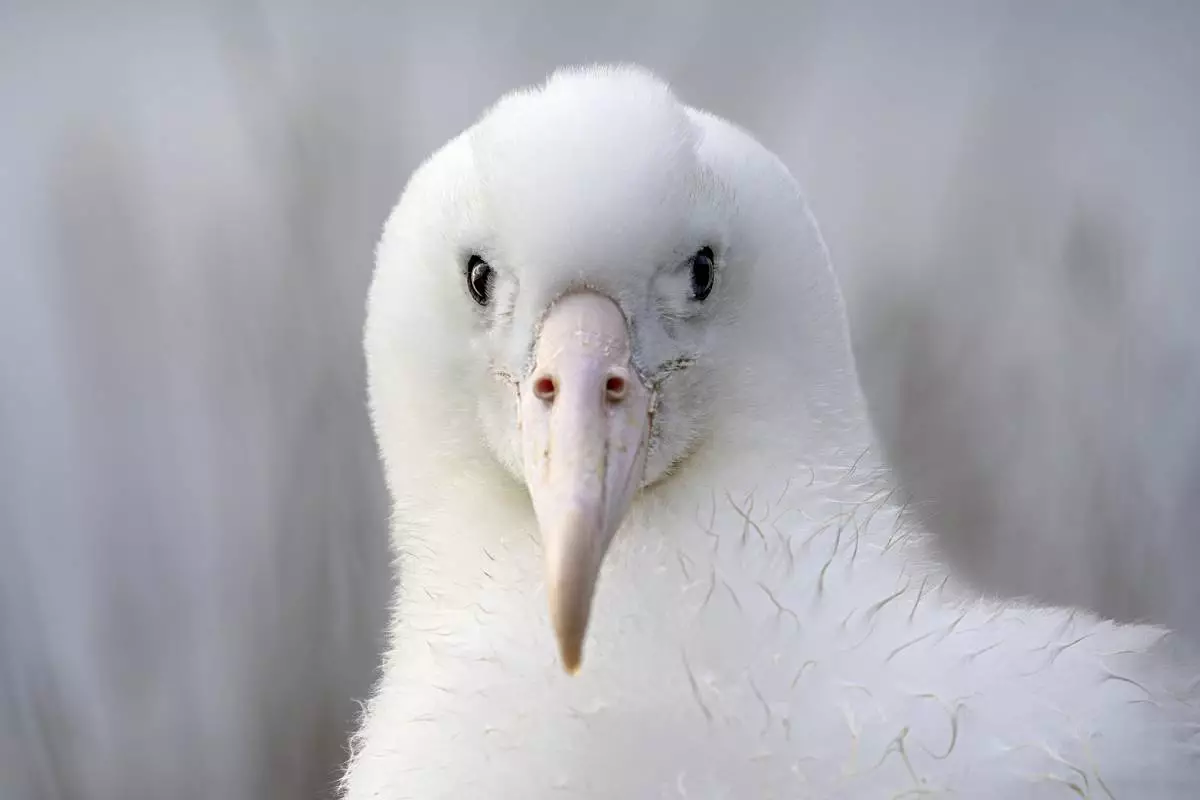
An albatross looks at the camera while nesting at Taiaroa Head, New Zealand on June 18, 2024. (Michael Hayward/New Zealand Department of Conservation via AP)