RIO DE JANEIRO (AP) — Colombian superstar Shakira will give a free concert on Copacabana Beach in Rio de Janeiro on Saturday night in an event that Rio officials say will draw approximately 2 million people to one of the world’s most iconic waterfronts.
The performance follows similar shows by Madonna in 2024 and Lady Gaga last year, also attended by huge crowds that danced on the sprawling sands. It is part of Shakira’s “ Las Mujeres Ya No Lloran ” ("Women No Longer Cry") world tour, named after her 2024 album.
Click to Gallery

Colombian singer Shakira rehearses a day ahead of her free concert on Copacabana beach in Rio de Janeiro, Friday, May 1, 2026. (AP Photo/Bruna Prado)

Colombian singer Shakira waves to fans during a rehearsal a day ahead of her free concert on Copacabana beach in Rio de Janeiro, Friday, May 1, 2026. (AP Photo/Bruna Prado)
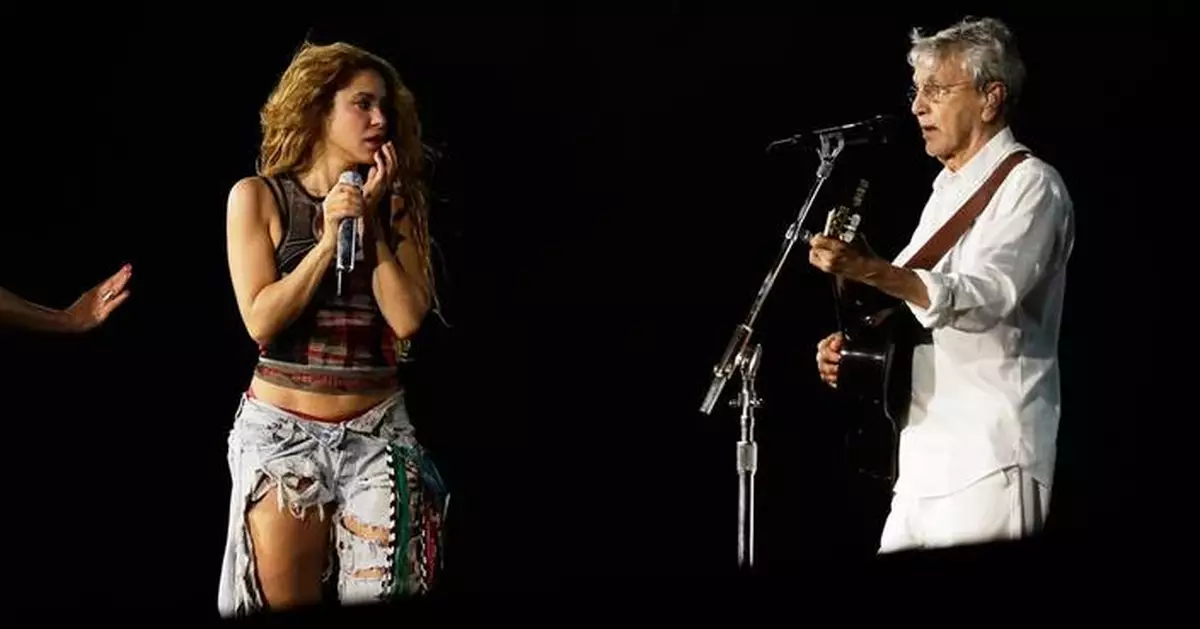
Colombian singer Shakira and Brazilian singer Caetano Veloso, second left, take part in a rehearsal a day ahead of Shakira's free concert, on Copacabana beach, in Rio de Janeiro, Friday, May 1, 2026. (AP Photo/Bruna Prado)
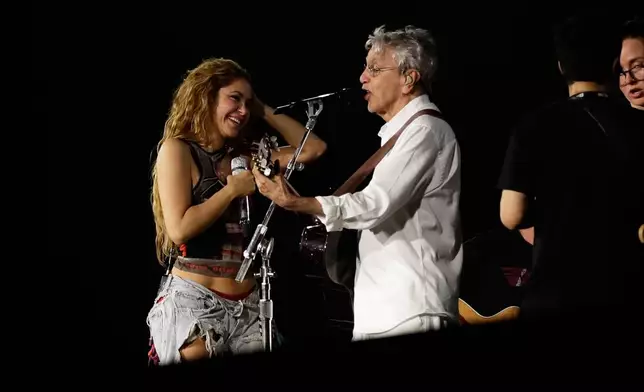
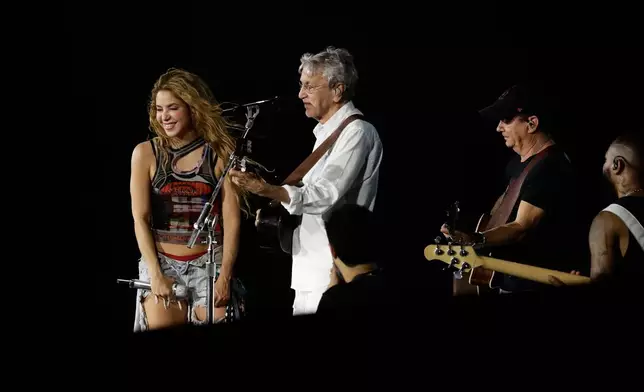
Colombian singer Shakira and Brazilian singer Caetano Veloso take part in a rehearsal a day ahead of Shakira's free concert, on Copacabana beach, in Rio de Janeiro, Friday, May 1, 2026. (AP Photo/Bruna Prado)
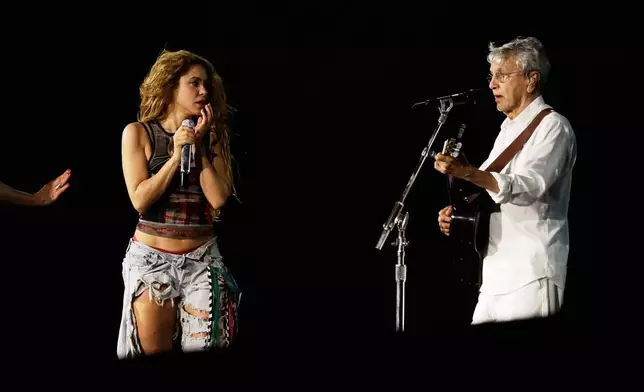
Colombian singer Shakira and Brazilian singer Caetano Veloso take part in a rehearsal a day ahead of Shakira's free concert, on Copacabana beach, in Rio de Janeiro, Friday, May 1, 2026. (AP Photo/Bruna Prado)
The Latina pop star said in an interview with Brazil’s TV Globo that she expects the Copacabana concert to be the biggest of her career.
“For me it’s a dream. I always dreamed of singing on this beach, because I think it’s a magical place,” she said in Portuguese, adding that she learned the language before English.
Brazil was one of the first countries where Shakira became successful back in the 1990s, thanks to her charisma and the connection she created with the Brazilian public, according to Felipe Maia, an ethnomusicologist who is pursuing a doctoral degree on popular music and digital technologies at Paris Nanterre University.
Her historical success in Brazil “has a lot to do with the fact that she comes from Colombia, a country whose culture has many similarities with Brazil,” Maia said, adding that Saturday’s performance “crowns the relationship she has had with Brazil for a very long time.”
By Saturday morning, crowds had started piling onto the beach to nab a good spot for the performance. Street vendors were selling food and drinks, but also toilet paper, deodorant and even bags of sand on which to stand to get a better view of the stage set up opposite Copacabana Palace.
DJs will start performing on the beach in the late afternoon. Shakira’s set is scheduled for 9:45 p.m. local time and is expected to last around two hours. After the performance, another DJ will take to the stage — a new addition to keep the crowds entertained and help with an orderly exit, according to Rio officials.
The free concerts are part of an effort led by Rio’s City Hall to boost economic activity after Carnival and New Years’ Eve festivities and the upcoming monthlong Saint John’s Day celebrations in June.
“For us, parties are serious business. Because parties generate jobs, income, development, and identity for the city,” Rio Mayor Eduardo Cavaliere said on Wednesday as he presented the city’s operational plan for the event. “Our investment in this show will give us a financial return 40 times greater,” he said.
Shakira’s performance could generate around 777 million reais (around $155 million), according to a study by Rio’s City Hall and Riotur, the municipality’s tourism company, thanks to the influx of tourists and cash spent in restaurants, hotels and shops.
More tourists headed to Rio in the month of May in the years with shows — 2024 and 2025 — compared to 2023, according to City Hall data. In 2024, the growth was 34.2% on May 1, just ahead of the concerts, compared to the previous year. In 2025, the increase was 90.5% compared to 2023.
Ahead of Shakira’s performance, Airbnb said in an April 22 statement that it was seeing an increase in guests expected to travel from different parts of Brazil, Latin America and even European capitals such as Paris and London.
Follow AP’s coverage of Latin America and the Caribbean at https://apnews.com/hub/latin-america
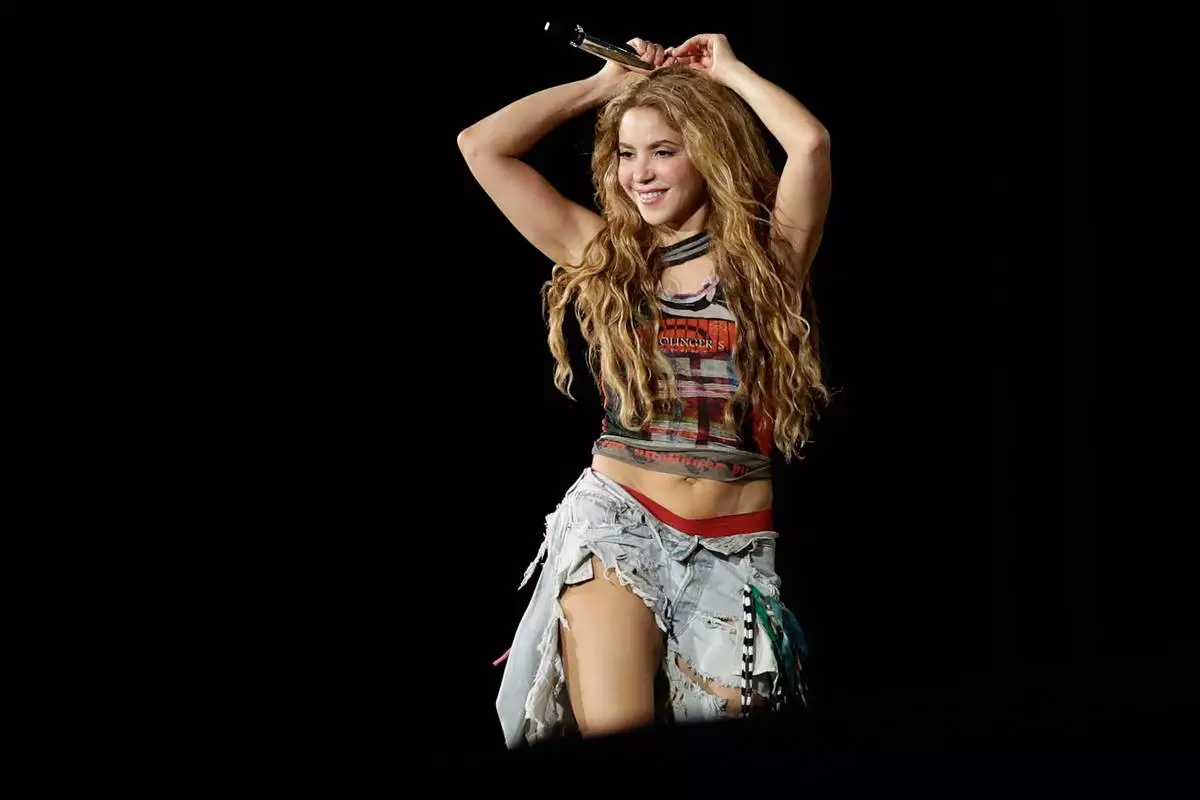
Colombian singer Shakira rehearses a day ahead of her free concert on Copacabana beach in Rio de Janeiro, Friday, May 1, 2026. (AP Photo/Bruna Prado)

Colombian singer Shakira waves to fans during a rehearsal a day ahead of her free concert on Copacabana beach in Rio de Janeiro, Friday, May 1, 2026. (AP Photo/Bruna Prado)
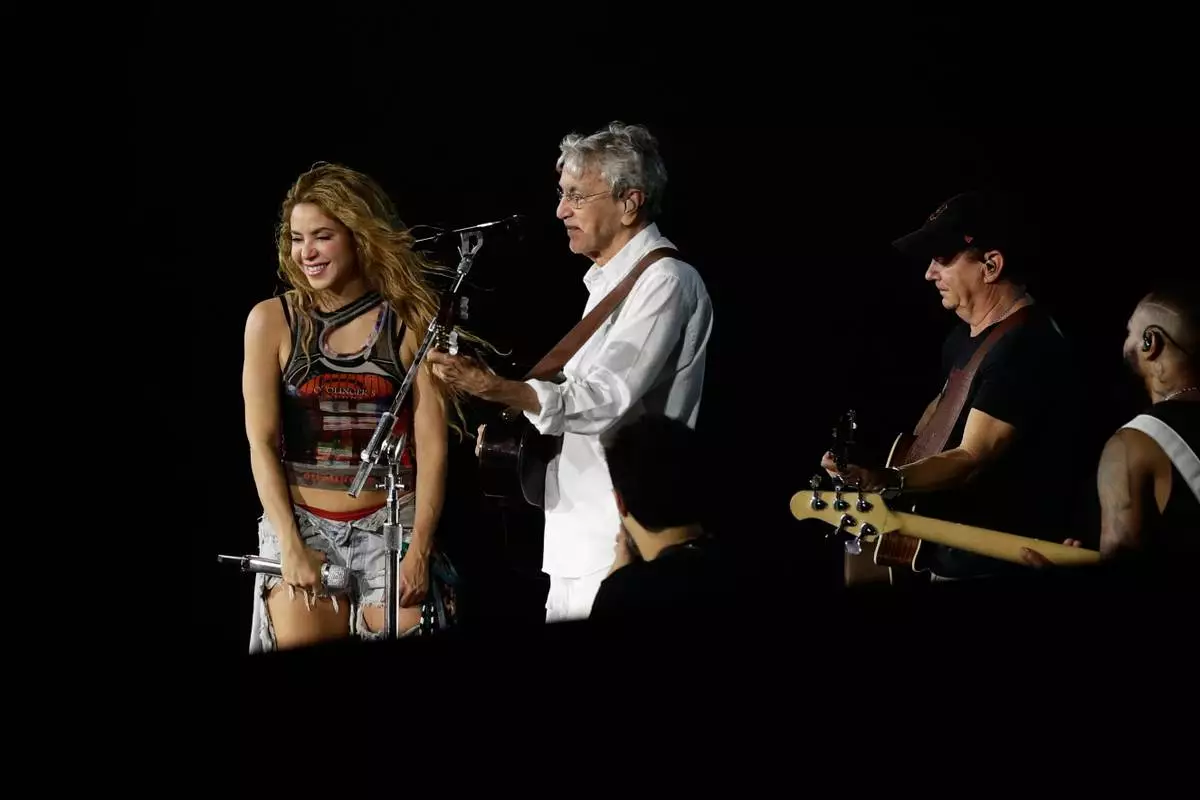
Colombian singer Shakira and Brazilian singer Caetano Veloso, second left, take part in a rehearsal a day ahead of Shakira's free concert, on Copacabana beach, in Rio de Janeiro, Friday, May 1, 2026. (AP Photo/Bruna Prado)
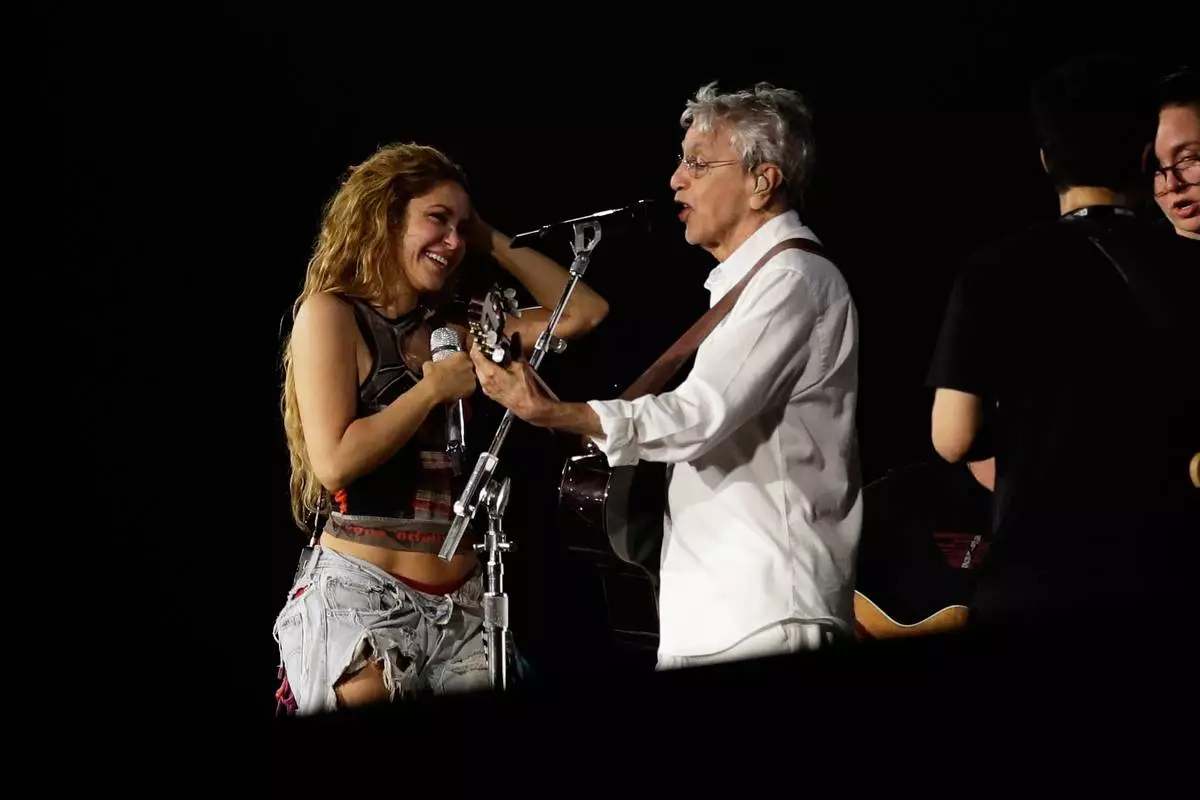
Colombian singer Shakira and Brazilian singer Caetano Veloso take part in a rehearsal a day ahead of Shakira's free concert, on Copacabana beach, in Rio de Janeiro, Friday, May 1, 2026. (AP Photo/Bruna Prado)
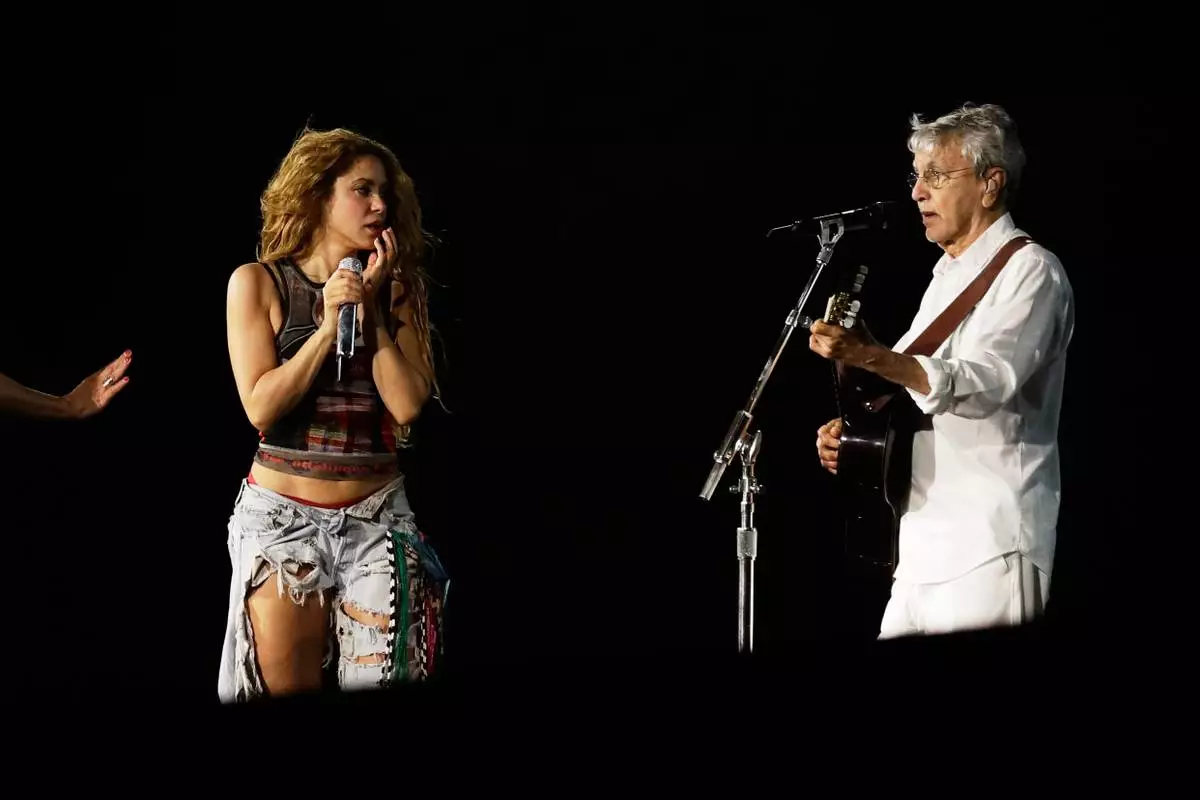
Colombian singer Shakira and Brazilian singer Caetano Veloso take part in a rehearsal a day ahead of Shakira's free concert, on Copacabana beach, in Rio de Janeiro, Friday, May 1, 2026. (AP Photo/Bruna Prado)