BERLIN (AP) — Germany's defense minister on Saturday appeared to take in stride a Pentagon announcement that the United States plans to pull some 5,000 troops out of Germany, saying a drawdown was expected and emphasizing the mutual benefit of the longstanding U.S. deployment in Europe.
Boris Pistorius said Europe recognized and was acting on the necessity of doing more to ensure its own security within the U.S.-led NATO military alliance that counts Germany as a key member, and said it is doing so. He suggested America, too, gains from its military deployment in the continent.
“The presence of American soldiers in Europe, and especially in Germany, is in our interest and in the interest of the U.S.,” Pistorius told the German news agency dpa.
Pistorius called the move “foreseeable,” apparently alluding to President Donald Trump’s recent threat of a drawdown in Germany.
Still, the withdrawals planned over the next six to 12 months mark a new deterioration in U.S. relations with Germany, and European allies more broadly: Trump has expressed exasperation over NATO allies' unwillingness to join his campaign with Israel against Iran, and has lashed out at leaders like German Chancellor Friedrich Merz, Spanish Prime Minister Pedro Sánchez and British Prime Minister Keir Starmer.
Merz last week criticized the war in Iran, saying the U.S. is being “humiliated” by the Iranian leadership and calling out Washington’s lack of strategy.
Trump meanwhile accused the EU of not complying with its U.S. trade deal and announced plans to increase tariffs next week on cars and trucks produced in the bloc to 25%, a move that would be particularly damaging to Germany, a major automobile manufacturer.
At least one EU lawmaker called the tariff hike “unacceptable” and accused Trump of breaking yet another U.S. commitment on trade.
A pullout of 5,000 soldiers from Germany would amount to about one-seventh of the 36,000 American service members stationed in the country: A sizable, but not critical drawdown. The Pentagon offered few details about which troops or operations would be affected.
More broadly, around 80,000-100,000 U.S. personnel are usually stationed in Europe — depending on operations, exercises and troop rotations. The U.S. increased its European deployment after Russia launched its full-scale war on Ukraine in February 2022. NATO allies like Germany have expected for over a year that these troops would be the first to leave.
Pistorius, in his comments to dpa, said, “We Europeans must take on more responsibility for our security,” while stressing recent efforts by Germany to boost its armed forces, accelerate procurement and develop infrastructure.
NATO spokesperson Allison Hart, in a post Saturday on X, said the trans-Atlantic alliance was “working with the U.S. to understand the details of their decision on force posture in Germany.”
“This adjustment underscores the need for Europe to continue to invest more in defense and take on a greater share of the responsibility for our shared security,” she added, noting “progress” toward a target among NATO allies to each invest 5% of their economic output to defense.
Pentagon spokesperson Sean Parnell said in a statement that the “decision follows a thorough review of the Department’s force posture in Europe and is in recognition of theater requirements and conditions on the ground.”
Germany hosts several American military facilities, including the headquarters of the U.S. European and Africa commands, Ramstein Air Base and a medical center in Landstuhl, where casualties from the wars in Afghanistan and Iraq were treated. U.S. nuclear missiles are also stationed in the country.
The mercurial U.S. leader has mused for years about reducing the American military presence in Germany, and has railed against NATO for its refusal to assist Washington in the war, which began on Feb. 28 with U.S.-Israeli strikes on Iran.
American allies in NATO have braced for a U.S. troop withdrawal since Trump took office, with Washington warning that Europe would have to look after its own security, including that of Ukraine, in the future.
Burrows reported from London. Jamey Keaten in Lyon, France, contributed to this report.

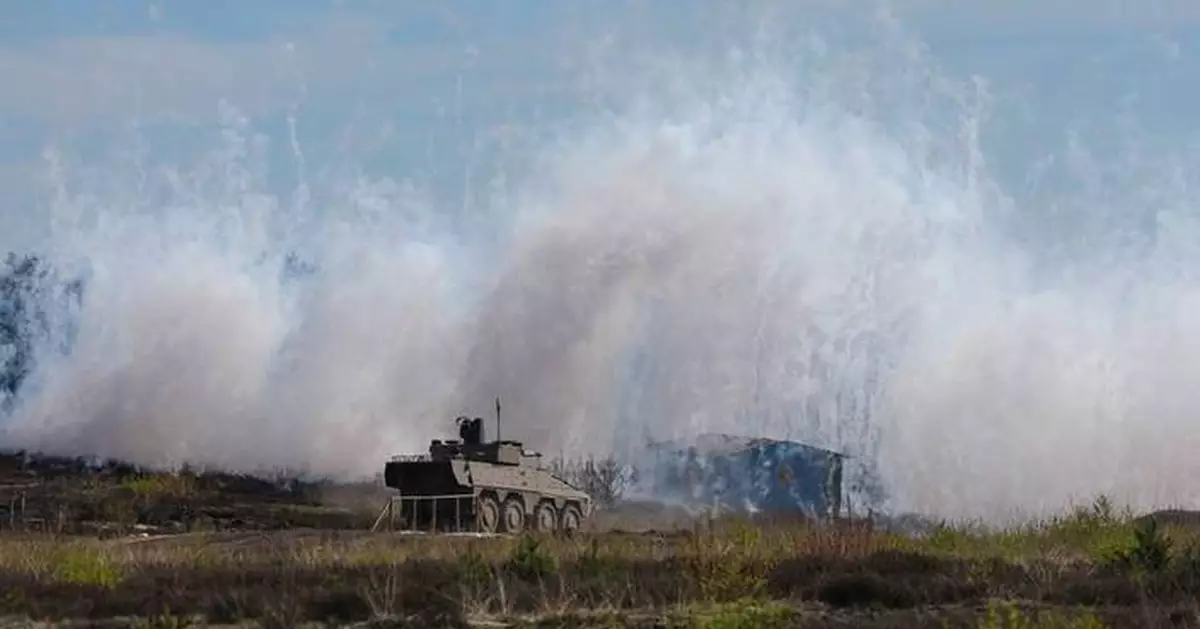
Bundeswehr troops demonstrate their capabilities during a visit of German Chancellor Friedrich Merz to the army at the Bundeswehr base in Munster, Germany, Thursday, April, 30, 2026. (AP Photo/Markus Schreiber)
OMAHA, Neb. (AP) — The folksy wisdom and jokes that were a staple of the Berkshire Hathaway annual meeting for decades when Warren Buffett was leading the show will be missing Saturday, but shareholders still started lining up at midnight outside a Nebraska arena to listen to new CEO Greg Abel.
Attendance is down significantly this year with the arena only a little over half full as the meeting started. That’s much different from the past few years when more than 40,000 attended to listen to the 95-year-old Buffett and — before his death in 2023, Buffett’s longtime partner Charlie Munger was always part of the fun. Buffett gave up the CEO title in January, but he remains chairman and will be sitting with the rest of the Berkshire board on the floor to listen at the meeting.
Saturday’s meeting began with a video tribute to Buffett filled with clips from the previous 60 years of annual meetings. The first clip showed the standing ovation Buffett received last year after he surprised shareholders by announcing that he would step down.
Abel then announced the symbolic move of retiring jerseys with Buffett’s and Munger’s names on them that will hang in the rafters of the arena.
Buffett took the microphone briefly to praise Abel and recognize Apple CEO Tim Cook, who attended the meeting. Buffett said Abel has done a tremendous job so far, and Cook helped Berkshire's initial $35 billion investment in Apple grow to be worth $185 billion today. Cook even got a longer round of applause than Buffett did when he was introduced.
“Greg is doing everything I did and then some,” Buffett said, so his decision to step down has worked out great so far.
Abel has been on stage next to the legendary investor at the annual meetings for several years, but this year is his first time running the show. Investors expect the conversation to focus more on how the dozens of companies Berkshire owns are doing. The conglomerate owns major insurers like Geico, several major utilities like Pacificorp, BNSF railroad and an assortment of manufacturers, retail and service businesses.
Signs of the transition are peppered throughout the 200,000-square-foot exhibit hall where shareholders buy products from Berkshire companies. A caricature of Abel playing his favorite sport of hockey is front and center on commemorative boxes of See’s Candy with Buffett and Mrs. See in the background in hockey gear. At the Pilot Travel Center booth pictures of Abel and Buffett are plastered on the windshield of a semitrailer truck, but Abel is in the driver’s seat. And this year Jazwares created a Squishmallow version of Abel to go with the latest versions of Buffett and his longtime partner Charlie Munger as stuffed dolls that shareholders lined up to buy.
“Sadly we miss Warren and Charlie and that show which was fun, but it’s a business meeting for a lot of us and hearing what the businesses are doing is what it’s all about,” investor Chris Bloomstran, who is president of Semper Augustus Investments Group said.
Abel opened the meeting that way with a detailed discussion of how Berkshire's biggest businesses are performing. He gave a granular explanation about the performance of Berkshire’s insurers, its railroad and its utilities. And he emphasized the way Berkshire is using artificial intelligence “to solve problems at our companies.”
But also many people travel to Omaha primarily to meet up with like-minded value investors, who practice the approach that Buffett employed, and attend some of the investment conferences and meetings that are scheduled around Berkshire’s shareholder meeting.
“That’s why I’m really here, really here is to network with other people,” said Bob Robotti, who runs his own investment company. He doesn’t expect surprises from Abel and the other Berkshire executives at the meeting. “They shouldn’t say anything that would be shocking and surprising because they’re consistent with what they do.”
Many investors are watching closely for any changes Abel might make, but there’s not a lot of reason expect anything big. After all, Abel has been with Berkshire for more than 25 years, and he had already been managing all of the conglomerate’s noninsurance businesses for nearly eight years by the time he was promoted.
Abel did make a few administrative changes to establish a team to help support him, but he has promised to maintain Berkshire’s culture that allows the CEOs of all of its businesses to largely run their day-to-day operations while consulting with headquarters on any major investments and sending any extra cash to Omaha.
The CEOs of Dairy Queen, See’s Candy, Jazwares and Brooks Running all said very little has changed since Abel was promoted other than they now report to NetJets CEO Adam Johnson who is overseeing 32 retail and service businesses.
“I think this is a very deeply rooted culture that Warren has created, and I believe the transition to Greg is going to be rooted in those values that Warren has for 60 years instituted and will continue,” Brooks CEO Dan Sheridan said.
For years Buffett always said he was having too much fun running Berkshire to ever retire, but once the shock of his announcement in the final minutes of last years meeting wore off the company’s executives quickly agreed this plan for the transition was better so Buffett can still be around to advise Abel.
“Berkshire is as strong today as it’s ever been and Warren is still part of it,” DQ CEO Troy Bader said as his staff sold Dilly Bars to shareholders. “Warren is still present. So that’s the greatest combination right now, to be able to have that transition in leadership where Greg and Warren can still work together.”
Abel is known to be a more demanding and hands-on boss than Buffett ever was, but he does that by challenging Berkshire’s CEOs to strengthen their competitive advantages while taking care of their customers. Abel asks tough questions and offers advice that his CEOs appreciate, but he doesn’t tell them exactly what to do.
And with Buffett remaining Berkshire’s chairman and its largest shareholder it’s unlikely that Abel will make any drastic changes. So shareholders shouldn’t expect Berkshire to start paying a dividend or that Abel will suddenly split the company up. Instead, Abel will continue building on the foundation Buffett established over 60 years.
Robotti said the performance of Berkshire’s businesses should be much more important to shareholders than the entertainment value of the annual meetings.
“My hope and expectation are they’re picking people who have competency in running a business and not necessarily public speakers and presenters,” Robotti said.
Berkshire said Saturday morning that its profits more than doubled in the first-quarter to $10.1 billion, or $7,027 per Class A share, as the value of its investments grew and most of its businesses improved.
The paper value of Berkshire’s investments always has a major impact on its bottom line, and it did record a $5.8 billion gain on the stocks it did sell. The value of the portfolio did slip to just over $288 billion.
Berkshire’s massive cash pile continues to grow, and it hit $397.4 billion at the end of the first quarter.
Most of Berkshire’s varied businesses reported better operating earnings this year. The insurance unit that includes Geico and a number of other companies reported an underwriting profit of $1.7 billion, up from $1.34 billion last year. Profits also grew somewhat at BNSF railroad and Berkshire’s utility and manufacturing companies.
But Abel acknowledged there is more improvement needed — especially at BNSF.
“We see a lot of opportunity here to continue to get better,” Abel said about the railroad.
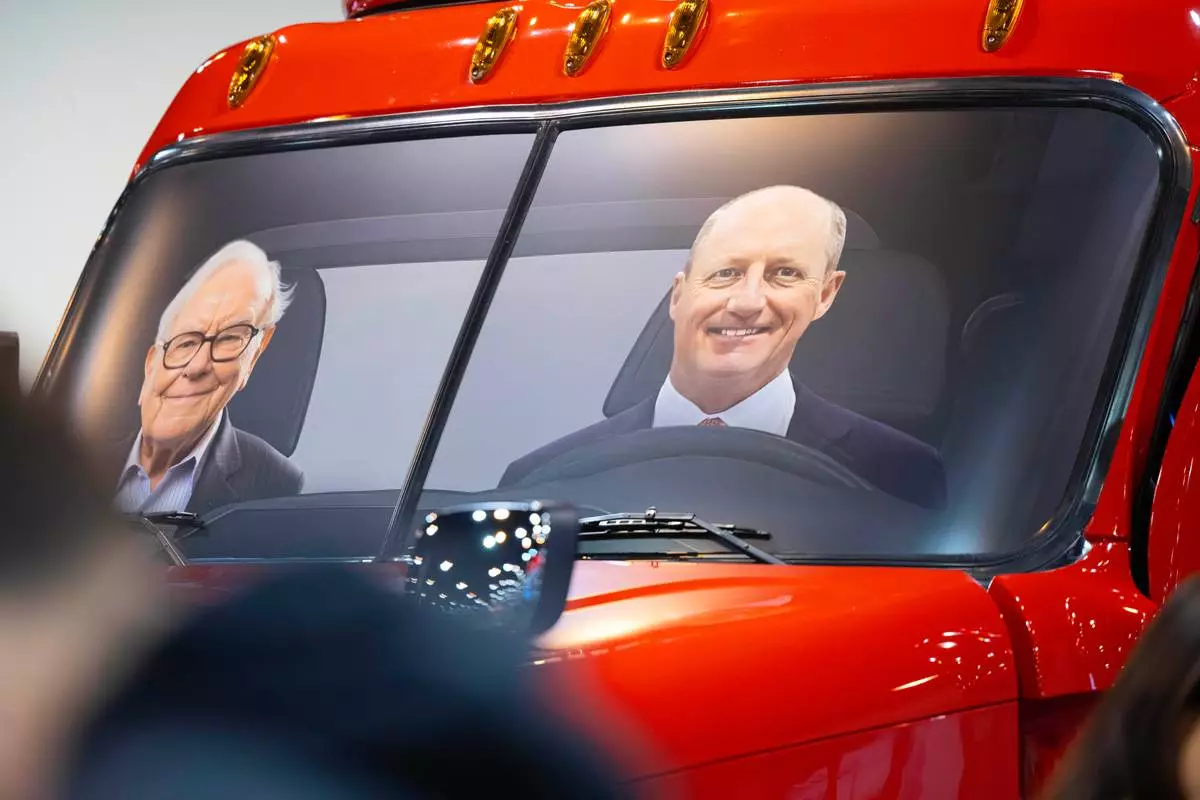
Portraits of Berkshire Hathaway's Warren Buffett, left, and CEO Greg Abel sit in a semi truck at the Pilot display in the Berkshire Hathaway annual meeting on Saturday, May 2, 2026, in Omaha, Neb. (AP Photo/Rebecca S. Gratz)
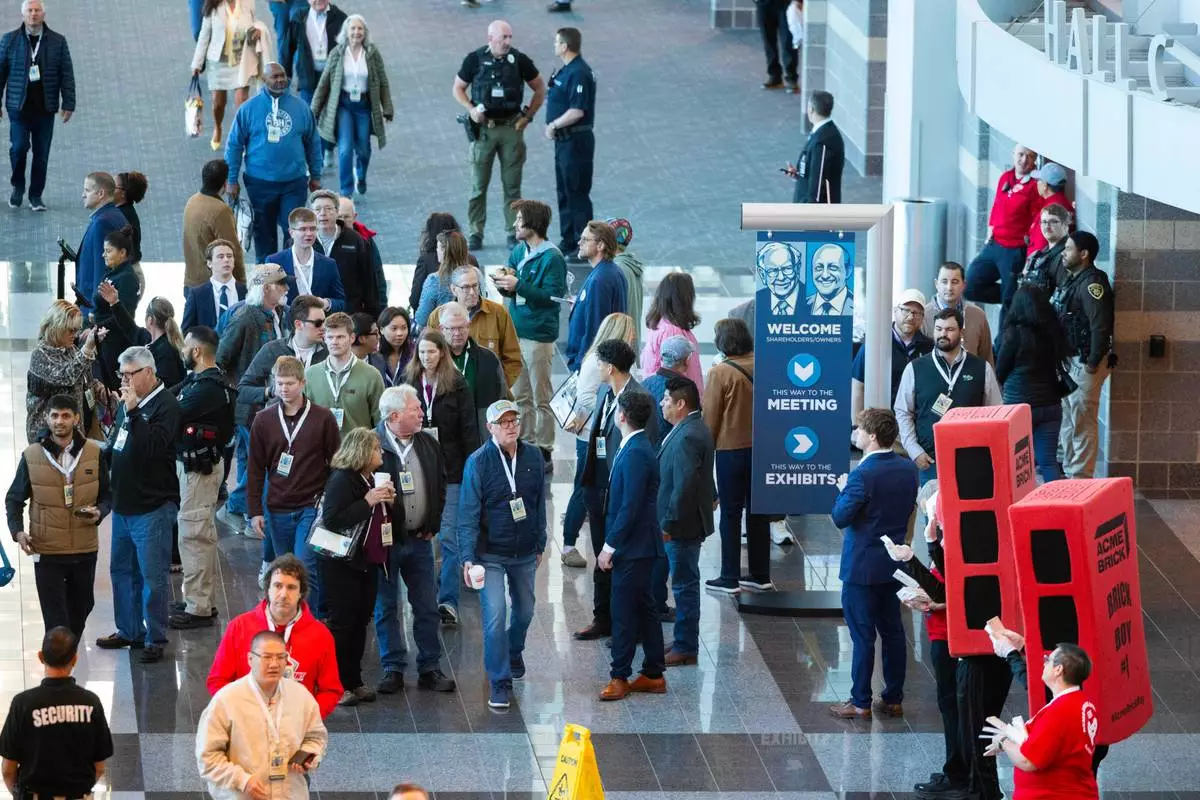
Shareholders arrive inside the CHI Health Center Omaha for the Berkshire Hathaway annual meeting on Saturday, May 2, 2026, in Omaha, Neb. (AP Photo/Rebecca S. Gratz)
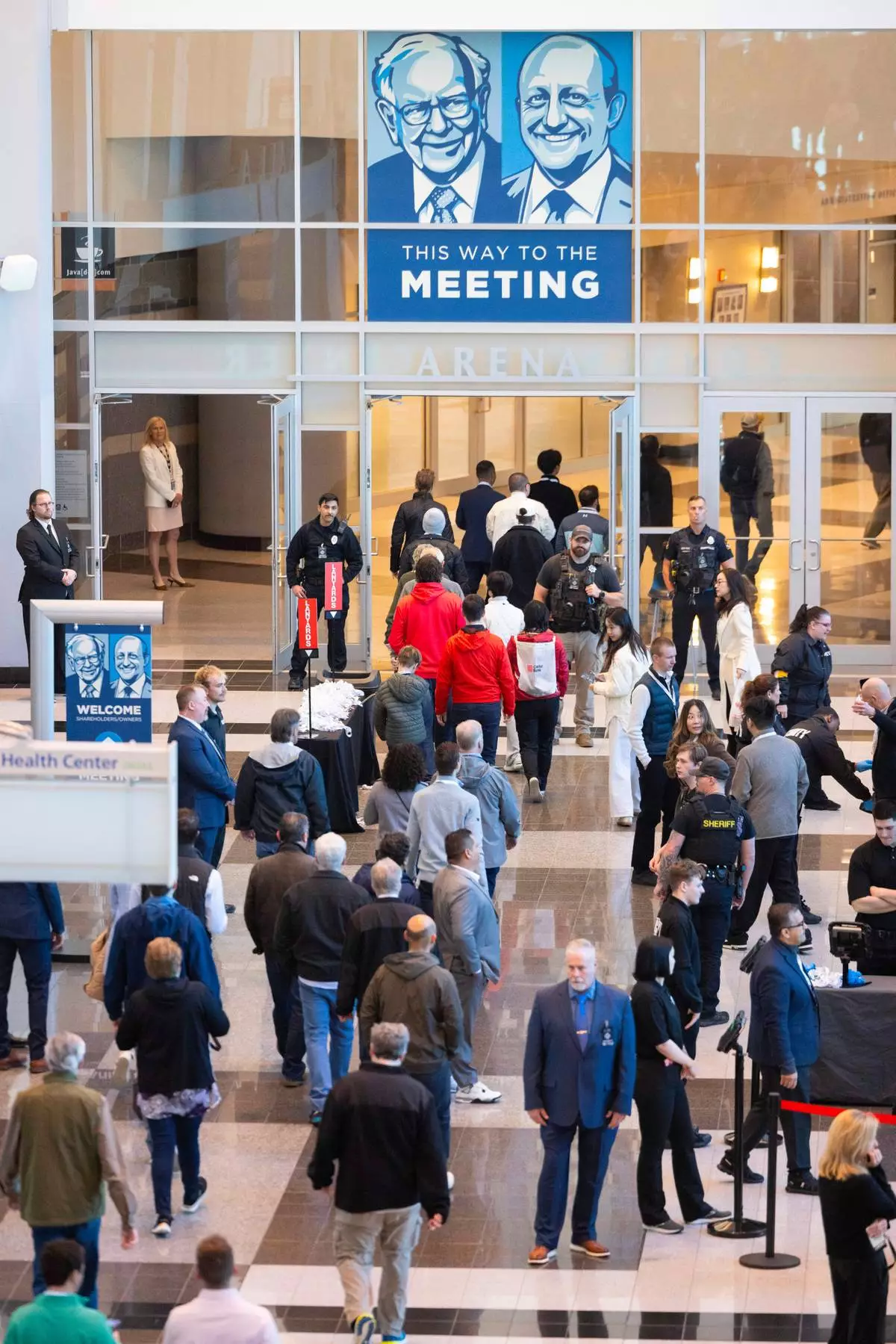
Shareholders enter the CHI Health Center Omaha for the Berkshire Hathaway annual meeting on Saturday, May 2, 2026, in Omaha, Neb. (AP Photo/Rebecca S. Gratz)

Shareholder Anna Larsen, 16, left, of Underwood, Iowa, poses for photo with her friend Ainsley Roberts, 17, in the Hello Kitty portion of the Squishmallows display in the Berkshire Hathaway annual meeting on Saturday, May 2, 2026, in Omaha, Neb. (AP Photo/Rebecca S. Gratz)
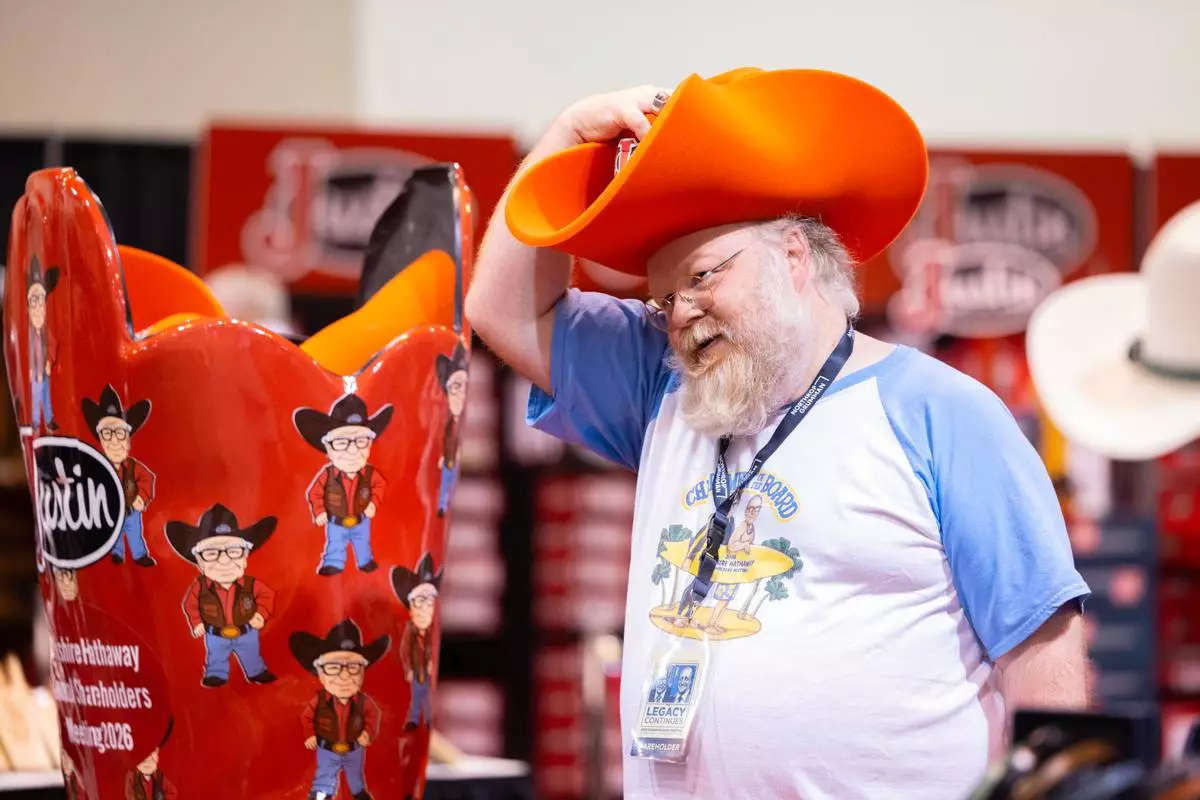
Shareholder Alex Vacca of Milwaukee poses for a photo in a foam hat in the Justin display od the Berkshire Hathaway annual meeting on Saturday, May 2, 2026, in Omaha, Neb. (AP Photo/Rebecca S. Gratz)
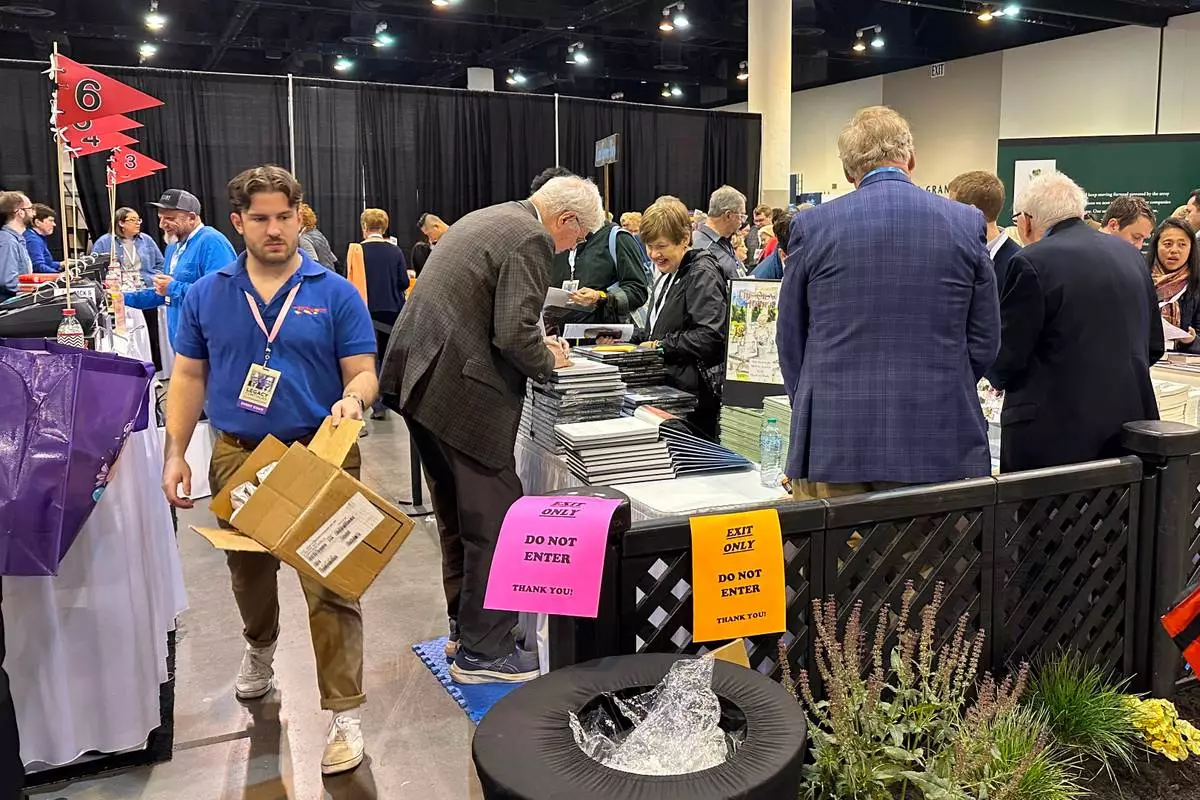
Author and former Omaha World-Herald reporter Steve Jordan signs copies of his book at the Berkshire Hathaway shareholders event on Friday, May 1, 2026 in Omaha, Neb. (AP Photo/Josh Funk)
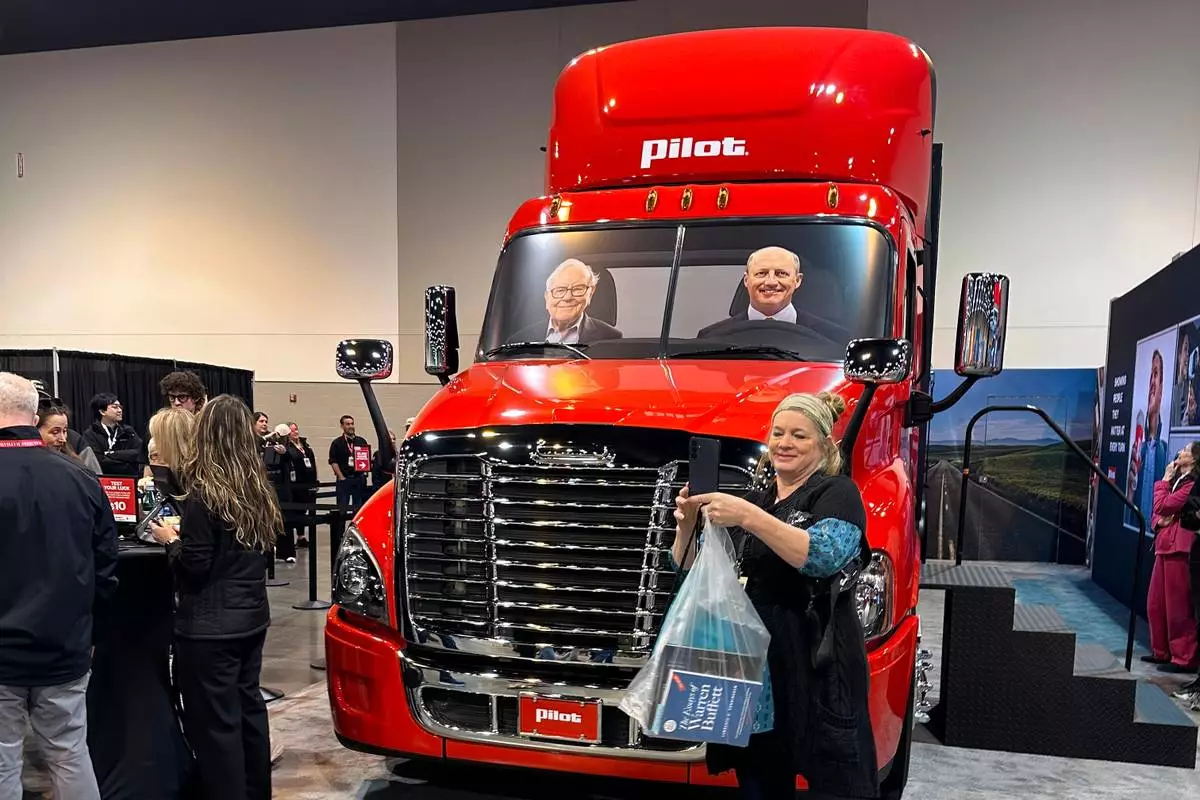
A Berkshire Hathaway shareholder takes a selfie in front of a Pilot truck stops semi truck with pictures of Berkshire's top two executives behind the wheel: new CEO Greg Abel and Chairman Warren Buffett on Friday, May 1, 2026 in Omaha, Neb. (AP Photo/Josh Funk)
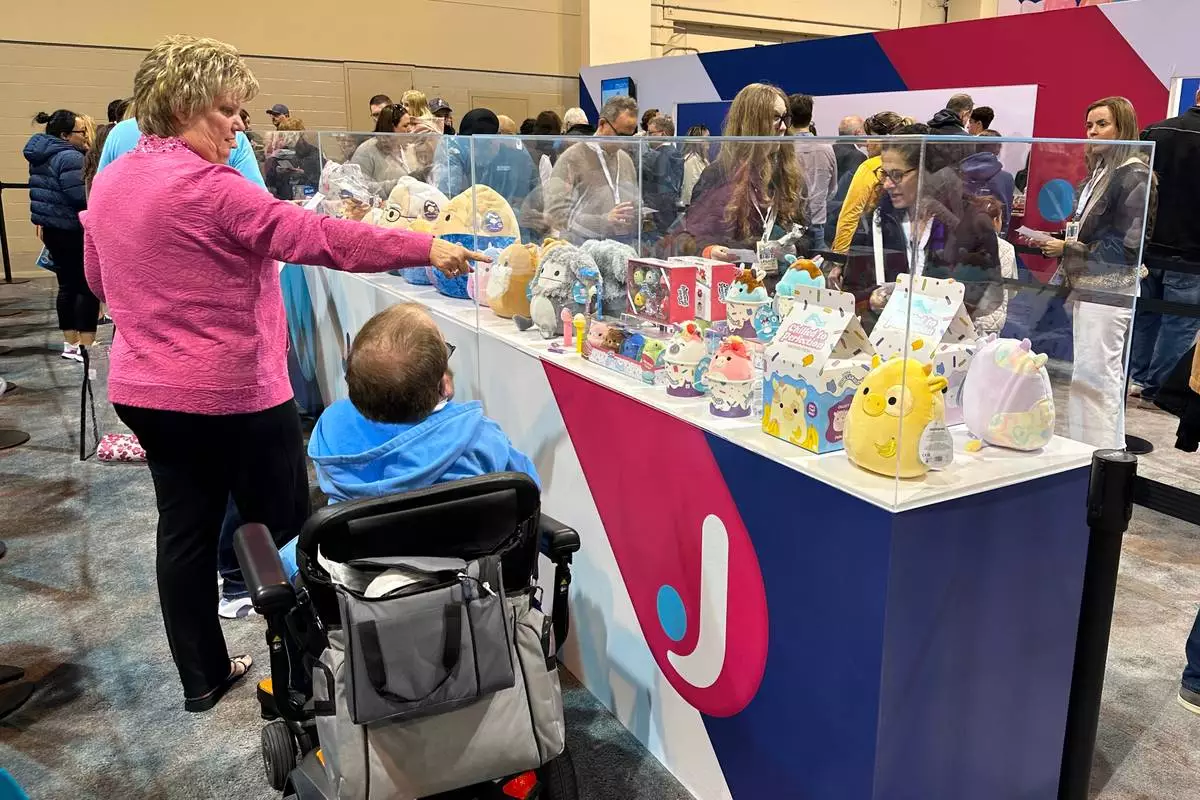
Berkshire Hathaway shareholders stand in line to purchase Squishmallows versions of the company's top executives: CEO Greg Abel, Chairman Warren Buffett and former Vice Chairman Charlie Munger on Friday, May 1, 2026 in Omaha, Neb. (AP Photo/Josh Funk)
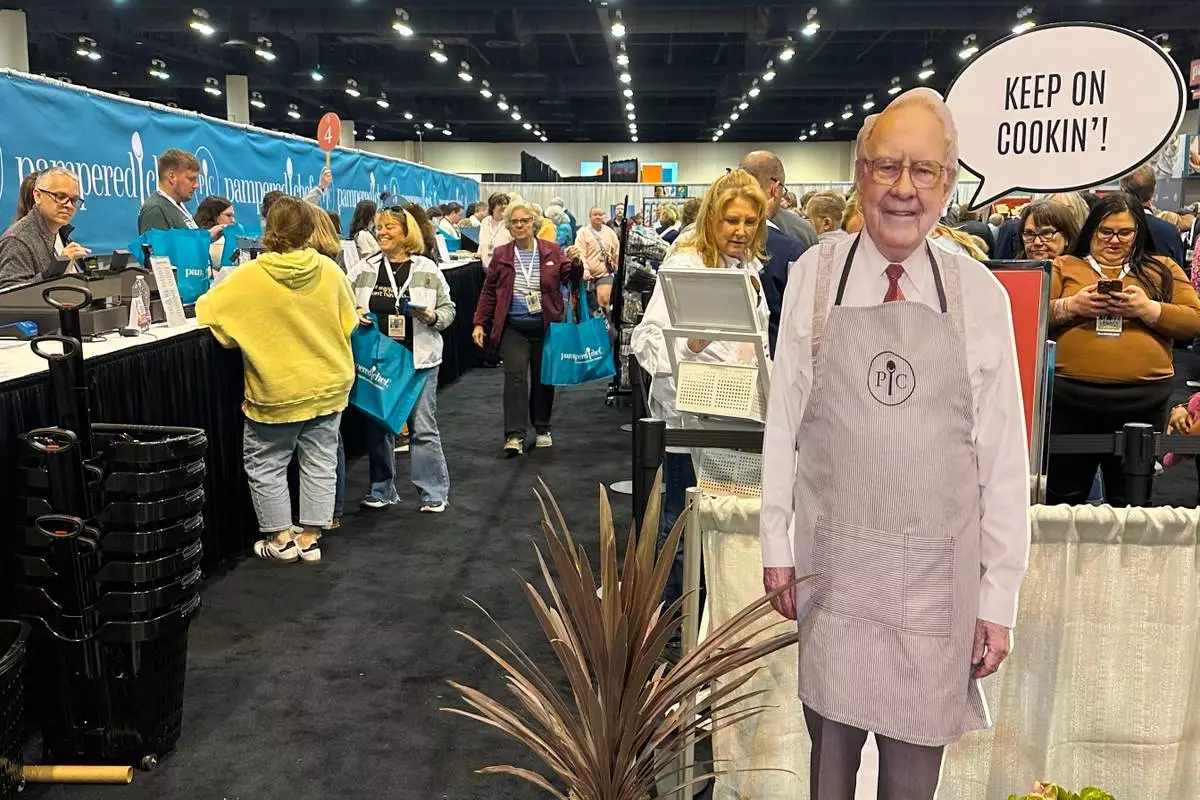
Berkshire Hathaway shareholders line up to buy products at the Pampered Chef booth behind a cutout of longtime CEO Warren Buffett who stepped down in January on Friday, May 1, 2026 in Omaha, Neb. (AP Photo/Josh Funk)
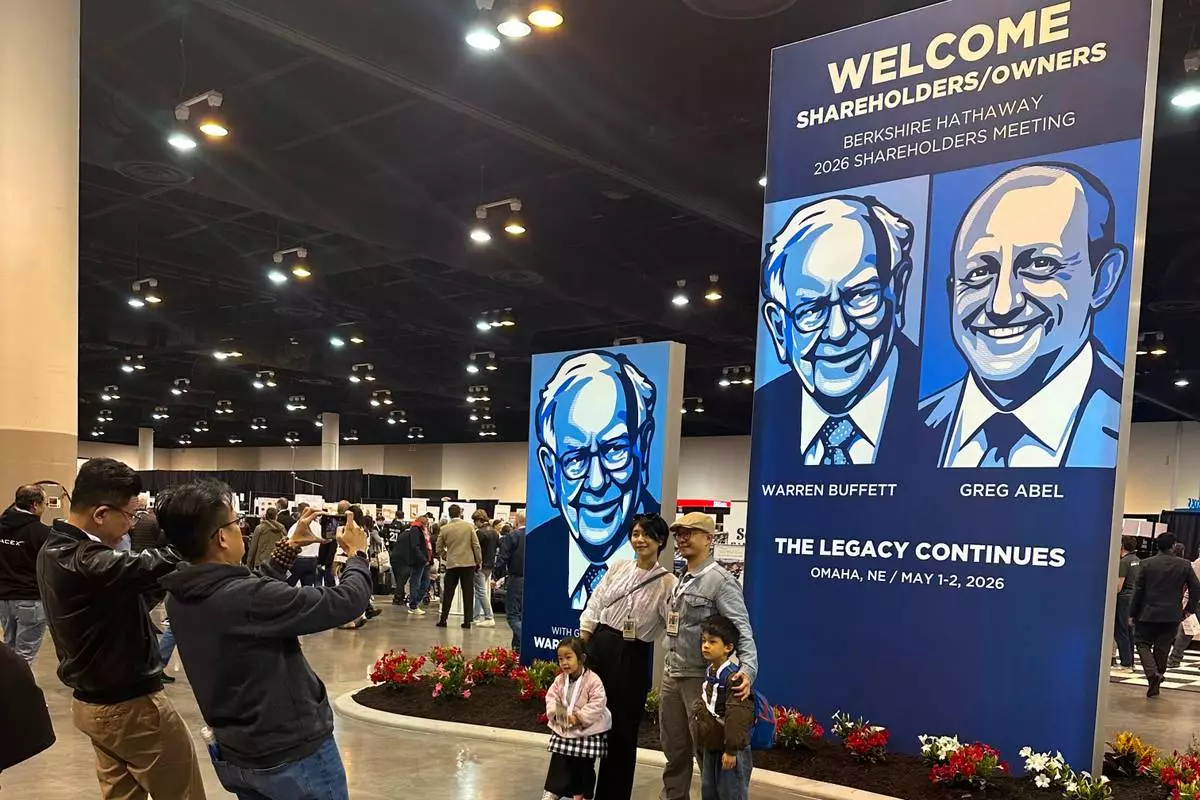
Shareholders line up to take pictures with depictions of Berkshire Hathaway's new CEO Greg Abel and Chairman Warren Buffett on Friday, May 1, 2026 in Omaha, Neb. (AP Photo/Josh Funk)