SUNNYVALE, California (AP) — Hundreds of years ago, Yemen helped introduce the world to coffee. Lately, the mountainous, war-ravaged country that borders Saudi Arabia and Oman is exporting something else: its coffee culture.
Yemeni coffeehouses are opening at a rapid pace across the U.S. The number of cafes run by six major chains that serve Yemeni-style drinks grew 50% last year to 136, according to Technomic, a restaurant industry consulting company. The count doesn’t include the many smaller chains and independent cafes serving coffees and teas imported from Yemen.
Click to Gallery
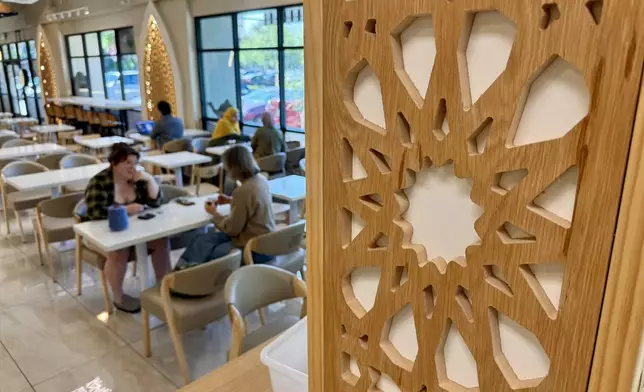
Customers sit inside Jabal Coffee House in Ann Arbor, Mich., on Monday, April 20, 2026. (AP Photo/Dee-Ann Durbin)
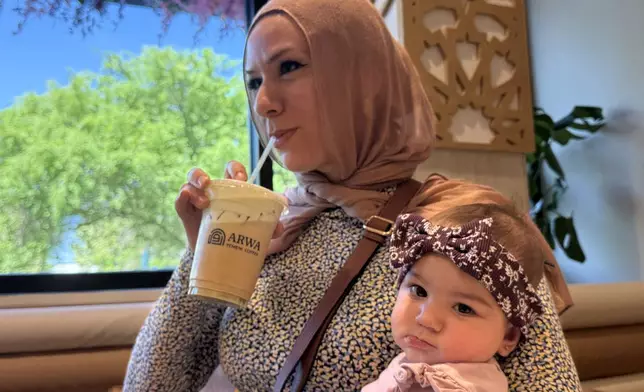
Hanan Jomaa drinks an iced pistachio latte inside Arwa Yemeni Coffee on April 6, 2026 in Sunnyvale, Calf. (AP Photo/Haven Daley)
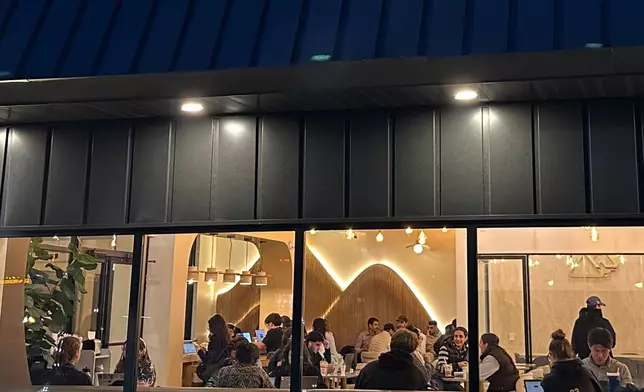
Customers are seen inside Arwa Yemeni Coffee on April 6, 2026, in Sunnyvale, Calif. (AP Photo/Haven Daley)
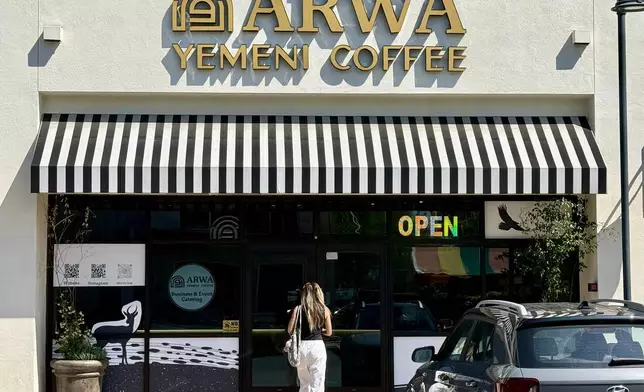
A customer enters Arwa Yemeni Coffee on April 6, 2026, in Sunnyvale, Calif. (AP Photo/Haven Daley)
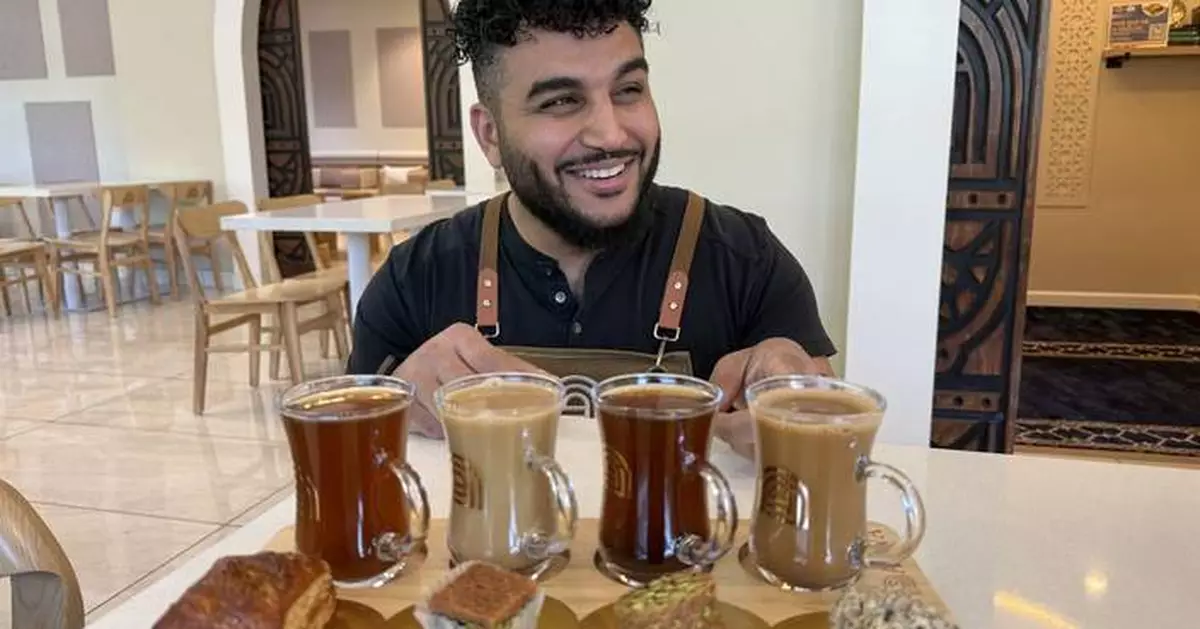
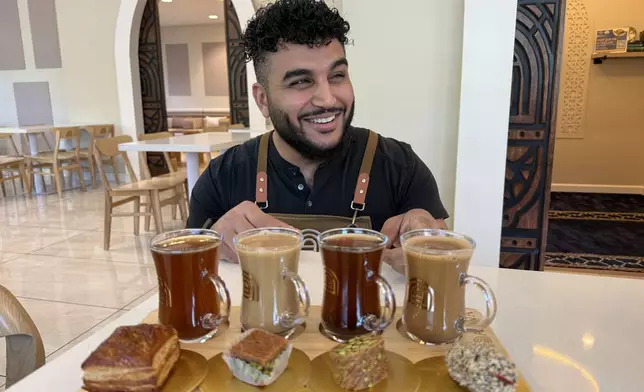
Franchisee Ahmad Badr serves a drink and treat sampler at Arwa Yemeni Coffee on April 6, 2026, in Sunnyvale, Calif. (AP Photo/Haven Daley)
Yemeni coffeehouses are meeting the moment for several reasons. They stay open late — sometimes past 3 a.m., especially during Ramadan — and provide a place to socialize for the growing number of Americans who don’t drink alcohol. Last year, a Gallup poll found that just 54% U.S. adults reported drinking alcohol, the lowest percentage in 90 years.
“Generally in the Middle East. our nightlife is coffee, right? People hang out at coffee shops, they play cards, they talk. We wanted to bring that here,” said Ahmad Badr, who owns an Arwa Yemeni Coffee franchise in Sunnyvale, California.
Another reason for the cafes’ popularity is the growing number of Americans of Arab descent. Between 2010 and 2024, the Arab American population in the U.S. rose by 43%, compared to around 10% growth for the U.S. population as a whole, according to the Arab American Institute.
While most Yemeni coffee shops are in places with high concentrations of Arab Americans, including Michigan, California and Texas, they’re also opening in locations as diverse as Alpharetta, Georgia; Overland Park, Kansas; and Portland, Maine.
Faris Almatrahi is the co-founder and owner of Texas-based Arwa Yemeni Coffee, a chain with 11 cafes across the U.S. and 30 more in development. He said an ongoing civil war in Yemen that began in 2014 has prevented Yemeni Americans like himself from visiting their homeland, so he has tried to evoke Yemen in his cafes.
Arwa locations are painted in natural desert tones, with archways that mimic mosques and lampshades shaped like the hats worn by Yemen’s coffee farmers.
“One of the ways to actually visit without traveling there was to bring that experience to the U.S., and that was a huge passion for us when we opened our first location,” Almatrahi said. “It was extremely emotional for all of us due to the fact that it really transported us to Yemen."
But Almatrahi noted that most of his customers aren’t of Arab descent. In fact, Americans of all backgrounds are seeking out new global flavors and authentic experiences, according to market research company Datassential. Food trends are also spreading quickly through social media.
Menus vary, but Yemeni cafes generally serve specialties like Adeni tea, a spiced tea similar to chai, and qishr, a traditional drink made from the dried husks of coffee cherries. Familiar drinks like lattes might contain special spices or honey; at Arwa, lattes features the outline of a camel stenciled in spices.
Bakery cases might contain khaliat nahal, or Yemeni honeycomb bread, a cheese-filled pastry drizzled with honey, or basboosa, a cake soaked in sugar syrup and often flavored with lemon or rose water. Many Yemeni menus also mix in more typical U.S. coffeeshop fare, like matcha lattes or berry refreshers.
Peter Giuliano, a researcher with the Specialty Coffee Association, a California-based nonprofit, said culturally specific cafes have been a key growth driver in the U.S. coffee industry for the last few years. In addition to Yemeni cafes, he cited the Latin-style chain Tierra Mia in California and Nguyen Coffee Supply, a New York-based company that roasts Vietnamese beans.
A customer who visited Badr's shop in Sunnyvale for the first time said an internet search brought her there on a recent weekday. Cindy Donovan said she’s always on the hunt for good coffee and was excited by Yemeni coffees she tried.
“I think they're much more refined and mellow, and much more full of flavor than a regular cup of dark roast, for instance,” Donovan said. “The cardamom in the drinks is fantastic. Very, very flavorful, rich but not heavy.”
Most Yemeni coffee is sun-dried, which enhances its flavor and brings out undertones of chocolate and fruit, Almatrahi said. Yemeni cafes often mix coffee with special spice mixes – or hawaij – that may contain cardamon, ginger, cinnamon, cloves, coriander or nutmeg.
“Our coffee and teas are not just made through a fully automatic machine,” said Mohamed Nasser, the director of operations for Haraz Coffee House, a Dearborn, Michigan-based chain with 50 U.S. outlets and another 50 in development. “We have to manually blend and mix our coffee and tea, boil it with water and evaporated milk, make sure that it comes out (with the) perfect taste, perfect color.”
Coffee has a long history in Yemen. While the plant was likely discovered in Ethiopia, by the 1400s it was being cultivated in Yemen, where monks brewed it to stay awake during prayers, according to the National Coffee Association, a U.S. trade group. Yemen monopolized the coffee trade for around 200 years until Dutch merchants smuggled coffee seeds to Indonesia and began growing plants there.
Almatrahi said a revitalization of the Yemeni coffee industry over the last two decades, led by coffee companies, foundations and young entrepreneurs, helped make the current U.S. boom possible. Coffee is one of the most promising sectors for economic development in Yemen, where more than 80% of the population lives in poverty, according to the Food and Agriculture Organization of the United Nations.
“We are ambassadors for our culture and our people. So when we open these shops, we want to perform the outreach, to show the hospitality, to show what we have to offer,” Almatrahi said.
Durbin reported from Detroit. AP Video Journalist Mike Householder contributed from Dearborn, Michigan.
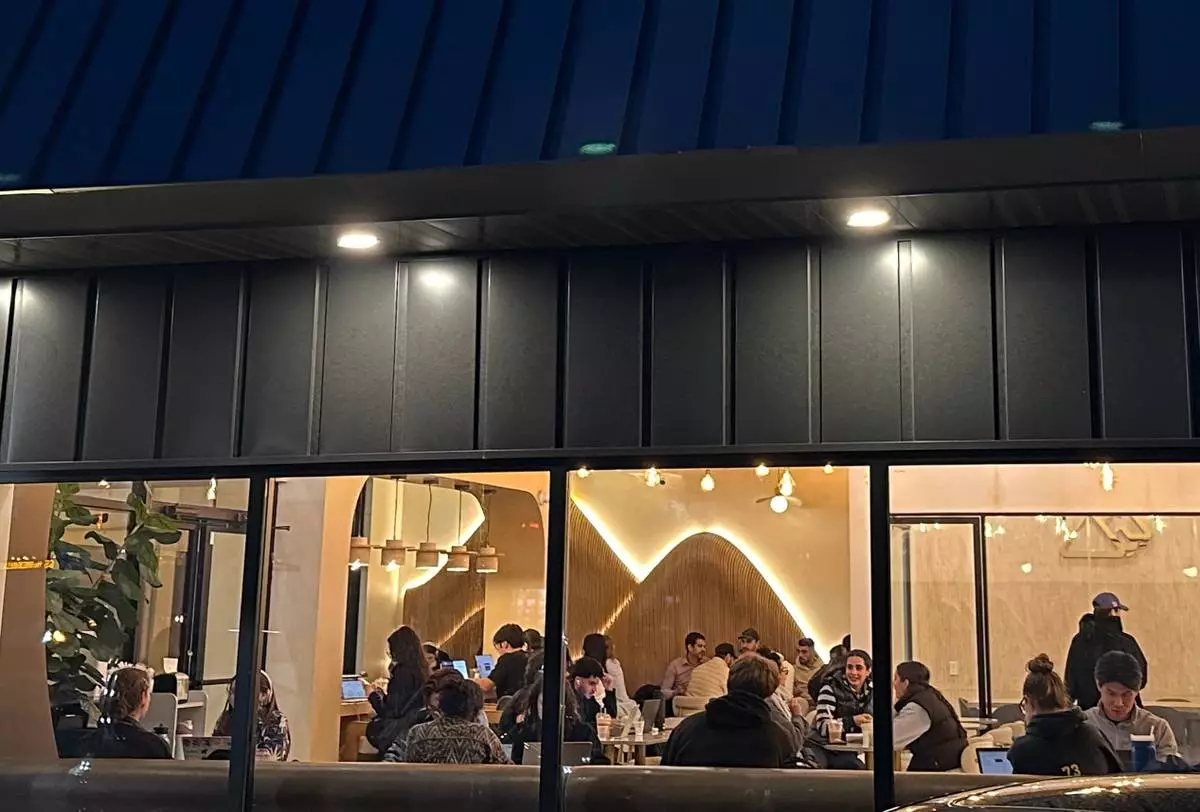
Customers sit inside Jabal Coffee House in Ann Arbor, Mich., on Monday, April 20, 2026. (AP Photo/Dee-Ann Durbin)
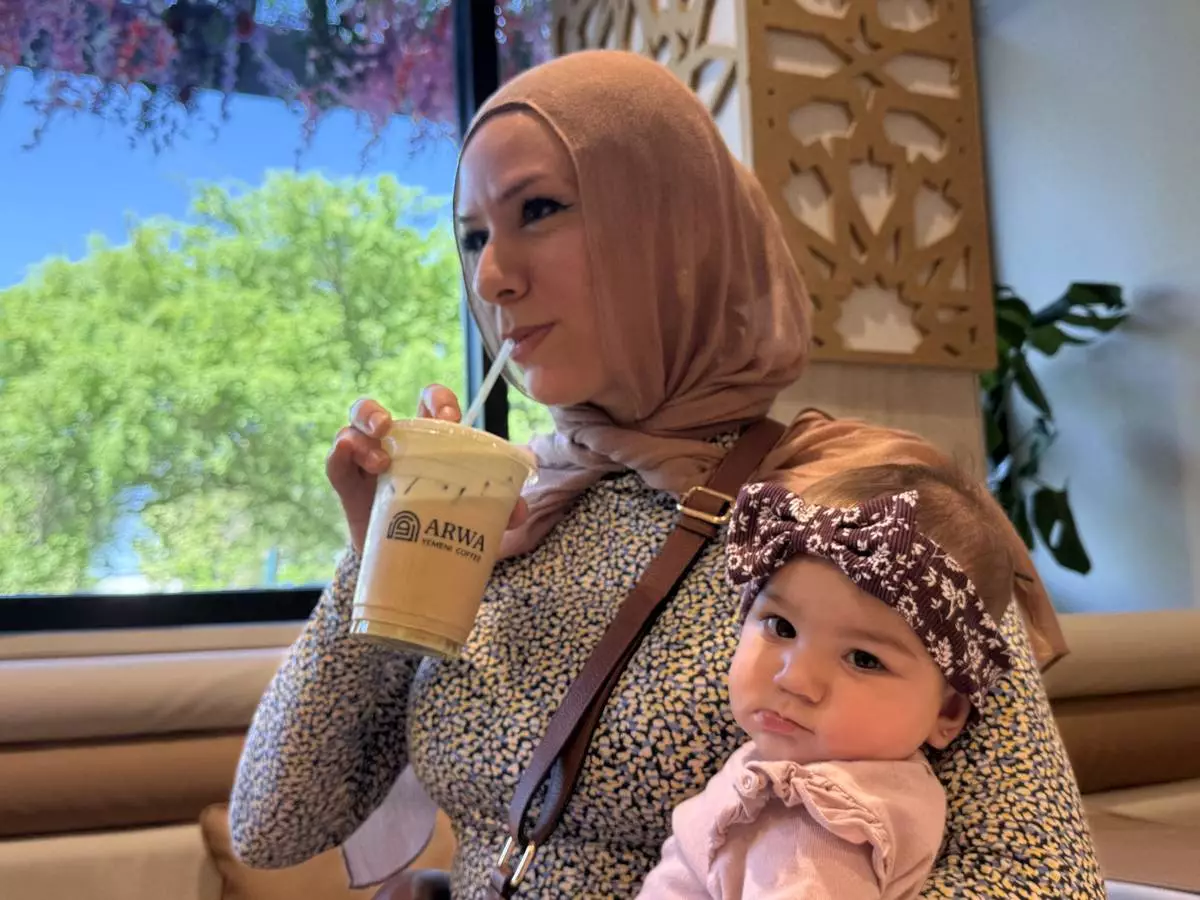
Hanan Jomaa drinks an iced pistachio latte inside Arwa Yemeni Coffee on April 6, 2026 in Sunnyvale, Calf. (AP Photo/Haven Daley)
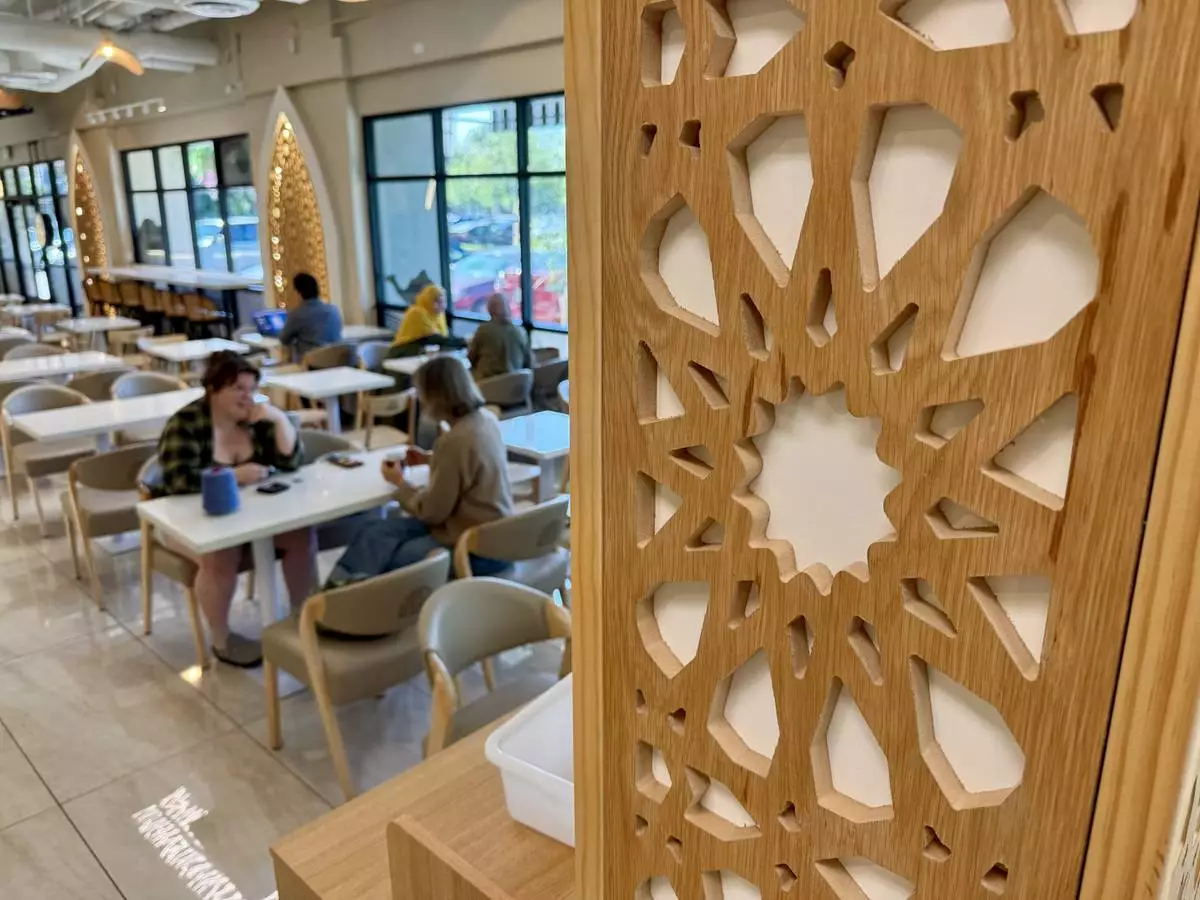
Customers are seen inside Arwa Yemeni Coffee on April 6, 2026, in Sunnyvale, Calif. (AP Photo/Haven Daley)
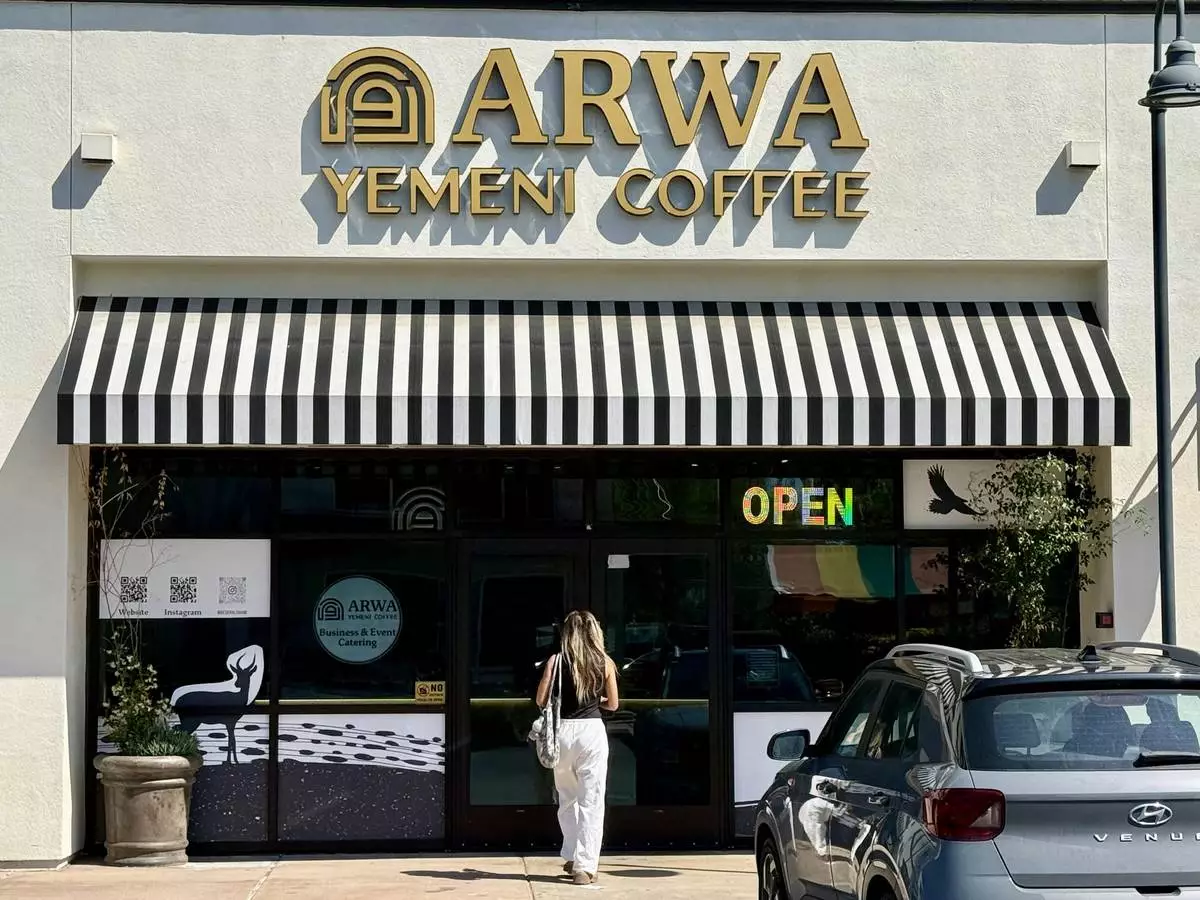
A customer enters Arwa Yemeni Coffee on April 6, 2026, in Sunnyvale, Calif. (AP Photo/Haven Daley)
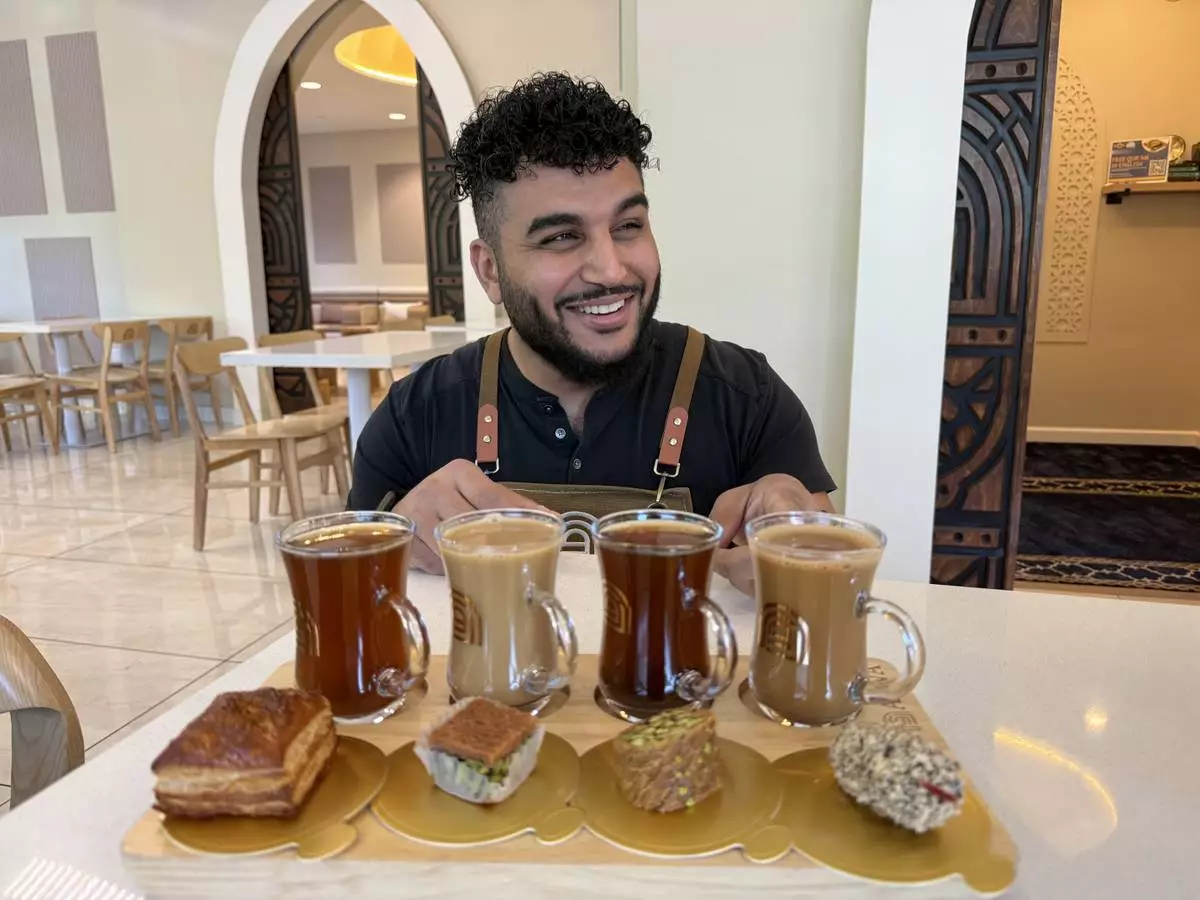
Franchisee Ahmad Badr serves a drink and treat sampler at Arwa Yemeni Coffee on April 6, 2026, in Sunnyvale, Calif. (AP Photo/Haven Daley)
OMAHA, Neb. (AP) — Berkshire Hathaway’s new CEO Greg Abel opened the first annual meeting without Warren Buffett on stage Saturday.
Abel was promoted to CEO in January. Thousands of people again attended the meeting, but the Omaha arena where the event is held was only a little over half full.
The meeting began with a video tribute to Buffett that was filled with clips from the previous 60 annual meetings for the conglomerate. Buffett surprised shareholders a year ago at the end of the meeting when he announced he would step down.
THIS IS A BREAKING NEWS UPDATE. AP’s earlier story follows below.
OMAHA, Neb. (AP) — The folksy wisdom and jokes that were a staple of the Berkshire Hathaway annual meeting for decades when Warren Buffett was leading the show will be missing Saturday, but shareholders still started lining up at midnight outside a Nebraska arena to listen to new CEO Greg Abel.
Attendance is down significantly this year with the arena only about half full just before the meeting started. That’s much different than the past few years when more than 40,000 attended to listen to the 95-year-old Buffett and — before his death in 2023, Buffett’s longtime partner Charlie Munger was always part of the fun. Buffett gave up the CEO title in January, but he remains chairman and will be sitting with the rest of the Berkshire board on the floor to listen at the meeting.
Abel has been on stage next to the legendary investor at the annual meetings for several years, but this year is his first time running the show. Investors expect the conversation to focus more on how the dozens of companies Berkshire owns are doing. The conglomerate owns major insurers like Geico, several major utilities like Pacificorp, BNSF railroad and an assortment of manufacturers, retail and service businesses.
Signs of the transition are peppered throughout the 200,000-square-foot exhibit hall where shareholders buy products from Berkshire companies. A caricature of Abel playing his favorite sport of hockey is front and center on commemorative boxes of See’s Candy with Buffett and Mrs. See in the background in hockey gear. At the Pilot Travel Center booth pictures of Abel and Buffett are plastered on the windshield of a semitrailer truck, but Abel is in the driver’s seat. And this year Jazwares created a Squishmallow version of Abel to go with the latest versions of Buffett and his long-time partner Charlie Munger as stuffed dolls that shareholders lined up to buy.
“Sadly we miss Warren and Charlie and that show which was fun, but it’s a business meeting for a lot of us and hearing what the businesses are doing is what it’s all about,” investor Chris Bloomstran, who is president of Semper Augustus Investments Group said.
But also many people travel to Omaha primarily to meet up with like-minded value investors, who practice the approach that Buffett employed, and attend some of the investment conferences and meetings that are scheduled around Berkshire’s shareholder meeting.
“That’s why I’m really here, really here is to network with other people,” said Bob Robotti, who runs his own investment company. He doesn’t expect surprises from Abel and the other Berkshire executives at the meeting. “They shouldn’t say anything that would be shocking and surprising because they’re consistent with what they do.”
Many investors are watching closely for any changes Abel might make, but there’s not a lot of reason expect anything big. After all, Abel has been with Berkshire for more than 25 years, and he had already been managing all of the conglomerate’s non-insurance businesses for nearly eight years by the time he was promoted.
Abel did make a few administrative changes to establish a team to help support him, but he has promised to maintain Berkshire’s culture that allows the CEOs of all of its businesses to largely run their day-to-day operations while consulting with headquarters on any major investments and sending any extra cash to Omaha.
The CEOs of Dairy Queen, See’s Candy, Jazwares and Brooks Running all said very little has changed since Abel was promoted other than they now report to NetJets CEO Adam Johnson who is overseeing 32 retail and service businesses.
“I think this is a very deeply rooted culture that Warren has created, and I believe the transition to Greg is going to be rooted in those values that Warren has for 60 years instituted and will continue,” Brooks CEO Dan Sheridan said.
For years Buffett always said he was having too much fun running Berkshire to ever retire, but once the shock of his announcement in the final minutes of last years meeting wore off the company’s executives quickly agreed this plan for the transition was better so Buffett can still be around to advise Abel.
“Berkshire is as strong today as it’s ever been and Warren is still part of it,” DQ CEO Troy Bader said as his staff sold Dilly Bars to shareholders. “Warren is still present. So that’s the greatest combination right now, to be able to have that transition in leadership where Greg and Warren can still work together.”
Abel is known to be a more demanding and hands-on boss than Buffett ever was, but he does that by challenging Berkshire’s CEOs to strengthen their competitive advantages while taking care of their customers. Abel asks tough questions and offers advice that his CEOs appreciate, but he doesn’t tell them exactly what to do.
And with Buffett remaining Berkshire’s chairman and its largest shareholder it’s unlikely that Abel will make any drastic changes. So shareholders shouldn’t expect Berkshire to start paying a dividend or that Abel will suddenly split the company up. Instead, Abel will continue building on the foundation Buffett established over 60 years.
Robotti said the performance of Berkshire’s businesses should be much more important to shareholders than the entertainment value of the annual meetings.
“My hope and expectation are they’re picking people who have competency in running a business and not necessarily public speakers and presenters,” Robotti said.
Berkshire said Saturday morning that its profits more than doubled in the first-quarter to $10.1 billion, or $7,027 per Class A share, as the value of its investments grew and most of its businesses improved.
The paper value of Berkshire’s investments always has a major impact on its bottom line, and it did record a $5.8 billion gain on the stocks it did sell. The value of the portfolio did slip to just over $288 billion.
Berkshire’s massive cash pile continues to grow, and it hit $397.4 billion at the end of the first quarter.
Most of Berkshire's varied businesses reported better operating earnings this year. The insurance unit that includes Geico and a number of other companies reported an underwriting profit of $1.7 billion, up from $1.34 billion last year. Profits also grew somewhat at BNSF railroad and Berkshire's utility and manufacturing companies.
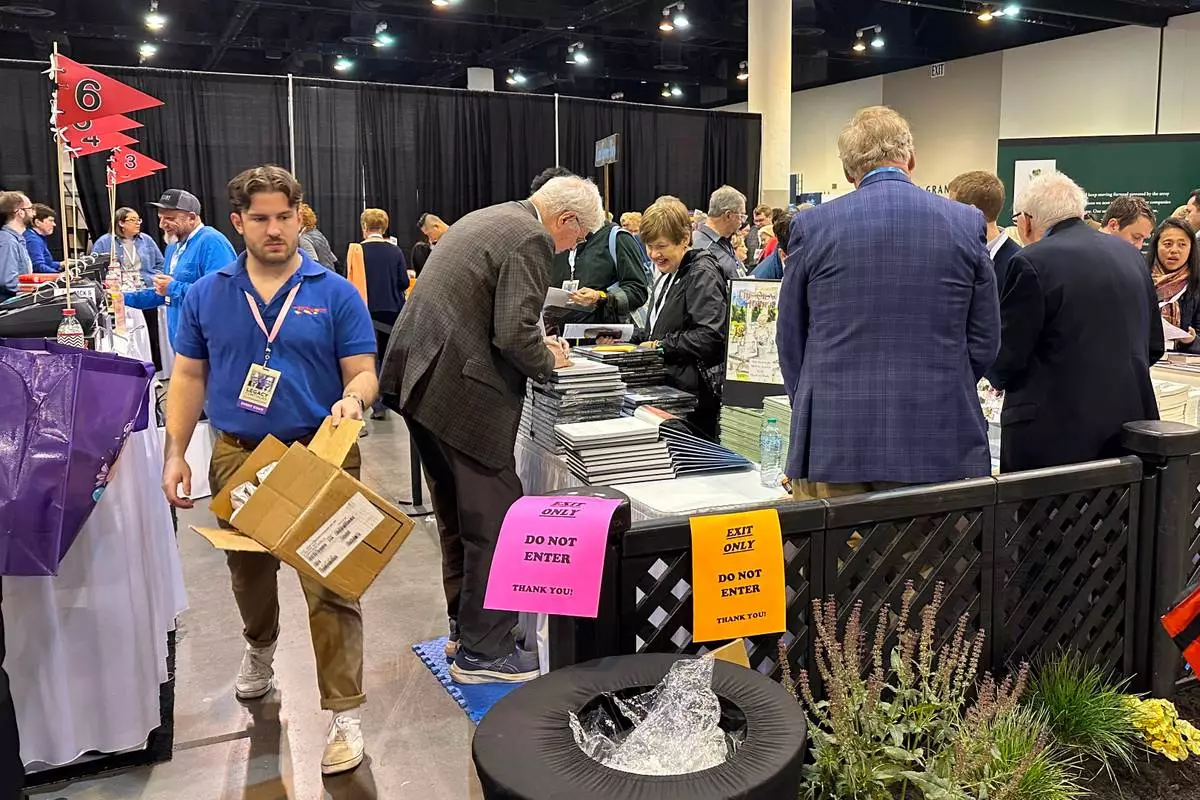
Author and former Omaha World-Herald reporter Steve Jordan signs copies of his book at the Berkshire Hathaway shareholders event on Friday, May 1, 2026 in Omaha, Neb. (AP Photo/Josh Funk)
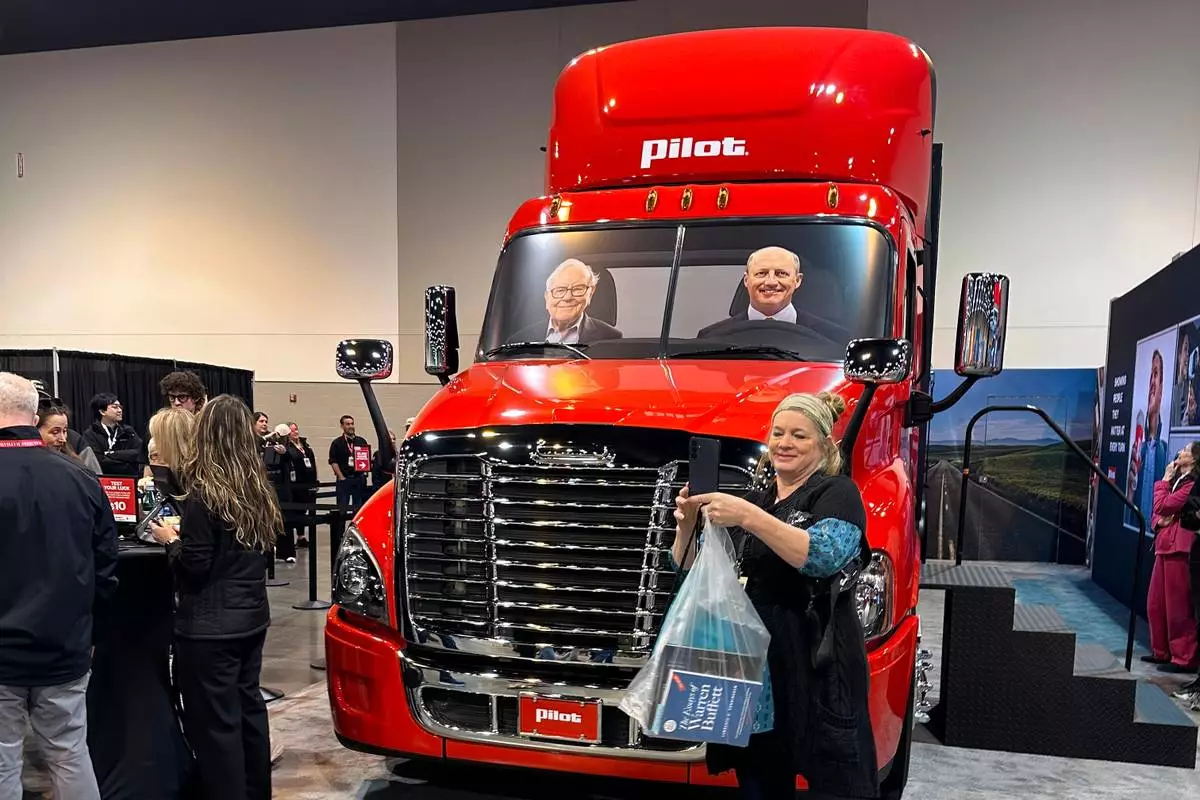
A Berkshire Hathaway shareholder takes a selfie in front of a Pilot truck stops semi truck with pictures of Berkshire's top two executives behind the wheel: new CEO Greg Abel and Chairman Warren Buffett on Friday, May 1, 2026 in Omaha, Neb. (AP Photo/Josh Funk)
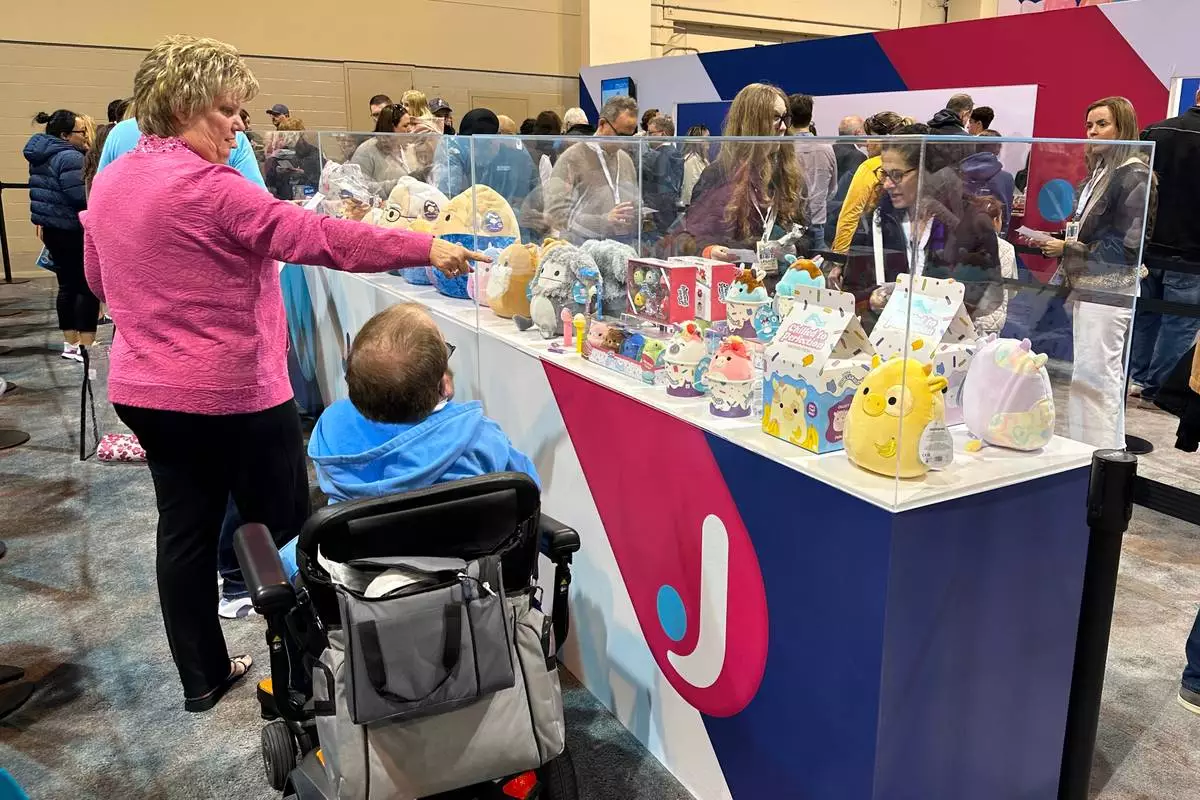
Berkshire Hathaway shareholders stand in line to purchase Squishmallows versions of the company's top executives: CEO Greg Abel, Chairman Warren Buffett and former Vice Chairman Charlie Munger on Friday, May 1, 2026 in Omaha, Neb. (AP Photo/Josh Funk)
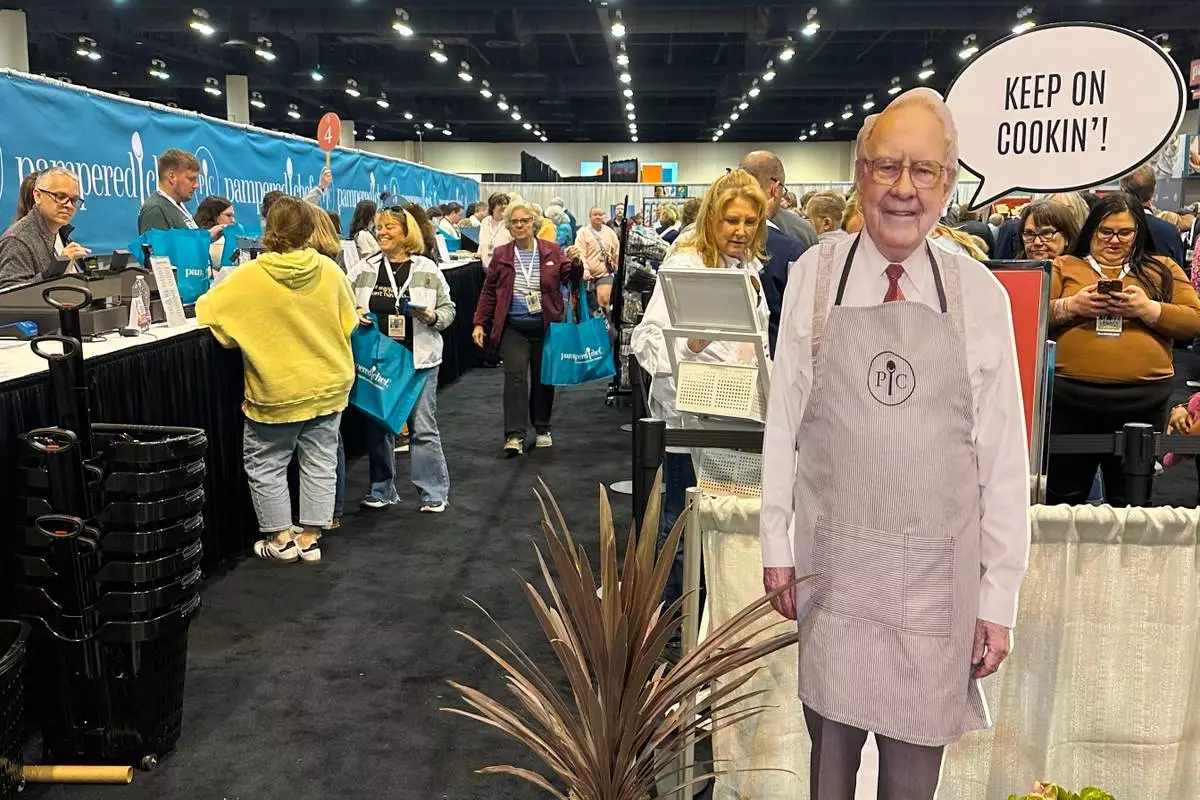
Berkshire Hathaway shareholders line up to buy products at the Pampered Chef booth behind a cutout of longtime CEO Warren Buffett who stepped down in January on Friday, May 1, 2026 in Omaha, Neb. (AP Photo/Josh Funk)
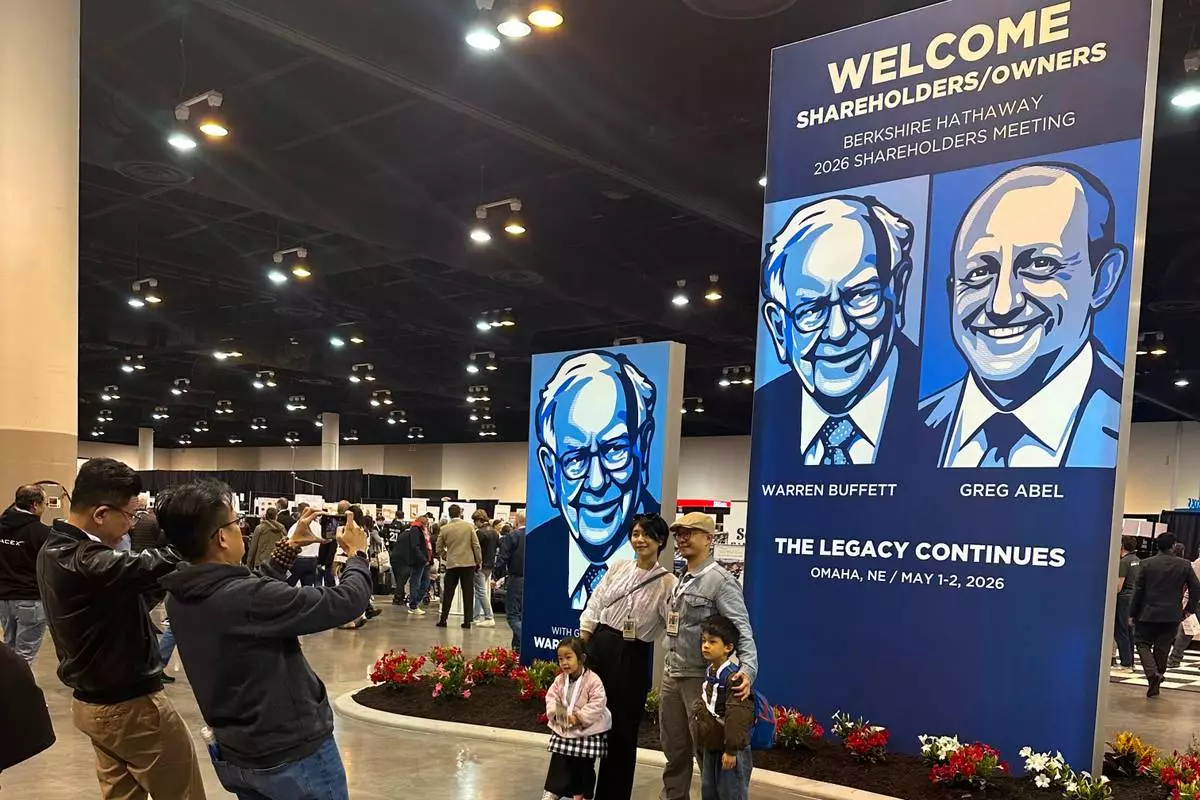
Shareholders line up to take pictures with depictions of Berkshire Hathaway's new CEO Greg Abel and Chairman Warren Buffett on Friday, May 1, 2026 in Omaha, Neb. (AP Photo/Josh Funk)