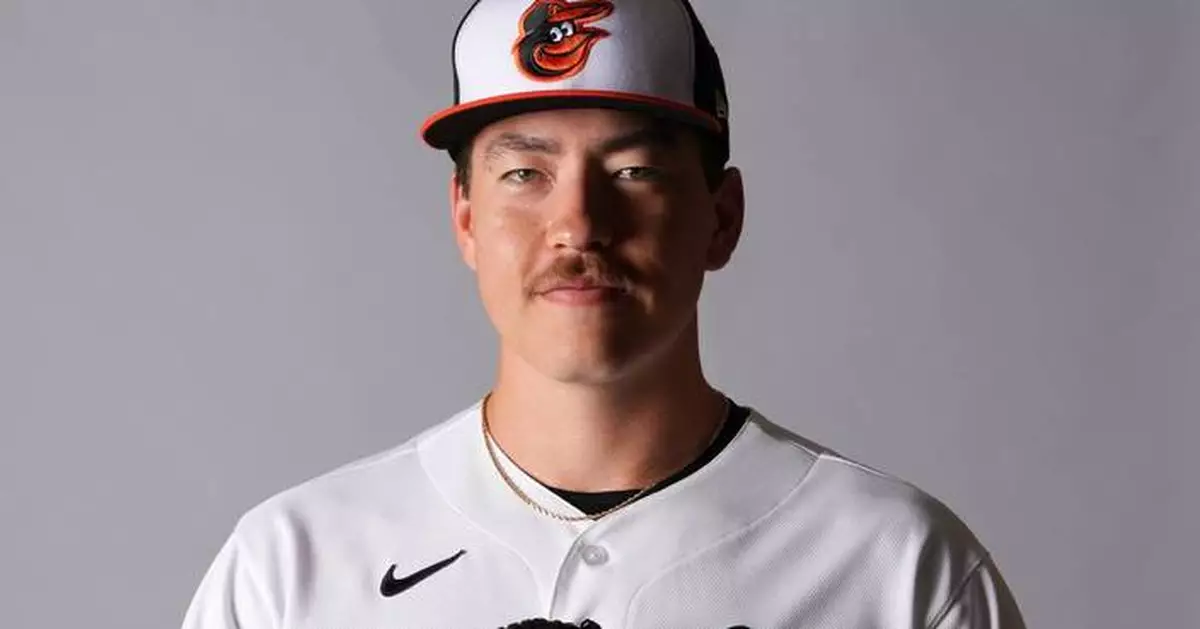
NEW YORK (AP) — Trey Gibson, a 23-year-old right-hander ranked as the Baltimore Orioles' No. 3 prospect, will be brought up Sunday to start against the New York Yankees in his major league debut.
Gibson had a 4.66 ERA in 9 2/3 innings during three spring training appearances with the Orioles this year, then was 2-2 with a 4.01 ERA in six starts at Triple-A Norfolk, striking out 25 and walking 12 in 24 2/3 innings.
“It’s going to be a fun day for him,” Orioles manager Craig Albernaz said before Saturday's 9-4 loss to the Yankees. “I just want to tell him when I see him to embrace the moment, have some fun with it. He's put a lot of work in throughout his whole life to get to this point and he has great stuff. And I want him to trust his stuff and be the best version of him.”
Gibson averaged 93.6 mph with his four-season fastball and 93 mph with his sinker at Norfolk this year. He threw six different pitches: sinkers 29.5%, four-seamers and cutters 18.3% each, curveballs 18.1%, sliders 11% and sweepers 4.8%.
“You can’t be a starter in the minor leagues, never mind the big leagues, without having more than a fastball,” Albernaz said.
Gibson was bypassed in the 2023 amateur draft after attending Liberty University, where he was suspended for his junior season.
He played summer ball for the Chatham Anglers in the Cape Cod League, going 1-3 with a 10.24 ERA in four starts and seven relief appearances. The 6-foot-5 pitcher signed a minor league contract with the Orioles for a $150,000 bonus.
Gibson pitched in one game that year for the Florida Complex League Orioles, then split 2024 at Class A Delmarva and High A Aberdeen. He moved up to Double-A Chesapeake last June 3 and Norfolk on Aug. 12, finishing the season with 166 strikeouts and 44 walks in 120 1/3 innings at the three levels.
Baltimore will have to make a move to open a spot on its active roster but has space on its 40-man roster to select Gibson's contract from Norfolk.
Before Saturday's game against the Yankees, the Orioles activated left-hander Dietrich Enns from the 15-day injured list after he recovered from an infected left foot, recalled left-hander Nick Raquet from Triple-A Norfolk, optioned right-hander Tyler Wells to the Tides and designated right-hander Albert Suárez for assignment.
AP MLB: https://apnews.com/hub/mlb
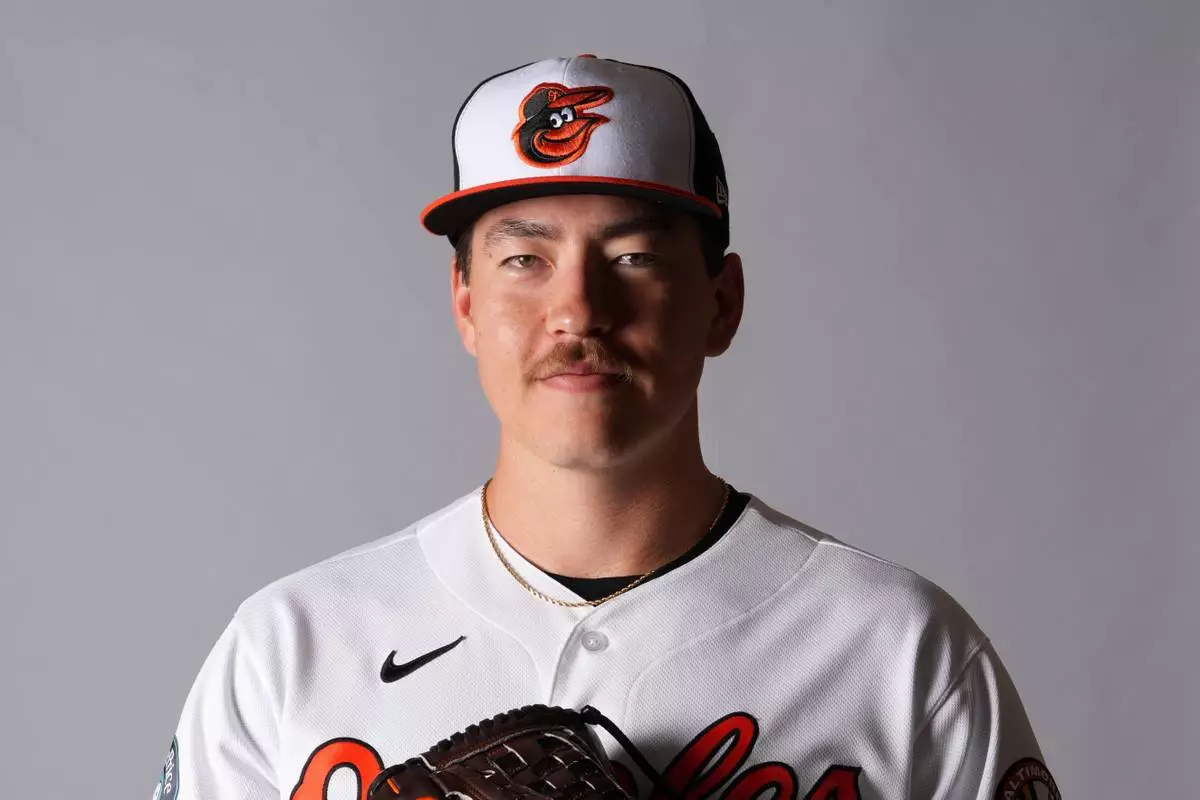
FILE - Baltimore Orioles' Trey Gibson poses for an official photo on Feb. 18, 2026, in Sarasota, Fla. (AP Photo/Matt Slocum, File)
When a federal judge shot down a Trump administration policy of holding immigrants without bond last December, it seemed like a serious blow to the president's mass deportation effort.
Instead, a top Justice Department official insisted the ruling wasn't binding, and the administration continued denying detainees around the country a chance for release.
By February, the district court judge, Sunshine Sykes, was fed up. Sykes, a nominee of President Joe Biden, accused Trump officials in a ruling that month of seeking “to erode any semblance of separation of powers,” adding that they could “only do so in a world where the Constitution does not exist.”
Hardly isolated, the case illustrates a broader pattern of defiance of lower court decisions in President Donald Trump's second term.
The failure of Trump officials to follow court orders has been highlighted most notably in individual immigration cases. But a review of hundreds of pages of court records by The Associated Press also shows an extraordinary record of violations in lawsuits over policy changes and other moves.
In the second Trump administration’s first 15 months in office, district court judges ruled it was violating an order in at least 31 lawsuits over a wide range of issues, including mass layoffs, deportations, spending cuts and immigration practices, the AP’s review of court records found. That’s about one out of every eight lawsuits in which courts have at least temporarily blocked the administration’s actions.
The Republican administration's power struggle with federal courts — which is testing basic tenets of U.S. democracy — reflects an expansive view of executive authority that has also challenged the independence of federal agencies, a president’s ethical obligations, and the U.S.’s role in the international order.
The Trump administration violations in the 31 lawsuits are in addition to more than 250 instances of noncompliance judges have recently highlighted in individual immigration petitions — from failing to return property to keeping immigrants locked up past court-ordered release dates.
Legal scholars and former federal judges said they could recall at most a few violations of court rulings over the full four-year terms of other recent presidential administrations, including Trump's first time in office. They also noted previous administrations were generally apologetic when confronted by judges; the Trump administration's Justice Department has been outright combative in some cases.
“What the court system is experiencing in the last year and a half is just qualitatively completely different from anything that’s preceded it,” said Ryan Goodman, a law professor at New York University who studies federal courts and is tracking litigation against the Trump administration.
Though Trump officials eventually backed down in about a third of the 31 lawsuits, legal experts say their treatment of court orders poses serious dangers.
“The federal government should be the institution most devoted to the rule of law in this country,” said David Super, a constitutional law scholar at Georgetown University. “When it ceases to feel itself bound, respect for the rule of law is likely to break down across the country.”
The White House’s aggressive policy moves have prompted a barrage of lawsuits — more than 700 and counting.
The AP’s review also found that higher courts, including the Supreme Court, overruled the district courts and sided with the White House in nearly half of the 31 cases. Critics say those decisions are emboldening the administration to ignore judges' orders.
White House spokeswoman Abigail Jackson said the higher courts had overturned “unlawful district court rulings.” The administration will “continue to comply with lawful court rulings,” she added in a written statement.
“President Trump’s entire Administration is lawfully implementing the America First agenda he was elected to enact,” the statement said.
Among other instances of noncompliance, judges found the White House defied rulings when it deported scores of accused gang members to a notorious prison in El Salvador, withheld billions of dollars in foreign aid and failed to restore programming at the Voice of America. The three cases date to the first few months of the new administration, but judges have continued to find violations since then, including in two cases in April.
“The danger is that this gets normalized,” said JoAnna Suriani, counsel at the nonpartisan group Protect Democracy, which is tracking noncompliance cases. The group is also involved in litigation against the administration.
In October, U.S. District Judge William Smith took little time to conclude Homeland Security officials were flouting one of his orders. Smith, a nominee of George W. Bush, had blocked them from making billions of dollars in disaster relief funding to states contingent on cooperation with the president's immigration priorities.
DHS responded by keeping the immigration requirement on some grants, but making it contingent on a higher court overriding Smith’s injunction. The judge called the move “ham-handed” and said DHS was trying to “bully the states.”
In a case over the suspension of refugee admissions, U.S. District Judge Jamal Whitehead, a Biden nominee, accused the Justice Department last May of “hallucinating new text” in an appellate court order and “rewriting” it to achieve the government's preferred outcome.
In four additional cases the AP reviewed, judges stopped short of a clear written finding of noncompliance but still criticized the administration’s response to their orders.
Of the judges who have confirmed violations, 22 were appointed by Democratic presidents and 7 by Republican presidents.
Former federal judges Jeremy Fogel and Liam O’Grady said judges are losing trust in the integrity of the Department of Justice.
That’s making them “more aggressive in accusing the government of bad faith,” said O’Grady, who along with Fogel is now part of the nonpartisan democracy group, Keep Our Republic.
Fogel said judges are also getting frustrated.
“They make orders and the orders don’t get complied with and then they have to inquire why the orders are not being complied with, and that’s where it gets very mushy and very political,” he said.
In Eureka, California, school administrator Lisa Claussen is worried about the impact on her students’ mental health if a judge does not find the Education Department in violation of a court order on federal grants.
Grant money allowed the school district in the poor coastal community in Northern California to hire more than a dozen psychologists and social workers to help students struggling with drug use and suicidal thoughts.
Education officials in the Trump administration told schools in California and other states last year that it was discontinuing the grants; the administration opposed diversity considerations in the grant process.
U.S. District Judge Kymberly Evanson blocked the move permanently in December, but California and 15 other states now say the administration is making an end run around her injunction by imposing new rules, including an initial limit of six months of funding.
Attorneys for the Education Department said they wanted to see whether schools were making progress on performance goals before releasing additional funds. The judge's order did not block the six-month limit, they added in a court filing.
Evanson, a Biden nominee, has yet to rule.
In the absence of a one-year funding guarantee, Eureka City Schools and other districts say they have already issued layoff notices to mental health providers or eliminated positions.
“We have many kids who don’t trust adults for very good reason and to be able to just swipe this grant like they’re doing ...” Claussen said in a phone interview, her voice trailing off. “We didn’t do anything wrong.”
In court filings, Justice Department attorneys have generally disputed accusations the government was not complying. They have argued over the meaning of words, cited favorable appellate court rulings and said they were acting outside the scope of the court’s order, among other legal maneuvering.
Outside of court, Trump and White House officials have railed against federal judges. Vice President JD Vance has even suggested the president could ignore court orders.
Will Chamberlain, senior counsel with the conservative legal advocacy group The Article III Project, said many of the judges who have found violations are ignoring laws that clearly prohibit their rulings.
Trump officials are “generally complying, appealing and winning,” he said. “If they were defying orders left and right, they’d be losing them.”
In March, a federal appeals court ruled Sykes, the judge in California, had likely exceeded her authority in requiring bond hearings nationwide and blocked her February decision.
The outcome was not unusual.
In 15 of the 31 lawsuits the AP reviewed, an appellate court or the Supreme Court either allowed the administration's underlying policy, limited the district court's efforts to correct or punish the noncompliance, or both.
Supreme Court Associate Justice Sonia Sotomayor criticized her fellow justices after one such ruling.
“This is not the first time the Court closes its eyes to noncompliance, nor, I fear, will it be the last,” she wrote in June in a dissent joined by the court's two other liberal justices. “Yet each time this Court rewards noncompliance with discretionary relief, it further erodes respect for courts and for the rule of law.”
Associated Press writer Michael Casey in Boston contributed.
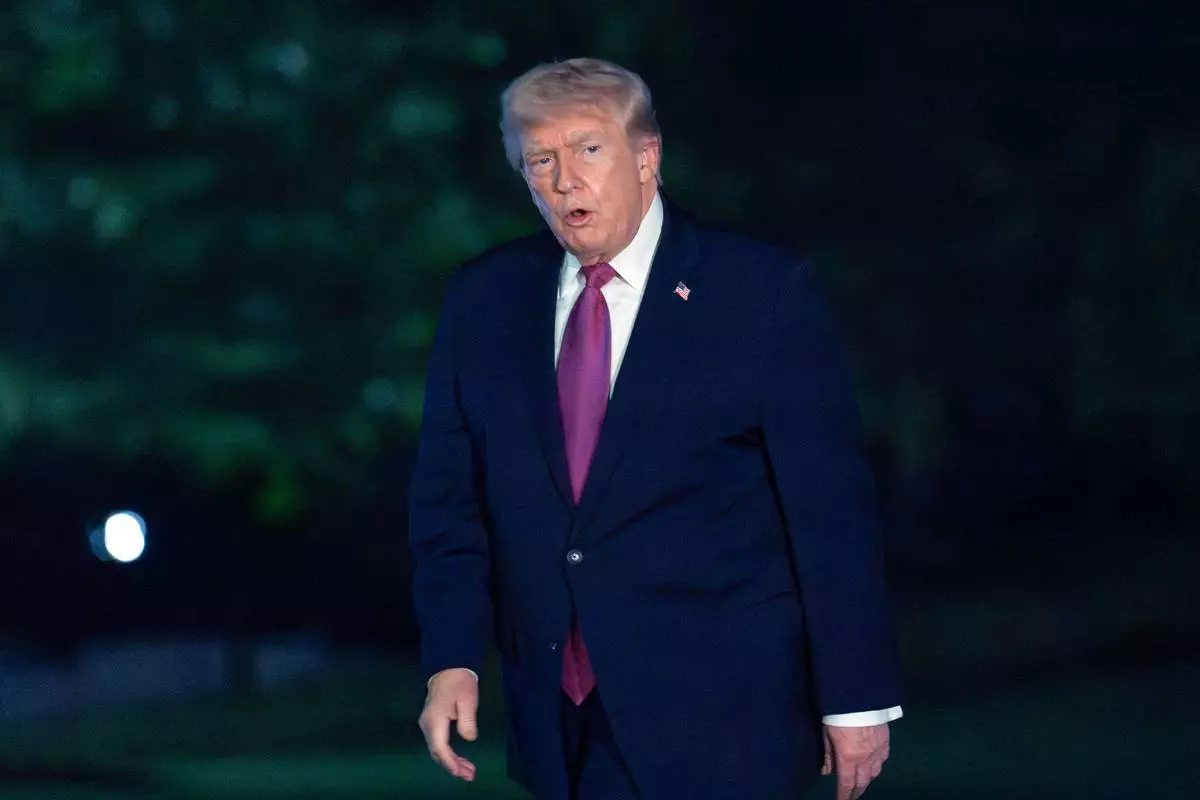
President Donald Trump walks on the South Lawn upon his arrival to the White House, Friday, April 17, 2026, in Washington. (AP Photo/Jose Luis Magana)