FRANKFURT, Germany (AP) — The Group of Seven democracies has sought to crimp Russia's oil export earnings that help fund the war against Ukraine. But Western governments and sanctions experts say Moscow has resorted to using a so-called shadow fleet of hundreds of aging tankers of uncertain ownership and safety practices that are dodging sanctions and keeping the oil revenue coming.
Here are things to know about the shadow fleet — and why it worries Western governments and environmental groups:
The shadow fleet is made up of aging tankers bought used, often by nontransparent entities with addresses in non-sanctioning countries such as the United Arab Emirates or the Marshall Islands, and flagged in places like Gabon or the Cook Islands. Some of the vessels are owned by the Russian state Sovcomflot shipping company. Their role is to help Russia's oil exporters elude the $60 per barrel price cap imposed by Ukraine's allies.
Estimates vary, but S&P Global and the Kyiv School of Economics Institute have put the number at over 400 ships that can transport oil, or products made from crude such as diesel fuel and gasoline.
The shadow fleet in fact isn't all that shadowy. The ships don't hide their stops at Russian oil terminals. Some have direct connections to Russia, as with the vessels owned by Sovcomflot. In other cases, it's often unclear who exactly is behind the listed owners, and what kind of safety practices and insurance the vessels have. What sets them apart is that they transport Russian oil and operate outside the jurisdictions of the sanctioning G7 countries.
The Kremlin has so far dodged commenting on the shadow fleet.
The cap is aimed at limiting Russia's profits while keeping the oil flowing to global markets and avoiding an energy crunch that would drive up gasoline prices and inflation.
The cap, which went into effect on Dec. 5, 2022, is enforced by barring service providers such as insurers and shipping managers from dealing with oil priced above the threshold. Those companies are mostly based in Western countries and thus within reach of sanctions enforcement.
That leverages the strict requirements from the U.N.'s International Maritime Organization that vessels must have financially solid insurance backed up by reputable audits in order to operate. That insurance has traditionally been provided by a network of Western-based industry insurers known as the International Group, or IG.
When the cap was first imposed, some 70% of Russian oil was transported on vessels with IG insurance, but that share has now fallen to 10%, according to the Kyiv School of Economics.
The vessels are bought used and owned by opaque entities located in places like the United Arab Emirates, the Seychelles, India or Vietnam that aren't taking part in sanctions. The new owners use new insurers in Russia or other non-Western locations.
No. The U.S., UK and EU in combination or individually have imposed sanctions on some 270 vessels they consider to be trading Russian oil in violation of the cap. Once they do that, transactions involving that ship or its cargo can bring trouble for customers, traders and banks.
That's especially true for American sanctions as getting caught violating them can then disrupt any business ties with the U.S. and its dominant financial system and economy. On Friday, the U.S. added 183 individual vessels to the sanctions list, most of them shadow fleet vessels, and blocked deals with two Russian insurance companies.
Some two-thirds of the targeted vessels have gone idle, meaning the money spent on them was wasted. That’s one goal of sanctions: to raise the costs of doing banned business if it can’t be stopped entirely.
The average age of the vessels is around 18 years, meaning they’re near the end of their lifespan and are more vulnerable to accidents, especially if they’re not well-maintained. Meanwhile, it’s questionable if the non-IG insurance could be counted on to pay the enormous cleanup costs in case an oil spill fouls a coastline in the Baltic, the Aegean or the English Channel, all routes used by tankers carrying oil from Russia’s ports in the Baltic or the Black Sea to customers in China, India and Turkey.
In May 2023, an 18-year-old shadow tanker carrying 340,000 barrels of Russian oil products from the port of Vysotsk on the Baltic lost engine power and almost ran aground while passing through the narrow Danish Straits.
In October, the UK said it would start requesting insurance details from suspected shadow vessels, and in December Denmark, Sweden, Poland, Finland and Estonia followed suit. Vessels aren’t stopped, but those that can’t prove adequate insurance can be added to sanctions lists.
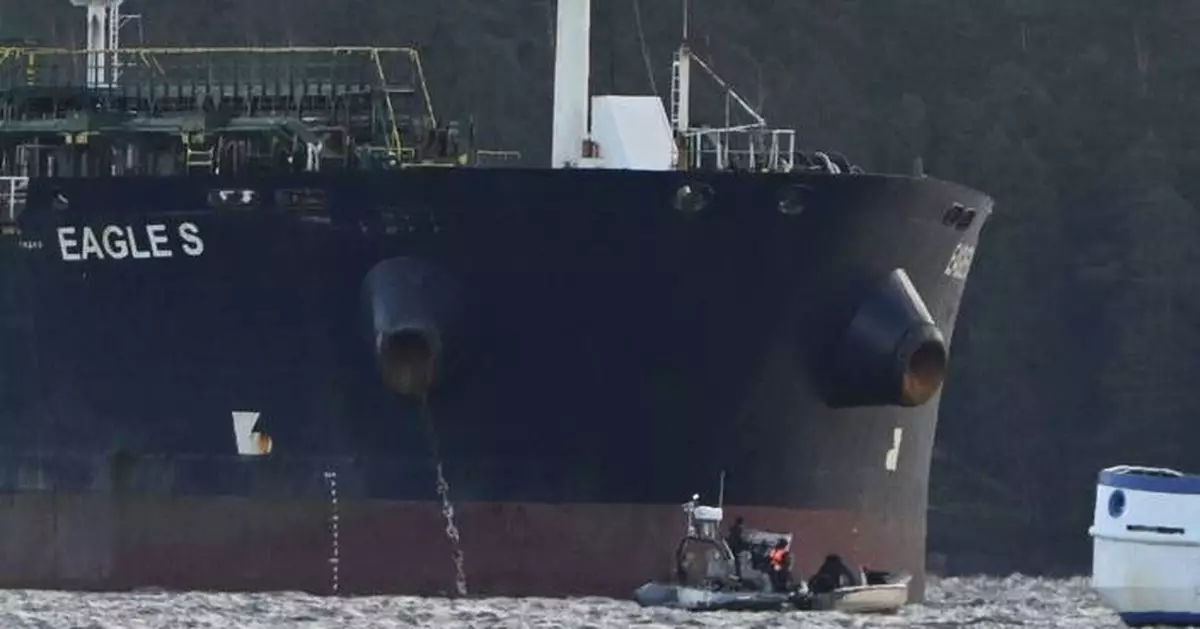
Finnish police on Dec. 26 seized the Eagle S, a tanker they said was part of the dark fleet, on suspicion it used its anchor to damage the Estlink 2 power cable that supplies electricity from Finland to Estonia under the Baltic.
The Joint Expeditionary Force, a group of 10 countries including Sweden, Norway, Finland, the three Baltic states and the U.K., has stepped up efforts to track shadow fleet vessels to safeguard undersea infrastructure.
“Specific vessels identified as being part of Russia’s shadow fleet have been registered into the system so they can be closely monitored when approaching key areas of interest,” the U.K. Ministry of Defense said in a statement.
Dodging the cap has increased the price Russia gets for its oil on global markets, sanctions experts say. The discount for Russian oil compared to international benchmark Brent crude has shrunk from as much as $35 per barrel to less than $10 per barrel. Russia has seen oil income hold up steadily and even rise.
Export revenues averaged $16.4 billion per month for the first 11 months of 2024, 5% higher than in the same period in 2023 as Russian oil averaged $64 per barrel, according to the Kyiv School of Economics. Evading the cap earned Russia an extra $9.4 billion.
That's money that the Kremlin can use to pay for the production of weapons and other goods for the military.
Oil income promotes economic stability by helping keep the budget deficit under control, and by supporting the value of the Russian ruble against other currencies. Oil keeps Russia's trade balance in surplus, meaning it sells more than it buys from the rest of the world and has money to pay for imports.
As a result, “Russia faces no significant constraints on its budget or war spending,” Kyiv school experts said in their latest assessment of the Russian economy.
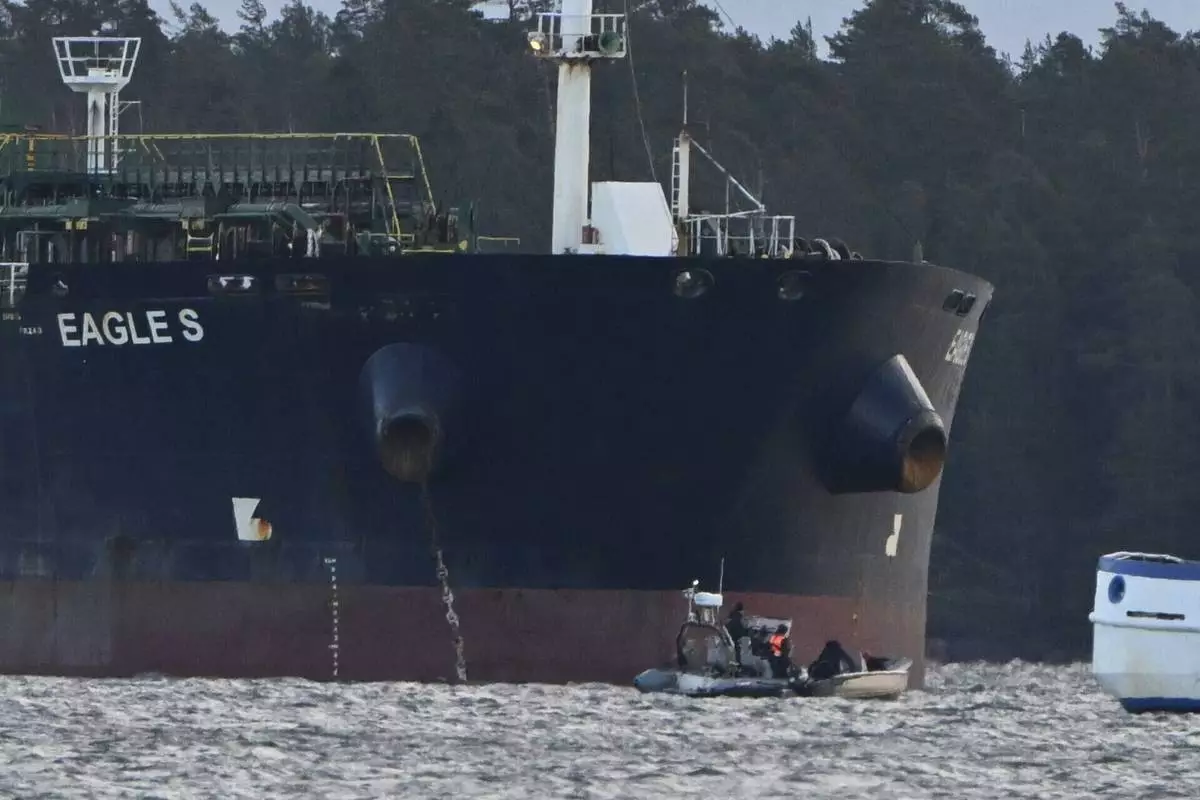
FILE - The Cook Islands-registered oil tanker Eagle S is anchored near the Kilpilahti port in Porvoo on the Gulf of Finland, Dec. 30, 2024. (Jussi Nukari/Lehtikuva via AP, File)