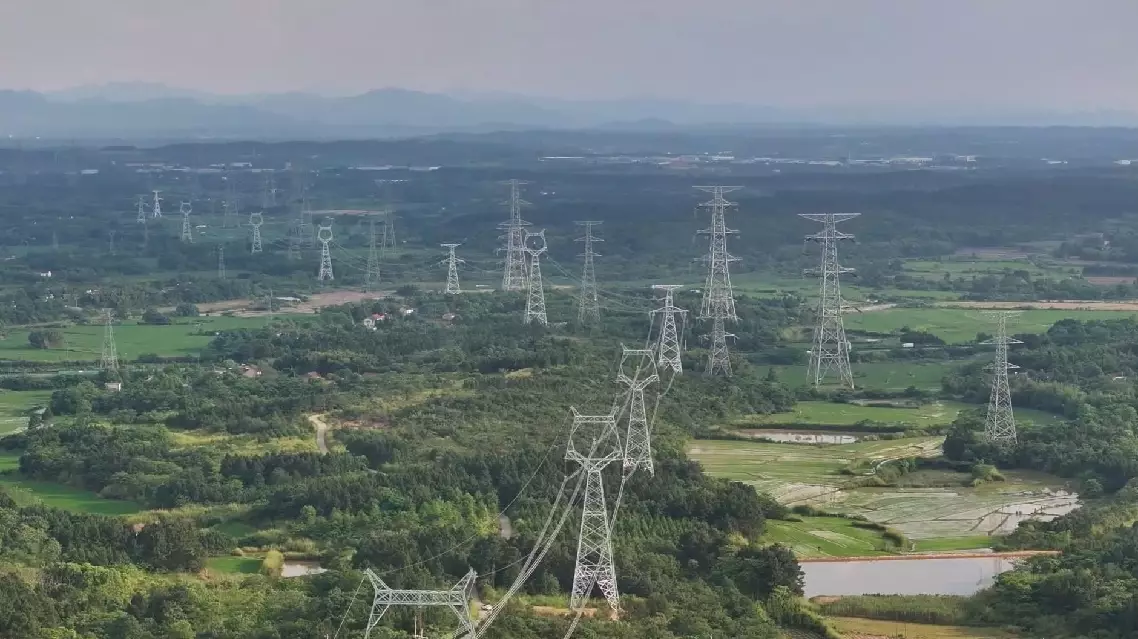
China's 1,100 kilovolt ultra-high voltage direct current (UHVDC) power transmission project, a major line that stretches from Xinjiang Uygur Autonomous Region to Anhui Province, has delivered over 300 billion kWh of electricity from west to east as of Sunday since it began operation in September 2019.
The project, which starts in Changji Hui Autonomous Prefecture of northwest China's Xinjiang Uygur Autonomous Region and ends in Xuancheng City in southern Anhui Province, has supplied a total of 300.001 billion kWh of electricity as of 05:00, sufficing 133 million households in a year, according to the real-time data of the Guquan converter station in Xuancheng. "Since it began operation, the output of this project amounts to saving 90 million tons of standard coal and reducing carbon dioxide emissions by more than 255 million tons for east China, playing an important role in promoting energy transformation and development," said Gui Xuexiang, deputy head of the Guquan converter station's power transformation operation and maintenance office.
The Changji-Guquan UHVDC power line has a length of 3,324 kilometers, passing through the six provinces and regions of Xinjiang, Gansu, Ningxia, Shaanxi, Henan and Anhui. It has the world's highest voltage level, biggest transmission capacity, and longest transmission distance.
The project has sent out rich thermal, wind and solar power in the western region, fully verifying the advantages of China's UHVDC transmission technology in terms of large capacity, long distance and high efficiency.
China's longest UHV power line delivers 300 billion kWh of electricity to east
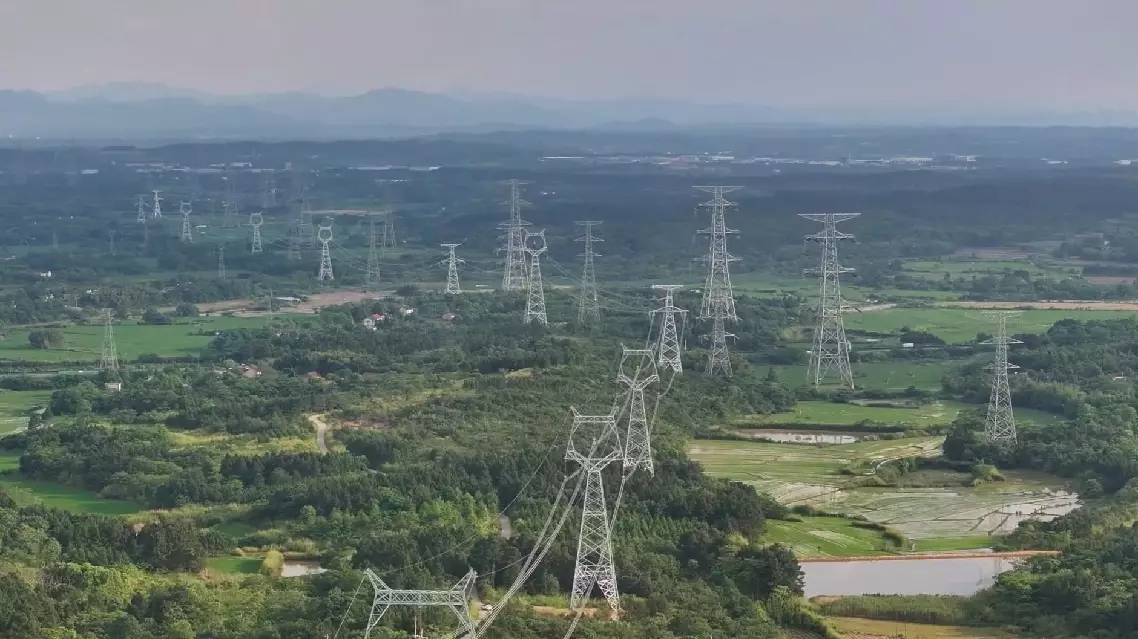
China's longest UHV power line delivers 300 billion kWh of electricity to east
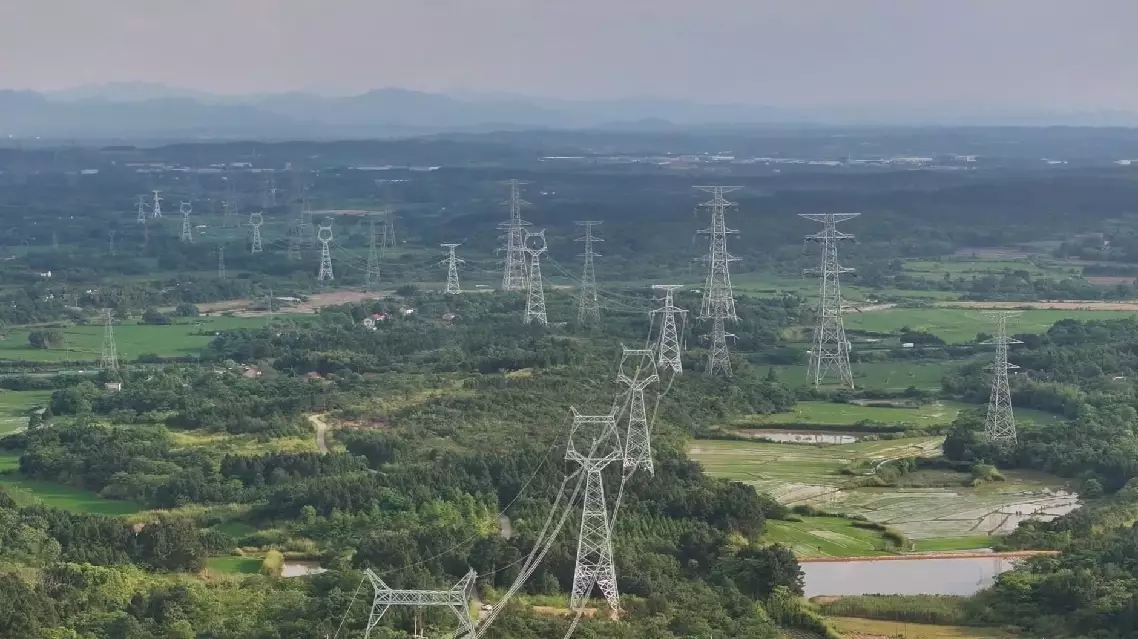
China's longest UHV power line delivers 300 billion kWh of electricity to east
The 9th Digital China Summit opened on Wednesday in Fuzhou City, east China's Fujian Province, with more than 120 outcomes in building a "Digital China" expected to be released during the event.
The summit, themed on accelerating innovation in digital technologies and deepening the building of Digital China, is jointly hosted by the National Development and Reform Commission (NRDC), the National Data Administration (NDA), the Cyberspace Administration of China (CAC), the Ministry of Industry and Information Technology (MIIT) and the Fujian provincial government.
It runs from April 29 to 30, with an extended exhibition period from April 28 to May 4.
The opening ceremony and main forum were held Wednesday, with landmark reports and phased updates on advancing the Digital China Initiative set to be released during the event, including the Digital China Development Report (2025), the Digital China development index and the National Data Resources Survey Report (2025).
"As for this year's summit, we put greater emphasis on the concept of serving enterprises and promoting development as the organizing principle. Among the 24,000 registered guests so far, 75 percent are from enterprises. Of the over 50 sub-forums and dialogue events, 28 are hosted by enterprises. There are over 400 exhibitors in the on-site experience area, of which more than 320 are enterprises, accounting for more than 80 percent. More than 120 achievements are expected to be released during the summit. We will strive to present a wonderful digital event," said Gao Bo, a spokesman for the NDA.
The on-site experience area features five core sections including an AI-driven innovation zone. With over 100 immersive interactive projects, the exhibition showcases the latest application scenarios of data elements across sectors such as industry and people’s wellbeing.
China's 15th Five-Year Plan (2026-2030) highlights the construction of Digital China as a key priority and places greater emphasis on the integration of digital technologies with AI than the 14th Five-Year Plan.
In the coming five years, efforts will be made to harness data and digital-intelligent technologies to propel the transformation and upgrading of traditional industries and cultivate emerging and future industries.
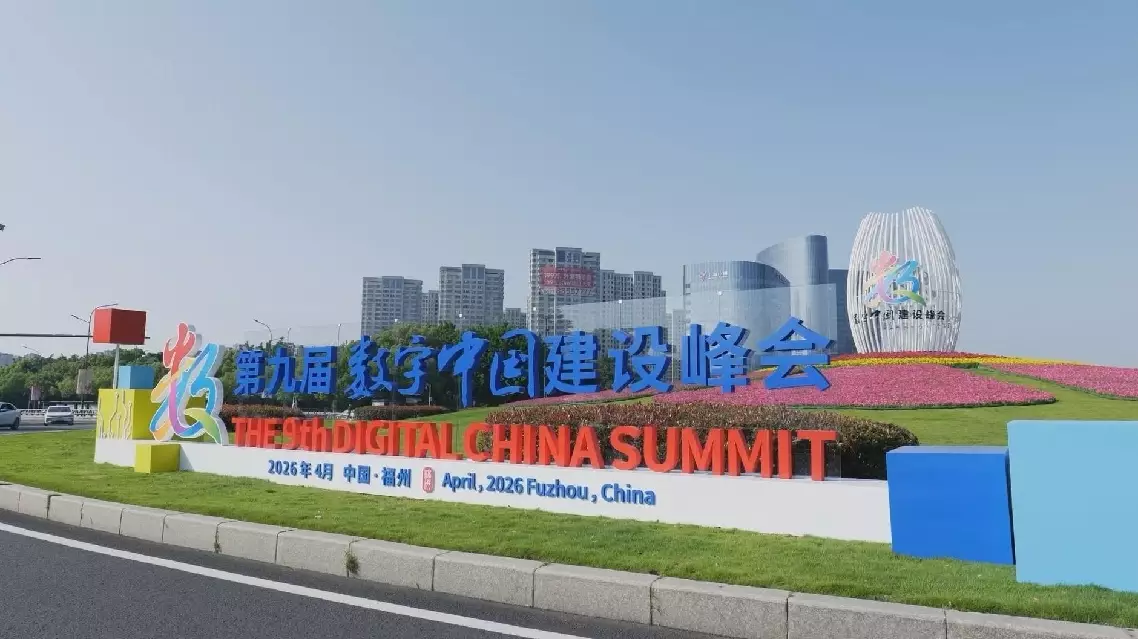
Digital China Summit opens in Fuzhou with over 120 outcomes expected