A Chinese theatrical dance show depicting the beauty of an ancient landscape scroll painting won acclaim from New York audiences as the show was staged at the Lincoln Center for the Performing Arts from Friday to Sunday.
Titled "A Tapestry of a Legendary Land," the show previously gained widespread popularity across the country after parts of the show were staged during the 2022 Spring Festival Gala, quickly making it a hit.
The dances were inspired by a painting from the Northern Song Dynasty (960-1126) depicting a panoramic view of mountains and rivers. The millinium-old masterpiece is celebrated as a hallmark of blue-green landscape painting, a style that uses mineral-based pigments like malachite (green) and azurite (blue) to create bold, vibrant colors.
In the show, a cultural relic researcher who, while immersed in studying this nearly 12-meter-long scroll, travels through centuries to connect with the artist and understand how the masterpiece was created.
New York audiences were stunned by the skillful performance and the artistic production, as well as the significant cultural meaning that the show intends to deliver.
"[The] performers were incredible, the music was great, and, you know, it's artistic interpretation," said an audience member.
I just love the way how the painting came to life and how the process really just showcases their beautiful culture," said another attendee at the performance.
The cast and crew of the dance show expressed deep gratitude for the opportunity to present such an intimate peek into Chinese culture for U.S. audiences.
"The enthusiastic responses from the New York audience went beyond my expectations, and when we were answering the curtain call, I heard their cheering becoming louder and louder. So, I was really lucky and really proud to be able to come to New York and to have the opportunity to showcase Chinese culture," said Zhang Han, one of the leading actors.
"A larger audience came to watch the dance show than we had expected. So, presenting the show in the United States, I think, meets the anticipation of both sides," said Han Zhen, the chief choreographer.
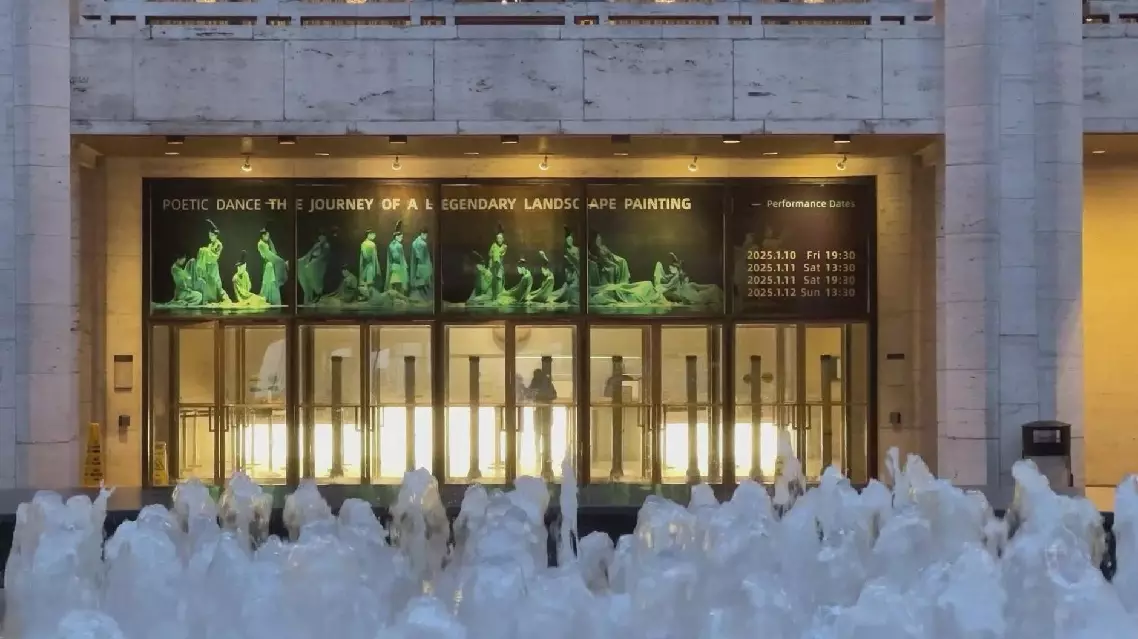
Chinese dance show awes US audiences with roots in ancient culture
Visiting Chinese Foreign Minister Wang Yi said on Thursday that China stands ready to work with the Democratic People's Republic of Korea (DPRK) to continue consolidating the positive momentum in the development of China-DPRK relations.
Wang, also a member of the Political Bureau of the Communist Party of China Central Committee, made the remarks in talks with DPRK Foreign Minister Choe Son Hui in Pyongyang.
Wang said that in early September last year, Xi Jinping, general secretary of the Communist Party of China Central Committee, and Kim Jong Un, general secretary of the Workers' Party of Korea (WPK), held a historic meeting in Beijing, reaching important consensus on the overall, strategic and directional issues concerning bilateral ties.
The meeting provides important strategic guidance for further developing China-DPRK relations, pushes bilateral ties into a new stage and opens a new chapter in friendly exchanges between the two countries, which is of great and far-reaching significance, Wang added.
Wang said China stands ready to work with the DPRK to take the important consensus reached by the top leaders of the two parties and countries as fundamental guidance, strengthen strategic communication, enhance exchanges and cooperation, create more benefits for the two peoples, and jointly promote regional peace and development.
The past year has witnessed a series of highlights in China-DPRK exchanges, which strongly demonstrated that the two countries' traditional friendship forged in blood remains everlasting and unbreakable, Wang said, noting that this year marks the 65th anniversary of the signing of the China-DPRK Treaty of Friendship, Cooperation and Mutual Assistance.
Over the past 65 years, Wang said, no matter how the international and regional situations have changed, China and the DPRK, as good neighbors, good friends and good comrades, have always trusted and supported each other, making unremitting efforts to maintain regional and world peace and stability and promote their respective development.
Wang said China is willing to work with the DPRK side to hold commemorative events for the 65th anniversary of the signing of the treaty, strengthen high-level exchanges, enhance dialogue and practical cooperation at all levels and in various fields, deepen people-to-people exchanges and mutual understanding, and contribute to respective economic and social development.
For her part, Choe said that the DPRK-China friendship is based on the common socialist system and traditional friendship, describing bilateral relations as deep-rooted, solid and sustainable. It is the unwavering position of the WPK and the nation to advance DPRK-China friendship and cooperation following the trend of the times and the will of the two peoples.
Choe noted that the historic and successful meeting between the top leaders of the two parties and countries in September last year has significantly enhanced friendship and mutual trust between the two parties and two countries, pointed out a clear direction for and injecting strong impetus into the development of bilateral ties.
The DPRK, Choe said, fully supports the one-China principle, firmly opposes any interference in China's internal affairs, and resolutely supports China's position on safeguarding sovereignty and territorial integrity concerning Taiwan, Xizang, Xinjiang, and other issues of China's core interests.
Choe said that the DPRK side fully endorses the vision of building a community with a shared future for humanity and the four global initiatives proposed by Xi, and highly values China's just position on and important role in international and regional affairs.
Choe said that the DPRK stands ready to work with China to implement the important consensus reached by the top leaders of the two parties and countries, hold commemorative events marking the 65th anniversary of the signing of the DPRK-China Treaty of Friendship, Cooperation and Mutual Assistance, expand exchanges and practical cooperation across various fields, enhance coordination between diplomatic departments, strengthen multilateral communication and collaboration, and continue to make efforts to lift DPRK-China relations to higher levels and open up new prospects.
The two sides also had an in-depth exchange of views on current international and regional issues.
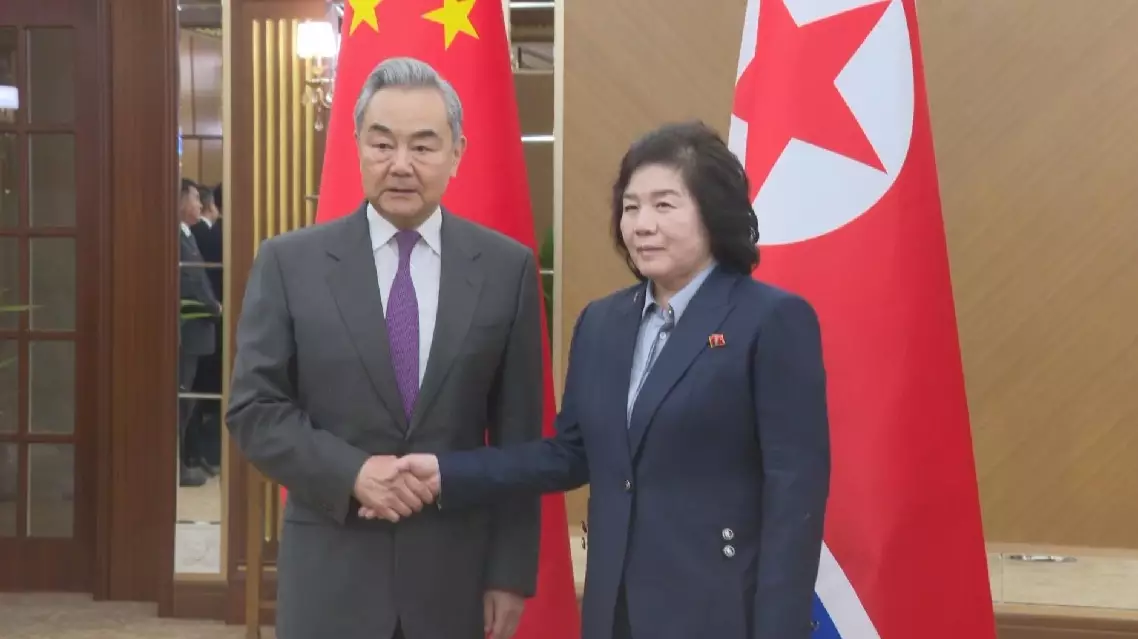
Chinese FM says China to work with DPRK to consolidate positive momentum of ties