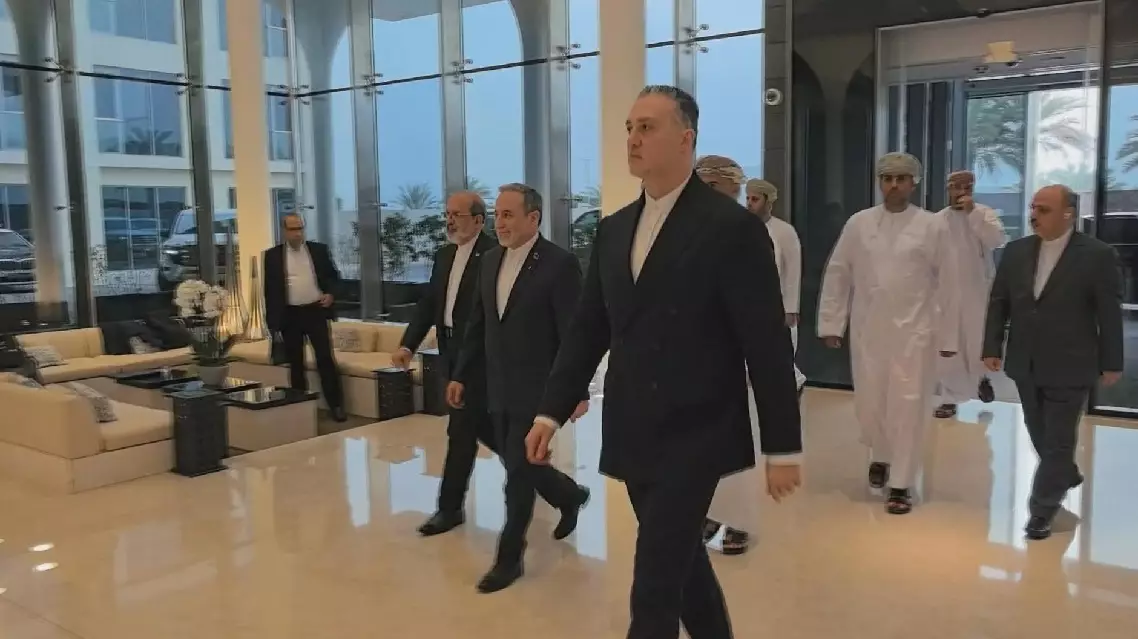
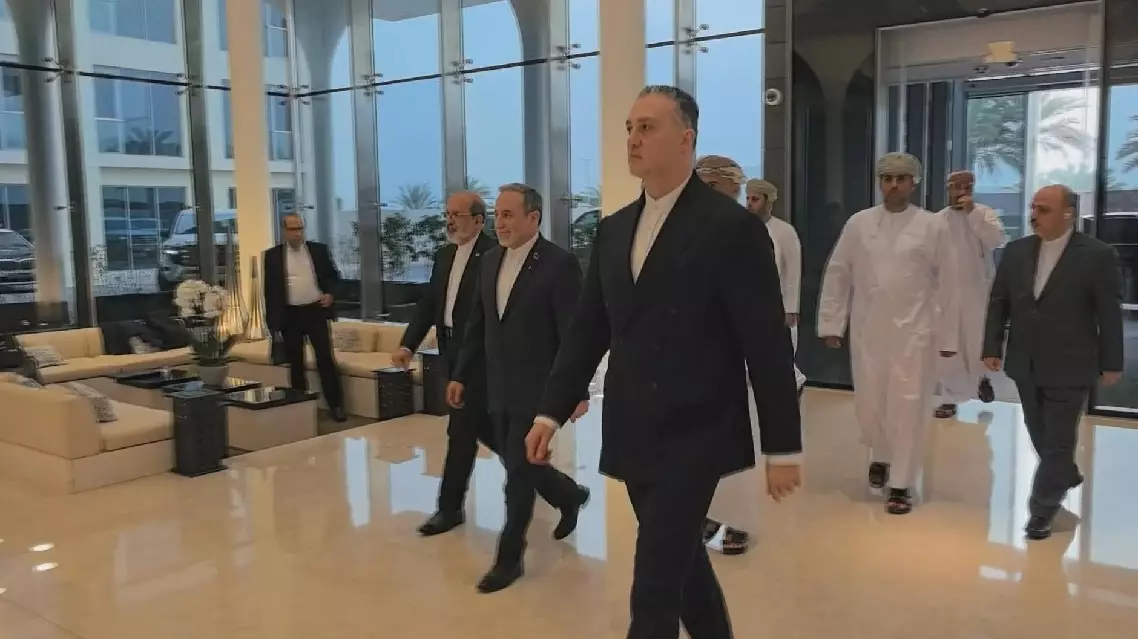
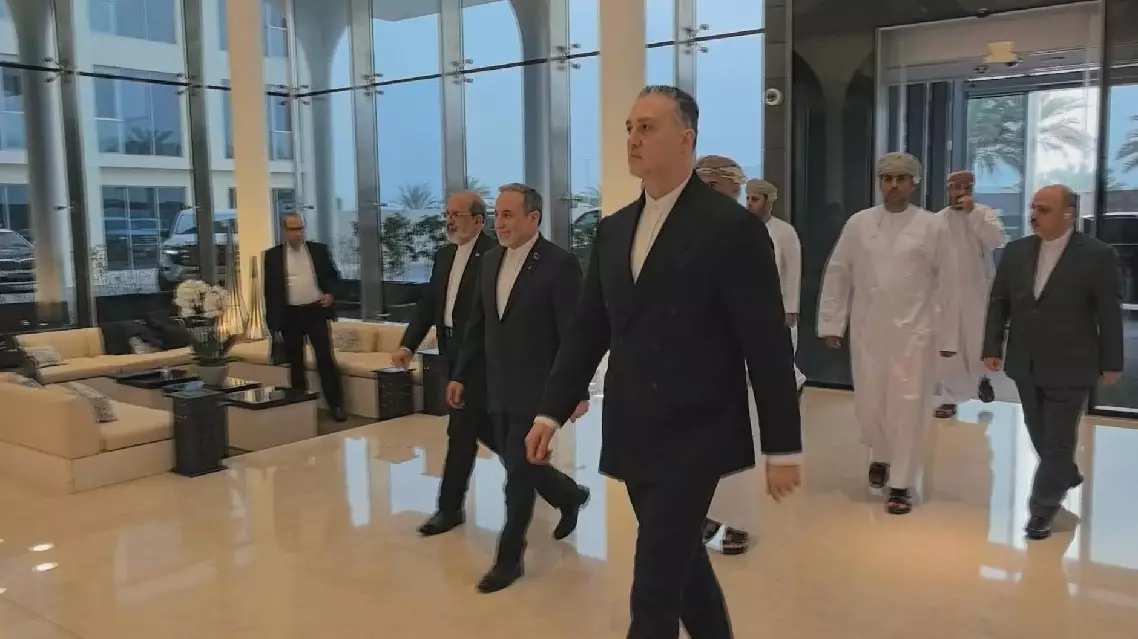
The indirect talks between Iran and the United States in Muscat, Oman, were "a good start," with both sides agreeing to continue negotiations in the future, Iran's Fars News Agency reported Friday, citing Iranian Foreign Minister Seyed Abbas Araghchi.
Noting that the talks took place in "a positive atmosphere," Araghchi, who led the Iranian delegation, said that both sides will first hold consultations in their respective capitals,and then decide how and when it will be regarding the next round of talks.
Araghchi said that the Friday talks focused solely on the nuclear issues, and that Tehran did not discuss "any other topics" with Washington, Fars reported.
The Iranian delegation had pointed out in the talks that refraining from threat and pressure is the prerequisite for any dialogue, Araghchi said, adding that Iran expects that this point "definitely be observed to prepare the ground for the talks' continuation."
The Iranian and U.S. delegations did not meet directly during the talks. Iran's state-run IRIB TV, quoting Araghchi as saying, reported that Omani Foreign Minister Sayyid Badr bin Hamad Al Busaidi held several meetings with the Iranian and U.S. delegations, helping the two sides exchange their viewpoints.
In a post on social media platform X, Al Busaidi said the indirect talks between Iran and the United States were "very serious" and "useful."
Earlier in the day, Iran's Mehr News Agency reported that Tehran had rejected a "zero enrichment" demand during the indirect talks.
The two sides have centered on the dilution of Iran's existing uranium stockpile, the agency said.
So far, the U.S. side has not issued any official statement regarding the talks.
The Friday talks came amid heightened regional tensions between Washington and Tehran, including a recent U.S. military buildup in the Middle East and stepped-up Iranian preparations.
The meeting marked the first round of nuclear negotiations between the two countries since U.S. airstrikes on Iranian nuclear facilities in June 2025.
Talks with US "a good start," both sides agree to continue negotiations: Iranian FM
Talks with US "a good start," both sides agree to continue negotiations: Iranian FM
Talks with US "a good start," both sides agree to continue negotiations: Iranian FM