Skip to Content Facebook Feature Image

Almirall at the JPMorgan Conference - Entering a New Era of Sustained Growth

News

Almirall at the JPMorgan Conference - Entering a New Era of Sustained Growth
News

News

Almirall at the JPMorgan Conference - Entering a New Era of Sustained Growth

2025-01-14 13:59 Last Updated At:14:11

SAN FRANCISCO--(BUSINESS WIRE)--Jan 14, 2025--

Almirall, a global pharmaceutical company dedicated to medical dermatology, is participating in the 2025 JPMorgan HealthCare Conference to provide an update on its business strategy and outlook. The company’s CEO and president Carlos Gallardo will highlight a new era for its business starting in 2025 – forecasting sustained double-digit growth of net sales (CAGR 2023-2030) and a substantial margin expansion, driven by Almirall’s focus on medical dermatology, commercial excellence, and its continued investment in R&D to innovate and advance science.

This press release features multimedia. View the full release here: https://www.businesswire.com/news/home/20250113044812/en/

Almirall combines the strengthening of its growth drivers, particularly the biologics products, with the continued growth of its broad portfolio of medical dermatology solutions, including Klisyri®, Wynzora®, and Seysara®. Almirall’s commercial excellence has been demonstrated by the successful launches of biologics across key markets in Europe. The success of the key growth drivers of Almirall has enabled the company to adjust the anticipated peak sales figures for the biologics portfolio to more than 800MM Eur annually comprising of expected peak sales for Ebglyss® of above 450MM Eur, and Ilumetri® of above 300MM Eur.

This development sees Almirall at a turning point entering an era of sustained double-digit growth (net sales CAGR 2023-2030) that is enabled by the previous investments into commercial capabilities for the launch of breakthrough assets, into capabilities, expertise, and infrastructure. This growth will mainly be driven by biologics which are well placed to take significant market share in these segments that show sustained overall increase and a transition of more patients to advanced treatment options.

Importantly, Almirall will continue to invest in its leading R&D capabilities in medical dermatology driving science leadership and enabling the company to develop disruptive and innovative products that build sustainable future growth as a leader in medical dermatology.

Medical Dermatology: Significant unmet needs and growth potential

Medical dermatology continues to be a pharmaceutical sector with significant unmet needs based on the severe patient impact of a wide range of dermatological diseases, the many uncontrolled patients with chronic diseases, increasing numbers of diagnoses, and the transition of more patients to advanced treatments. Almirall has significant potential for growth in this sector due to its dedication to medical dermatology, commercial capabilities, close collaboration with the medical community, and its proven end-to-end capabilities across the entire value chain. This enables Almirall to give patients and the medical community access to innovative and relevant solutions and contribute to improving their lives.

The company has continuously invested around 12% of its Net Sales in R&D over many years, laying the foundation for continued growth and acceleration in the future and creating and advancing a strong pipeline in key areas, both in clinical and preclinical stages.

Almirall has a broad range of collaborations that help to advance science and enable the development of disruptive new treatments across different modalities. The company continues to focus on building collaborations with partners that have new platforms and technologies to further develop its innovative pipeline. We access the latest available technologies, including small molecules, biologics, and other modalities such as mRNA, for example through the multi-target alliance with etherna to discover and develop innovative and disruptive mRNA / LNP therapies.

" 2025 is a turning point for Almirall as we are entering an era of sustained double-digit growth of our net sales CAGR to 2030, and increased EBITDA margins to around 25% by 2028. We are dedicated to improving patients' lives and advancing medical dermatology through our leading research and development initiatives and giving patients access to novel and impactful treatment options – now and in the future," stated Carlos Gallardo, CEO and President of Almirall. " We continue with our sustained investment in R&D to lead science, innovation and excellence in medical dermatology. Almirall is a partner of choice for dermatologists and together we will impact more patients' lives in line with our company’s growth.

Our robust financial situation enables us to invest in long-term growth opportunities which are aligned with our business strategy and ambition as leaders in medical dermatology. By building on our strong portfolio, and making strategic investments, we are well-positioned to meet our ambitious objectives and generate long-term value for shareholders. Our primary advantage lies in our collaborative mindset, agility, and ability to seize opportunities swiftly. This approach also allows us to distribute development costs efficiently,” stated Mike McClelllan, Almirall's CFO.

About Almirall

Almirall is a global pharmaceutical company dedicated to medical dermatology. We closely collaborate with leading scientists, healthcare professionals, and patients to deliver our purpose: to transform the patients' world by helping them realize their hopes and dreams for a healthy life. We are at the forefront of science to deliver ground-breaking, differentiated medical dermatology innovations that address patients´ needs.

Almirall, founded in 1944 and headquartered in Barcelona, is publicly traded on the Spanish Stock Exchange (ticker: ALM, total revenue in 2023: €898.8 MM, 1900 employees globally). Almirall products help to improve the lives of patients every day and are available in over 100 countries.

For more information, please visit almirall.com

Disclaimer

This document includes only summary information and does not intend to be comprehensive. Facts, figures and opinions contained herein, other than historical, are "forward-looking statements". These statements are based on currently available information and on best estimates and assumptions believed to be reasonable by the Company. These statements involve risks and uncertainties beyond the Company's control. Therefore, actual results may differ materially from those stated by such forward-looking statements. The Company expressly disclaims any obligation to review or update any forward-looking statements, targets or estimates contained in this document to reflect any change in the assumptions, events or circumstances on which such forward-looking statements are based unless so required by applicable law.

Almirall HQ in Barcelona (Photo: Business Wire)

Almirall HQ in Barcelona (Photo: Business Wire)
CAPE CANAVERAL, Fla. (AP) — NASA’s Artemis II astronauts fired their engines and blazed toward the moon Thursday night, breaking free of the chains that have trapped humanity in shallow laps around Earth in the decades since Apollo.

The so-called translunar ignition came 25 hours after liftoff, putting the three Americans and a Canadian on course for a lunar fly-around early next week. Their Orion capsule bolted out of orbit around Earth right on cue and chased after the moon to nearly 250,000 miles (400,000 kilometers) away.

“Ladies and gentlemen, I am so, so excited to be able to tell you that for the first time since 1972 during Apollo 17, human beings have left Earth orbit,” NASA’s Lori Glaze announced at a news conference.

The engine firing was flawless, she noted.

Canadian astronaut Jeremy Hansen said he and his crewmates were glued to the capsule's windows as they left Earth in the rearview mirror, taking in the “phenomenal” views. Their faces were pressed so tightly against the windows that they had to wipe them clean.

“Humanity has once again shown what we are capable of, and it’s your hopes for the future that carry us now on this journey around the moon,” Hansen said.

NASA had the Artemis II crew stick close to home for a day to test their capsule’s life-support systems before clearing them for lunar departure.

Now committed to the moon, the Artemis II test flight is the opening act for NASA’s grand plans for a moon base and sustained lunar living.

Commander Reid Wiseman, pilot Victor Glover, Christina Koch and Hansen will dash past the moon then hang a U-turn and zip straight home without stopping on land. In the process, they will become the farthest humans have ever traveled from Earth, breaking the Apollo 13 distance record set in 1970. They also may become the fastest during their reentry at flight’s end on April 10.

Glover, Koch and Hansen already have made history as the first Black, the first woman and the first non-U.S. citizen to launch to the moon. Apollo’s 24 lunar travelers were all white men.

To set the mood for the day’s main event, Mission Control woke up the crew with John Legend’s “Green Light” featuring Andre 3000 and a medley of NASA teams cheering them. “We are ready to go,” Glover said.

Mission Control gave the final go-ahead minutes before the critical engine firing, telling the astronauts that they were embarking on “humanity’s lunar homecoming arc” to bring them back to Earth. The capsule is relying on the gravity of Earth and the moon — termed a free-return lunar trajectory — to complete the round-trip figure-eight loop. The engine accelerated their capsule to more than 24,000 mph (38,000 kph) to shove them out of Earth's orbit.

“With this burn to the moon, we do not leave Earth. We choose it,” Koch said.

Flight director Judd Frieling said he and his team were all business while on duty but will likely reflect on the momentousness of it all once they go home. “I suspect everybody understands that this is a once-in-a-lifetime moment," he told reporters.

The next major milestone will be Monday’s lunar flyby.

Orion will zoom 4,000 miles (6,400 kilometers) beyond the moon before turning back, providing unprecedented and illuminated views of the lunar far side, at least for human eyes. The cosmos will even treat the Artemis II astronauts to a total solar eclipse as the moon temporarily blocks the sun from their perspective.

While awaiting their orbital departure earlier Thursday, the astronauts savored the views of Earth from tens of thousands of miles high. Koch told Mission Control that they can make out the entire coastlines of continents and even the South Pole, her old stomping ground.

NASA is counting on the test flight to kickstart the entire Artemis program and lead to a moon landing by two astronauts in 2028.

The so-called lunar loo may need some design tweaks, however.

Orion's toilet malfunctioned as soon as the Artemis crew reached orbit Wednesday evening. Mission Control guided astronaut Koch through some plumbing tricks and she finally got it going, but not before having to resort to using contingency urine storage bags.

The urine pouches are serving double duty. Mission Control ordered the crew to fill a bunch of the empty bags with water from the capsule’s dispenser on Thursday. A valve issue arose with the dispenser following liftoff, and NASA wanted plenty of drinking water on hand for the crew in case the problem recurred. The astronauts used straws and syringes to fill the pouches with more than 2 gallons (7 liters) worth before pivoting to the moon.

The Associated Press Health and Science Department receives support from the Howard Hughes Medical Institute’s Department of Science Education and the Robert Wood Johnson Foundation. The AP is solely responsible for all content.

This image released by NASA on Thursday, April 2, 2026, shows NASA’s Orion spacecraft with Earth in the background. (NASA via AP)

This image released by NASA on Thursday, April 2, 2026, shows NASA’s Orion spacecraft with Earth in the background. (NASA via AP)

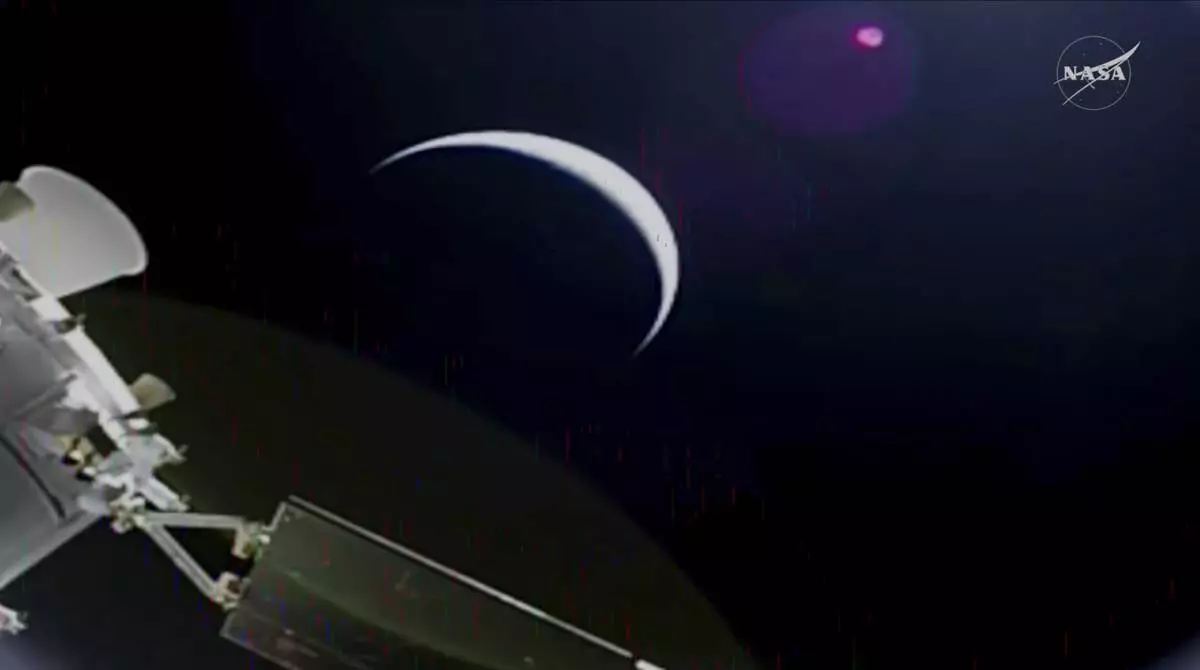
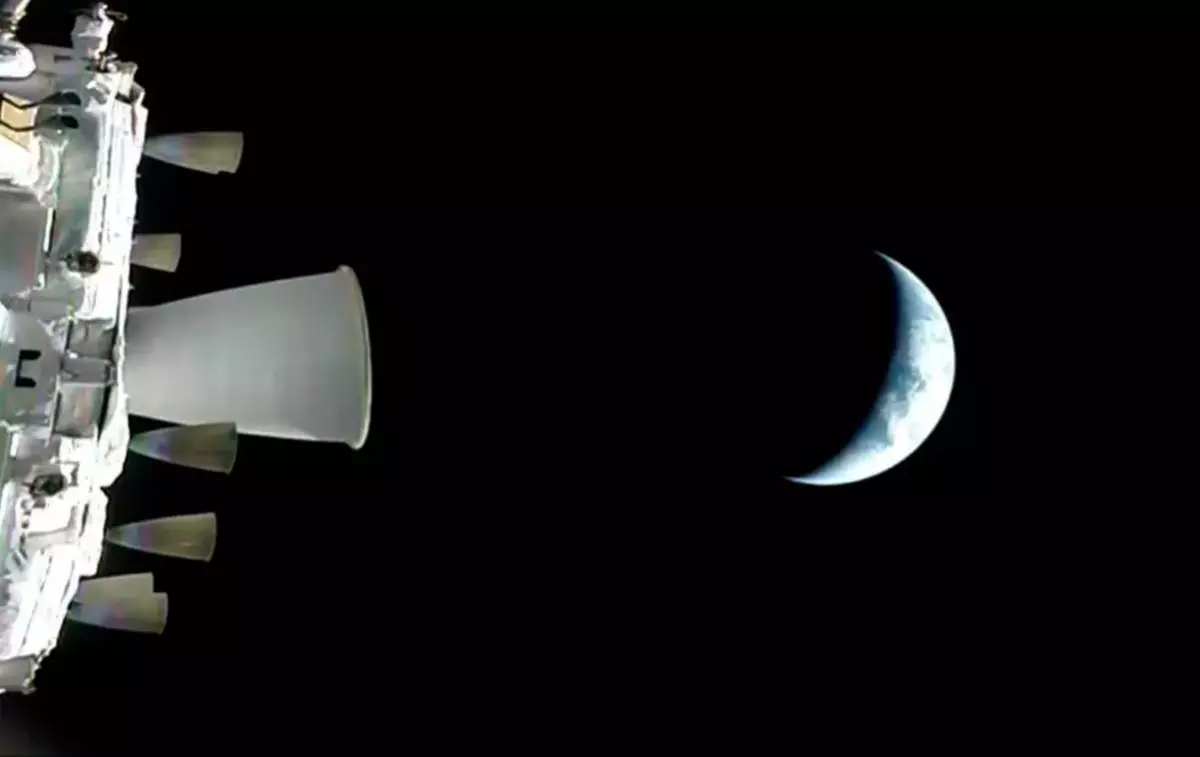
This image taken from video provided by NASA shows the Earth, left, from NASA's Orion spacecraft as it fired its engines heading toward the moon Thursday, April 2, 2026. (NASA via AP)

This image taken from video provided by NASA shows the Earth, left, from NASA's Orion spacecraft as it fired its engines heading toward the moon Thursday, April 2, 2026. (NASA via AP)

In this photo provided by NASA, a view of the Earth from NASA's Orion spacecraft as it orbits above the planet during the Artemis II test flight, on Thursday, April 2, 2026. (NASA via AP)

In this photo provided by NASA, a view of the Earth from NASA's Orion spacecraft as it orbits above the planet during the Artemis II test flight, on Thursday, April 2, 2026. (NASA via AP)

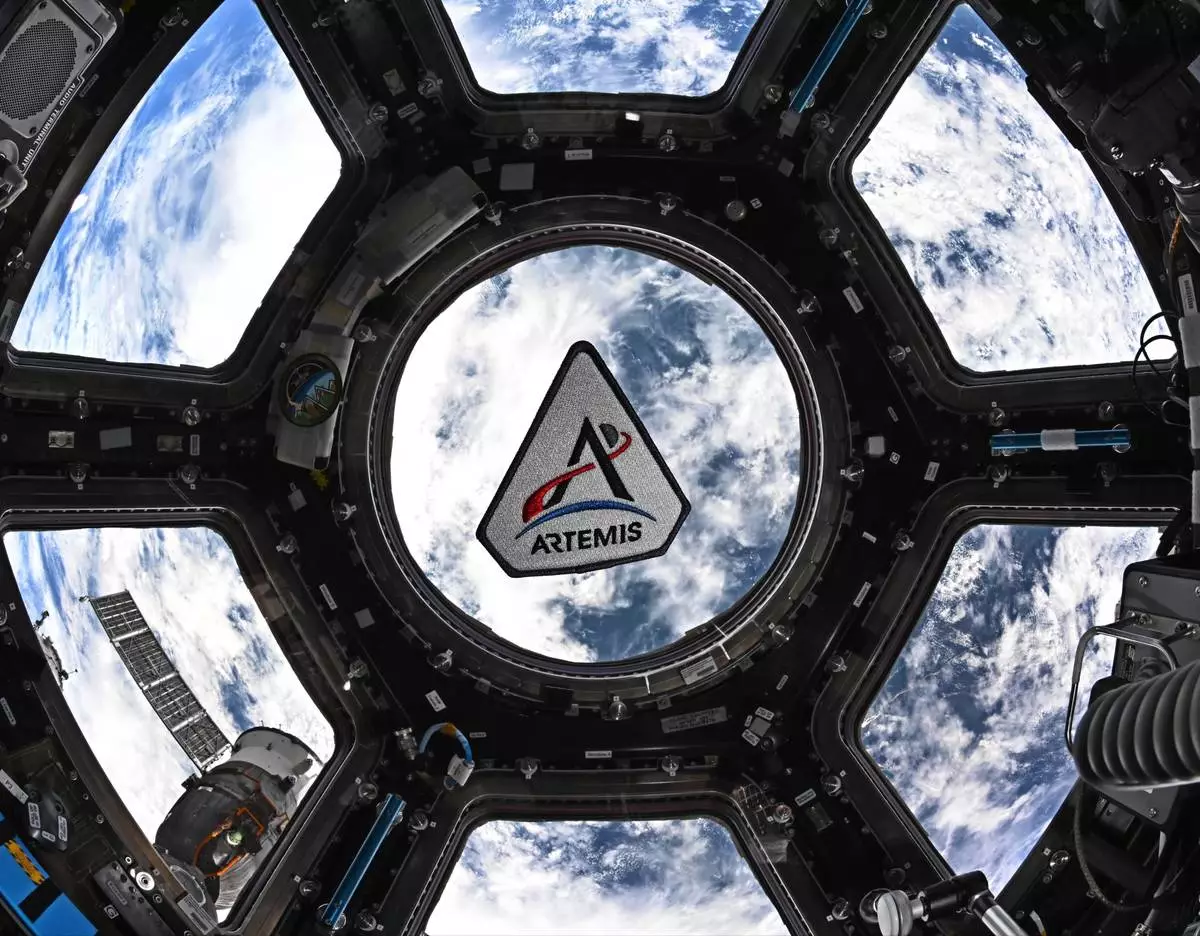
In this photo provided by NASA, an Artemis program patch floating in the International Space Station's cupola, on March 30, 2026. (Jessica Meir/NASA via AP)

In this photo provided by NASA, an Artemis program patch floating in the International Space Station's cupola, on March 30, 2026. (Jessica Meir/NASA via AP)

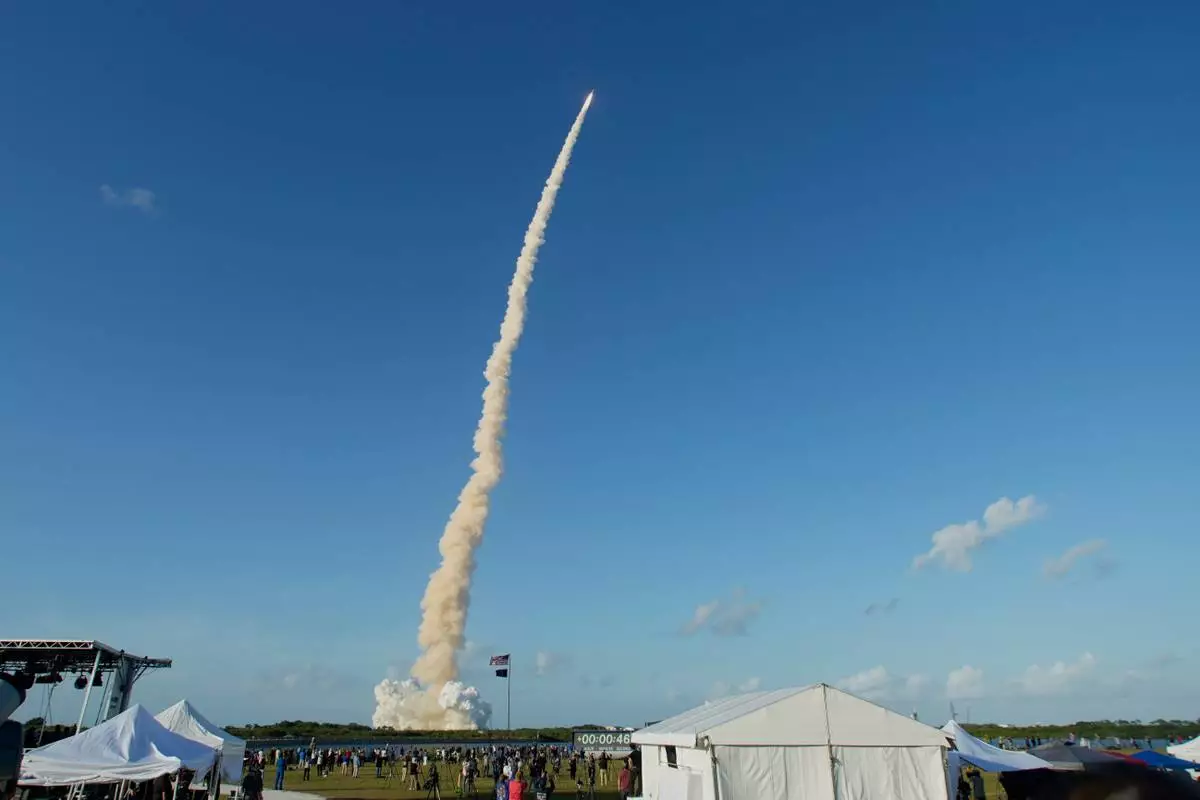
Spectators view NASA's Artemis II moon rocket launch from the A. Max Brewer Bridge, Wednesday, April 1, 2026, in Titusville, Fla. (AP Photo/Phelan M. Ebenhack)

Spectators view NASA's Artemis II moon rocket launch from the A. Max Brewer Bridge, Wednesday, April 1, 2026, in Titusville, Fla. (AP Photo/Phelan M. Ebenhack)

Spectators view NASA's Artemis II moon rocket launch from the A. Max Brewer Bridge, Wednesday, April 1, 2026, in Titusville, Fla. (AP Photo/Phelan M. Ebenhack)

Spectators view NASA's Artemis II moon rocket launch from the A. Max Brewer Bridge, Wednesday, April 1, 2026, in Titusville, Fla. (AP Photo/Phelan M. Ebenhack)

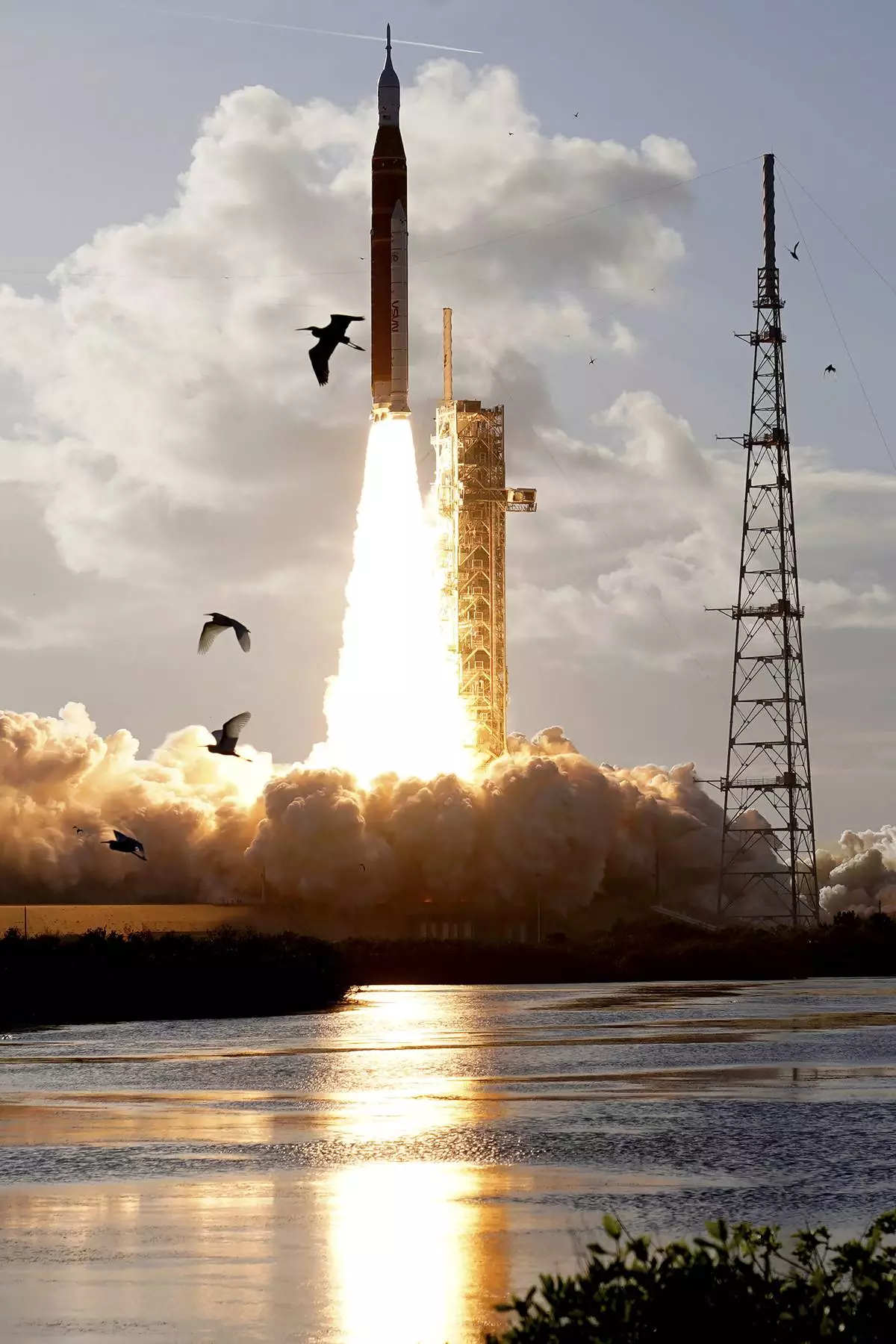
NASA's Artemis II moon rocket lifts off from the Kennedy Space Center's Launch Pad 39-B Wednesday, April 1, 2026, in Cape Canaveral, Fla. (AP Photo/Chris O'Meara)

NASA's Artemis II moon rocket lifts off from the Kennedy Space Center's Launch Pad 39-B Wednesday, April 1, 2026, in Cape Canaveral, Fla. (AP Photo/Chris O'Meara)

NASA's Artemis II moon rocket lifts off from the Kennedy Space Center's Launch Pad 39-B Wednesday, April 1, 2026, in Cape Canaveral, Fla. (AP Photo/Chris O'Meara)

NASA's Artemis II moon rocket lifts off from the Kennedy Space Center's Launch Pad 39-B Wednesday, April 1, 2026, in Cape Canaveral, Fla. (AP Photo/Chris O'Meara)

NASA's Artemis II moon rocket lifts off from the Kennedy Space Center's Launch Pad 39-B Wednesday, April 1, 2026, in Cape Canaveral, Fla. (AP Photo/John Raoux)

NASA's Artemis II moon rocket lifts off from the Kennedy Space Center's Launch Pad 39-B Wednesday, April 1, 2026, in Cape Canaveral, Fla. (AP Photo/John Raoux)

Recommended Articles