A dedicated team of young maintenance workers born after 2000 is braving extreme cold and perilous mountain conditions to ensure the safety and efficient operation of a crucial railway to China's northernmost city, Mohe, facilitating the seamless transit of both freight and passenger trains.
Located in the heart of the Daxing'anling Mountains, the Mengke Mountain section of the Nenlin Railway endures temperatures plunging below minus 50 degrees Celsius, marking it as the most treacherous stretch along the line.
Early on a recent frigid morning, with temperatures hovering around minus 30 degrees, the maintenance crew set off for their work site, trudging through fresh snow that blanketed the area and reached above their knees.
"There is only one road leading to the railway. After a snowfall, you can't even find the path you took before," said Zhai Minglang, a 24-year-old team leader with three years of experience.
As the oldest and most seasoned member, he led the way, trekking two kilometers with nearly 100 kilograms of equipment.
"Going downhill is manageable, but going uphill is too difficult. In this mountain, we can't see the gullies; the snow is all flat. But sometimes when you step on it, with a slip, you fall into a snow gully, and you're gone except for your head," Zhai added, illustrating the perilous nature of their work environment.
The Nenlin Railway is a single-track line that accommodates a mix of freight trains, tourist trains, public service trains, and recently launched rural revitalization trains. The Mengke Mountain section is particularly challenging, featuring sharp curves, tunnels, and steep inclines, which place immense pressure on maintenance crews.
"In the case of heavy snow, what can't be brought in by road can only be brought in by rail. If the railway is interrupted, it means that the people and materials cannot be transported in or out," explained Gu Yue, foreman of the Monk Mountain Maintenance Section of China Railway Harbin Bureau Group.
After more than an hour of trekking, the team finally reached the work site. Here, moisture trapped in the track bed freezes and can cause the rails to bulge. If left unaddressed, this could lead to dangerous shaking during train travel or even derailment.
The crew meticulously cleared the snow, revealing a barely perceptible bulge in the steel rail.
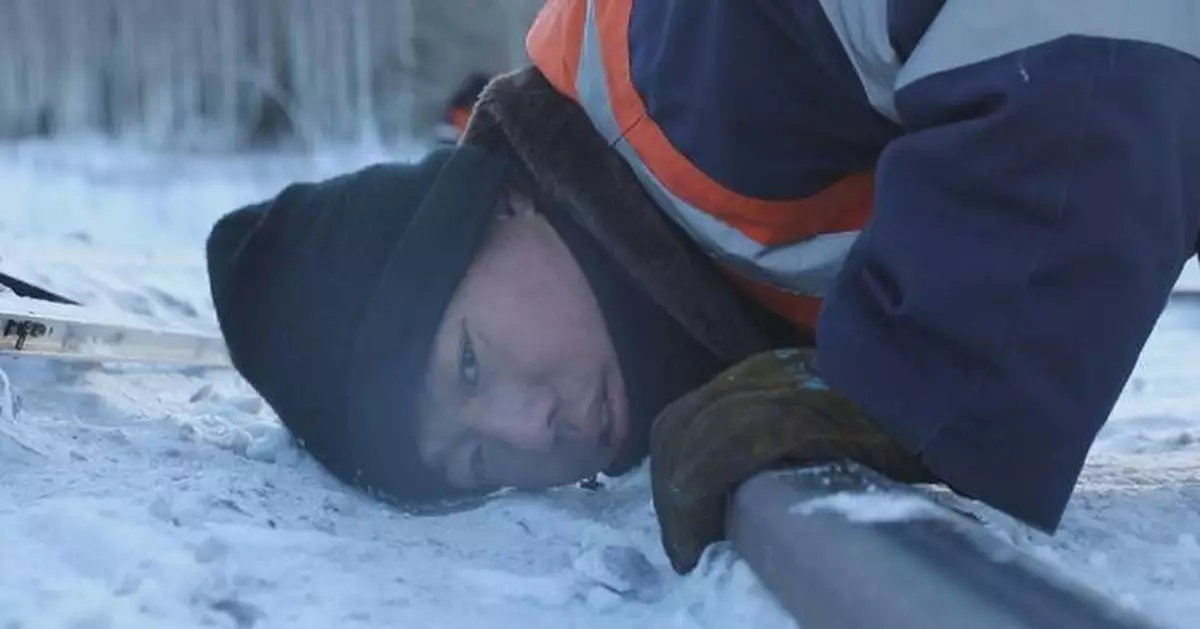
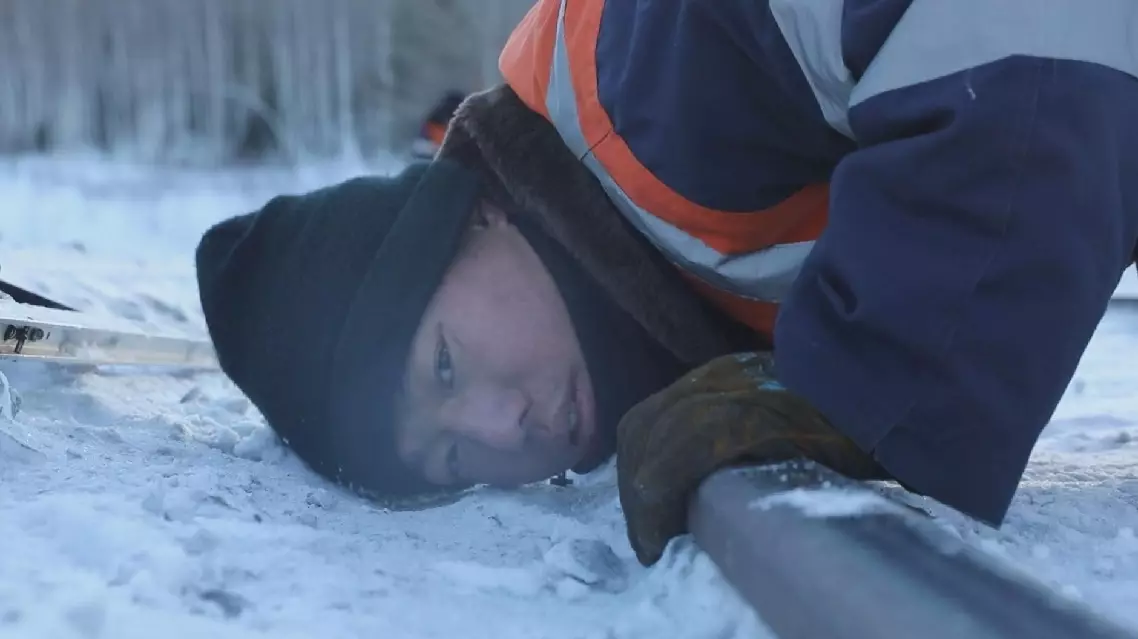
Zhai laid on the icy steel tracks, using his experience and instruments to detect subtle irregularities. Despite the bright sun, the temperature was a bone-chilling minus 34 degrees.
Working alongside Zhai was 22-year-old Li Boru, who has only been on the job for four months. As his mentor, Zhai patiently taught Li each step of the process.
"I know it's tough for him, coming all the way from the northwest and being so far from his family. I try to teach him as much as I can to help him avoid unnecessary difficulties," said Zhai.
With no platforms in the rugged Mengke Mountain section, trains rush by in a blur.
After one train passed, Zhai carefully tapped the tracks with a hammer, listening intently. The joints between the rails are particularly susceptible to wear from passing trains, which can create small cracks that compromise safety.
Li, using a mirror to assist his observations, inadvertently removed his gloves for better maneuverability only to see his finger freezing stuck to the cold metal.
The quick-thinking and experienced Zhai quickly intervened, breathing warm air onto the frozen spot until Li's finger was freed. Zhai explained that in winter, the cold steel rails cause warm skin to freeze on contact, making it risky to pull directly as it could lead to the skin tearing.
After several hours of labor, the team was thoroughly chilled, with icy winds and snowflakes stinging their faces. Once a section of repairs was completed, they gathered around a campfire for warmth.
"The coldest part of the job is freezing feet. If we stop for just two or three minutes, they go numb. If we don't warm up, it takes all day to recover," Zhai noted.
In this remote area, surrounded by miles of wilderness, they pulled out homemade lunches of steamed buns, sausages, and pickled vegetables.
After completing their repairs, the team returned to their accommodation in the evening.
Zhai received a call from his mother, who, like any parent, worried about her son working in such harsh conditions. With the Spring Festival approaching, Zhai's family has sent him his favorite treats – rice cakes and steamed bean buns.
In another dormitory, Li carefully sorted through a collection of dried mushrooms he gathered from the forest over the summer. He planed to send these local delicacies home as gifts, a token of his first year's earnings.
Zhang Chao, another young worker from Inner Mongolia, proudly displayed the thick cotton trousers his mother sewed for him, padded with almost 1.5 kilograms of cotton to protect him from the extreme cold.
As the Spring Festival holiday approaches, the railway is seeing an increase in travelers heading to Mohe for the festivities.
Despite the harsh conditions, the young maintenance workers take pride in the knowledge that their dedicated efforts are vital to the smooth operation of this crucial railway.
"This is my first job, and I feel proud that I can take on this challenge and make my parents proud," said Xie Xin, one of the line maintenance workers.
Young workers brave extreme cold to keep railway to China's northernmost city running