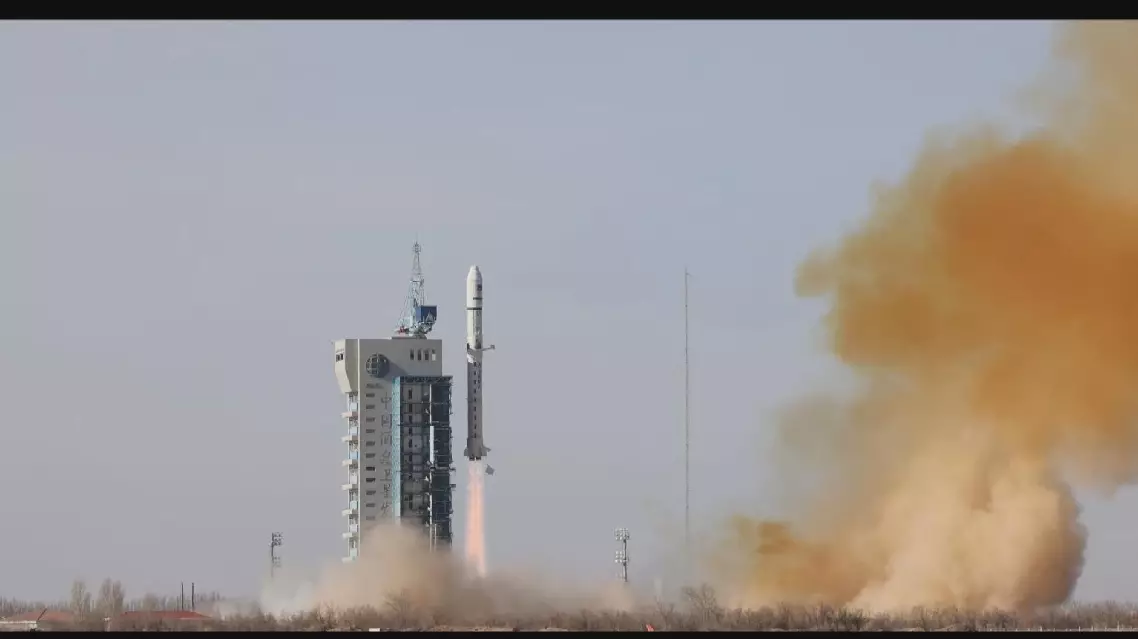
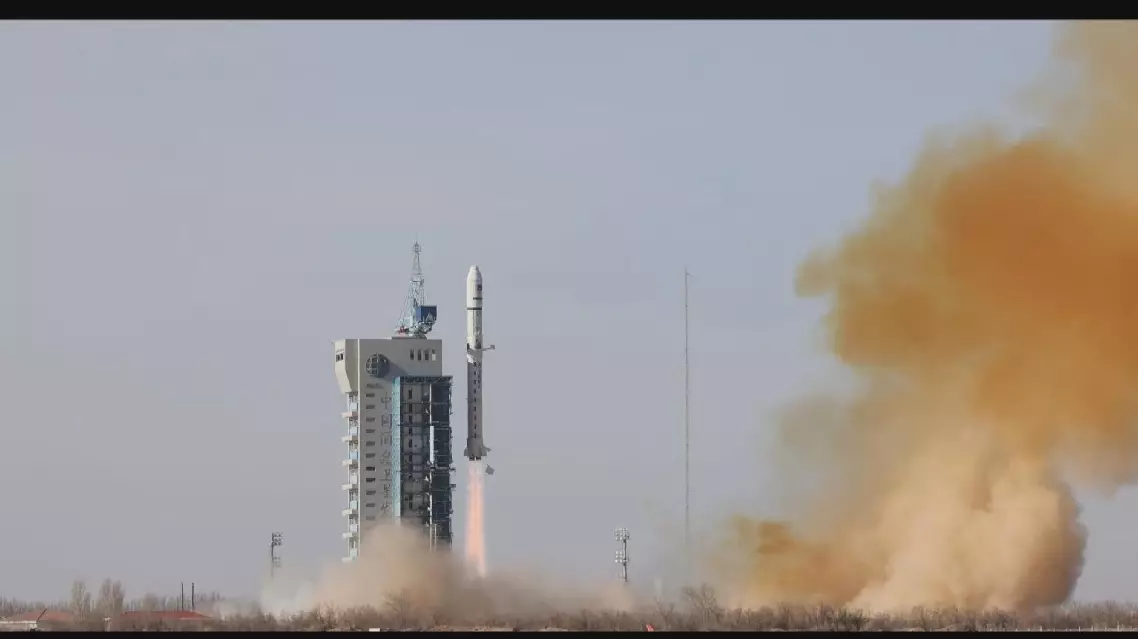
China on Friday sent a Pakistani satellite into space from the Jiuquan Satellite Launch Center in northwest China.
The satellite, named PRSC-EO1, was launched at 12:07 (Beijing Time) by a Long March-2D carrier rocket and entered its planned orbit successfully.
The rocket also carried two Chinese satellites, namely Tianlu-1 and Lantan-1, launched together with the Pakistani one.
This launch marked the 556th flight mission involving the Long March carrier rocket series.
China launches Pakistani satellite, two others
China launches Pakistani satellite, two others
Iran on Tuesday warned it would deliver a stern response to any new aggression, after U.S. President Donald Trump ordering preparations for a prolonged naval blockade of the country.
Trump has instructed his administration to prepare for an extended blockade of Iran as the ceasefire remains in place amid stalled talks, The Wall Street Journal reported on Tuesday, citing U.S. officials.
In recent meetings, including a Monday discussion with top security officials in the White House, Trump opted to continue squeezing Iran's economy and oil exports by preventing shipping to and from its ports, said the report.
The president assessed that the blockade, "a high-risk bid" to compel Tehran's nuclear capitulation, carries less risk than other options -- resume bombing or walk away from the conflict, the officials were quoted as saying.
Iranian government spokesperson Fatemeh Mohajerani stated the same day that Tehran has completed "all necessary arrangements" to counter the U.S. naval blockade.
She noted that Iran's primary strategy focuses on maximizing its geographical advantages through effective tactical maneuvers.
Also on Tuesday, Iranian army spokesman Mohammad Akraminia declared that the military considers the current situation a state of war.
Akraminia added that Iran has fully updated its target lists and operational equipment, promising a "stern response" to any further aggression.
Mujtaba Ferdosipour, head of Iran's Interests Section in Cairo, told the IRNA news agency on Wednesday that U.S. attempts to force unilateral demands through a naval blockade are ineffective. He stressed that Iran's extensive land borders with neighboring countries provide viable alternatives to bypass the maritime restrictions.
Ferdosipour reiterated that the Strait of Hormuz is closed only to vessels linked to Israel and the United States. He asserted that Iran has the right to manage security in the strait, maintaining that this position does not violate international conventions.
The envoy further stated that Iran does not trust the United States and has no desire for direct negotiations. He emphasized that Tehran can employ all available means to defend itself against attacks.
According to the latest data from the UN Trade and Development (UNCTAD), ship transits through the Strait of Hormuz have plummeted by 95.3 percent since Feb 27. The disruption has caused global food prices to rise by approximately six percent, while crude oil prices in European markets have surged by nearly 50 percent.
Iran warns of stern response as US plans prolonged blockade