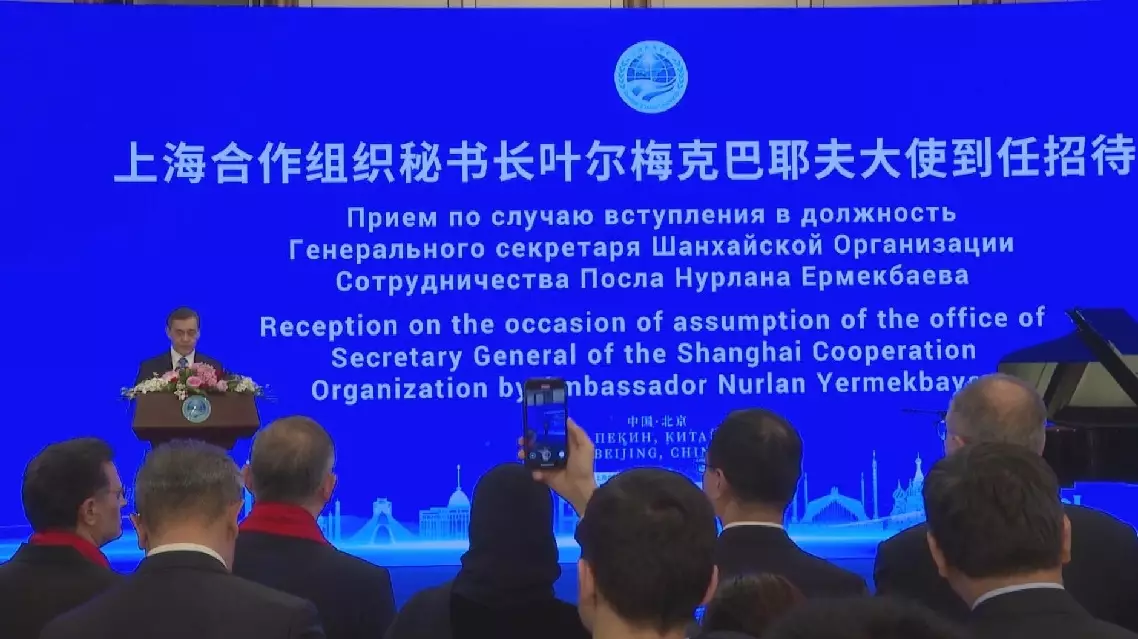
Secretary-General of the Shanghai Cooperation Organization (SCO) Nurlan Yermekbayev said Friday that he would strive to contribute to the development of the organization and the well-being of the SCO family during his three-year term while addressing a reception marking his inauguration in Beijing.
He said that since the establishment of the SCO, member states have always adhered to the "Shanghai spirit" of mutual trust, mutual benefit, equality, consultation, respect for diverse civilization and pursuit of common development, and the organization's circle of friends continues to expand.
After the Astana Summit in July last year, China officially took over the rotating presidency of the organization for 2024-2025 and Yermekbayev was appointed as the secretary-general. He took office on Jan 1.
Yermekbayev said the top priority is to support China's presidency this year.
"The chairmanship of China in SCO is very thoughtful, very datelined. A big plan of action includes more than 200 events. We hope it's going to be a very interesting year," he said. The reception was attended by diplomatic envoys in China from SCO member states, observer states, and dialogue partner states as well as people from all walks of life.
The SCO is a permanent intergovernmental international organization established on June 15, 2001 in Shanghai. Now, with nine member states, three observer states and 14 dialogue partners, the SCO is the world's largest regional organization in terms of geographical scale and population.
Secretary-general pledges contribution to well-being of SCO family
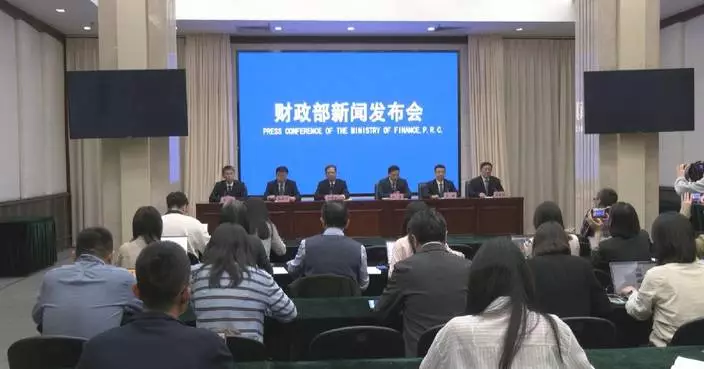
China's newly increased special-purpose local government bonds issued in the first quarter of 2026 stood at 1.1599 trillion yuan (about 169.7 billion U.S. dollars), according to the country's Ministry of Finance on Friday.
The number was 199.6 billion more than that of the same period last year, up 20.8 percent.
The special-purpose local government bonds are used for projects in key areas such as social services, transportation infrastructure, affordable housing, and urban renewal.
They are also intended to supplement government fund resources and help the clearance of government arrears owed to enterprises.
In the first quarter, the total treasury bond issuance exceeded 3.6 trillion yuan, up nearly 10 percent year on year, providing strong support to proactive fiscal policy.
Also on Friday, China kicked off the issuance of its 2026 ultra-long special treasury bonds, with the first two tranches comprising 20-year and 30-year fixed-rate bonds with periodic interest payments.
The issuance follows this year's Government Work Report, which proposed raising 1.3 trillion yuan (about 189.3 billion U.S. dollars) through ultra-long special treasury bonds to support projects for implementing major national strategies and building security capacity in key areas, as well as large-scale equipment upgrades and consumer goods trade-in programs.
According to a notice previously released by the Ministry of Finance, the issuance of this year's ultra-long special treasury bonds is expected to be completed by mid-October.
Ultra-long special treasury bonds are government securities with maturities typically of 10 years or longer. They are used as a policy tool to finance long-term, large-scale investments aligned with national priorities, while also helping to stabilize growth by injecting sustained fiscal support into the economy.
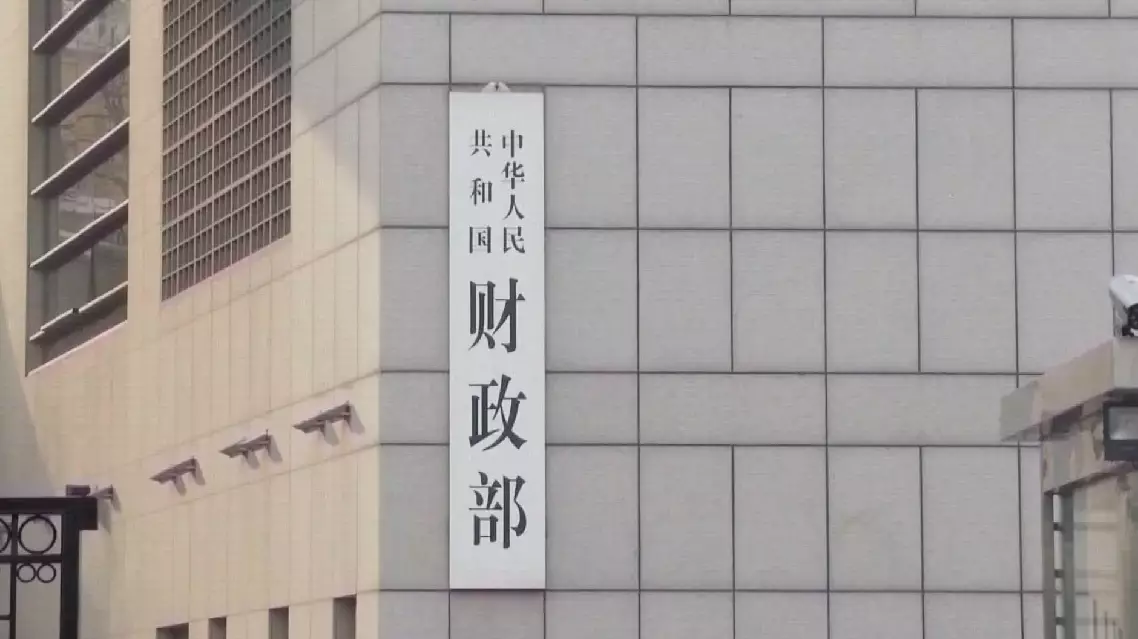
China issues nearly 1.16 trillion yuan of new special-purpose local gov't bonds in Q1