Six zebrafish are scheduled to travel to China's space station this year to aid scientists in investigating the effects of the space environment on vertebrate muscle and skeletal development, aimed to enhance human survival in space and facilitate future interplanetary living, according to Wang Gaohong from the Institute of Hydrobiology of the Chinese Academy of Sciences.
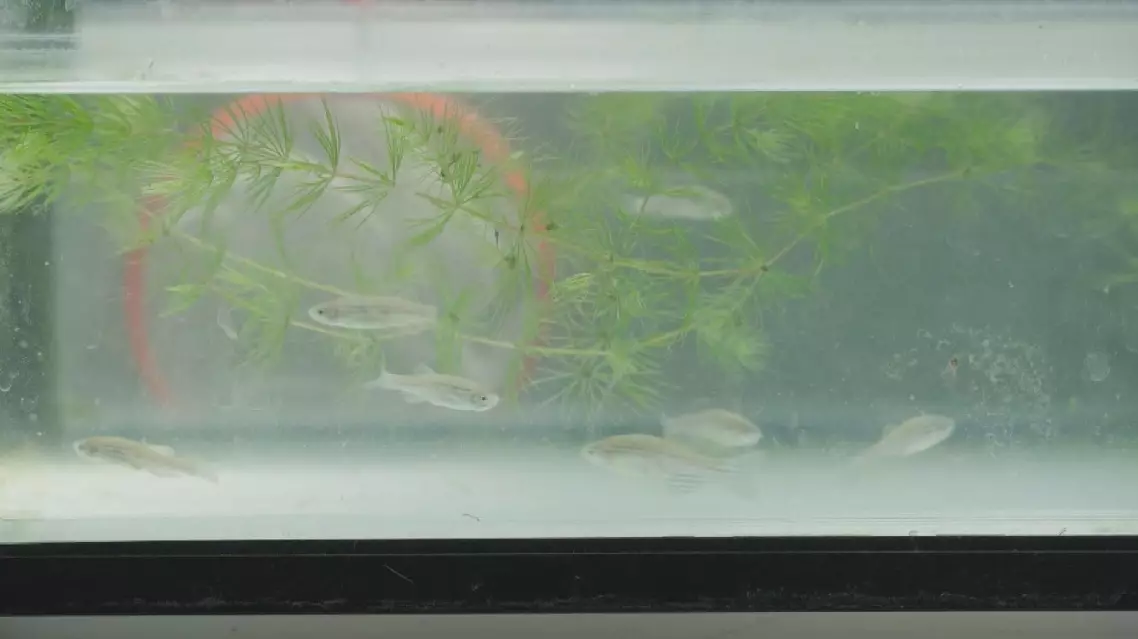
A "fishbowl" in the Tiangong Space Station will house six zebrafish and six grams of Ceratophyllum this year, according to the institute. The study will focus on the impact of microgravity on the proteins in the zebrafish's bones and muscles. Once the experiment comes to an end, the fish will be frozen and brought back to Earth for further analysis.
Sharing a genomic similarity of over 70 percent with the humans, Zebrafish are small, reproduce rapidly, and have a short development cycle, making them a prime model organism in life sciences. They're widely utilized in research spanning various fields, including hematopoiesis, cardiovascular health, kidney, skeletal systems, tumor and epilepsy.
In April 2024, a container with four zebrafish and four grams of Ceratophyllum was sent to the space station by Shenzhou-18 manned spaceship, forming China's first space-based self-sustaining aquatic ecosystem. This space aquatic ecosystem ran smoothly for about 43 days, setting a global record for the longest operational duration of such a system.
Given that the typical lifespan of zebrafish is two to three years, their 43 days in space can be equated to a human spending three to four years in that environment, according to Wang, who is in charge of the experiment.
"The aquatic ecosystem is a comprehensive system. Apart from analyzing material cycling within this ecosystem, we also observe the gas exchange within the system, such as using Ceratophyllum to provide oxygen to zebrafish and utilizing Ceratophyllum to recycle some waste produced by the zebrafish. Through this system's cycling, we can successfully cultivate zebrafish in orbit," said Wang.
The "Tiangong fishbowl" currently in development has a volume of only 1.2 liters, equivalent to two bottles of drinking water. Conducting long-term breeding experiments for zebrafish in such a small space presents various challenges. To address these issues, researchers dedicated three to four years on Earth to preparation and planning.
"Later we retrieved biological samples, including water samples, according to the plan, and currently, some of our samples are under analysis. In fact, our experimental setup is relatively small, at 1.2 liters. Ensuring the fish's survival for such a long duration within this confined space was a challenging task. In the future, we will optimize our experimental setup, including some components of our ecological system, to enhance the well-being of the fish inside, enabling us to further our research effectively," said Wang.
Microgravity in space can induce a range of pathophysiological phenomena in humans, such as cardiovascular issues, weakened immunity, bone loss, muscle atrophy, and hormonal imbalances. Understanding these effects is a key scientific endeavor in space biology. This study will enhance human collective understanding of how the space environment impacts genes, cells, and life as a whole.
More zebrafish to swim in China's space station