As the winter chill settles in, many diseases have seen a high occurrence rate. As a result, the Emergency Department at China's top medical center Beijing Union Medical College Hospital becomes a battlefield where doctors and nurses race against time to save lives.
Night after night, the department is filled with a steady stream of patients - feverish children, frail elderly, and those grappling with complex medical conditions.
The Union Hospital, founded over 100 years ago, is internationally reputed for its comprehensive yet specialized departments and rich clinical experience, which means it's expected to give the final chance to critical patients from across the country.
Leading the charge is Song Xiao, an attending physician who works on 10-hour overnight shifts, having to diagnose about 60 to 70 patients on every shift.
"I shouted all night and was really too exhausted to make it anymore. The patients, especially many grannies and grandpas, they simply cannot hear you," Song said, with her voice hoarse from the constant strain.
As the morning shift begins at 08:00, Song and her colleagues who have busily worked throughout the night start to hand over the work to the next shift before they could be off, and the doctors and nurses to take over must meticulously record the conditions of each patient, leaving no room for error.
Suddenly, a 66-year-old patient begins hemorrhaging uncontrollably, with his blood pressure plummeting. The hospital immediately activates its "green channel", trying to give the patient the best chance at survival.
"Now we go straight to the operating room. No other options, or the patient will no longer have a chance. We cannot tell you what the result will be, but we must try our best," said Wang Weibin, director of General Surgery Department of the hospital.
In less that 10 minutes, the patient is wheeled into the operation room, where a team of specialists converge to perform a complex, high-risk surgery.
"Here's the case: He's in a very critical condition now, and he might pass away after anesthesia. It all depends on how long he can hold on. There may also be bleeding at the bifurcation of the pancreatic duct, bile duct and gastric juice. Should this happen, the only option will be a major surgery - pancreaticoduodenectomy. This is the most formidable surgery, which usually lasts very long and the patient may not be able to endure. But if it comes to that, we've got no choice," Lin Chen, head of the General Surgery Department's emergency team, explained to the patient's families.
"I've never seen my dad like this," said the patient's daughter, adding that she didn't sleep at all the night before. "We are short of blood and we've been making calls to find some, fearing that we wouldn't be able to get the transfusion."
After five intense hours, the surgical team successfully halts the bleeding, thanks to the teamwork of experts of multi-disciplines throughout the hospital.
"What we did was like to perform the operation on him to the limits: we cut to this location so that the stomach and intestine can be anastomosed again. Today we have mobilized all the blood in the hospital to save him. Fortunately, he survived and dodged a crisis," said Lin.
Once the immediate crisis is averted, Lin hurries to the intensive care unit to check on her grandmother, who is still recovering from severe heart failure.
"I feel so bad, every day I've been saving people, but not my own families. She actually have had jaundice for some time, but she didn't tell me because they thought I was busy and they didn't want to bother me. My parents are in their 60s, almost 70 years old, and they usually don't let me know when they are sick," Lin said.
"My daughter also has a fever, hitting 40 degrees Celsius yesterday. She called me and urged me to come back quickly, as she vomited. I had to calmly tell my colleagues, 'What can I do at home? I'm not medicine'," Lin said.
Torn between her professional duties and personal responsibilities, Lin embodies the unwavering commitment of the Union Hospital's emergency staff. They are a team of highly skilled, deeply compassionate individuals who have chosen to dedicate themselves to the relentless battle against illness and injury, whatever the cost.
Originally a mathematics graduate from Beijing University, Lin chose a different path by pursuing a PhD of clinical medicine.
"I also considered a lot, and finally decided to choose this path (to become a doctor) and walk on it firmly. My original aspiration was to become a surgical scientist, able to help patients survive successfully while making my own achievements. Like the patient last night, when he was wheeled into the operation room, his hemoglobin level was very low and his whole body was as white as paper. When the bleeding was finally stopped, I felt that his life was surely saved," Lin said.
Lin and her team completed seven surgeries on that single day, wrapping up their shift at 23:00.
Founded in 1921 by the Rockefeller Foundation, Beijing Union Medical College Hospital is a national center guiding the diagnosis and treatment of difficult and serious diseases appointed by the National Health Commission.
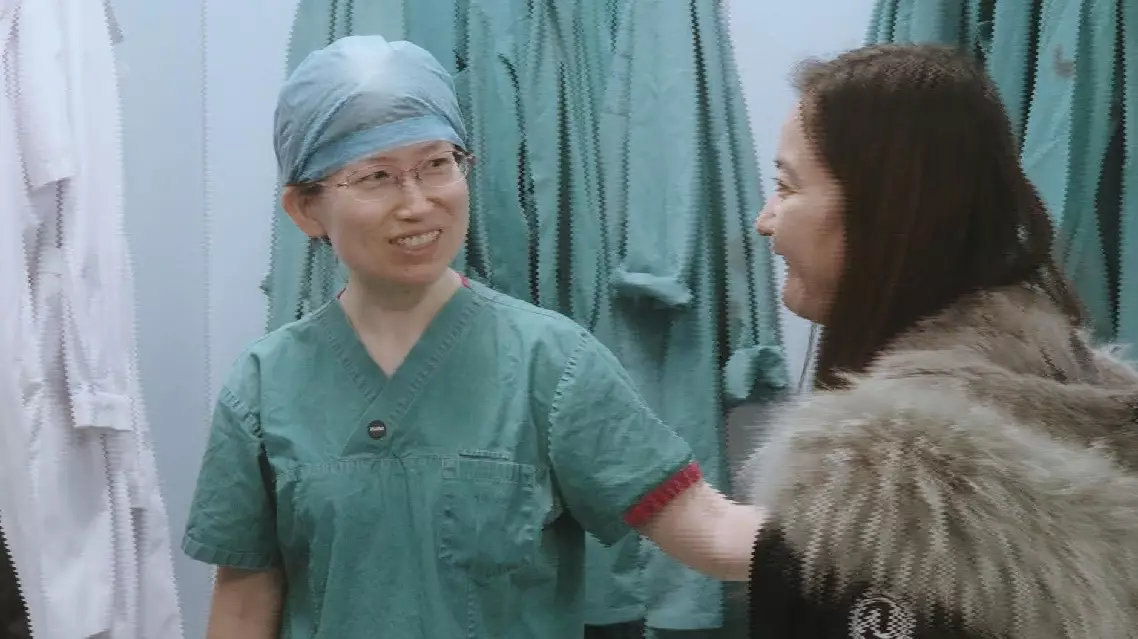
Union Hospital emergency doctors race against time to save lives