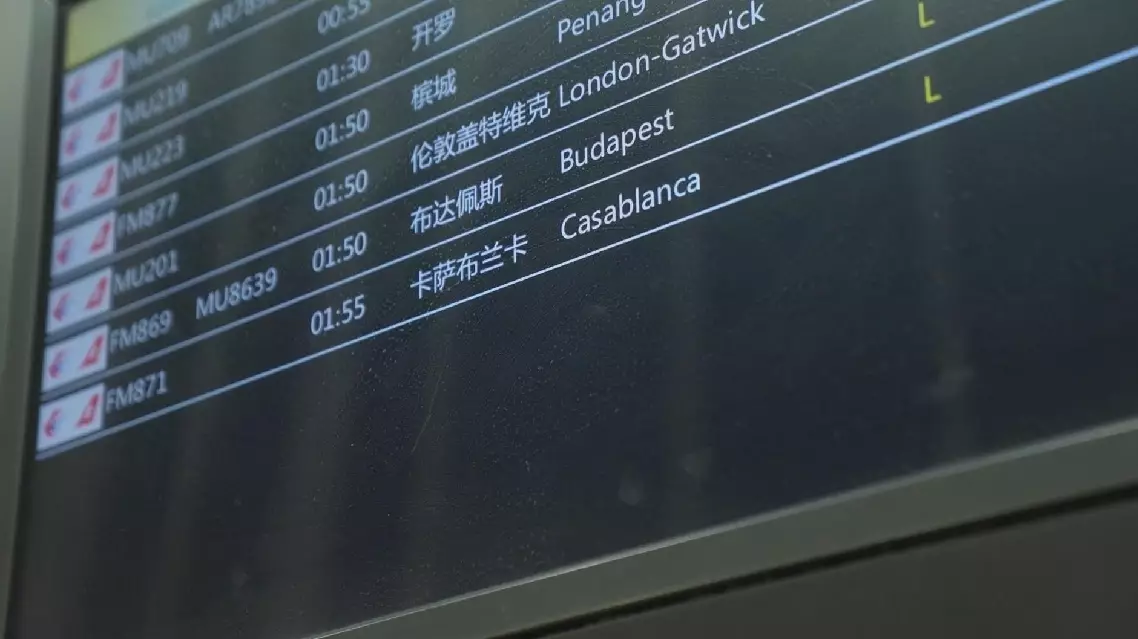
The first flight route connecting east China's cosmopolitan Shanghai with Morocco's largest city Casablanca was launched on Sunday, enabling travelers to enjoy an easier trip while enhancing exchanges between the two countries.
Shanghai Airlines, a China Eastern Airlines subsidiary, is the first Chinese carrier to fly a commercial route between Shanghai and Casablanca. The new service will operate three times a week with a stopover in the French city of Marseille.
The new route is the second flown by China Eastern Airlines to north Africa. The airline also operates a commercial route to the Egyptian capital Cairo. The air service is expected to boost tourism, especially after Morocco introduced a visa-free policy for Chinese citizens in 2016.
Morocco's visa-free policy has made it much easier for Chinese citizens to travel, said Gong Yongping, a Chinese passenger.
"People of my age should have watched a movie called 'Casablanca'. Personally, I've always wanted to pay a visit after watching the movie. When I heard about the inaugural flight, I signed up immediately to see for myself," he said.
Morocco is a commercial hub known for its vibrant culture and breathtaking surroundings, drawing travelers from across the globe.
Moroccan state media reports that in 2024, Chinese visitors to the country surged by nearly 80 percent compared to the previous year, exceeding 100,000. As the Chinese New Year holiday approaches, the new route offers even more travel options for Chinese tourists.
"Interest in North Africa is growing, with many eager to explore its exotic appeal. Unique food, landscapes, and experiences make it an exciting destination for adventurous travelers," said Chen Cheng, a tour guide.
The new flight route also marks the strengthening of ties between China and Morocco. In 2016, the two countries established a strategic partnership. China is Morocco's largest trade partner in Asia and the third largest globally, with expanding cultural exchanges further strengthening their ties.
"This recent year between Morocco and China,it's a good relationship about the business,about the students. They have a bunch of students who come from Morocco. I find business people, I find teachers from Morocco that teach Arabic or teach English or teach French. So this connectivity is gonna make the relationship more stronger," said Amiss Mourbat, a Moroccan student in China.
First Shanghai-Casablanca air route launched to enhance China-Morocco connectivity