China has already seen over a billion cross-regional trips made during the first six days of the 2025 Spring Festival travel rush, according to data released by the Ministry of Transportation on Monday.
The travel rush, known as 'chunyun', is considered the world's largest annual human migration and coincides with China's biggest traditional celebration, the Spring Festival, a time when hundreds of millions of people return home for family reunions to celebrate the Chinese Lunar New Year, which falls on Jan 29 this year.
This massive migration, which began on Jan 14 and continues until Feb 22, is expected to reach a staggering 9 billion passenger trips this year, with both rail and air passenger trips set to hit record highs.
More than 200 million train tickets have been sold so far, while road travel accounts for nearly 80 percent of the total number of trips made to date.
To accommodate the increasing number of electric vehicles on the roads, China's transport ministry has implemented a special holiday highway service area support mechanism to ensure there are adequate charging facilities for new energy vehicles (NEVs).
During this peak travel period, some 7.2 billion road trips and over 90 million civil aviation trips are forecast, while more than 510 million passenger trips are expected to be handled by the country's railways, with an average of 12.75 million daily rail trips being made, an increase of 5.5 percent compared with last year.
To meet the surging demand, China's railway operator has moved to increase its overall passenger transport capacity, which is expected to grow by about 4 percent year on year. An average of over 14,000 passenger trains are being operated on a daily basis during the 40-day travel rush, providing an additional 500,000 seats per day.
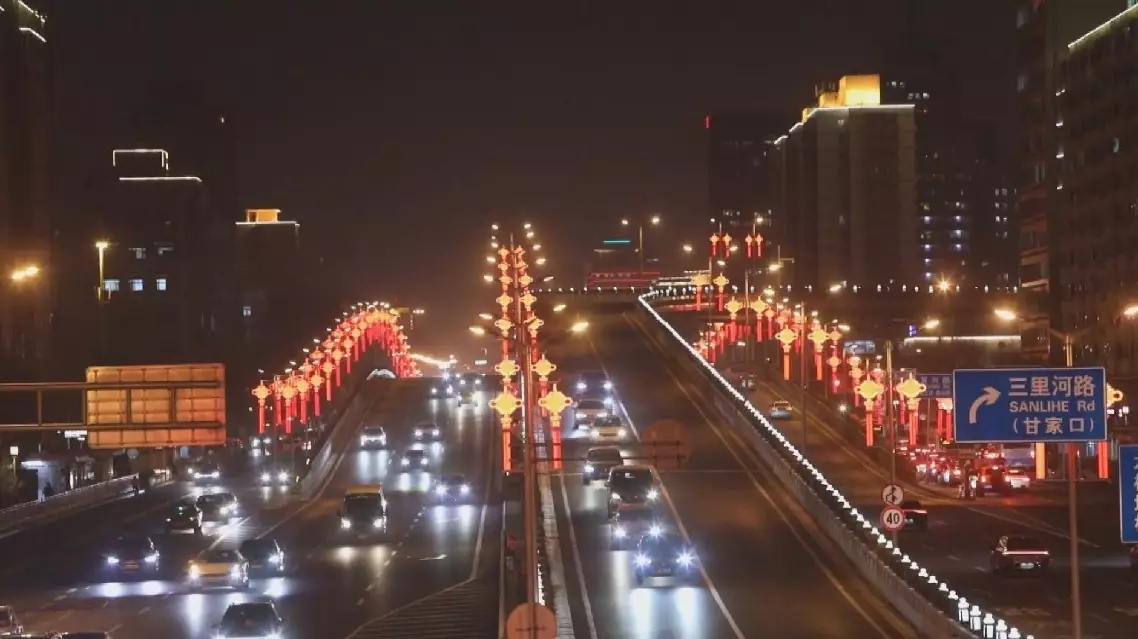
Over one billion trips already made as China's Spring Festival travel rush picks up
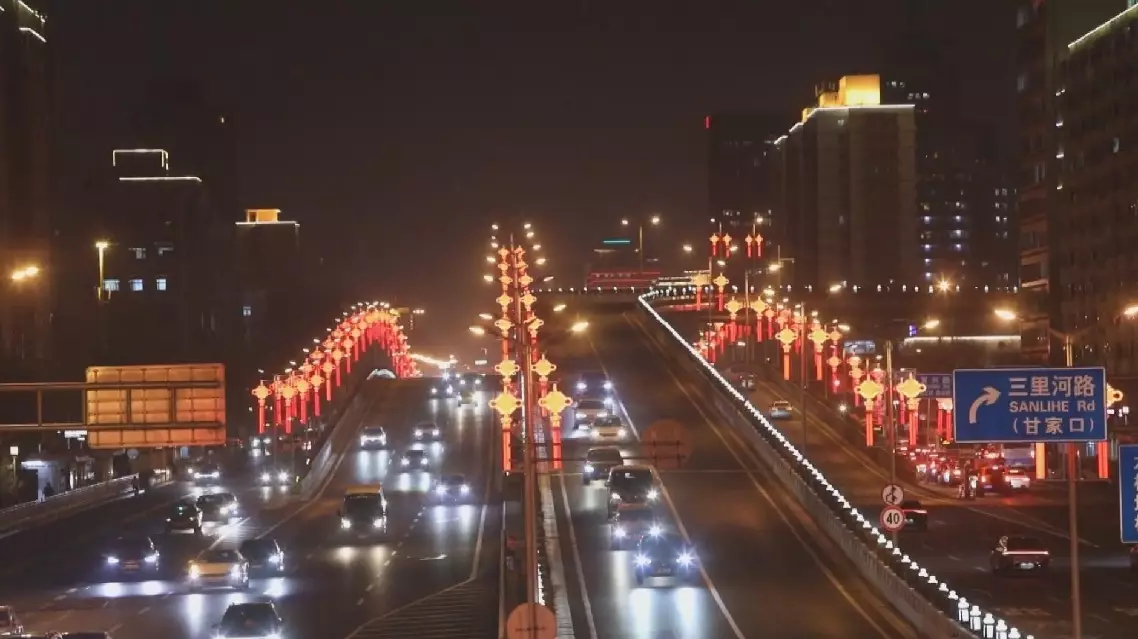
Over one billion trips already made as China's Spring Festival travel rush picks up
Artists have reimagined ancient themes through a modern lens at the 60th Venice Biennale China National Pavilion Exhibition, now underway in Shanghai.
The main feature of the exhibition is a fully immersive project by artist Che Jianquan, who has placed consecutive screens placed side by side to present his two-decade-long documentation of the same pavilion since 2003.
Through his lens, the artist captures the pavilion, as it emerges and disappears amidst mist and clouds, evoking the aesthetic of misty landscapes in traditional Chinese ink paintings.
"At the beginning, I wanted to use painting to document my feeling, but later I realized that painting was somewhat powerless. So, starting in 2003, I began using the earliest video equipment to start recording. What I care about more is a place—a very small location—and the unique connection it has within that field to history and to the culture of that region. I think this is something I hope to achieve: through a seemingly ordinary scene, to uncover the stories behind it, as well as its possible influence on both the past era and the present," said Chen.
Established in 1895, the Venice Biennale is one of the premier events in the global art world. This year, the China National Pavilion Exhibition, under the theme "Atlas: Harmony in Diversity," presents not only the documentary archives of 100 Chinese paintings held overseas, but also seven contemporary artworks created by seven Chinese artists exploring themes, such as architecture, landscapes, figures, flora and fauna.
"The core of the Venice Biennale is contemporary art, reflecting the spirit of the present era—yet the present and history cannot be separated. This exhibition is rooted in the tradition of Chinese painting across dynasties, drawing from over 20,000 individual works that took us twenty years to collect globally," said Wang Xiaosong, an artist and the curator of the exhibition.
"Notably, we discovered that more than 3,000 of these paintings had been lost overseas, which we spent two decades retrieving through digital tools. This is how we engage with traditional art: through each artist's reflection and a new understanding of the relationship between the ancients, the present, and the future," he added.
Wang drew special attention to a piece by the modern artist Qiu Zhenzhong, who he said merges the art of Chinese gardens with calligraphy using traditional methods to showcase contemporary issues such as environmental and ecological change.
"It's like a dialogue with nature," Wang said.
The exhibition in Shanghai is the final stop of the national tour, following the legs in the southwest Chinese city of Chongqing and the southern Chinese city of Guangzhou, and will run until May 31.
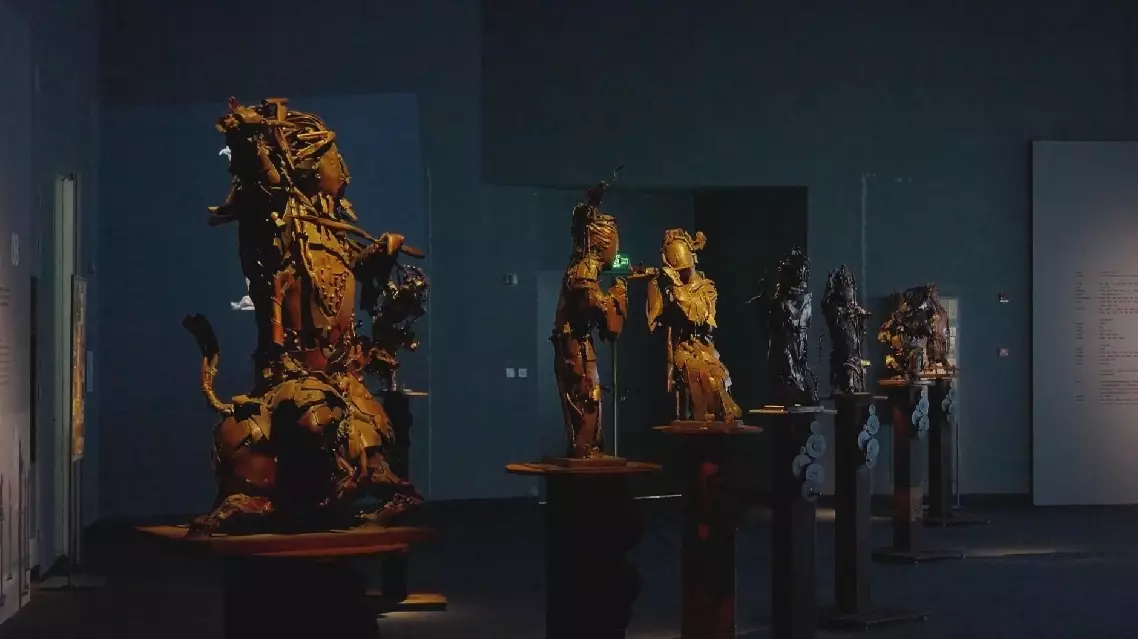
Exhibition in Shanghai bridges contemporary art with centuries of Chinese artistic tradition