China's top diplomat Wang Yi on Monday said blocking the Strait of Hormuz is not in the common interests of the international community, and achieving a comprehensive and lasting ceasefire through political and diplomatic means is the fundamental way to resolve the issue.
Wang, a member of the Political Bureau of the Communist Party of China Central Committee and director of the Office of the Central Commission for Foreign Affairs, made the remarks during his meeting with Khaldoon Khalifa Al Mubarak, special envoy of the president of the United Arab Emirates (UAE) to China, who is accompanying Sheikh Khaled bin Mohamed bin Zayed Al Nahyan, Crown Prince of Abu Dhabi, UAE, on his visit to China.
Driven by the strategic guidance of the two heads of state, China-UAE relations have maintained a sound momentum of development, Wang said, adding that the visit of the crown prince is a significant event in bilateral relations, and that this visit will further enhance China-UAE strategic mutual trust and deepen practical cooperation between the two countries.
Wang expounded on China's principled position on the current situation in the Middle East, stating that China fully understands the legitimate security concerns of Gulf Arab states and supports the UAE in safeguarding its national sovereignty, security, and legitimate rights and interests.
China has been committed to promoting ceasefire and ending hostilities, and is willing to work with the international community, including the UAE, to help restore peace and tranquility to the Middle East as soon as possible.
Khaldoon Khalifa Al Mubarak expressed gratitude for the warm and thoughtful arrangements made by the Chinese side for the visit of the crown prince, adding that the UAE side appreciates China's efforts in easing tensions in the Middle East and expects China to play a greater role in this regard.
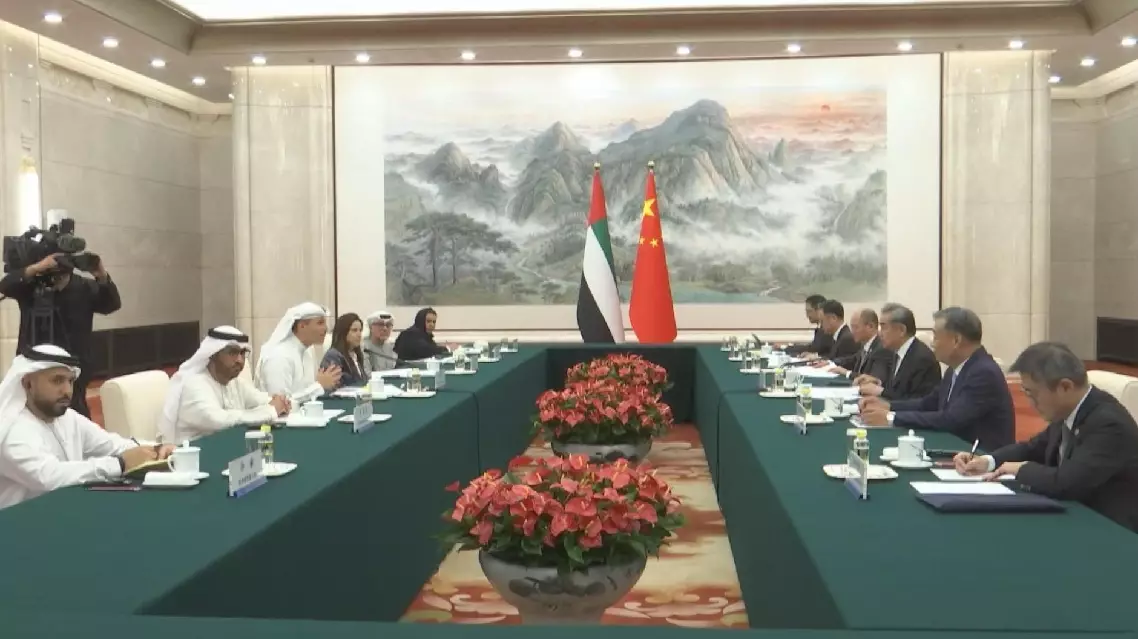
Strait of Hormuz blockade not in common interests of int'l community: China's top diplomat
India, home to one of the world's youngest populations, is witnessing a growing number of students heading to China in search of quality education and stronger career prospects.
Fields such as artificial intelligence, robotics and engineering are seeing a notable rise in enrollments.
Naresh Patra, a researcher in astrophysics at the Chinese University of Hong Kong, chose to study in China for what he describes as the excellent value for the potential boost to his career.
"First thing, the education system is very good and expenses are too low. And second point [is that] you will get good exposure about machine learning and AI, and third point you will get jobs immediately after passing from these universities," said Naresh Patra, a student from India.
There has been a noticeable surge in inquiries from Indian students for courses in engineering and artificial intelligence. To attract more international applicants, Chinese universities have ramped up investment in world-class infrastructure, including advanced laboratories, while expanding scholarship offerings across a wide range of disciplines.
Akshay Bhambri is among those who secured such a scholarship, supporting his research in traditional medicine. He describes his academic experience in China as highly professional and well-structured.
"In different departments, there are enough resources to do that, and even in libraries, whatever you need is provided immediately to you. So this kind of environment for a researcher, for a student, be it undergrad or PhD student, is very helpful when they want to do some kind of research or some kind of understanding to get what they want immediately, so that they can excel in their work," said the researcher.
Cross-border studies are also foundational to forming academic partnerships between China and India, but experts say that even greater outreach and engagement are needed.
"It will be more possible if there is a higher level, not just the people-to-people level, but (if) we see the authorities from both sides interact, and university-to-university interactions, in that case, there would be a lot of confidence building," said Nishith Shah, principal of India China Academy.
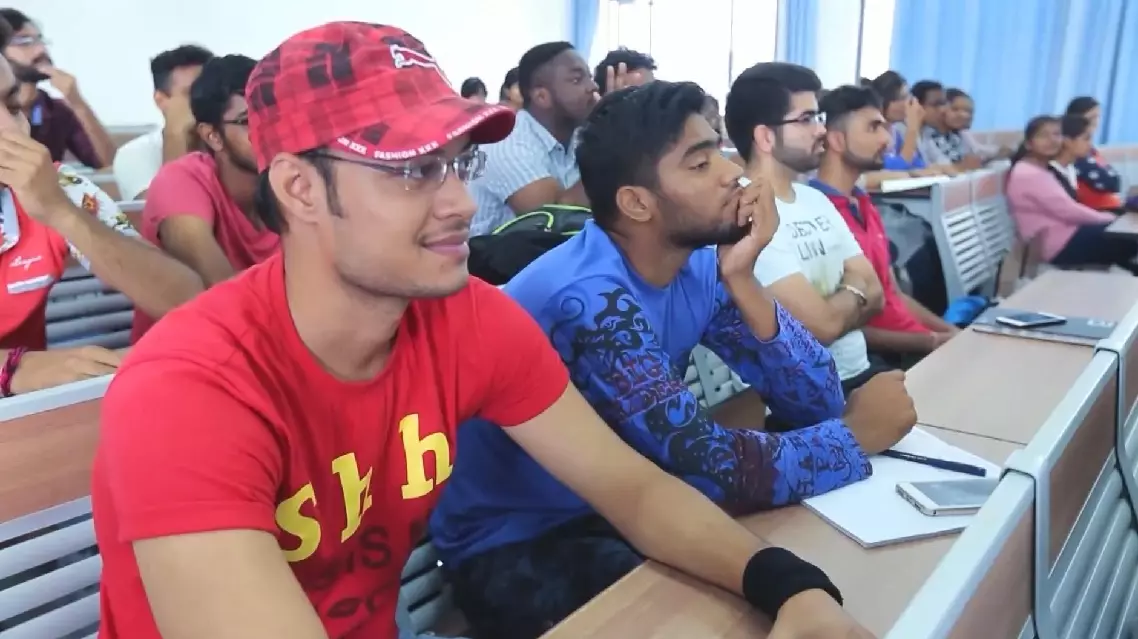
More Indian students choose Chinese universities for quality education