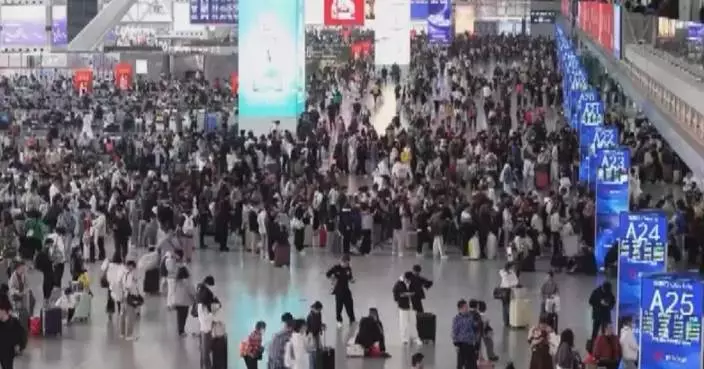
China was estimated to have handled more than 1.3 billion trips in the first week of its 40-day-long Spring Festival travel rush, with over 210 million trips made on Monday, the seventh day of the travel rush period.
The travel rush, also known as "Chunyun", is a period of high transportation demand coinciding with China's largest annual holiday, the Spring Festival, which is a time when hundreds of millions of people head home for family reunions and to celebrate the Chinese Lunar New Year, which falls on Jan 29 this year.
This massive migration, which began on Jan 14 and continues until Feb 22, is expected to see a staggering 9 billion passenger trips this year, with both rail and air passenger numbers set to hit record highs.
In terms of rail transport, China's railways were estimated to handle 13.45 million passenger trips on Monday, with 862 extra trains scheduled to meet the rising demand.
As passenger numbers rise ahead of the Spring Festival, China's railway authorities have focused on boosting capacity in high-demand areas, including Beijing, Shanghai, Guangzhou in southern China, as well as Chengdu and Chongqing in southwestern China.
Starting Monday, high-speed rail routes, including the Nanning-Guangzhou high-speed railway and Guiyang-Guangzhou high-speed railway, added 128 night trains, setting a new record for nightly services.
Meanwhile, road transportation saw an estimated 197 million passenger trips, while waterways recorded 700,000 trips and air travel hit 2.22 million, with 19,057 flights scheduled.
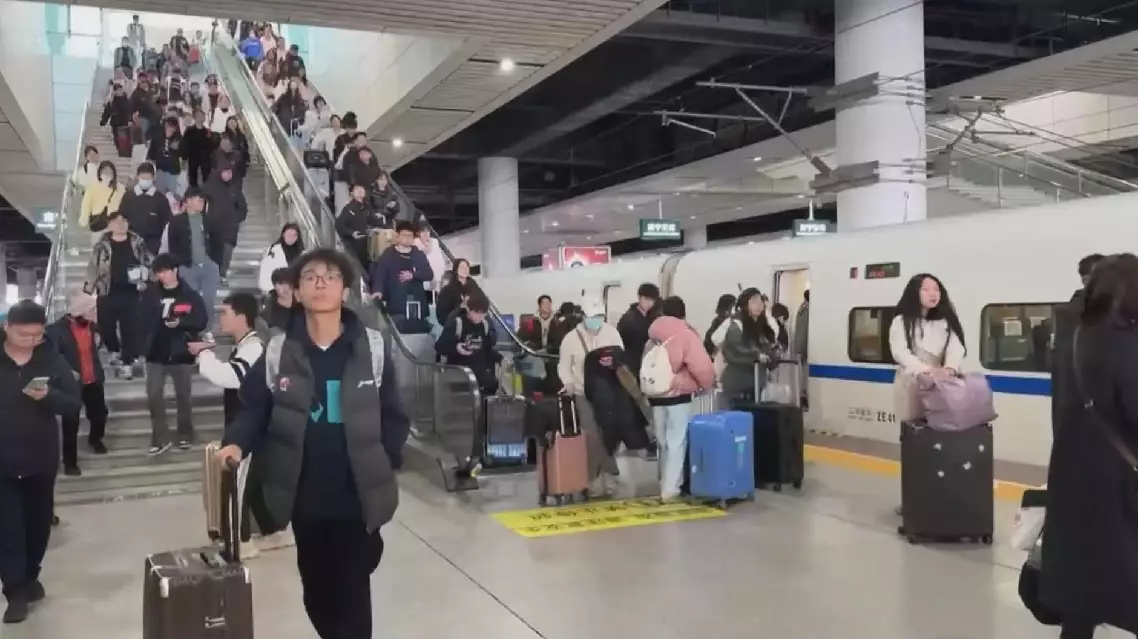
China estimated to handle over 1.3 bln trips in first week of Spring Festival travel rush
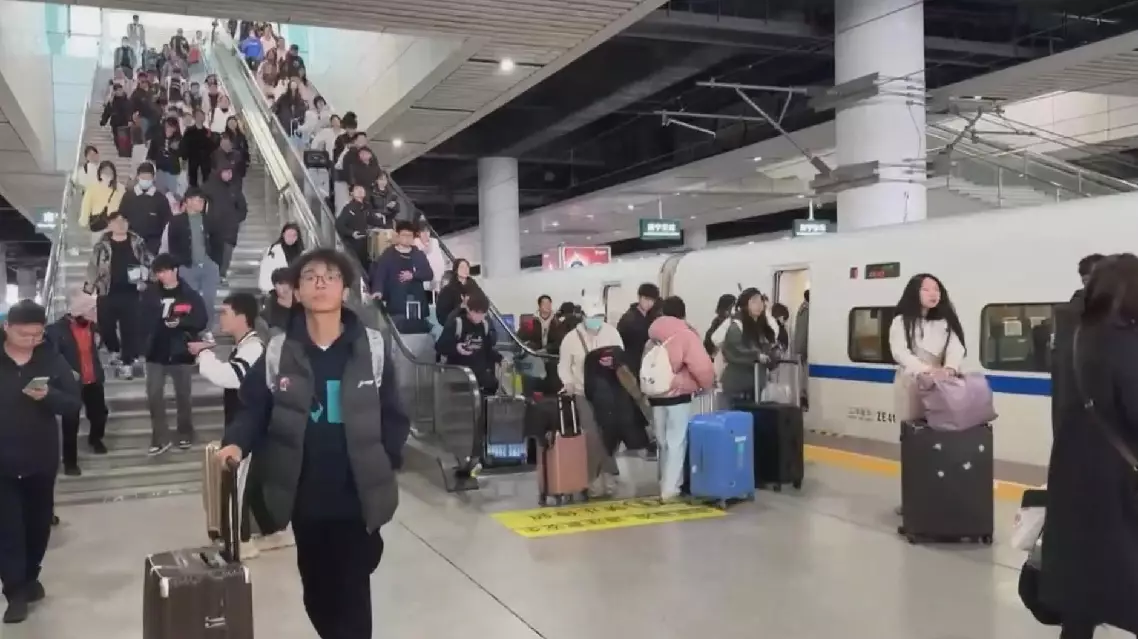
China estimated to handle over 1.3 bln trips in first week of Spring Festival travel rush
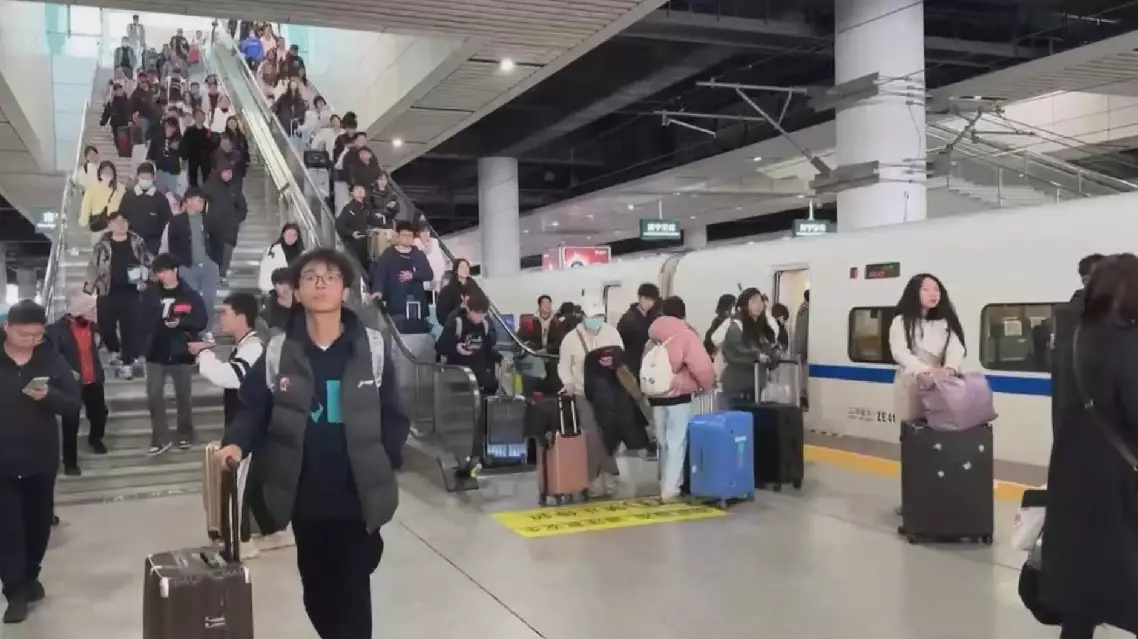
China estimated to handle over 1.3 bln trips in first week of Spring Festival travel rush
The United States cannot legitimize an operation that attacked Venezuela and captured its president, a Chinese scholar said Sunday.
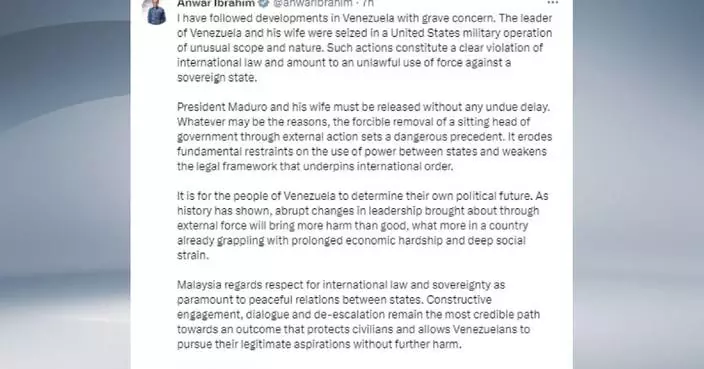
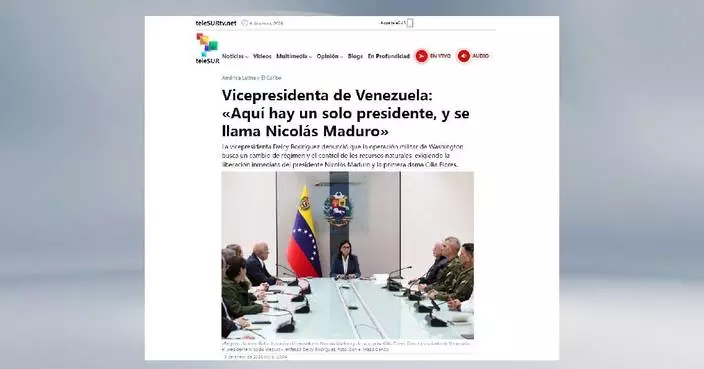
On Saturday, the United States launched a large-scale strike on Venezuela, during which Venezuelan President Nicolas Maduro and his wife were 'captured and flown out of Venezuela' according to a post by U.S. President Donald Trump on his Truth Social account.
Teng Jianqun, director of the Center for Diplomatic Studies at Hunan Normal University, said in an interview with China Global Television Network (CGTN) that the aim of this operation is to take full control of Venezuela’s natural resources.
"I don't think the United States can legitimize this operation to take custody of the president of Venezuela. And also I don't think the United States can legitimize its any action in taking the oil reserves of that country. This is actually a very dangerous game played by the Trump administration. And of course, the United States would like to take full control of that country and to take full control of the natural resources, especially the large reserve of oil in Venezuela," said Teng.
Teng said Venezuela is not an isolated case but a common practice by the United States. The United States launched an invasion of Panama on Dec. 20, 1989, which continued until January 1990, with the stated objective of capturing Panamanian strongman Manuel Noriega on charges of drug trafficking and organized crime.
"We still remember the so-called sentence of the former president of Panama in the late 1980s. And this time, the president of Venezuela will be under some judicial condition (judicial proceedings) for the so-called drug trafficking and some other crimes. So I think this is not a single case for the Venezuela country, but also this is actually a practice by the United States -- to use force, to use so-called justice under law against any leaders in Latin America and the Caribbean waters," he said.

US cannot legitimize operation against Venezuela: Chinese scholar