China's short drama industry is increasingly strengthening its foothold in the United States, which already stands as its largest international market.
In recent years, the plot-driven and captivating short dramas enjoyed surging popularity in the online streaming landscape. In China, according to data by regions on top short drama streaming apps, their combined revenue from the U.S. reached over 151 million U.S. dollars, accounting for 64.8 percent of their total income.
Chinese fantasy period dramas were well-received among overseas viewers, according to some production company executives. Studios are now partnering with U.S. companies for local language remakes of short dramas in other genres.
In east China's Hangzhou, Jiuzhou Wenhua, a short drama company, is making new content with both Chinese and American screenwriters together for adaptation meeting sessions to ensure their content would be well-received by American audience.
The company launched its app's international version a year ago, and so far their daily active users have exceeded 1 million, with popular paying content earning them over 10 million U.S. dollars from American users.
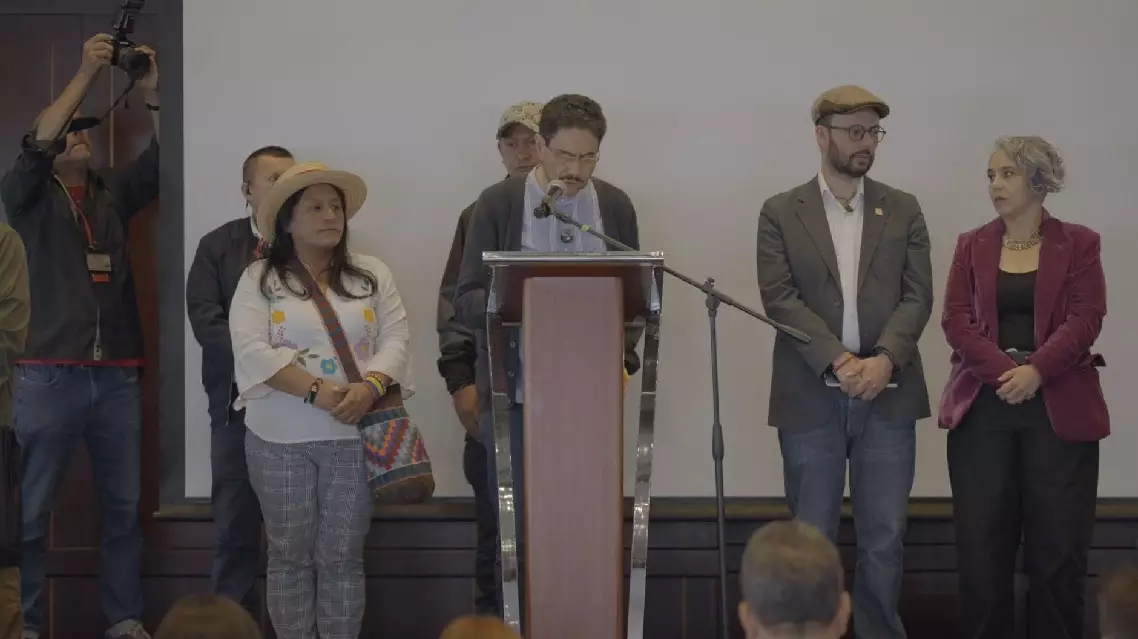
"The United States is a very important market for us, both due to its large population and its high per capita consumption of entertainment products. For our platform, we place great strategic importance on the U.S. market and invested heavily in it," said He Zexi, co-founder of Jiuzhou Wenhua's overseas short drama platform.
Chinese short dramas are exported largely in two ways: dubbed or locally produced. The number of episodes generally range from 60 to 100, with each episode one to two minutes long. The cost for viewers to watch an entire series is usually between 10 to 20 U.S. dollars.
"We have adapted the operation of China's short drama market, hiring American screenwriters for adaptation, and casting American actors. Our business model has been validated and is experiencing rapid growth," said Nan Yapeng, vice president of media company Crazy Maple Studio.
Crazy Maple's short drama platform is now rolling out as many as four new dramas per week. With the fast pace of content production, more and more local actors and production staff are joining the industry.
In Los Angeles, a newly founded short drama studio is producing adapted Chinese short dramas with a mostly American production crew.
"Many of our leads are union actors, because this type of short dramas get a lot of views, which give them very good exposure," said Yang Bohan, founder of the studio.
Industry insiders revealed that the United States currently produces up to 100 vertical short dramas each month. The production cost of each short drama ranges between 100,000 to 200,000 U.S. dollars, and the entire production cycle, from shooting to release on platforms, takes only about six weeks. This model stands in stark contrast to Hollywood's traditional production, which often involves large budgets, high costs, and lengthy production time. In Los Angeles alone, short dramas have created at least 20 percent of the employment opportunities in the local film industry.
"Definitely increases work opportunities, especially with the labor issues that we have. This is just very streamlined. It shoots very quickly, involves a lot of talented people that right now would be struggling for work I think," said Kevin, a U.S. industry professional.
Data indicates that from August 2022 to June 2024, over 100 Chinese short drama apps were launched in overseas markets. These apps have accumulated 148 million downloads, with in-app purchases reaching 252 million U.S. dollars. Industry experts say that the short drama market outside China is still facing a supply shortage. Companies are now seeking to expand collaboration in terms of local adaptation and market operation to achieve greater success in the U.S. market.
"Market promotion is entirely done on the internet, a model that differs from Hollywood and the traditional film industry. What we really want is to elevate this to the next level – to use American screenwriters with (extensive) understandings of local culture, but at the same time respect China's data-driven methods. We want to have a fusion, of course this would come with fierce clashes, but I believe we shall see some truly outstanding works afterwards," said Jia Songtao, chief strategy officer of a U.S.-based short drama company.

China's short drama industry seeks deeper integration in US market

China's short drama industry seeks deeper integration in US market