ROME (AP) — Italian police arrested a Libyan warlord on a warrant from the International Criminal Court, but an Italian tribunal refused to approve the arrest and he was instead sent back to Libya, Italy's state-run RAI television reported.
Ossama Anjiem, also known as Ossama al-Masri, heads the Tripoli branch of the Reform and Rehabilitation Institution, a notorious network of detention centers run by the government-backed Special Defense Force. The SDF acts as a military police unit combating high-profile crimes including kidnappings, murders as well as illegal migration.
Like many other militias in western Libya, the SDF has been implicated in atrocities in the civil war that followed the overthrow and killing of longtime Libyan dictator Moammar Gadhafi in 2011. Recently, the International Criminal Court's chief prosecutor issued arrest warrants over alleged crimes in Libya beyond the civil war, including in detention facilities where human rights groups have documented abuses.
Italian newspapers Avvenire and La Stampa had reported that al-Masri was arrested in Turin on Sunday on an warrant from The Hague-based court after he attended a Juventus-Milan soccer match the night before.
The Justice Ministry said in a statement Tuesday that the court had requested al-Masiri's arrest and that it was being evaluated by prosecutors. But RAI state television said late Tuesday that the Turin tribunal had declined to approve the arrest, and that al-Masri had been released from prison and was sent back to Libya.
There was no immediate comment from the Justice Ministry.
Al-Masri's arrest had posed a dilema for Italy, because it has close ties to the internationally recognized government in Tripoli as well as energy interests in the country. Additionally, any trial in The Hague of al-Masri could bring unwanted attention to Italy's migration policies and its support of the Libyan coast guard, which it has financed to prevent migrants from leaving.
Human rights groups have documented gross abuses in the Libyan detention facilities where migrants are kept, and have accused Italy of being complicit in their mistreatment.
Nello Scavo, an Italian journalist who has documented atrocities against migrants and broke the story of al-Masri's arrest, was not surprised that Italy let al-Masri go but said it amounted to a failure of Italy's obligations under international law to turn him over to the court.
Italy is a founding member of the International Criminal Court and hosted the 1998 Rome conference that gave birth to it.
Italy's failure to hand him over “makes one wonder what the real power relations are between Italy and Libya,” he said in a message to AP. "If internationally wanted persons can obtain through legal subterfuge safe conduct in a G7 country like Italy, then words like law and international justice are emptied of all meaning, to the detriment of the weakest and the democracies.”
Amnesty International had called on Italy to promptly hand al-Masri over to the ICC, saying it had documented “horrific violations committed with total impunity” in the Libyan prisons, including torture, unlawful killings and forced disappearances.
“With no prospect of domestic accountability in Libya of powerful commanders of militias, Italy, and all members of the international community, must pursue justice for crimes under international law," Amnesty said in a statement before news of al-Masri's release and expulsion was made public.
The Hague-based court has issued a handful of new warrants against Libyans in the past year after opening an investigation into Libya in 2011 at the request of the U.N. Security Council. In October, it unsealed arrest warrants against six men, but other warrants have remained sealed. Al-Masri’s name doesn’t appear on any of the public warrants.
The ICC says it currently has 11 arrest warrants, for which seven people are still at large. In a recent report, the ICC prosecutor’s office said it expected to issue new warrants in 2025 related to crimes in detention facilities.
Libya has been divided for years between rival administrations in the east and west, each backed by armed groups and foreign governments. Currently, it is governed by Abdul-Hami Dbeibah’s government in Tripoli and by the administration of Prime Minister Ossama Hammad in the east.
Western Libya is controlled by an array of lawless militias allied with Dbeibah’s government, while forces of powerful military commander Khalifa Hifter control the east and south.
Mediterranea Saving Humans, a humanitarian organization that has denounced the atrocities against migrants in Libyan detention centers, said al-Masri’s arrest followed “years of complaints and testimonies from victims made to the International Criminal Court, which conducted a difficult investigation.”
The group has long condemned the Italian government’s financial support of Libya’s coast guard.
“He was hiding in Italy, of course, because here the traffickers feel safe,” the group said in a statement, suggesting that Italian authorities didn’t want the information to be released but that it leaked out thanks to reporting by the Avvenire journalist Scavo.
Magdy reported from Cairo.
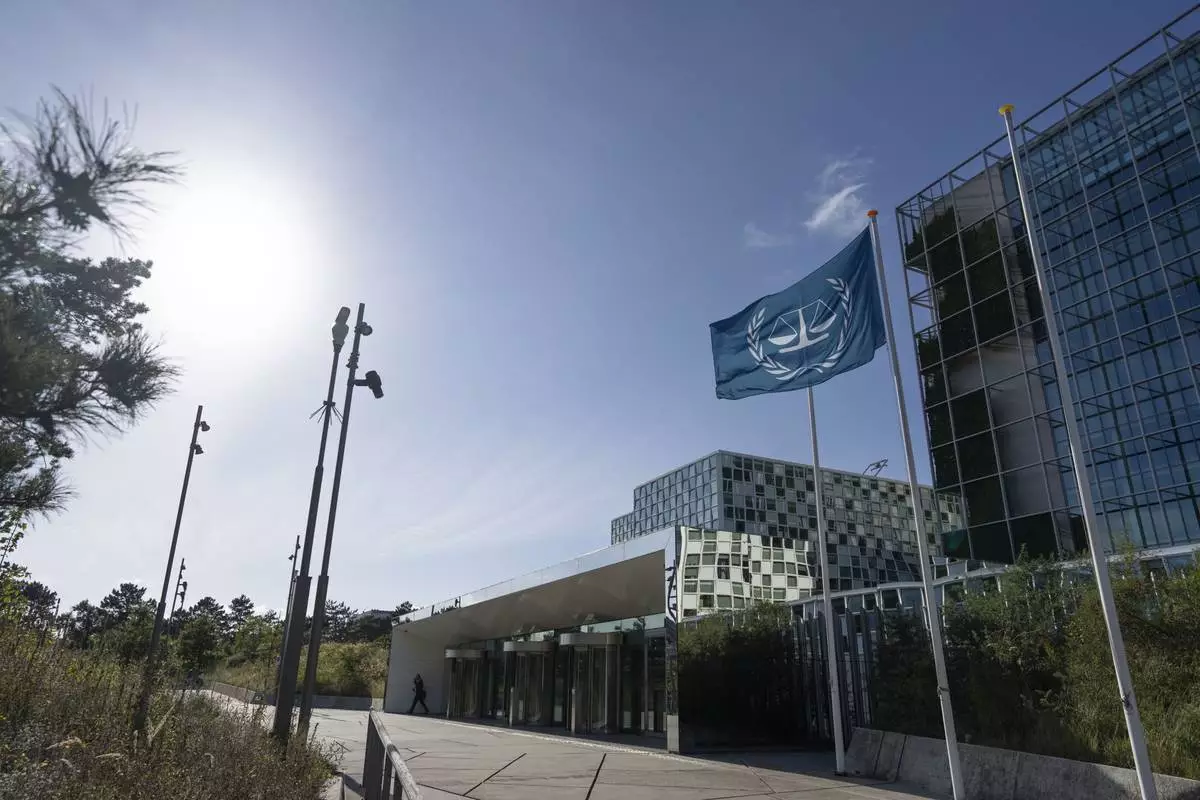
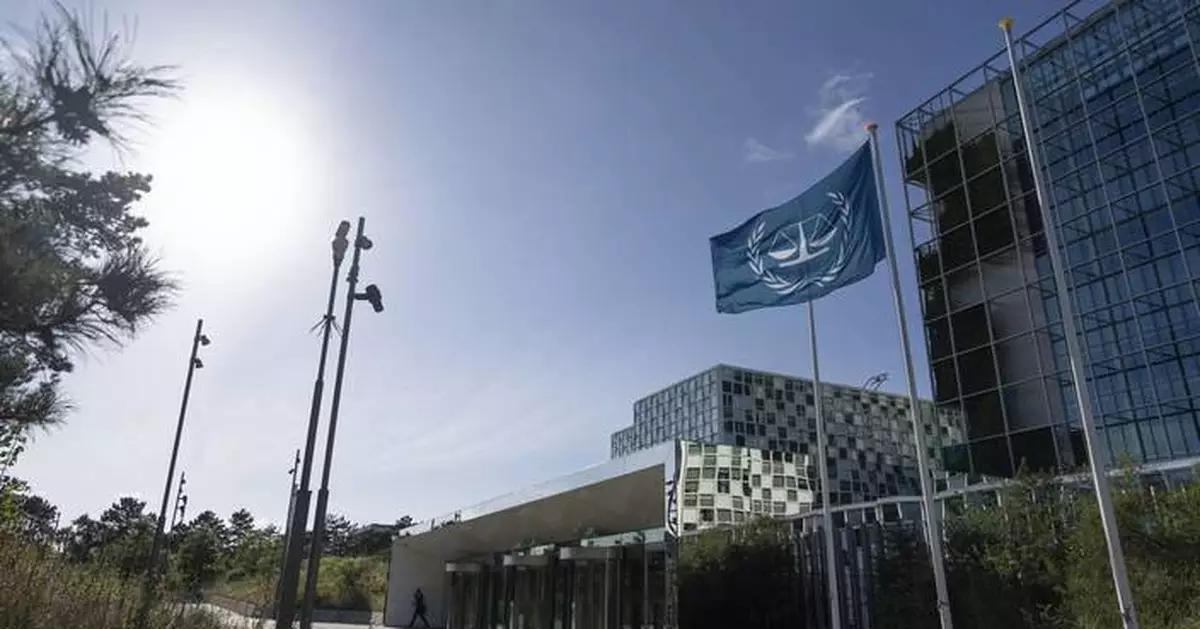
FILE - View of the ICC, the International Criminal Court, in The Hague, Netherlands, Monday, Sept. 16, 2024. (AP Photo/Peter Dejong, File)
DUBAI, United Arab Emirates (AP) — The U.S. military announced Wednesday that it was conducting a 12th night of strikes against Iran as both sides increasingly targeted civilian infrastructure.
U.S. Central Command said the attacks were designed to “further degrade Iran’s ability to threaten civilian mariners and commercial vessels transiting regional waters,” as the Americans push to regain control over the Strait of Hormuz and restore the flow of international shipping.
President Donald Trump warned earlier Wednesday that the U.S. would destroy one bridge or power plant each time Iran shoots at a ship in the strait.
“From this point forward, any time the Islamic Republic of Iran shoots at a ship in the Strait of Hormuz, whether it be by Missile, Rocket, Drone, or any other device or weapon, the United States will bomb and destroy ONE BRIDGE OR POWER PLANT,” Trump wrote on social media.
The continued American airstrikes are occurring even as diplomatic efforts show little public sign of progress and officials on both sides have dug in on the dispute over the crucial waterway for global energy that remains largely closed. The unpopular war threatens further worldwide economic disruption and is sending fuel prices up ahead of midterm U.S. elections this fall.
Seyed Abbas Araghchi, Iran’s foreign minister, said his country would adopt an “eye for an eye” defense doctrine.
“Any aggression against Iran, including our infrastructure, will compel a powerful and decisive response,” he posted Wednesday on X.
Iranian state media reported that U.S. missiles struck locations late Wednesday near the cities of Ahvaz, Ramshir and Andimeshk in western Iran. Two people were killed in a U.S. missile strike in the town of Shalamcheh on the Iraqi boarder, Iranian state media said early Thursday.
Meanwhile, military officials in Kuwait said on social media that their air defenses were “confronting attacks by hostile drones, following the sinful Iranian aggression.”
Iran has responded to U.S. attacks by targeting energy infrastructure and desalination plants that provide drinking water in parched neighboring Gulf countries.
International law generally prohibits such attacks unless the infrastructure is being used for military purposes.
The closure of the strait, through which a fifth of the world’s traded oil and gas passed during peacetime, has jolted the world economy with effects far beyond the Middle East. A new threat by Iran-backed Houthi rebels in Yemen to target Saudi shipping in the Red Sea puts another trade chokepoint at risk.
Trump traveled to Dover Air Force Base on Wednesday for the arrival of the remains of four U.S. service members. A day earlier Defense Secretary Pete Hegseth estimated in a fiery Senate hearing that the U.S. had spent $37.5 billion on the war so far.
Benchmark Brent crude oil rose to more than $93 a barrel in trading. That's up from less than $72 early this month, which is roughly where it was before the war. Gasoline prices are also climbing.
Iran says it has the right to manage traffic and potentially charge fees in the strait, which was open to all and toll-free before the war. It has attacked ships using a route through the strait that is overseen by U.S. forces and intended to be outside Tehran's control.
Iran's parliament speaker, Mohammad Bagher Qalibaf, who has led negotiations with the U.S., appeared to brush off Trump's threats.
“We have repeatedly said that the situation of the strait will not return to prewar conditions," he wrote on social media..
Before the latest strikes, Iranian Interior Minister Eskandar Momeni visited Pakistan, a key mediator in the conflict, seeking to revive diplomacy. But it was unclear what new arrangement might be reached to end the war, which lately has become a battle for control over the Strait of Hormuz.
Iran's Interior Ministry spokesman Ali Zeinivand said “diplomacy isn’t called off” and that messages were still being exchanged, without elaborating, according to IRNA.
An Arab diplomat said Gulf states are increasingly pessimistic about finding an off-ramp for escalating hostilities and are particularly concerned about the latest round of threats.
The diplomat said countries in the region, in addition to Pakistan and Turkey, are continuing to push for de-escalation. But, he said the chances for any improvement currently appear bleak. The diplomat spoke on condition of anonymity due to the sensitivity of the situation.
At a regional summit in the Philippines, U.S. Secretary of State Marco Rubio denounced Iran’s actions in the strait.
“If we create a precedent in the Middle East where a nation state can decide that they are going to control an international waterway, charge a toll and if you don’t pay them, blow up your ships, we have created a very dangerous precedent which will repeat itself in other parts of the world, including in this region,” he said.
Rubio said the U.S. remains open to negotiations with Iran, “but right now they don’t seem to be serious about that” so instead the focus is on protecting shipping.
In response to Iran’s attacks, the U.S. re-imposed a blockade on Iranian ports.
Speaking from the Oval Office on Tuesday, Trump gave a dim view on possible talks, saying the U.S. had “no interest in meeting.”
He signaled that U.S. forces could soon target an under-construction Iranian nuclear site buried deep under a mountain.
The site, known as Pickaxe Mountain, lies on the south side of Iran’s Natanz nuclear enrichment site, which was bombed by the U.S. during the 12-day war between Iran and Israel in 2025. But Pickaxe Mountain has remained untouched as Iran continues to dig at the site.
Iran has always insisted its nuclear program is peaceful, while resuming the enrichment of uranium to near weapons-grade levels since Trump scrapped a 2015 nuclear deal during his first term.
Binkley and Toropin reported from Washington. Contributing were Associated Press writers Bassem Mroue in Beirut; Michelle L. Price and Jim Gomez in Manila, Philippines; and Christopher Weber in Los Angeles.
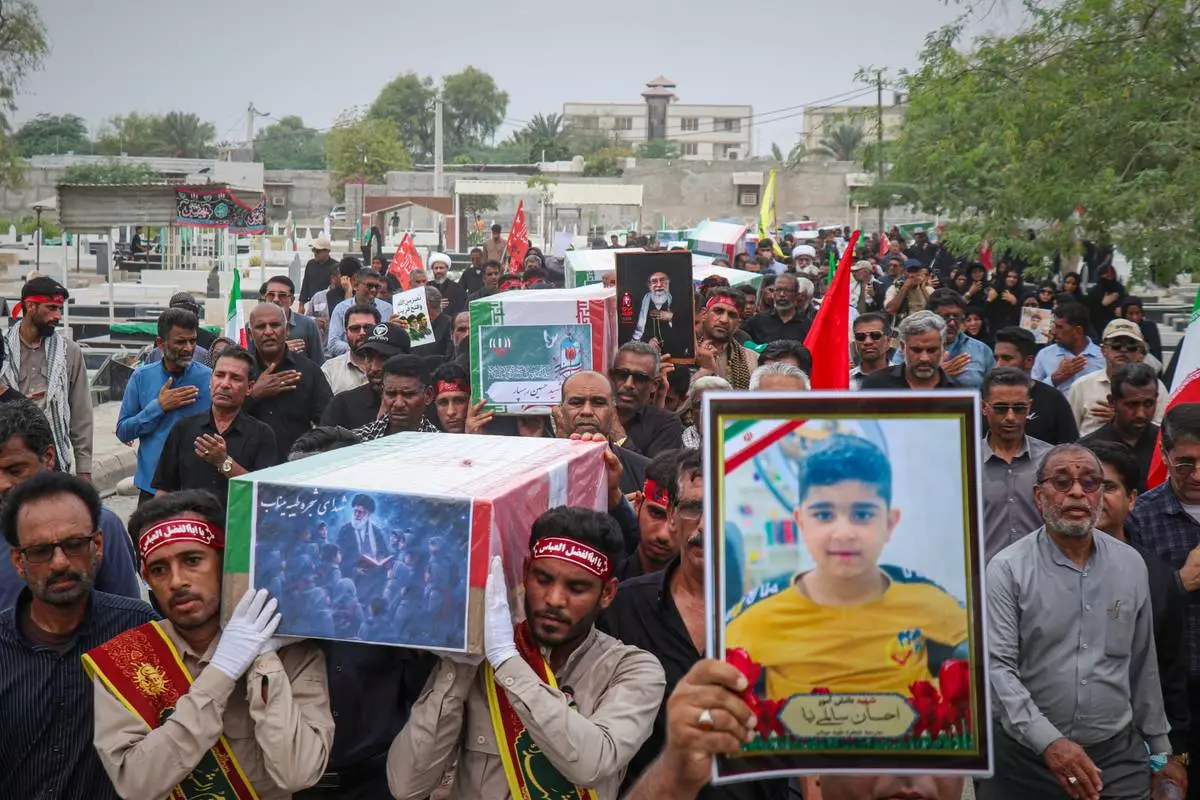
Mourners carry the coffins containing additional remains of victims identified through DNA testing during funeral ceremonies in Minab, Iran, Tuesday, July 22, 2026, nearly five months after they were killed in the Feb. 28 strike on the Shajareh Tayyebeh School.(Razieh Poudat/ISNA via AP)
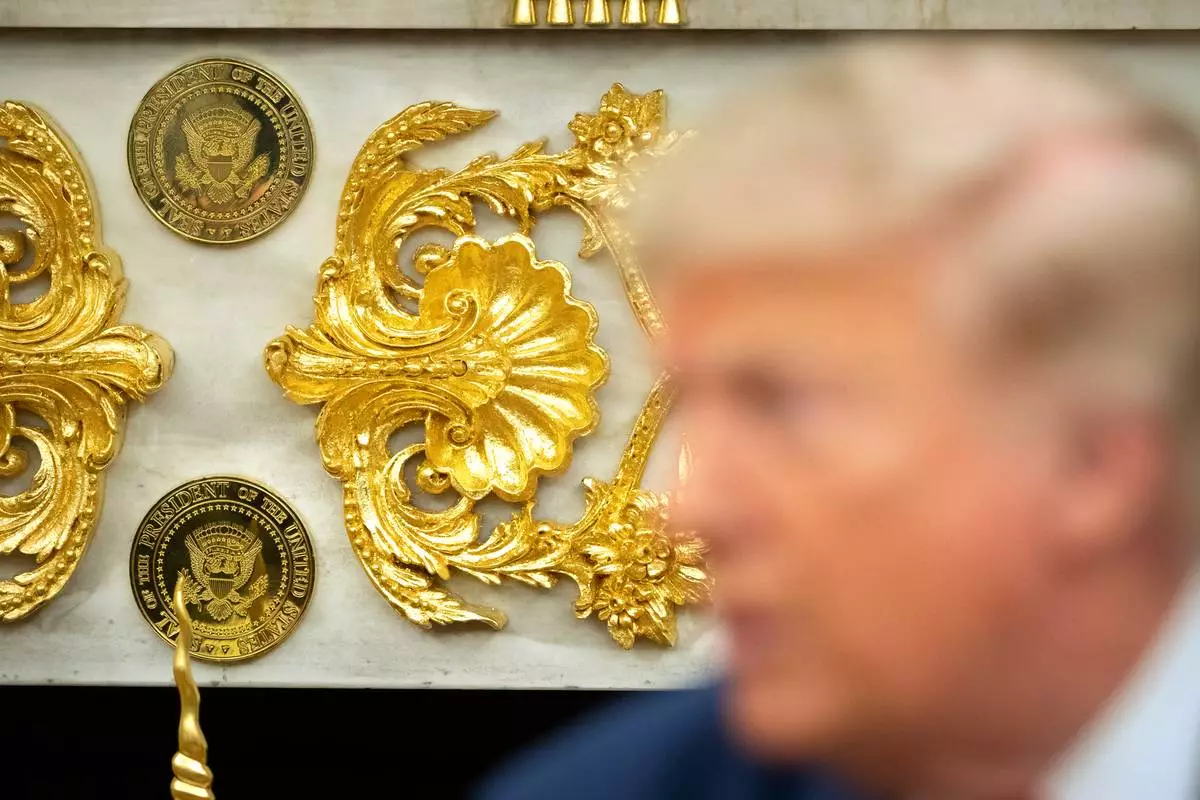
Gold-colored Presidential seals are seen on a fireplace in the Oval Office as President Donald Trump meets with Lebanese President Joseph Aoun at the White House, Tuesday, July 21, 2026, in Washington. (AP Photo/Mark Schiefelbein)
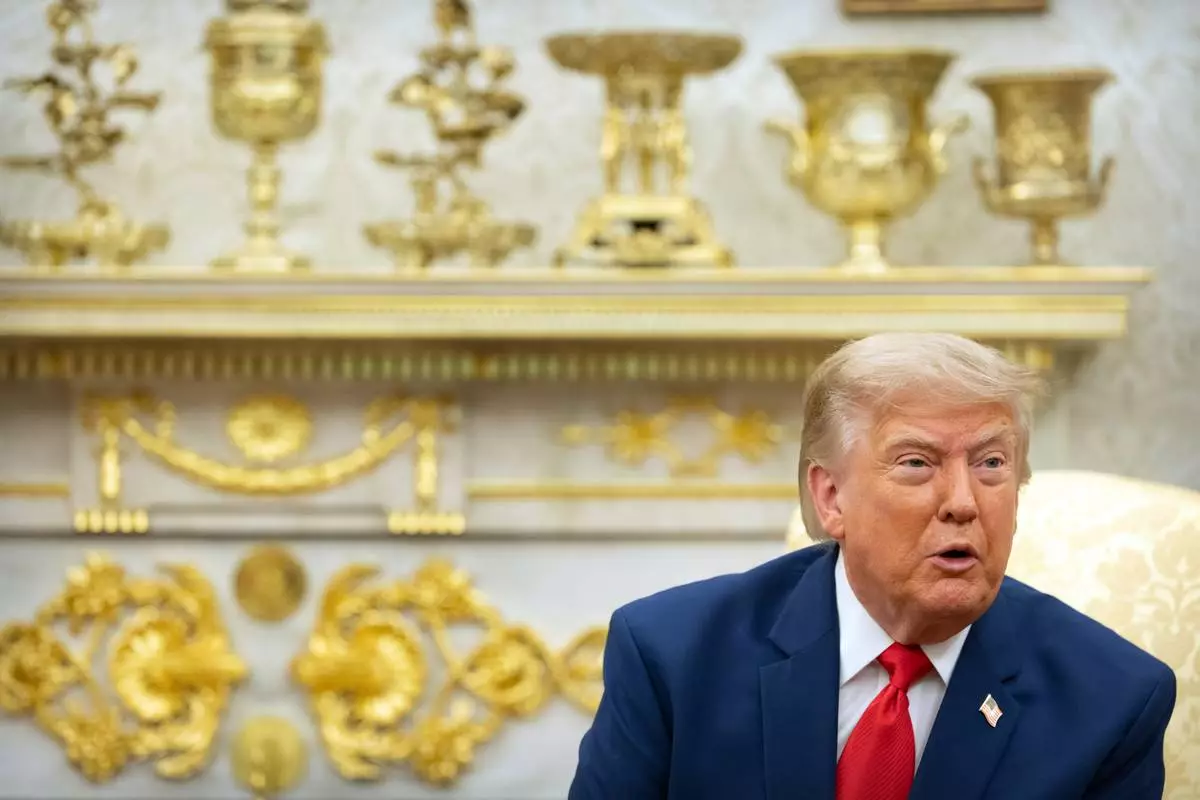
President Donald Trump speaks while meeting with Lebanese President Joseph Aoun in the Oval Office at the White House, Tuesday, July 21, 2026, in Washington. (AP Photo/Mark Schiefelbein)
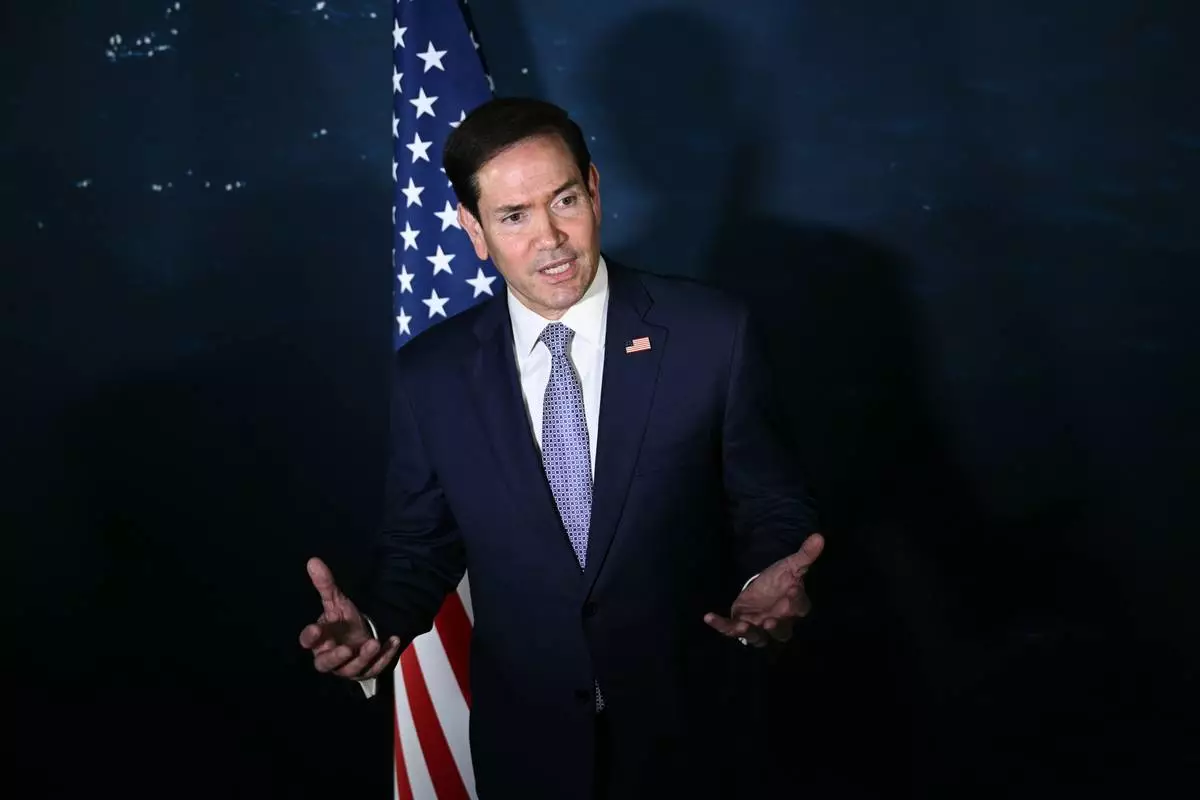
Secretary of State Marco Rubio speaks during a press conference on the sidelines of the Association of Southeast Asian Nations (ASEAN) Foreign Ministers' Meeting in Pasay, Metro Manila, Philippines Wednesday, July 22, 2026. (Brendan Smialowski/Pool Photo via AP)