Skip to Content Facebook Feature Image

Former El Salvador President Mauricio Funes dies in exile in Nicaragua at age 65

News

Former El Salvador President Mauricio Funes dies in exile in Nicaragua at age 65
News

News

Former El Salvador President Mauricio Funes dies in exile in Nicaragua at age 65

2025-01-23 05:51 Last Updated At:06:00

SAN SALVADOR, El Salvador (AP) — Former El Salvador President Mauricio Funes, who spent the final years of his life in Nicaragua to avoid various criminal sentences, died late Tuesday. He was 65.

Nicaragua’s Health Ministry said in a statement that Funes had died of a serious chronic illness.

Funes governed El Salvador from 2009 to 2014. He lived his final nine years under the protection of Nicaragua President Daniel Ortega, whose government had given him citizenship, allowing him to avoid extradition.

Nicaragua's Foreign Affairs Ministry said that Funes' family had decided he would be buried in Nicaragua.

The former president had pending sentences in El Salvador for corruption and making deals with the country’s powerful street gangs that amounted to 28 years, but he never set foot in prison.

The journalist-turned-politician came to power with the Farabundo Martí National Liberation Front, the leftist party born of El Salvador’s civil war and a powerful national political force for three decades that was left with no seats in the Congress after last year’s election.

On Wednesday, his party said in a statement that “Mauricio Funes as an investigative journalist and incisive generator of public opinion, as well as in his time as president of the republic, enjoyed broad acceptance and support from the Salvadoran people and the international community.”

Current Labor Minister Rolando Castro said via X that Funes’ “skills and contributions to the country as a journalist are undeniable, just as are his mistakes in public office.”

Funes was born in San Salvador on Oct. 18, 1959. He worked as a teacher in Catholic schools, but later made his name as a war reporter and hosted a highly popular interview show that took on controversial topics. He interviewed multiple heads of state, worked at two television stations and was a correspondent for CNN from 1991 to 2007, winning multiple awards.

Then the FMLN came calling, offering to make him their candidate and he won the 2009 elections, defeating Rodrigo Ávila of the conservative National Republican Alliance, better known as Arena, that had governed the country since 1989.

Funes was a fresh face, not someone directly involved in the civil war as the party tried to remake itself with a less bellicose image.

At the time, Cardinal Gregorio Rosa Chávez praised Funes as “tenacious” and someone who wouldn’t shy away from El Salvador’s problems.

But by the time he left office, Funes was hounded by accusations of corruption. In 2016, he fled to Nicaragua. He always denied the accusations and said his troubles were all part of political persecution.

But he was tried in absentia six times and convicted in each one.

For one, Funes was sentenced in May 2023 to 14 years in prison for negotiating a truce with the gangs to lower the homicide rate during his administration in exchange for giving imprisoned gang leaders perks.

His last sentence came just last year in June. He was sentenced to eight years in prison for receiving an airplane as a kickback for awarding a construction contract for a bridge project. He was also being prosecuted for allegedly diverting some $351 million in government funds.

A number of former officials in his administration, as well as his ex-wife Vanda Pignato, his children and various former partners have also been prosecuted for corruption. His former security minister, David Munguía Payés, was sentenced to 18 years in prison for his role in negotiating the gang truce.

Despite Funes’ troubled presidency, the FMLN won again with President Salvador Sánchez Cerén who governed from 2014 to 2019. Sánchez Céren had been one of the five guerrilla commanders in the civil war.

In recent years, Funes and current El Salvador President Nayib Bukele frequently sparred on social platforms, trading insults. Bukele pushed prosecutions of the former president, especially for his negotiations with the gangs.

Bukele himself had been accused of negotiating with gang leaders, but vehemently denied that and later crushed the gangs in a yearslong all-out offensive.

FILE - Mauricio Funes, presidential candidate of the Farbundo Marti National Liberation Front party (FMLN), waves the victory sign to supporters during his victory speech in San Salvador, March 15, 2009. (AP Photo/Dario Lopez-Mills, File)

FILE - Mauricio Funes, presidential candidate of the Farbundo Marti National Liberation Front party (FMLN), waves the victory sign to supporters during his victory speech in San Salvador, March 15, 2009. (AP Photo/Dario Lopez-Mills, File)

FILE - In this June 1, 2012 file photo, El Salvador's President Mauricio Funes stands in the National Assembly in San Salvador, El Salvador. Former El Salvador President Mauricio Funes, who spent the final years of his life in Nicaragua to avoid various criminal sentences, died late Tuesday. He was 65. (AP Photo/Luis Romero, File)
FILE - In this June 1, 2012 file photo, El Salvador's President Mauricio Funes stands in the National Assembly in San Salvador, El Salvador. Former El Salvador President Mauricio Funes, who spent the final years of his life in Nicaragua to avoid various criminal sentences, died late Tuesday. He was 65. (AP Photo/Luis Romero, File)
NARA, Japan (AP) — In Japan's ancient capital, Nara, deer moved through grass fields and shaded paths, lowering their heads toward visitors holding special crackers made just for them.

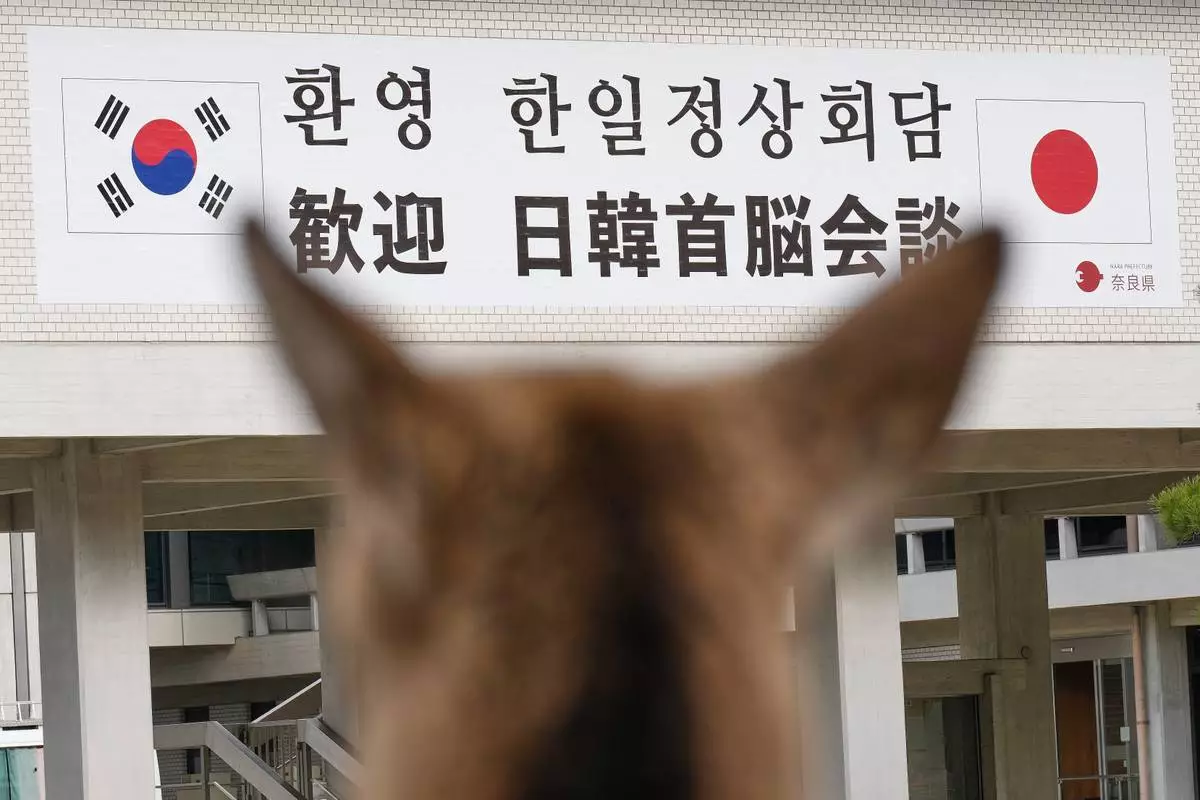
Nara this week hosted a Japan–South Korea summit, with Japanese Prime Minister Sanae Takaichi, who is from the city, welcoming South Korean President Lee Jae Myung.

But despite the high-level diplomacy, the deer were still stars of the show.

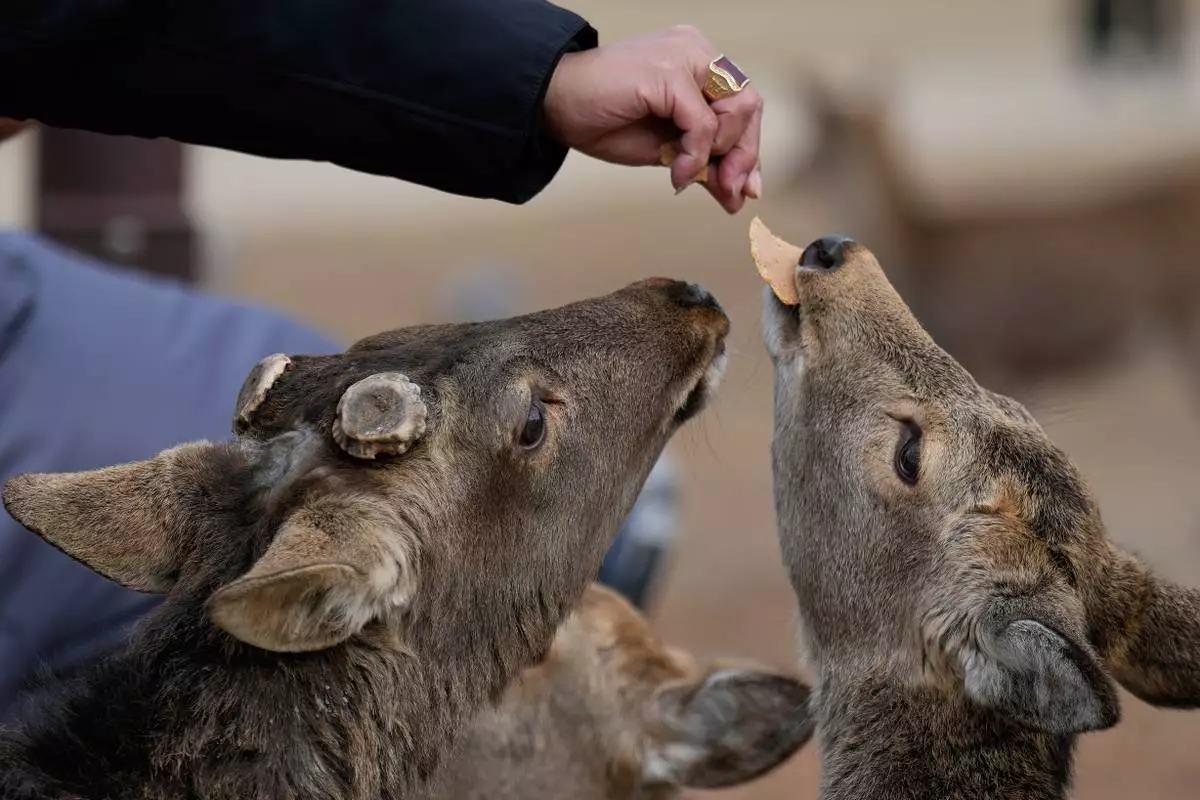
Tourists around the park stopped to watch or feed the animals with crackers, sold by vendors, that are made from flour and rice husks.

When the deer fix their gazes on visitors, many responded by pulling out crackers and stepping closer.

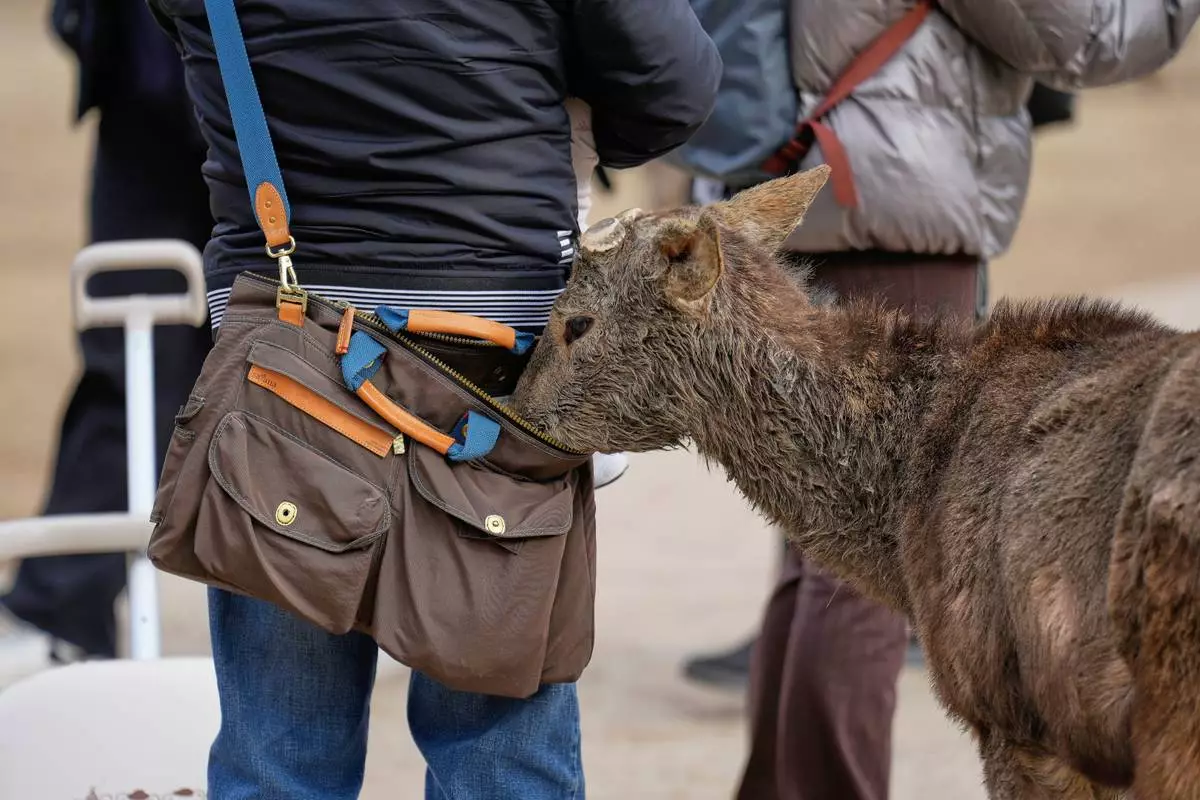
Not all encounters were gentle. Some deer nudged visitors from behind, sniffing backpacks and shopping bags. Others tried to nibble at coat pockets or chew at clothing when they suspected food was hidden there.

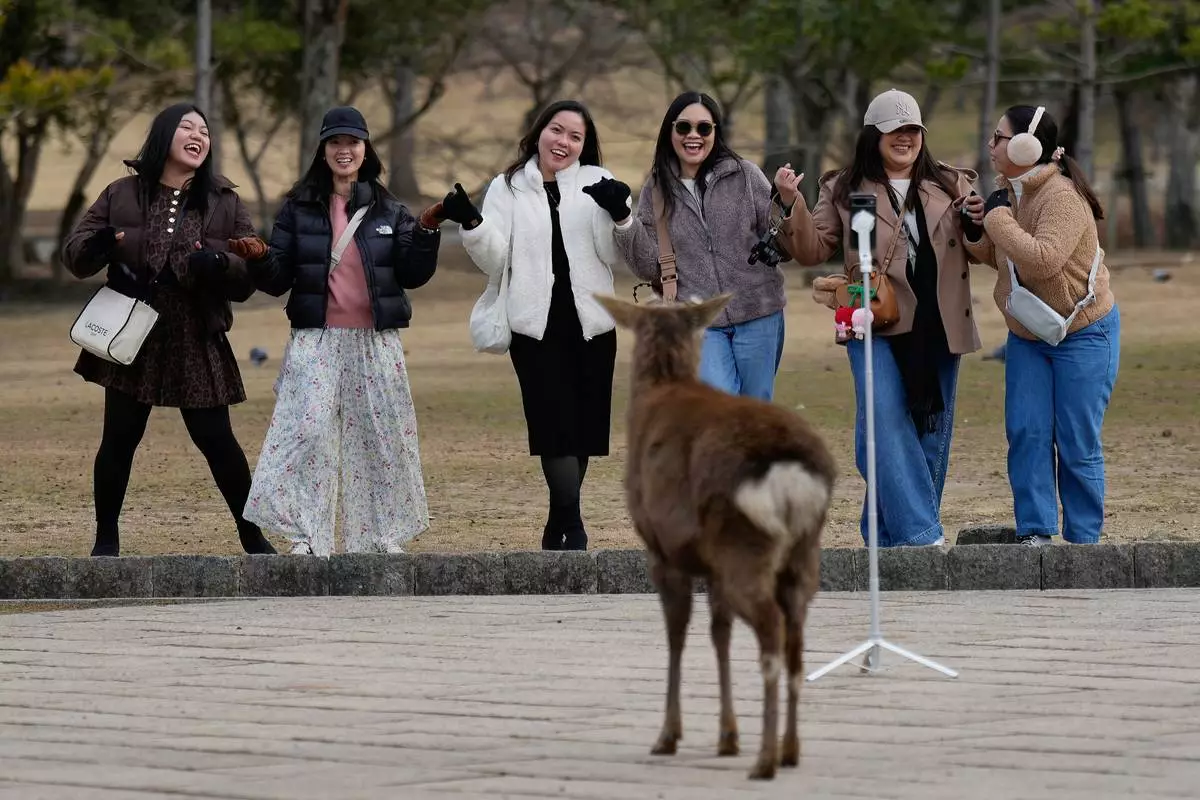
Some visitors hesitated, appearing nervous, but fed the deer anyway. As the animals stepped closer, many tourists recoiled, taking a step back or letting out brief screams. Others lifted their phones to take pictures.

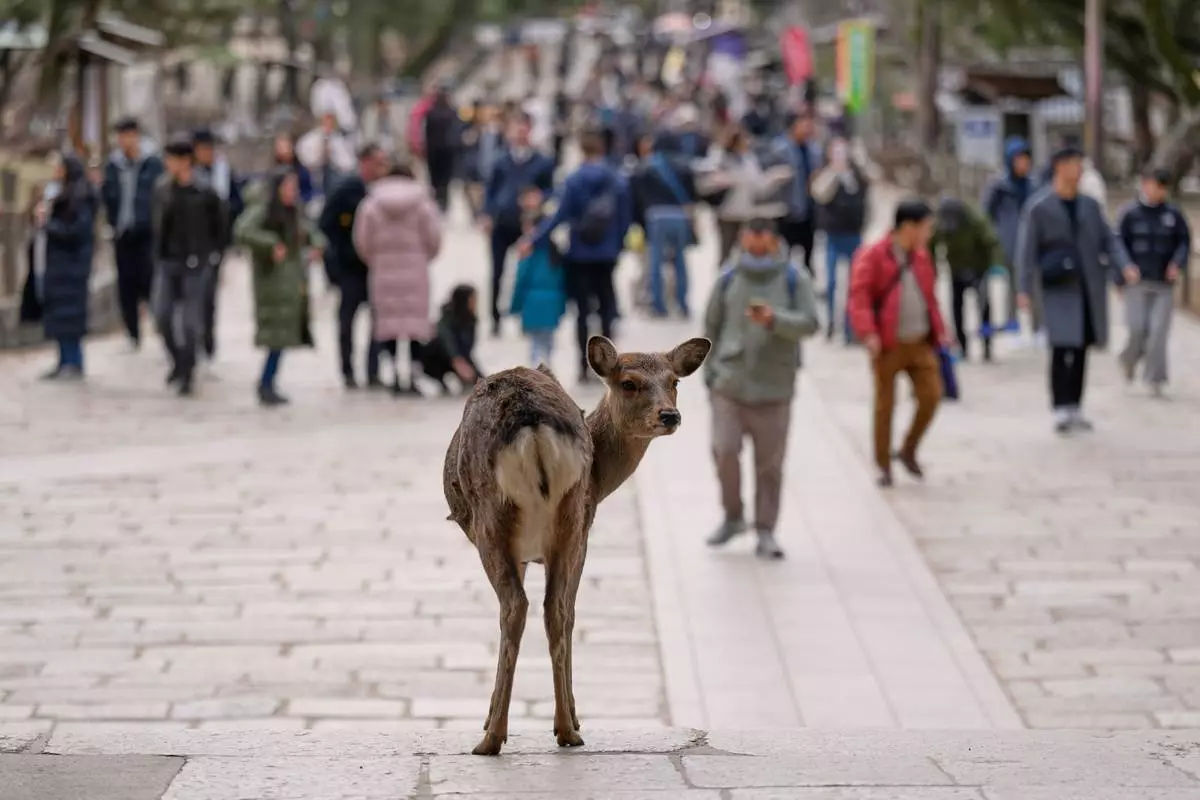
More than 1,000 deer live in the park and surrounding areas. They roam freely across lawns, sidewalks and temple grounds, resting under trees or gathering near food stalls. A few deer were seen wandering into nearby shops.

The deer are protected and are considered sacred according to local Shinto beliefs. Legend has it that a deity arrived in Nara riding a white deer more than a thousand years ago.

Nara was Japan’s first permanent capital in the eighth century and is home to several UNESCO World Heritage sites, including Todaiji temple and Kasuga shrine.

This is a photo gallery curated by AP photo editors.

Deer are fed by a staff at a park in Nara, western Japan, Wednesday, Jan. 14, 2026, where more than 1,000 free-roaming deer considered sacred in Shinto belief have become one of the city's most popular tourist attractions. (AP Photo/Eugene Hoshiko)

Deer are fed by a staff at a park in Nara, western Japan, Wednesday, Jan. 14, 2026, where more than 1,000 free-roaming deer considered sacred in Shinto belief have become one of the city's most popular tourist attractions. (AP Photo/Eugene Hoshiko)

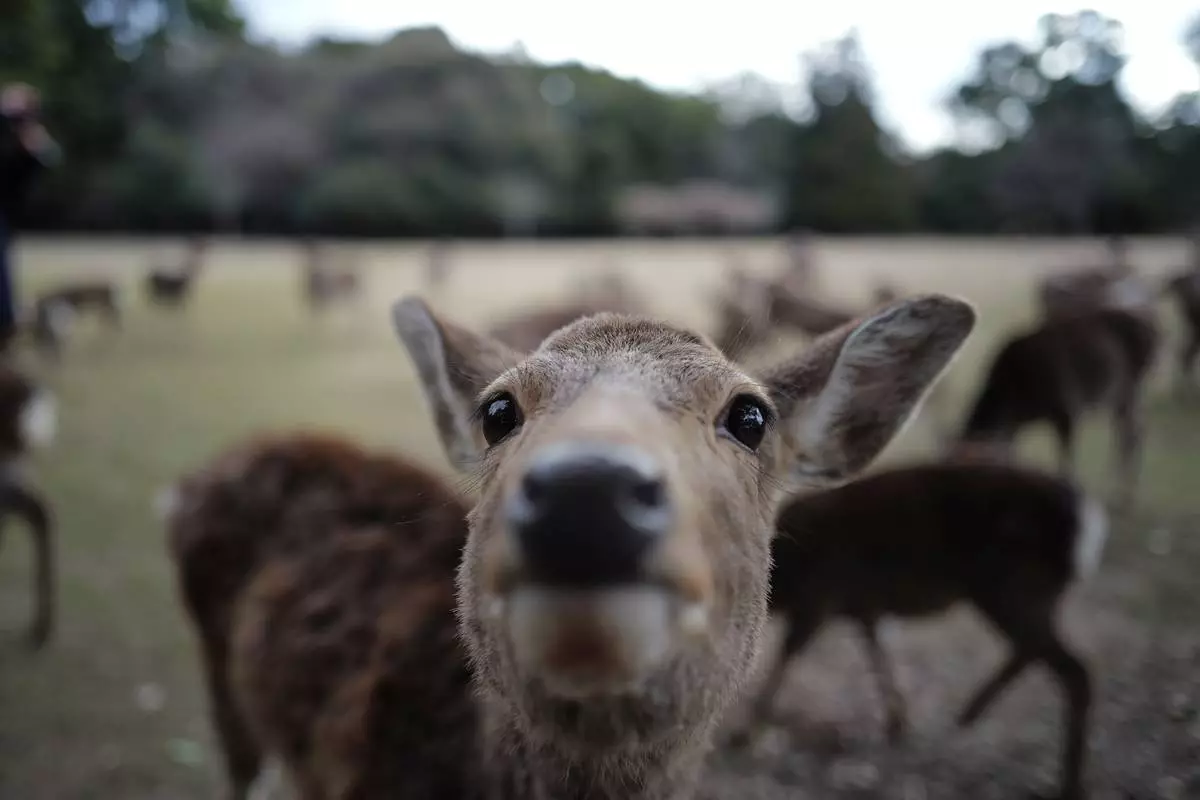
A deer waits for food from tourists at a park in Nara, western Japan, Wednesday, Jan. 14, 2026, where more than 1,000 free-roaming deer considered sacred in Shinto belief have become one of the city's most popular tourist attractions. (AP Photo/Eugene Hoshiko)

A deer waits for food from tourists at a park in Nara, western Japan, Wednesday, Jan. 14, 2026, where more than 1,000 free-roaming deer considered sacred in Shinto belief have become one of the city's most popular tourist attractions. (AP Photo/Eugene Hoshiko)

A deer stands in a park in Nara, western Japan, Wednesday, Jan. 14, 2026, near a banner reading "Welcome Japan-South Korea Summit Meeting" hoisted at a public building.(AP Photo/Eugene Hoshiko)

A deer stands in a park in Nara, western Japan, Wednesday, Jan. 14, 2026, near a banner reading "Welcome Japan-South Korea Summit Meeting" hoisted at a public building.(AP Photo/Eugene Hoshiko)

A deer waits for food from tourists near Todaiji temple, in Nara, western Japan, Wednesday, Jan. 14, 2026, where more than 1,000 free-roaming deer considered sacred in Shinto belief have become one of the city's most popular tourist attractions. (AP Photo/Eugene Hoshiko)

A deer waits for food from tourists near Todaiji temple, in Nara, western Japan, Wednesday, Jan. 14, 2026, where more than 1,000 free-roaming deer considered sacred in Shinto belief have become one of the city's most popular tourist attractions. (AP Photo/Eugene Hoshiko)

A tourist feeds deer at a park, in Nara, western Japan, Wednesday, Jan. 14, 2026, where more than 1,000 free-roaming deer considered sacred in Shinto belief have become one of the city's most popular tourist attractions. (AP Photo/Eugene Hoshiko)

A tourist feeds deer at a park, in Nara, western Japan, Wednesday, Jan. 14, 2026, where more than 1,000 free-roaming deer considered sacred in Shinto belief have become one of the city's most popular tourist attractions. (AP Photo/Eugene Hoshiko)

Tourists pose for their selfie as a deer waits for food at a park, in Nara, western Japan, Wednesday, Jan. 14, 2026, where more than 1,000 free-roaming deer considered sacred in Shinto belief have become one of the city's most popular tourist attractions. (AP Photo/Eugene Hoshiko)

Tourists pose for their selfie as a deer waits for food at a park, in Nara, western Japan, Wednesday, Jan. 14, 2026, where more than 1,000 free-roaming deer considered sacred in Shinto belief have become one of the city's most popular tourist attractions. (AP Photo/Eugene Hoshiko)

A deer pokes its head into a tourist's bag while looking for food at a park, in Nara, western Japan, Wednesday, Jan. 14, 2026, where more than 1,000 free-roaming deer considered sacred in Shinto belief have become one of the city's most popular tourist attractions. (AP Photo/Eugene Hoshiko)

A deer pokes its head into a tourist's bag while looking for food at a park, in Nara, western Japan, Wednesday, Jan. 14, 2026, where more than 1,000 free-roaming deer considered sacred in Shinto belief have become one of the city's most popular tourist attractions. (AP Photo/Eugene Hoshiko)

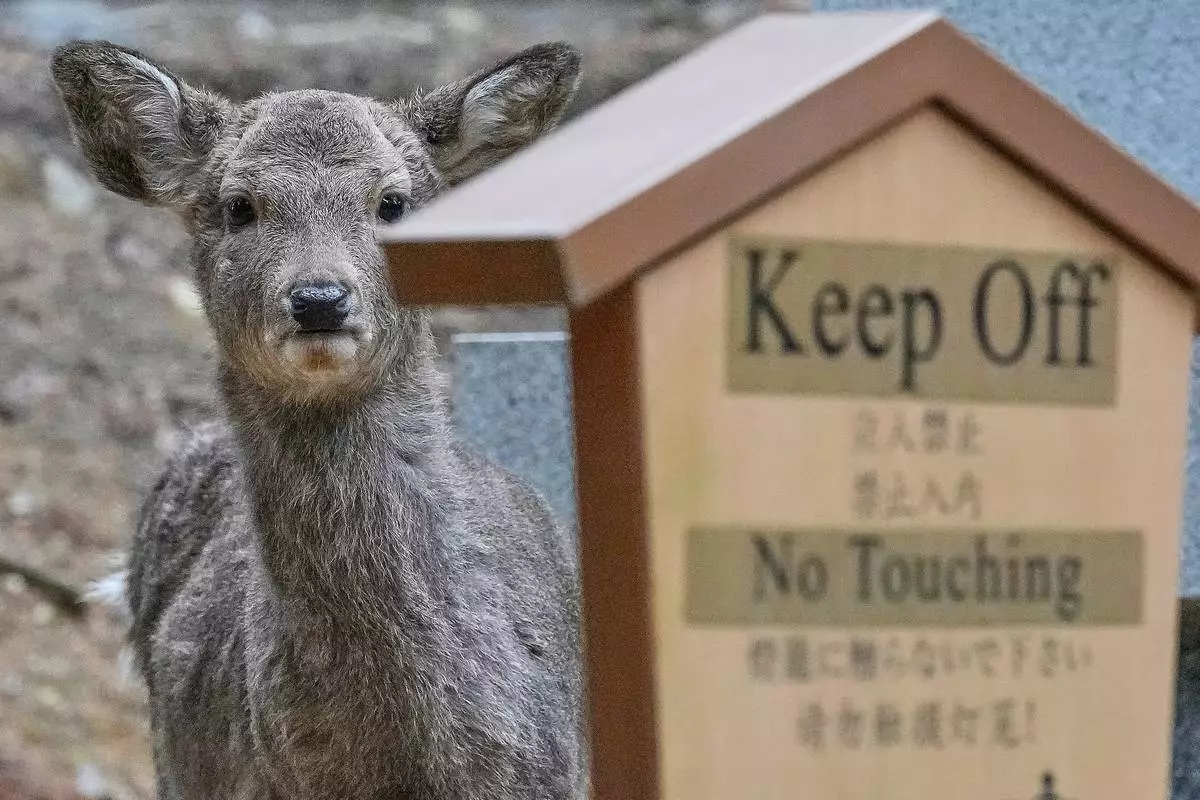
A deer peeks behind of a sign at a park in Nara, western Japan, Wednesday, Jan. 14, 2026, where more than 1,000 free-roaming deer considered sacred in Shinto belief have become one of the city's most popular tourist attractions. (AP Photo/Eugene Hoshiko)

A deer peeks behind of a sign at a park in Nara, western Japan, Wednesday, Jan. 14, 2026, where more than 1,000 free-roaming deer considered sacred in Shinto belief have become one of the city's most popular tourist attractions. (AP Photo/Eugene Hoshiko)

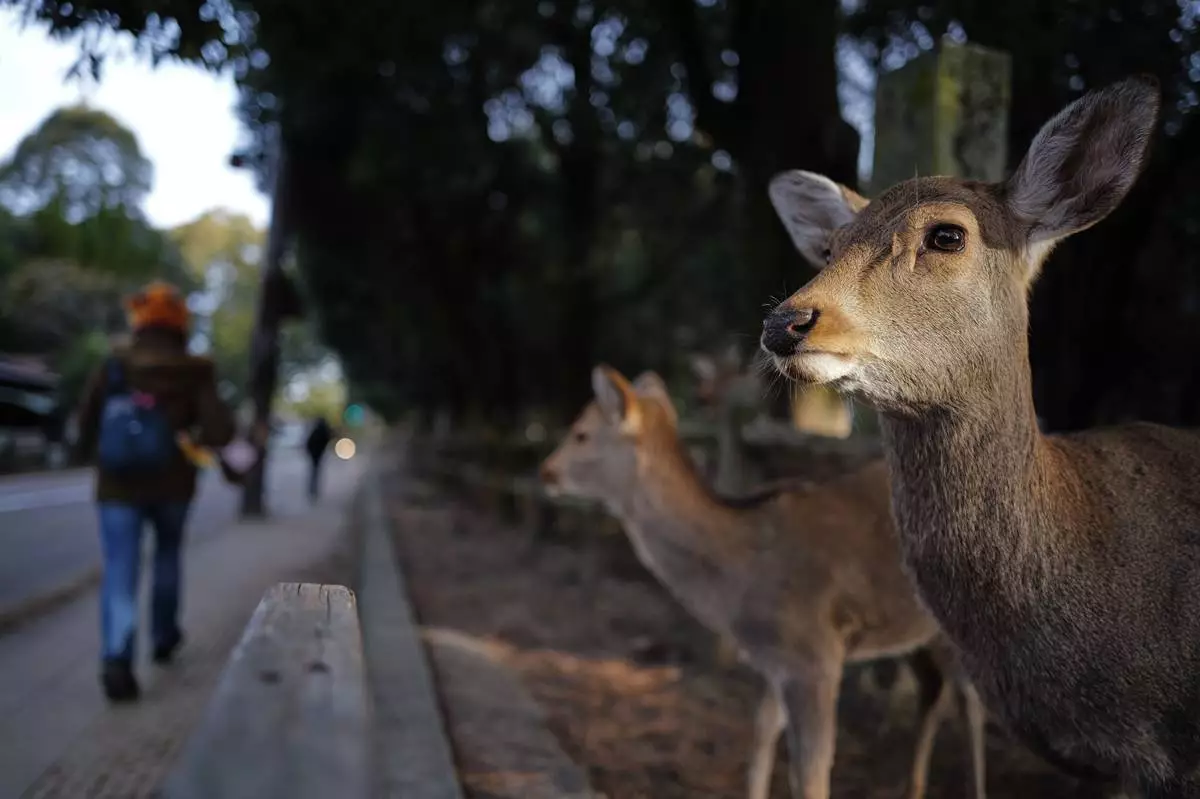
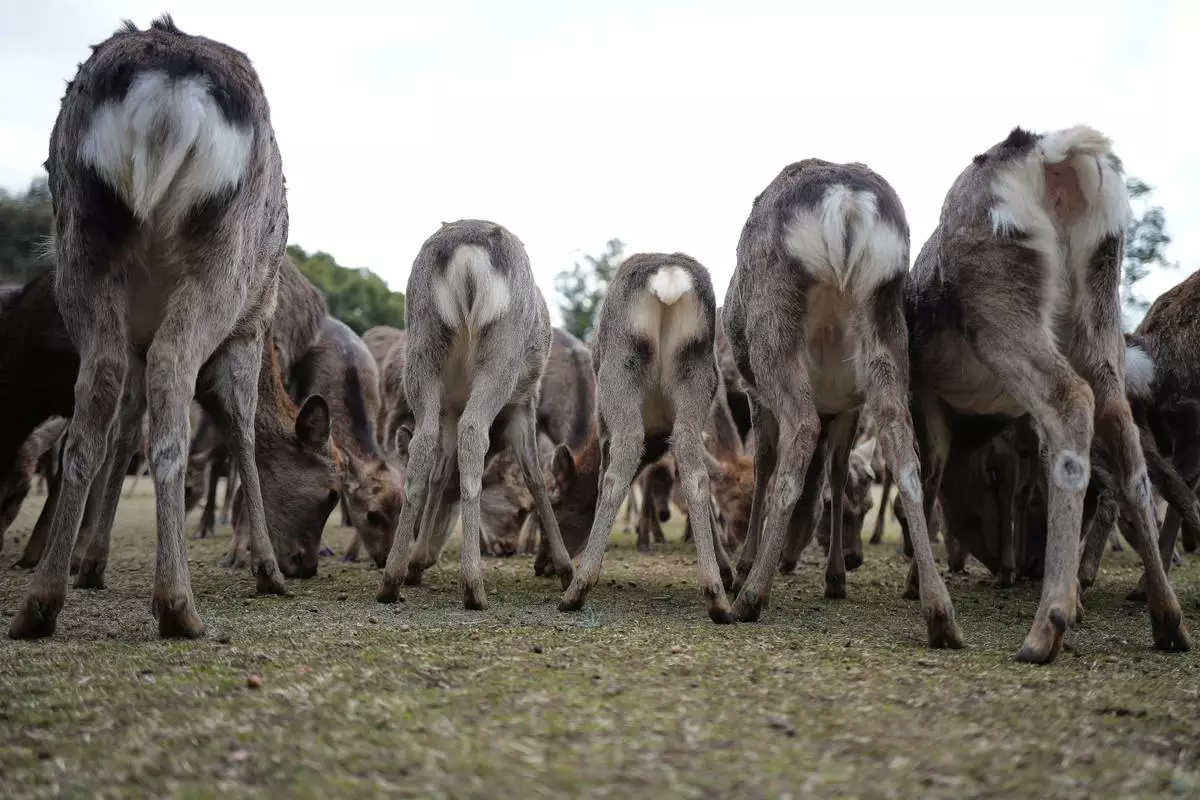
Deer stroll at a park in Nara, western Japan, early Wednesday, Jan. 14, 2026, where more than 1,000 free-roaming deer considered sacred in Shinto belief have become one of the city's most popular tourist attractions. (AP Photo/Eugene Hoshiko)

Deer stroll at a park in Nara, western Japan, early Wednesday, Jan. 14, 2026, where more than 1,000 free-roaming deer considered sacred in Shinto belief have become one of the city's most popular tourist attractions. (AP Photo/Eugene Hoshiko)

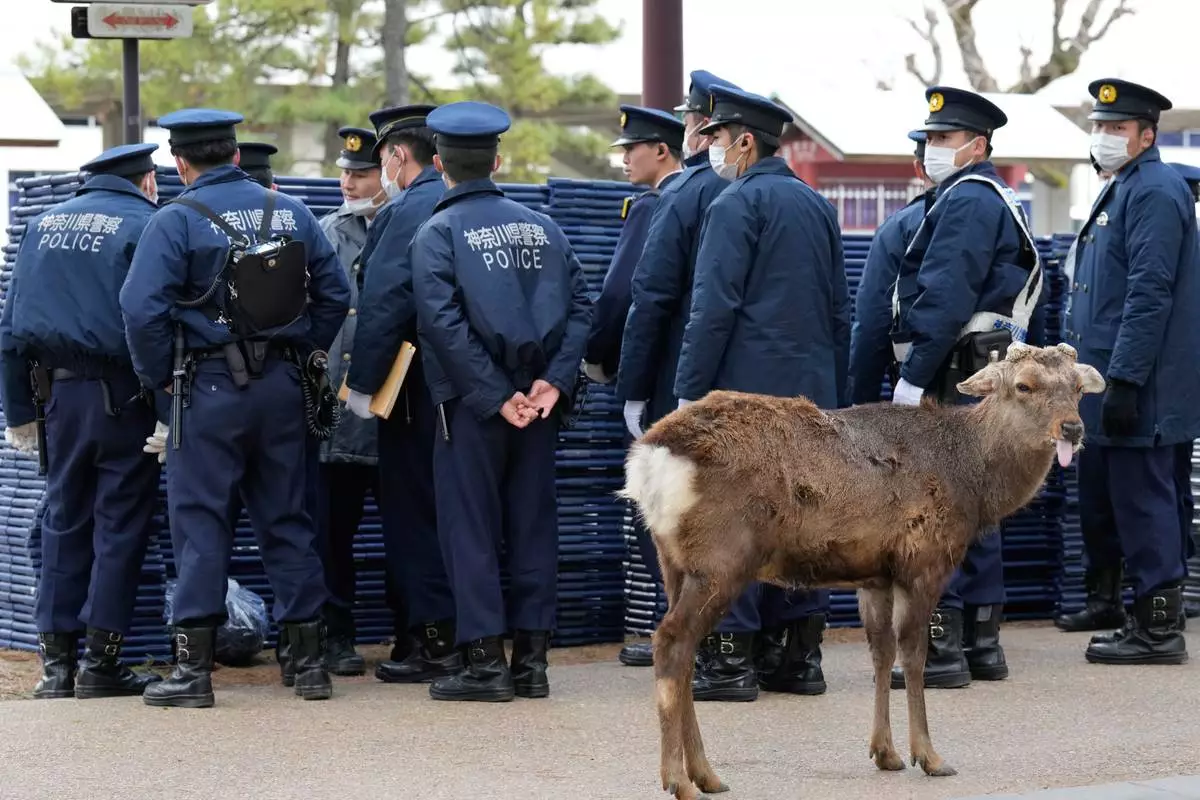
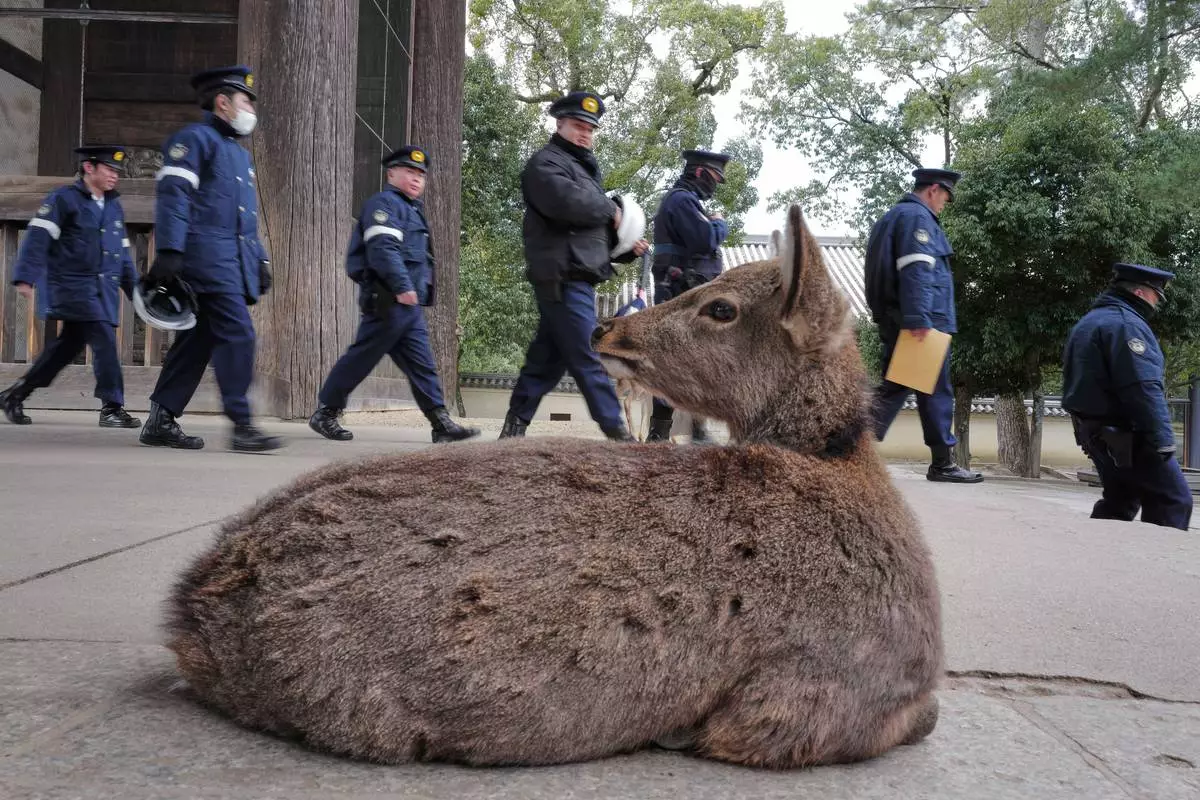
Police officers stand guard as a deer walks by in Nara, western Japan, Wednesday, Jan. 14, 2026. (AP Photo/Eugene Hoshiko)

Police officers stand guard as a deer walks by in Nara, western Japan, Wednesday, Jan. 14, 2026. (AP Photo/Eugene Hoshiko)

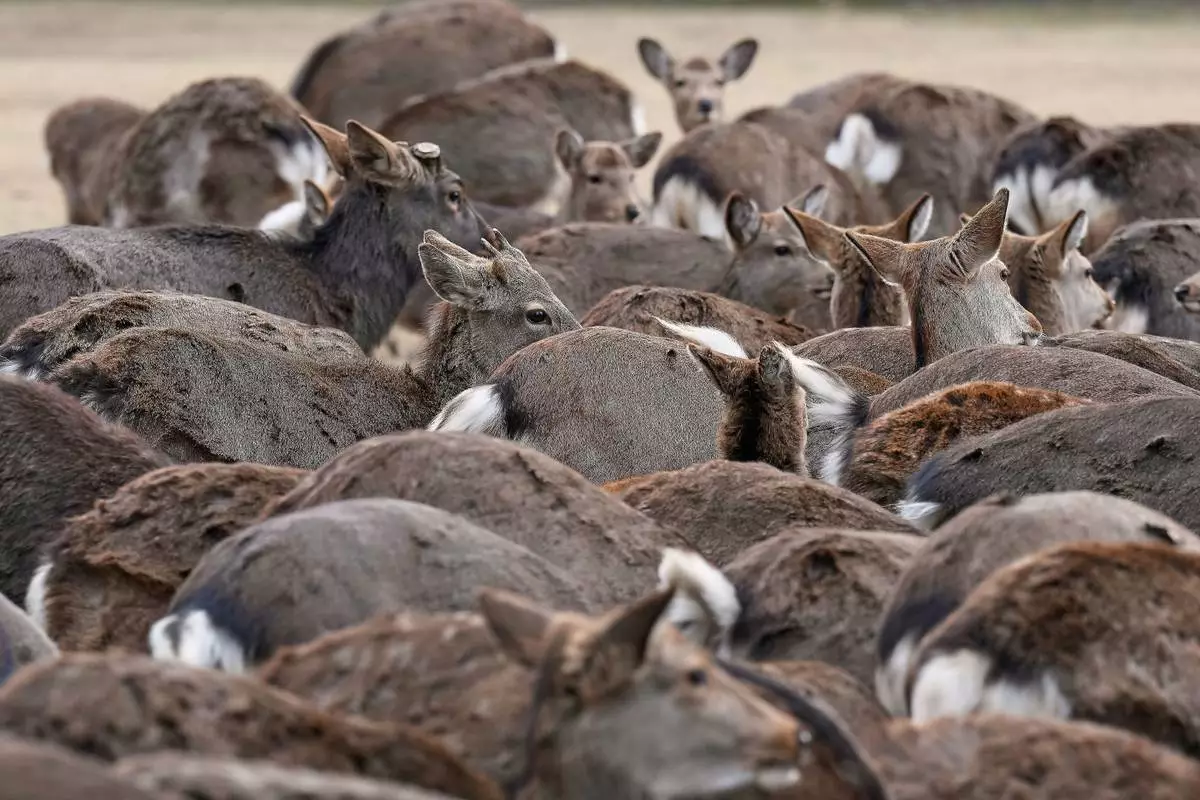
Deer wait for food from tourists at a park in Nara, western Japan, Wednesday, Jan. 14, 2026, where more than 1,000 free-roaming deer considered sacred in Shinto belief have become one of the city's most popular tourist attractions. (AP Photo/Eugene Hoshiko)

Deer wait for food from tourists at a park in Nara, western Japan, Wednesday, Jan. 14, 2026, where more than 1,000 free-roaming deer considered sacred in Shinto belief have become one of the city's most popular tourist attractions. (AP Photo/Eugene Hoshiko)

A deer rests at Todaiji temple in Nara, western Japan, Wednesday, Jan. 14, 2026, in Nara, western Japan, as police officers walk by. (AP Photo/Eugene Hoshiko)

A deer rests at Todaiji temple in Nara, western Japan, Wednesday, Jan. 14, 2026, in Nara, western Japan, as police officers walk by. (AP Photo/Eugene Hoshiko)

Recommended Articles