With the Spring Festival just days away, regions across China are alive with festival markets and booming consumer activities, highlighting the diversity of local culture and the holiday spirit.
The Spring Festival, which marks the start of a new year in the Chinese lunar calendar, is the biggest annual holiday in China, and sees people across the country return to their hometowns to celebrate with their families and friends. This year, it falls on Jan 29, ushering in the Year of the Snake.
On Wednesday, a grand lantern fair with over 100 sets of creative lanterns of varying sizes lighted up the Beijing Garden Expo Park in the city's Fengtai District. The event, combined with a temple fair, offers visitors an immersive experience of traditional Chinese culture amidst the vibrant Spring Festival atmosphere.
At the Huizhou ancient town in Shexian County of Huangshan City, east China's Anhui Province, large red lanterns with decorative gold tassels are hung on city walls and throughout the streets and alleys.
Meanwhile, red cultural decorations including Spring Festival couplets, Fu characters and red chili peppers can be seen along the Wujiang River in Zunyi City, southwest China's Guizhou Province, creating an auspicious festive vibe.
Elsewhere in the country, local residents in Zezhou County, north China's Shanxi Province, are busy preparing "sugar melons", a local specialty made with malt that can only be produced in the coldest months, creating a festive atmosphere for the Little New Year, or Xiaonian in Mandarin, which typically falls a week before the Spring Festival. This year, it is celebrated on Wednesday in northern China and Thursday in the south.
People in Shenyang, northeast China's Liaoning Province also gathered around the traditional Chinese kang, or heatable adobe sleeping platform, enjoying malt candy, and creating paper-cuttings to gear up for the Chinese New Year.
Meanwhile, an annual festival market, which boasts a nearly 300-year history, was held in Ningbo, east China's Zhejiang Province on Wednesday. An extensive array of festival goods offered at the market attracted visitors from far and wide.
"The festive atmosphere is quite strong. Let's experience the festive vibe together during the Little New Year and welcome the Chinese New Year," said Zheng Bowen, a resident in Ningbo.
Cities across China have also launched a series of activities, offering people the chance to savor the joys of the Spring Festival by experiencing intangible cultural heritages. In Shunde District of south China's Guangdong Province, sweet oranges, symbolizing "good luck" have been harvested in abundance. In several landmark commercial districts of Shanghai, many fairs have showcased a variety of national-level intangible cultural heritages, including the Yingge dance and bench dragon dance performances.
Tianjin Ancient Culture Street, an ancient gathering place for business and trade in northern China's Tianjin is adorned with festivities. Vibrant intangible cultural heritage performances shown there, such as Peking Opera, dragon dances, and lion dances, have also attracted throngs of tourists.
"The sound of gongs and drums truly evokes the festive spirit of the Spring Festival. This year marks the first year since the Spring Festival's inscription on UNESCO's Representative List of the Intangible Cultural Heritage of Humanity. We're really proud and super happy," said Yang Hui, a resident in Tianjin.
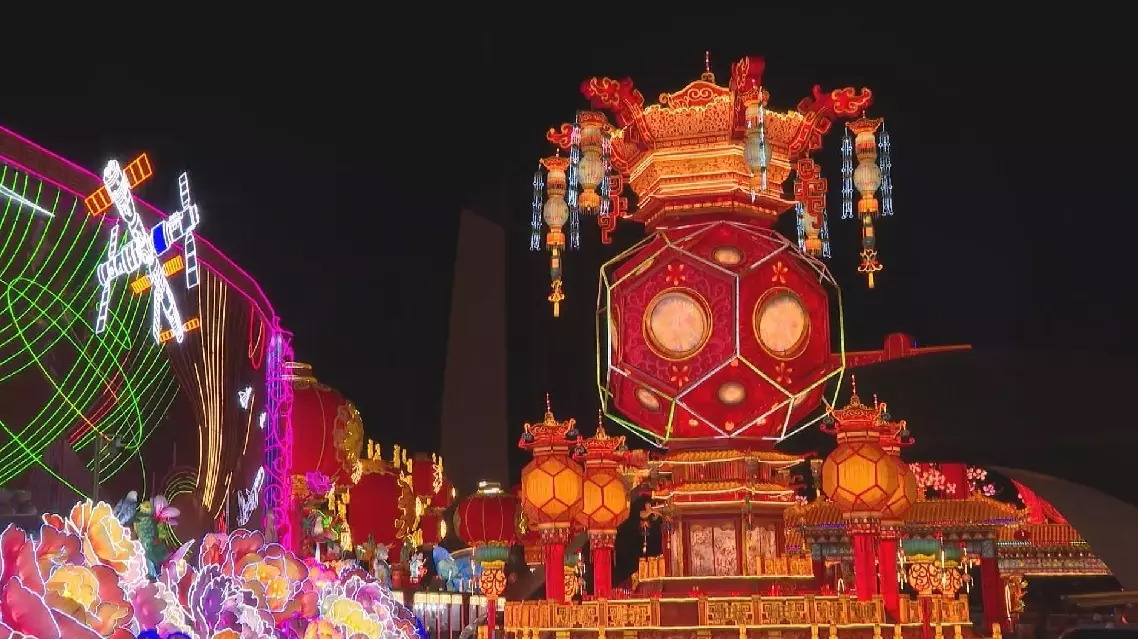
Various activities held across China to welcome upcoming Spring Festival