Chinese people held grand celebrations for the traditional Little New Year, or Kitchen God Festival, on Wednesday, with festivities blending centuries-old traditions with modern elements.
The "Little New Year," or "Xiaonian" in Chinese, falls on the 23rd or 24th day of the last month of the Chinese traditional lunar calendar, marking one-week countdown to the Spring Festival, the country's largest annual celebration.
In Fuzhou, capital of east China's Fujian Province, the historical Shangxiahang district took center stage of the holiday celebration.
Once the city's commercial hub, it is home to over 300 well-preserved traditional buildings. These buildings host lively markets and cultural performances, with the Spring Festival market setting the tone for the celebrations.
Adorned with colorful lights and decorations, the Spring Festival market offers a lively atmosphere where visitors can enjoy a vibrant mix of traditional and modern performances, including the Ningde Huo Tong Lion Dance -- a national-level intangible cultural heritage.
Performed by a troupe whose youngest members are as less than 18 years old, this intricate dance combines lion dancing with string puppetry, requires immense skill and stamina, with the lion -- sometimes weighing up to 40 kilograms -- dances and juggles a ball in sync with complex rhythms, captivating the crowd with both acrobatic feats and playful antics.
As visitors explore the market, they encounter the "three-piece set" of traditional Spring Festival goods -- handmade candies, cakes, and festival decorations. Local artisans continue to uphold traditional craftsmanship, creating unique items that embody Fuzhou's rich cultural heritage.
Food also plays a starring role in Fuzhou's festivities. Iconic dishes like "Taiping Mian" (peace noodles), symbolizing longevity and good fortune, and "Meat Swallow" (rou yan), a dumpling representing abundance, are central to the festive spread. The beloved "Taro Paste" (yuni), a sweet made from betel nut taro, sugar, and lard, completes the culinary offerings.
A cherished Little New Year custom in Fuzhou involves gift-giving. Daughters and sons-in-law visit their parents' homes with baskets of candy, oranges, pig legs, and fish -- symbols of abundance. Parents reciprocate with "flower face shells," which are paper masks wishing good health for the year ahead.
Throughout the Spring Festival, the Shangxiahang district will host a series of lively performances and interactive cultural experiences. These events, blending traditional and modern elements, create an unforgettable atmosphere, offering a fresh perspective on Fuzhou's rich heritage.
Heading north to Gansu Province in northwest China, Little New Year celebrations in Huanzhou, Qingyang, were equally vibrant. The streets came alive with festival lights and decorations, setting the stage for a season filled with traditional food and cultural activities.
Local markets bustle with energy, offering a range of traditional goods like dried fruits, nuts, and local specialties. Performances, including dragon and lion dances, dry boat rowing, and yangge folk dances, invite visitors to explore Gansu's rich cultural heritage.
This year's celebrations also feature a food tasting and intangible heritage appreciation event. Local culinary specialties and craftsmanship are on display, with fried donuts, sugar-coated pastries, and intricate flour dough sculptures offering both delicious flavors and a glimpse of traditional artistry.
One standout delicacy is "eighteen ways to eat lamb," where lamb is prepared in various styles, including dry-fried, roasted, and stuffed into buns. Gansu's tender lamb is cooked using steaming, stir-frying, and braising methods, showcasing the diverse flavors of local cuisine.
Cultural activities also play a significant role in the celebrations. In eastern Gansu, attending traditional Chinese opera during the Spring Festival is a long-standing tradition. Performances of Qin opera, accompanied by shadow puppets, evoke nostalgia and connect people to their cultural roots.
As the Minor New Year festivities continue, the return of migrant workers and the renewal of traditional customs, such as cleaning, preparing meals, and decorating homes, enrich the celebrations. These practices connect people to their cultural heritage and family bonds.
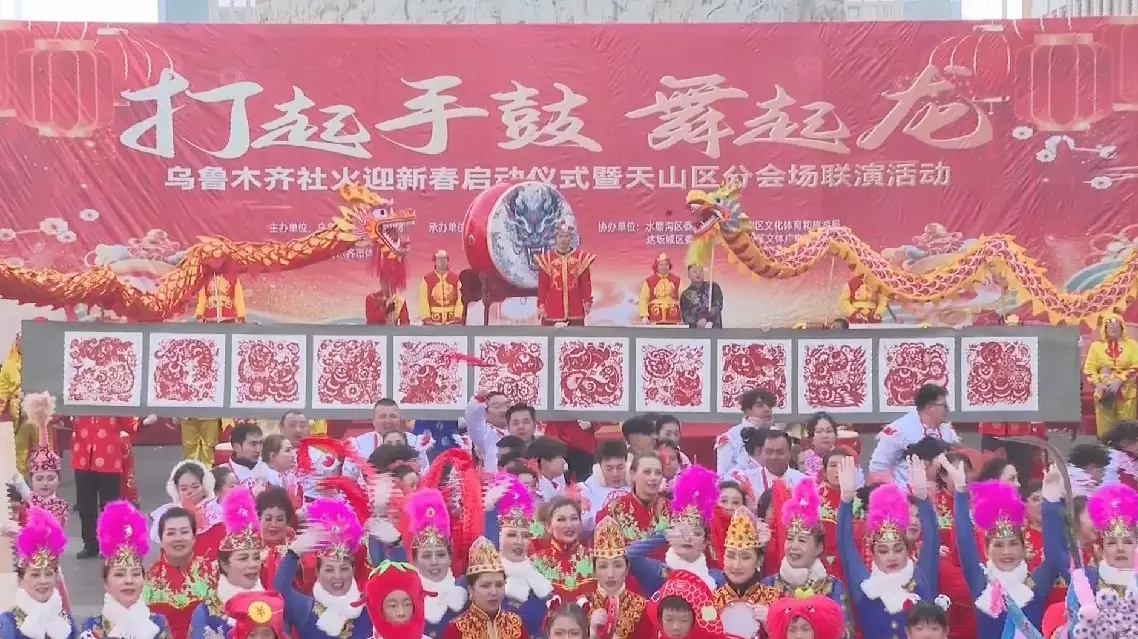
Meanwhile, in Urumqi, capital of Xinjiang Uygur Autonomous Region in the northwest, Spring Festival celebrations begin with traditional Shehuo events at the Xinjiang International Grand Bazaar. The lively performances blend traditional dragon and lion dances, yangge drumming, and innovative shehuo programs, amplifying the festive atmosphere.
Twelve local teams from Urumqi showcase a mix of traditional and modern performances, promoting ethnic unity in the region. Dragon and lion dances, along with performances of Meshrep -- a traditional Uygur folk dance -- add energy and color to the festivities, set against the backdrop of the Grand Bazaar.
Urumqi's Shehuo celebrations are a cherished part of the Spring Festival, evoking nostalgia for many. Though deeply rooted in tradition, this year's performances combined ancient and contemporary art forms, offering a unique showcase of Xinjiang's vibrant diversity.
In addition to the performances, visitors can explore local handicrafts like leather carvings and felt-making, immersing themselves in the region's rich cultural heritage.
Celebrations of traditional Little New Year feature rich cultural heritage