An Alabama woman passed a major milestone Saturday to become the longest living recipient of a pig organ transplant – healthy and full of energy with her new kidney for 61 days and counting.
“I’m superwoman,” Towana Looney told The Associated Press, laughing about outpacing family members on long walks around New York City as she continues her recovery. “It’s a new take on life.”
Looney’s vibrant recovery is a morale boost in the quest to make animal-to-human transplants a reality. Only four other Americans have received hugely experimental transplants of gene-edited pig organs – two hearts and two kidneys – and none lived more than two months.
“If you saw her on the street, you would have no idea that she’s the only person in the world walking around with a pig organ inside them that’s functioning,” said Dr. Robert Montgomery of NYU Langone Health, who led Looney’s transplant.
Montgomery called Looney’s kidney function “absolutely normal." Doctors hope she can leave New York – where she’s temporarily living for post-transplant checkups – for her Gadsden, Alabama, home in about another month.
“We’re quite optimistic that this is going to continue to work and work well for, you know, a significant period of time,” he said.
Scientists are genetically altering pigs so their organs are more humanlike to address a severe shortage of transplantable human organs. More than 100,000 people are on the U.S. transplant list, most who need a kidney, and thousands die waiting.
Pig organ transplants so far have been “compassionate use” cases, experiments the Food and Drug Administration allows only in special circumstances for people out of other options.
And the handful of hospitals trying them are sharing information of what worked and what didn’t, in preparation for the world’s first formal studies of xenotransplantation, expected to begin sometime this year. United Therapeutics, which supplied Looney’s kidney, recently asked the Food and Drug Administration for permission to begin a trial.
How Looney fares is “very precious experience,” said Dr. Tatsuo Kawai of Massachusetts General Hospital, who led the world’s first pig kidney transplant last year and works with another pig developer, eGenesis.
Looney was far healthier than the prior patients, Kawai noted, so her progress will help inform next attempts. “We have to learn from each other," he said.
Looney donated a kidney to her mother in 1999. Later pregnancy complications caused high blood pressure that damaged her remaining kidney, which eventually failed, something incredibly rare among living donors. She spent eight years on dialysis before doctors concluded she’d likely never get a donated organ – she’d developed super-high levels of antibodies abnormally primed to attack another human kidney.
So Looney, 53, sought out the pig experiment. No one knew how it would work in someone “highly sensitized” with those overactive antibodies.
Discharged just 11 days after the Nov. 25 surgery, Montgomery’s team has closely tracked her recovery through blood tests and other measurements. About three weeks after the transplant, they caught subtle signs that rejection was beginning – signs they’d learned to look for thanks to a 2023 experiment when a pig kidney worked for 61 days inside a deceased man whose body was donated for research.
Montgomery said they successfully treated Looney and there’s been no sign of rejection since – and a few weeks ago she met the family behind that deceased-body research.
“It feels really good to know that the decision I made for NYU to use my brother was the right decision and it’s helping people,” said Mary Miller-Duffy, of Newburgh, New York.
Looney in turn is trying to help others, serving as what Montgomery calls an ambassador for people who've been reaching out to her through social media, sharing their distress at the long wait for transplants and wondering about pig kidneys.
One, she said, was being considered for a xenotransplant at another hospital but was scared, wondering whether to proceed.
“I didn’t want to persuade him whether to do or not to do it,” Looney said. Instead she asked if he was religious and urged him to prayer, to “go off your faith, what your heart tells you.”
“I love talking to people, I love helping people,” she added. “I want to be, like, some educational piece” for scientists to help others.
There’s no way to predict how long Looney’s new kidney will work but if it were to fail she could receive dialysis again.
“The truth is we don’t really know what the next hurdles are because this is the first time we’ve gotten this far,” Montgomery said. “We’ll have to continue to really keep a close eye on her.”
The Associated Press Health and Science Department receives support from the Howard Hughes Medical Institute’s Science and Educational Media Group and the Robert Wood Johnson Foundation. The AP is solely responsible for all content.
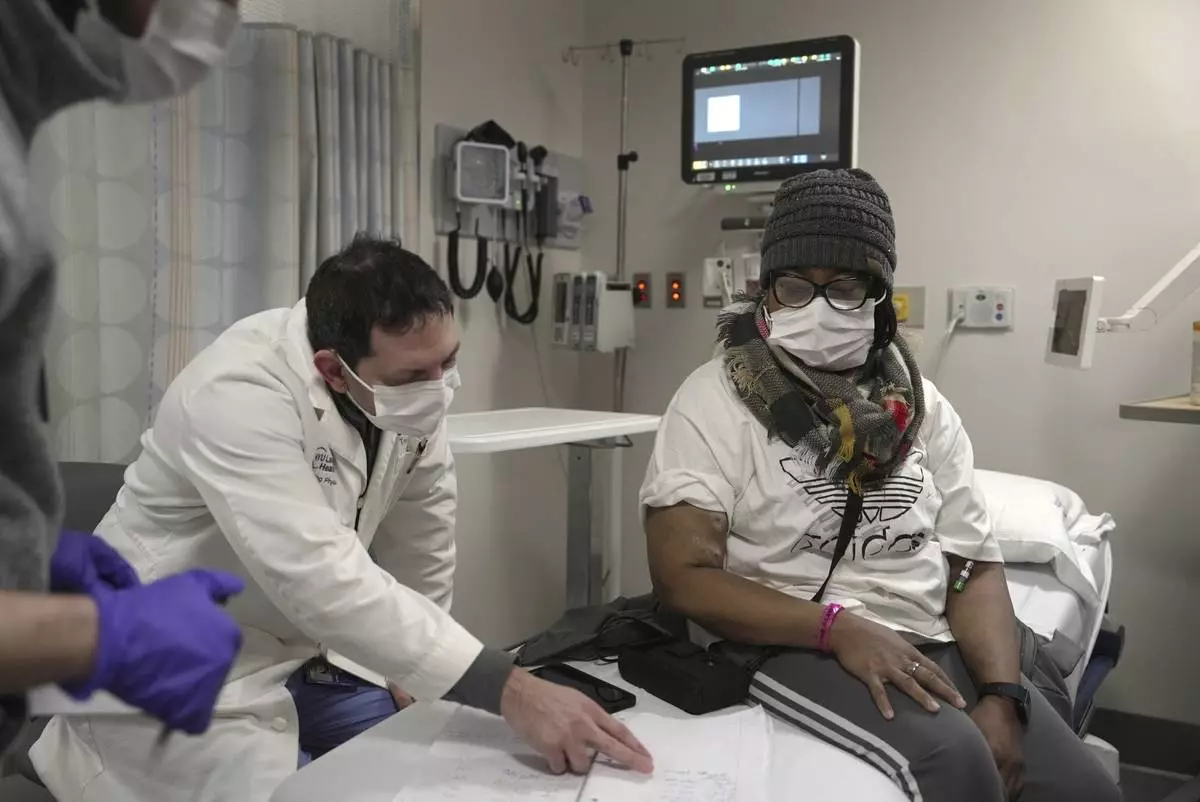
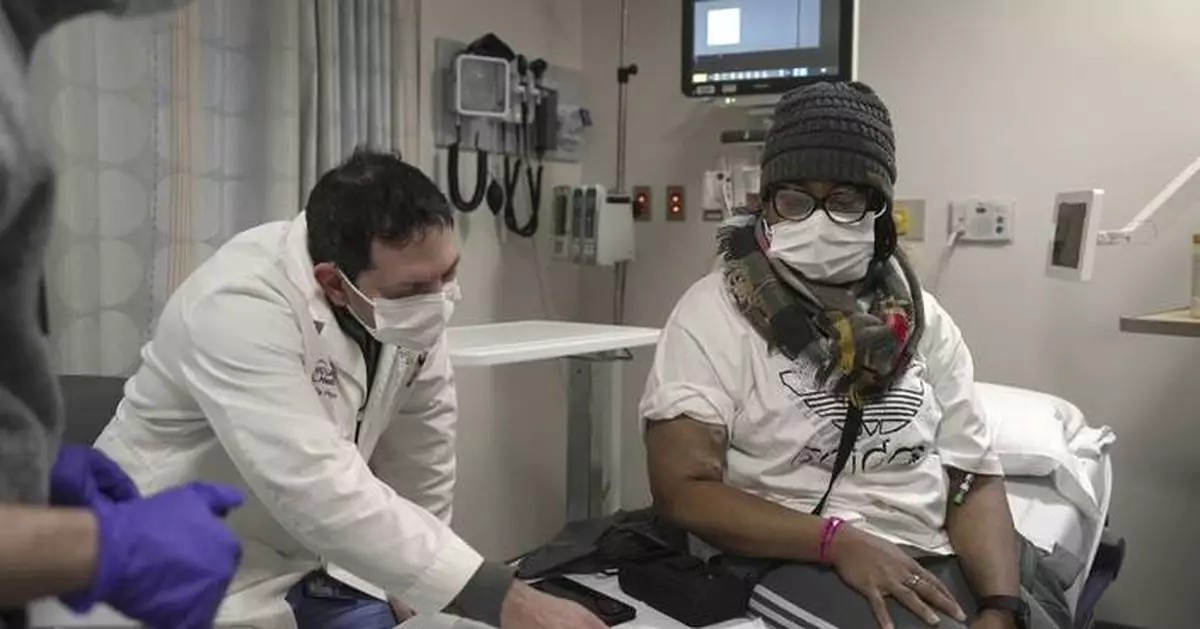
Towana Looney, who received a pig kidney transplant in November 2024, goes over notes about her recovery with Dr. Jeffrey Stern at NYU Langone Health in New York, Friday, Jan. 24, 2025. (AP Photo/Shelby Lum)