
WASHINGTON (AP) — Four centrist Republicans broke with Speaker Mike Johnson on Wednesday and signed onto a Democratic-led petition that will force a House vote on extending for three years an enhanced pandemic-era subsidy that lowers health insurance costs for millions of Americans.
The stunning move came the same day that House Republican leaders pushed to passage a health care bill that does not address the soaring monthly premiums that millions of people will soon endure. Those premium hikes will occur because the tax credits for those who buy insurance through the Affordable Care Act expire at year’s end.
Click to Gallery
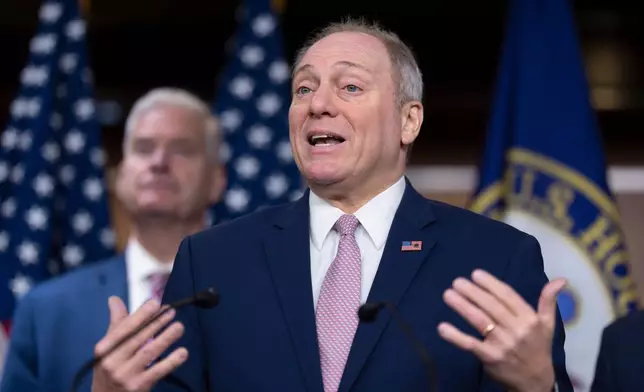
House Majority Leader Steve Scalise, R-La., speaks to reporters following a strategy session with House Republicans, at the Capitol in Washington, Wednesday, Dec. 10, 2025. (AP Photo/J. Scott Applewhite)
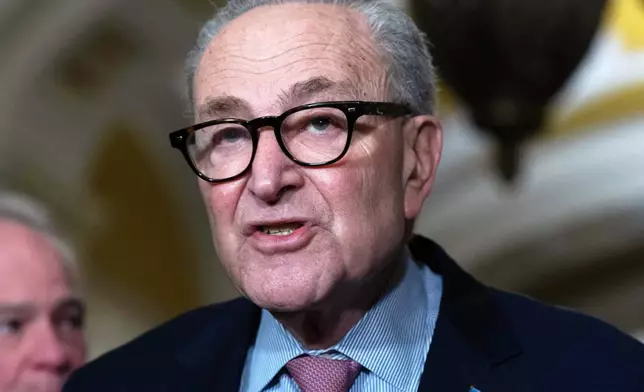
Senate Minority Leader Chuck Schumer, D-N.Y., speaks to reporters following the weekly policy luncheons at the Capitol, Tuesday, Dec. 16, 2025, in Washington. (AP Photo/Jose Luis Magana)

Speaker of the House Mike Johnson, R-La., meets with reporters as Republicans struggle with a plan to address growing health care costs, at the Capitol in Washington, Tuesday, Dec. 16, 2025. (AP Photo/J. Scott Applewhite)

FILE - Pages from the U.S. Affordable Care Act health insurance website healthcare.gov are seen on a computer screen in New York, Aug. 19, 2025. (AP Photo/Patrick Sison, File)
The developments set the stage for a renewed intraparty clash over health care in January, something Republican leaders had been working hard to avoid.
The moderate Republicans were able to force the issue by signing a petition, led by Democratic leader Hakeem Jeffries of New York, to vote on a bill that would extend the ACA subsides for three years.
Republican Reps. Brian Fitzpatrick, Robert Bresnahan and Ryan Mackenzie, all from Pennsylvania, and Mike Lawler of New York signed on Wednesday morning, pushing it to the magic number of 218. A vote on the subsidy bill could come as soon as January under House rules.
“Unfortunately, it is House leadership themselves that have forced this outcome.” Fitzpatrick said in a statement.
Johnson told reporters Wednesday that “I have not lost control of the House” and he noted that Republicans have a razor-thin majority that allows a small number of members to employ procedures that would not usually be successful in getting around leadership.
“These are not normal times,” said Johnson, R-La.
The revolt against GOP leadership came after days of talks centered on the health care subsidies.
Johnson had discussed allowing more politically vulnerable GOP lawmakers a chance to vote on bills that would temporarily extend the subsidies while also adding changes such as income caps for beneficiaries. But after days of discussions, the leadership sided with the more conservative wing of the party's conference, which has assailed the subsidies as propping up a failed ACA program, which is widely known as “Obamacare.”
House Republicans pushed ahead Wednesday on a 100-plus-page health care package without the subsidies. Instead, the measure focused on long-sought GOP proposals designed to expand insurance coverage options for small businesses and the self-employed. The bill passed on a mostly party-line vote of 216-211. Rep. Thomas Massie, R-Ky., joined with Democrats in voting against the measure.
Fitzpatrick and Lawler tried to add a temporary extension of the subsidies to the bill, but were denied.
“Our only request was a floor vote on this compromise, so that the American People’s voice could be heard on this issue. That request was rejected. Then, at the request of House leadership I, along with my colleagues, filed multiple amendments, and testified at length to those amendments,” Fitzpatrick said. “House leadership then decided to reject every single one of these amendments."
“As I’ve stated many times before, the only policy that is worse than a clean three-year extension without any reforms, is a policy of complete expiration without any bridge," Fitzpatrick said.
Lawler, in a social media post, similarly said that “the failure of leadership” to permit a vote had left him with “no choice” but to sign the petition.
“I don’t like them. It’s not the way it’s supposed to work,” Johnson said of the discharge petitions.
Jeffries, for several weeks, had called on Republicans to sign his discharge petition. He particularly challenged Republicans in competitive congressional districts to join the effort if they really wanted to prevent steep premium increases for their constituents.
“Our position from the very beginning was that we are standing on the right side of the American people who want to see the Affordable Care Act tax credits extended, and we’re appreciative that we now have the bipartisan coalition to get that done," Jeffries said.
The GOP holds a 220-213 majority in the House, which means defections from just a sliver of the conference can upend leadership's plans. Johnson has been able to negotiate that challenge largely by making accommodations to the more conservative wing of his conference. This time, it was the moderates who revolted.
The defectors largely represent districts that Democrats have targeted in their bid to retake the majority, with Democrats promising to make health insurance costs a central issue in next year's midterms.
Lawmakers turn to discharge petitions to show support for an action and potentially force a vote on the House floor, but they are rarely successful. This year has proven an exception. The vote requiring the Department of Justice to release the Jeffrey Epstein files occurred after Reps. Ro Khanna, D-Calif., and Massie introduced a petition to force a vote on the Epstein Files Transparency Act. The signature effort was backed by all House Democrats and four Republicans.
It was a long battle to get 218 signatures, but once the magic number was reached, lawmakers in both chambers voted overwhelmingly for the bill.
Even if the Democrats' subsidy bill were to pass the House in January, which is far from assured, it would face an arduous climb in the Republican-led Senate.
Republicans last week voted down a three-year extension of the subsidies and proposed an alternative that also failed. But in an encouraging sign for Democrats, four Republican senators crossed party lines to support their proposal.
Senate Majority Leader John Thune, R-S.D., argued against the Democratic extension as “an attempt to disguise the real impact of Obamacare’s spiraling health care costs.”
Sen. Thom Tillis, R-N.C., said he viewed the House developments Wednesday as a positive for generating a compromise that both parties could support.
“If we're not talking, we're not making progress. This continues the discussion,” Tillis said.
Senate Democratic leader Chuck Schumer of New York said that the 218th signature for the Democrats' bill showed that the demand from the American people for an extension is undeniable, but “the damage has now been done, no matter what happens.”
“Because at this point, Republicans have made it impossible to prevent many Americans from paying more on their monthly premiums on January 1st. And Republicans can’t even say they tried to stop it,” Schumer said.
Associated Press staff writer Joey Cappelletti contributed to this report.
This story has been corrected to reflect that the next government funding deadline comes at the end of January, not the end of December.
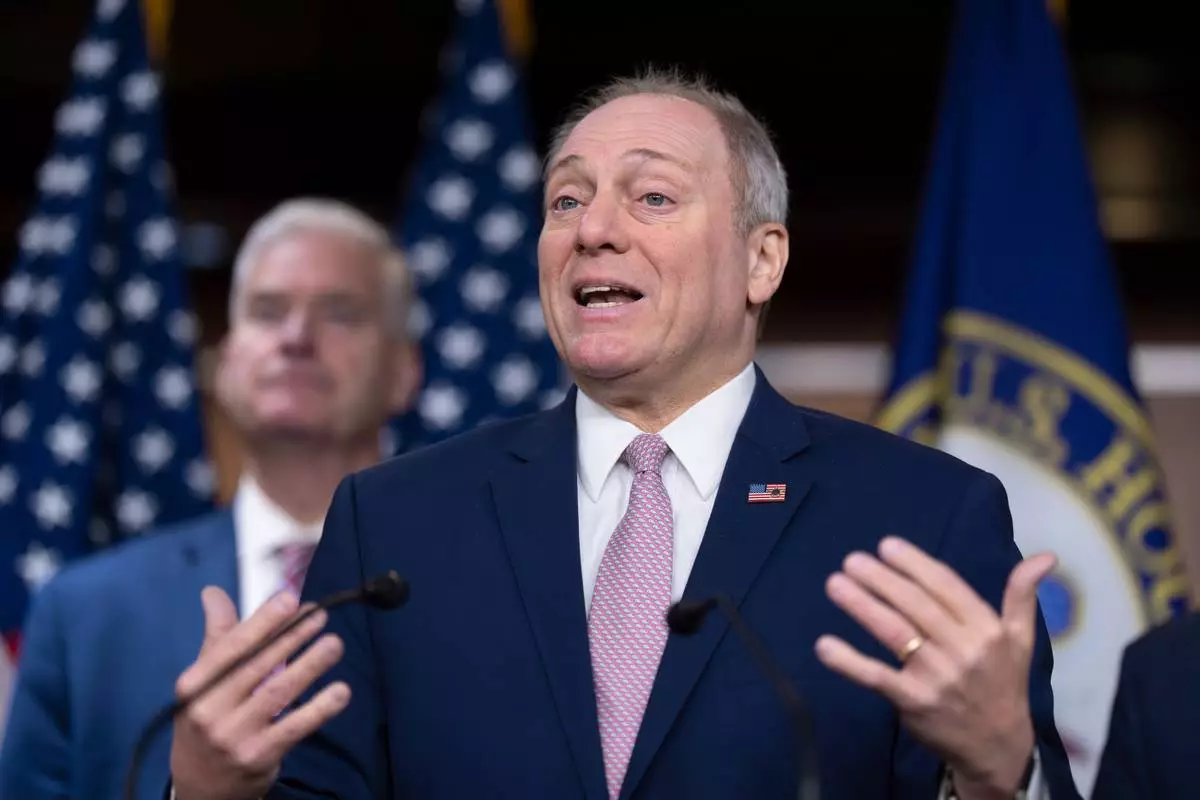
House Majority Leader Steve Scalise, R-La., speaks to reporters following a strategy session with House Republicans, at the Capitol in Washington, Wednesday, Dec. 10, 2025. (AP Photo/J. Scott Applewhite)

Senate Minority Leader Chuck Schumer, D-N.Y., speaks to reporters following the weekly policy luncheons at the Capitol, Tuesday, Dec. 16, 2025, in Washington. (AP Photo/Jose Luis Magana)

Speaker of the House Mike Johnson, R-La., meets with reporters as Republicans struggle with a plan to address growing health care costs, at the Capitol in Washington, Tuesday, Dec. 16, 2025. (AP Photo/J. Scott Applewhite)

FILE - Pages from the U.S. Affordable Care Act health insurance website healthcare.gov are seen on a computer screen in New York, Aug. 19, 2025. (AP Photo/Patrick Sison, File)