Skip to Content Facebook Feature Image

Takeaways from The Associated Press report on Myanmar's crackdown on cyberscam centers

News

Takeaways from The Associated Press report on Myanmar's crackdown on cyberscam centers
News

News

Takeaways from The Associated Press report on Myanmar's crackdown on cyberscam centers

2025-12-18 00:39 Last Updated At:00:41

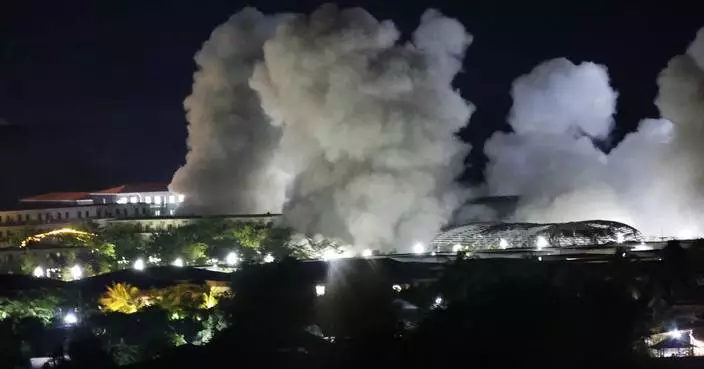
Myanmar’s military government has announced a new “zero tolerance” policy against the industrial-scale cyberscam centers that have taken root in the country. As a sign of commitment, they raided and bombed KK Park — a notorious compound that has become a symbol of impunity in the battle against one of the most lucrative criminal industries in the world.

New visual analysis raises questions about whether KK Park will ultimately be abandoned, repurposed or rebuilt. Faced with growing international pressure in the run-up to national elections later this month, Myanmar’s leaders have been trumpeting their scam-busting credentials. But interviews with current and former scammers indicate that the crackdown may not turn out to be as deep or long-lasting as the government would like it to appear.

Here are takeaways from reporting by The Associated Press:

Government officials said that by Dec. 13, 413 buildings in KK Park had been “demolished” and the remaining 222 would be cleared as well. Detailed analysis of the first wave of demolition, which the government says is complete, shows that 31 structures were flattened. At least 78 more were partially damaged, according to the Center for Information Resilience (CIR), a London-based nonprofit focused on exposing human rights violations.

More than half the buildings were damaged by heavy machinery, which often left roofs, ceilings and layers between floors intact, said Guy Fusfus, an investigator at Myanmar Witness, a CIR project. “There may be an intention to reconstruct and reuse these buildings,” he said.

New satellite imagery shows that most buildings in KK Park appeared wholly or partially intact on Dec. 4, even as demolition had spread to other sections of the compound.

Myanmar’s track record of lasting enforcement is poor. Raids in response to Chinese pressure earlier this year failed to contain the growth of scam compounds, according to C4ADS, a U.S.-based nonprofit that takes a data-driven approach to conflict analysis. Over 7,000 scam center workers were released as part of that purge, according to the U.N. Office on Drugs and Crime, but the scams kept on running.

C4ADS examined satellite imagery of 21 known scam compounds in Myawaddy Township and found that 14 of them — including KK Park — had shown construction or expansion since January.

“This continued growth of scam compounds is emblematic of the junta’s inability to rein in the industry within Myanmar,” said Michael Di Girolamo, a C4ADS analyst.

Since the raid on KK Park, the Thai military said around 1,500 people who worked there have made it out through official channels in Thailand — a fraction of the total workforce, estimated to be in the tens of thousands.

The whereabouts of the rest are unknown. Telegram is popping with job ads for newly displaced workers. Some followed company bosses to other locations, four workers who fled KK Park told AP.

One person trapped at a nearby compound called Hengsheng Park 4 told AP that more than a hundred KK Park workers stayed for a week before moving on. “I heard that most of them went to Cambodia, Mauritius and Africa,” he said, on condition of anonymity, fearing for his safety.

KK Park is just one of around 30 scam compounds along Myanmar’s border with Thailand. The government says it has also raided additional sites, including Shwe Kokko — another notorious compound in the crosshairs of U.S. authorities. But scammers have continued to work uninterrupted, and people trafficked from around the world still wait to be rescued, people now trapped in scam centers and activists trying to free them told AP.

“It’s not a real crackdown yet,” said Jay Kritiya, the coordinator of the Civil Society Network for Human Trafficking Victim Assistance.

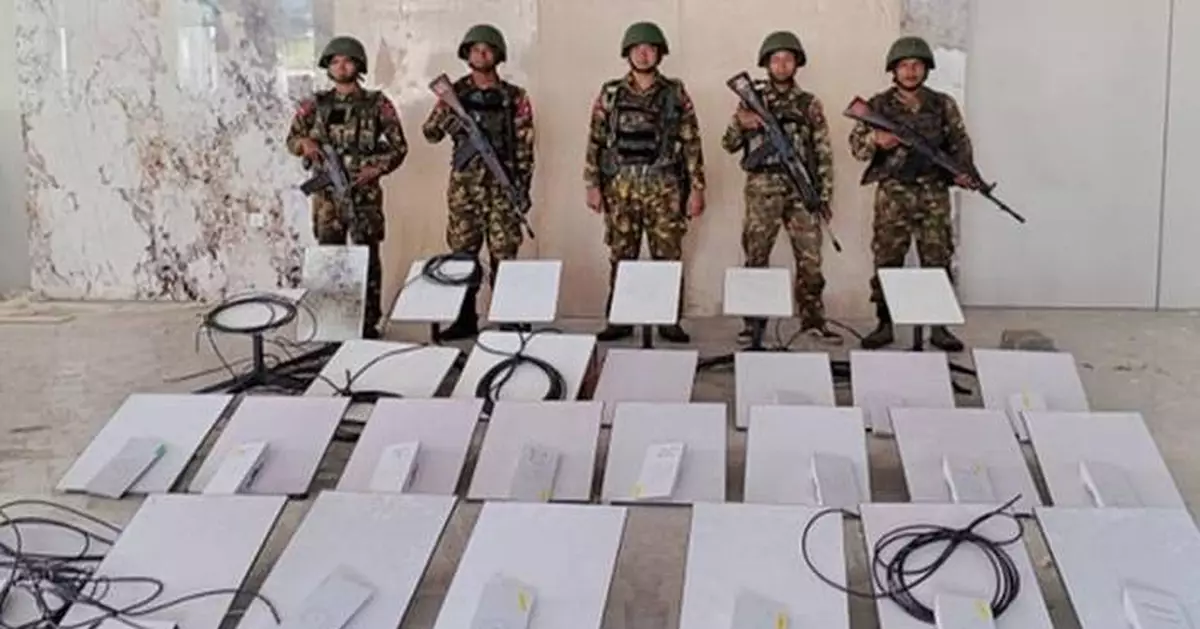
Myanmar state media broadcast images of dozens of seized Starlink units, and SpaceX announced it cut off access to more than 2,500 Starlink units in Myanmar.

But the man at Hengsheng Park 4 told AP they are still using Starlink — three units stopped working after SpaceX’s crackdown, but a fourth still functions.

Starlink is also still up and running at the Deko Park compound, 35 miles (56 kilometers) south of KK Park, according to a worker trapped there.

AP asked SpaceX for comment and provided the locations of both compounds, but the company did not reply.

---

This story is part of an ongoing collaboration between The Associated Press and FRONTLINE (PBS) that includes an upcoming documentary.

—-

Associated Press reporter Huizhong Wu contributed from Bangkok, Thailand.

—-

Contact AP’s global investigative team at Investigative@ap.org or https://www.ap.org/tips/.
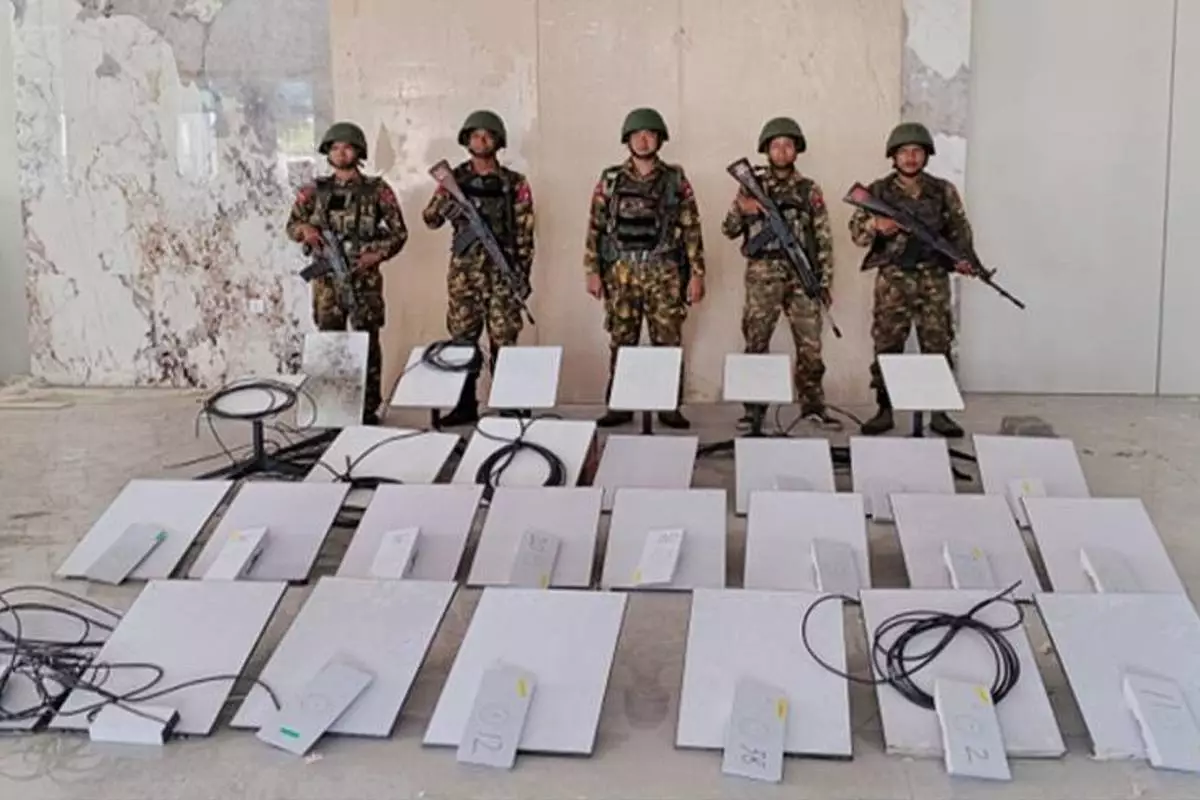
FILE - In this image provided by the Myanmar military on Oct. 19, 2025, soldiers stand next to Starlink satellite internet devices as they seize KK Park online scam center in Myawaddy township, Karen State, Myanmar. (The Myanmar Military True News Information Team via AP, File)
FILE - In this image provided by the Myanmar military on Oct. 19, 2025, soldiers stand next to Starlink satellite internet devices as they seize KK Park online scam center in Myawaddy township, Karen State, Myanmar. (The Myanmar Military True News Information Team via AP, File)

NEW YORK (AP) — More drops for AI stocks are dragging the U.S. market lower Wednesday, and Wall Street is heading toward a fourth straight loss.

The S&P 500 fell 0.6% in midday trading, though it's still not far from its all-time high set last week. The Dow Jones Industrial Average was down 89 points, or 0.2%, as of 11 a.m. Eastern time, and the Nasdaq composite was 1.1% lower.

The majority of stocks across Wall Street were rising, but they're getting drowned out by drops for stocks in the artificial-intelligence industry. Questions continue to dog them about a possible bubble and whether all the investment in AI will produce enough profit and productivity to prove worth the cost. Worries are also rising about the debt that some companies are taking on to pay for it all.

Broadcom dropped 5%, Oracle fell 5.9% and CoreWeave sank 6.8%. Nvidia, the chip company that’s become Wall Street’s most influential stock because of its tremendous size, fell 3.6% and was the heaviest weight on the S&P 500.

Only 17% of respondents in a survey of relatively big businesses by UBS said they're in production at scale with their AI projects. That could be “a reminder for tech investors to remain sober about the likely 2026 revenue growth uplift from AI products,” according to UBS analysts, though the rate continues to rise.

Also on the losing end of Wall Street was Lennar, which sank 5.4% following a mixed profit report. The homebuilder delivered a weaker profit for the latest quarter than analysts expected, though its revenue topped expectations.

Executive Chairman Stuart Miller said that conditions remain challenging, with customers feeling less confident while looking for discounts and more affordable options. As a result, the company gave limited forecasts for its upcoming financial performance.

Progressive, meanwhile, sank 3% after the insurer based in Mayfield Village, Ohio, said that its net income for November fell 5% from its year-ago level.

On the winning side of Wall Street were oil companies, after President Donald Trump ordered a blockade of all “sanctioned oil tankers” into Venezuela. It’s Trump’s latest escalation in pressure on Venezuela, which may be sitting on more oil than any other country.

That sent the price of a barrel of benchmark U.S. crude higher by 1.5% to $55.98, just a day after it sank to its lowest level since 2021. Brent crude, the international standard, climbed 1.4% to $59.73 per barrel.

That in turn helped ConocoPhillips rise 2.6% and cut into its loss for the year so far, which came into the day at 8.5%. Devon Energy rallied 3.8%, and Halliburton added 1.1%. Oil prices had dropped through most of this year on expectations that companies are pumping more than enough crude to meet the world’s demand.

Netflix climbed 1.8% after Warner Bros. Discovery’s board said it still recommends shareholders approve a buyout offer for its Warner Bros. business from the streaming giant, rather than a competing hostile bid from Paramount Skydance for the entire company.

Warner Bros. Discovery slipped 1.1%, while Paramount Skydance fell 4.4%.

In the bond market, Treasury yields held relatively steady ahead of a report coming on Thursday that will show how bad inflation has been for U.S. consumers.

The yield on the 10-year Treasury edged down to 4.14% from 4.15% late Tuesday.

In stock markets abroad, indexes were mixed in Europe following a stronger finish in Asia.

South Korea’s Kospi leaped 1.4% for one of the world’s bigger gains and shaved its loss for the week so far down to 2.7%.

AP Business Writer Elaine Kurtenbach contributed.

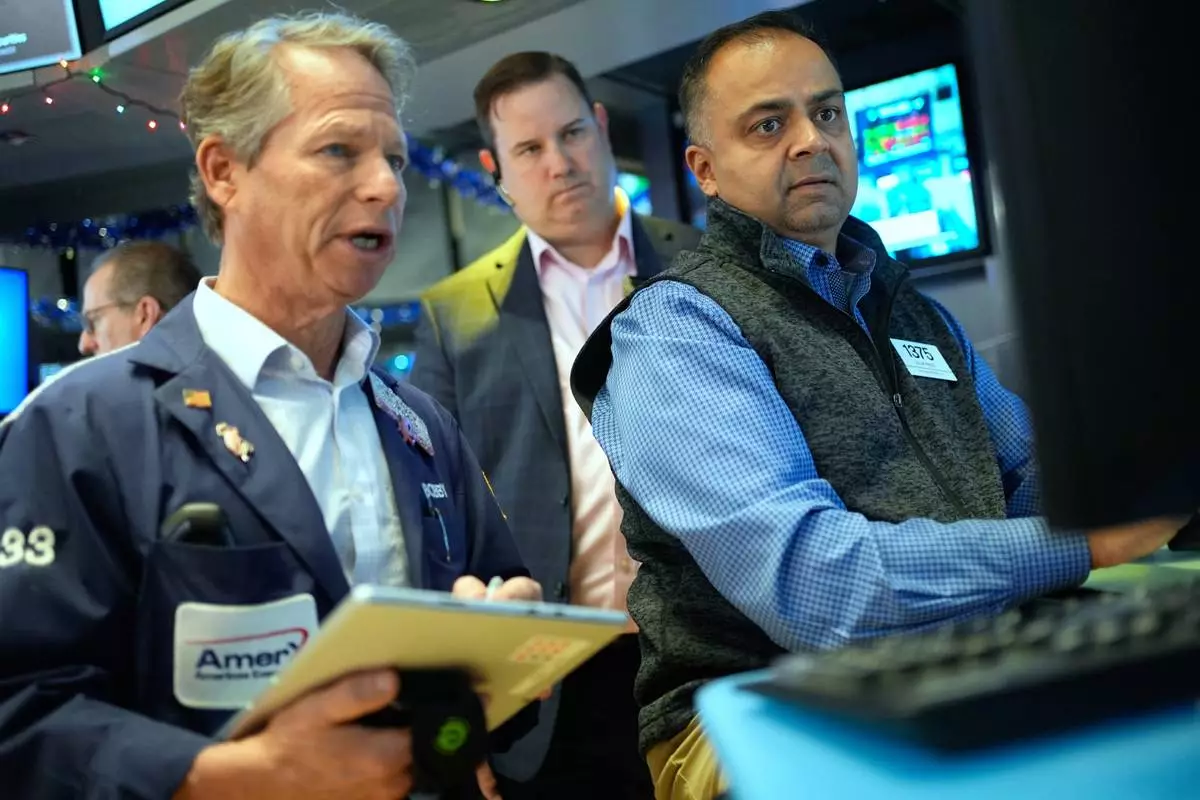
Dilip Patel, right, and Bobby Charmak, left, work on the floor at the New York Stock Exchange in New York, Wednesday, Dec. 10, 2025. (AP Photo/Seth Wenig)

Dilip Patel, right, and Bobby Charmak, left, work on the floor at the New York Stock Exchange in New York, Wednesday, Dec. 10, 2025. (AP Photo/Seth Wenig)

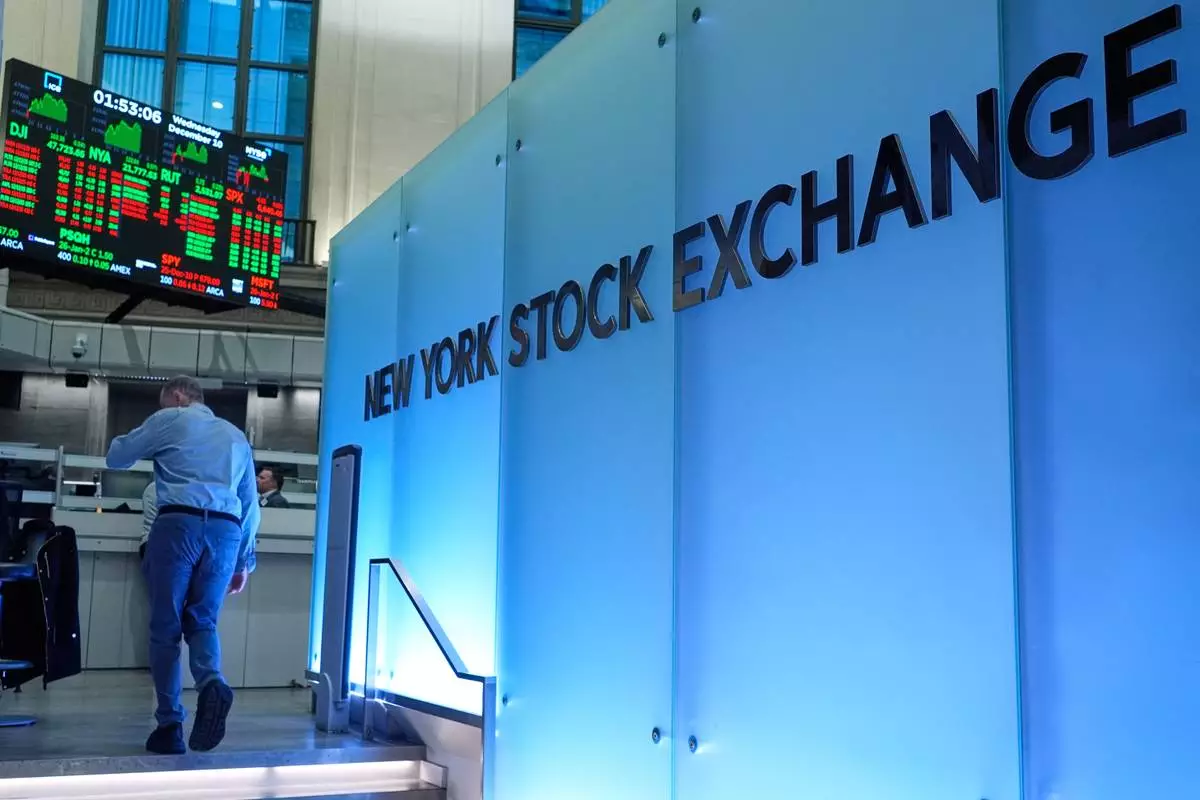
Traders work on the floor at the New York Stock Exchange in New York, Wednesday, Dec. 10, 2025. (AP Photo/Seth Wenig)

Traders work on the floor at the New York Stock Exchange in New York, Wednesday, Dec. 10, 2025. (AP Photo/Seth Wenig)

Currency traders work near a screen showing the Korea Composite Stock Price Index (KOSPI), left, at the foreign exchange dealing room of the Hana Bank headquarters, in Seoul, South Korea, Wednesday, Dec. 17, 2025. (AP Photo/Ahn Young-joon)

Currency traders work near a screen showing the Korea Composite Stock Price Index (KOSPI), left, at the foreign exchange dealing room of the Hana Bank headquarters, in Seoul, South Korea, Wednesday, Dec. 17, 2025. (AP Photo/Ahn Young-joon)

A currency trader watches monitors near a screen showing the Korea Composite Stock Price Index (KOSPI) at the foreign exchange dealing room of the Hana Bank headquarters, in Seoul, South Korea, Wednesday, Dec. 17, 2025. (AP Photo/Ahn Young-joon)

A currency trader watches monitors near a screen showing the Korea Composite Stock Price Index (KOSPI) at the foreign exchange dealing room of the Hana Bank headquarters, in Seoul, South Korea, Wednesday, Dec. 17, 2025. (AP Photo/Ahn Young-joon)

A currency trader stands near a screen showing the Korea Composite Stock Price Index (KOSPI), top left, and the foreign exchange rate between U.S. dollar and South Korean won at the foreign exchange dealing room of the Hana Bank headquarters, in Seoul, South Korea, Wednesday, Dec. 17, 2025. (AP Photo/Ahn Young-joon)

A currency trader stands near a screen showing the Korea Composite Stock Price Index (KOSPI), top left, and the foreign exchange rate between U.S. dollar and South Korean won at the foreign exchange dealing room of the Hana Bank headquarters, in Seoul, South Korea, Wednesday, Dec. 17, 2025. (AP Photo/Ahn Young-joon)

Recommended Articles