VANCOUVER, British Columbia--(BUSINESS WIRE)--Dec 17, 2025--
After more than four years in front of courts, and legal fees far beyond their means, the British Columbia Mink Producers Association and the Canada Mink Breeders Association are dropping their petition for judicial review of the Province of British Columbia’s decision to impose a ban on their industry. The result is that the government and an aggressive anti-fur lobby have effectively shut down, without any compensation, farmers in one of Canada’s most sustainable heritage industries. This unilateral and groundless decision is an enormous blow to the right to farm in British Columbia and across Canada.
This press release features multimedia. View the full release here: https://www.businesswire.com/news/home/20251217169195/en/
To the shock and devastation of B.C. mink farmers, the B.C. Government announced in November 2021 that it would “phase out” all mink farming in the province, citing public health concerns after cases of COVID-19 were reported in three mink farms. Despite the phrasing, it was an immediate ban on mink farming, as farmers were prohibited from breeding mink moving forward.
The B.C. Government attributed this drastic decision to a threat that mink farms pose to public health. However, live mink were permitted on site for another 18 months and could be transported to other provinces. In addition, all mink pelts had to be sold or removed from site by April 2025, despite research showing these goods would not contain the live virus or pose a public health risk.
Five farms fought back in a separate lawsuit against the province demanding compensation, but after investing significant funds, the case was thrown out of court. To date, the government has not offered any financial compensation; instead, they distributed mental health information such as suicide hotlines and job ideas — many of which were unrelated to the farmers’ expertise. The farmers have absorbed the exorbitant cost of tearing down their farms.
British Columbia is the only North American jurisdiction to shut down an entire farming sector. The Danish government issued a similar order during the pandemic, but later reinstated mink farming with an apology, compensating its mink farmers with up to 19 billion Danish krones (CAD $3.9 billion).
“We were 65 years in business, providing livelihoods for generations of family, employees, and community suppliers," said Angela Bernemann of Dogwood Fur Farms, which was started in 1957. "Our capacity to make an income was shockingly taken away from us when the government informed us they were essentially banning mink farming immediately. The public was notified in a press conference before we even had a chance to inform our employees. The loss of our right to farm has been devastating both morally and financially. We are still struggling to date."
“This isn't really about being pro- or anti-fur,” said Terry Engebretson of Engebretson Fur Farm. “This is about how the government treats its citizens and how it treated these farmers."
Engebretson grew up on the Abbotsford farm and later bought it, continuing the legacy of his grandfather who had been a hunter, trapper, and fisherman. Family members took pride in their multigenerational practice, owning two farms with fifteen employees. After the ban, they were forced to sell the farm that Terry, his children, and grandchildren grew up on to pay their debts.
Terry Williams of Williams Fur Farm in Aldergrove, B.C., worked in the fur industry for over 50 years. The ban left him with approximately $7 million in debt. “I was devastated,” he said. “What the government did was wrong. I had ordered lots of specialized equipment and could've saved all that money if I’d had more warning. It was mind boggling that they could strip us of our right to farm and toss us aside like we were insignificant.”
“We are appalled and devastated by the action of this government, and the manner in which it has treated our B.C. farmers, their families, and our sector,” said Ian Stansell, the President of the Canada Mink Breeders Association. “We would have loved to see our day in court and finish out this David vs. Goliath fight, but unfortunately, this time Goliath wins.”
About the Canada Mink Breeders Association
The Canada Mink Breeders Association (CMBA) is a not-for-profit organization representing Canadian mink farmers. Formed in 1952, the CMBA, on behalf of its members, provides leadership in research, animal welfare, best farming practices, marketing, and promotion of the fur farming sector. The CMBA also facilitates the sector’s robust, globally recognized, third-party audited mink welfare certification program – Certifur Canada. Learn more about the Canada Mink Breeders Association and Certifur Canada at www.canadamink.ca and www.certifur.ca.

Jenni Engebretson (left) stands with her father Terry Engebretson and son Jack in one of their dismantled mink barns. Jenni holds a photo of Terry’s father and grandfather when they won the Grand championship trophy for the farm in the late 1960s. Terry and Jack hold up awards the farm has won. The farm passed through five generations before the ban took place. (Courtesy Terry and Jenni Engebretson.)
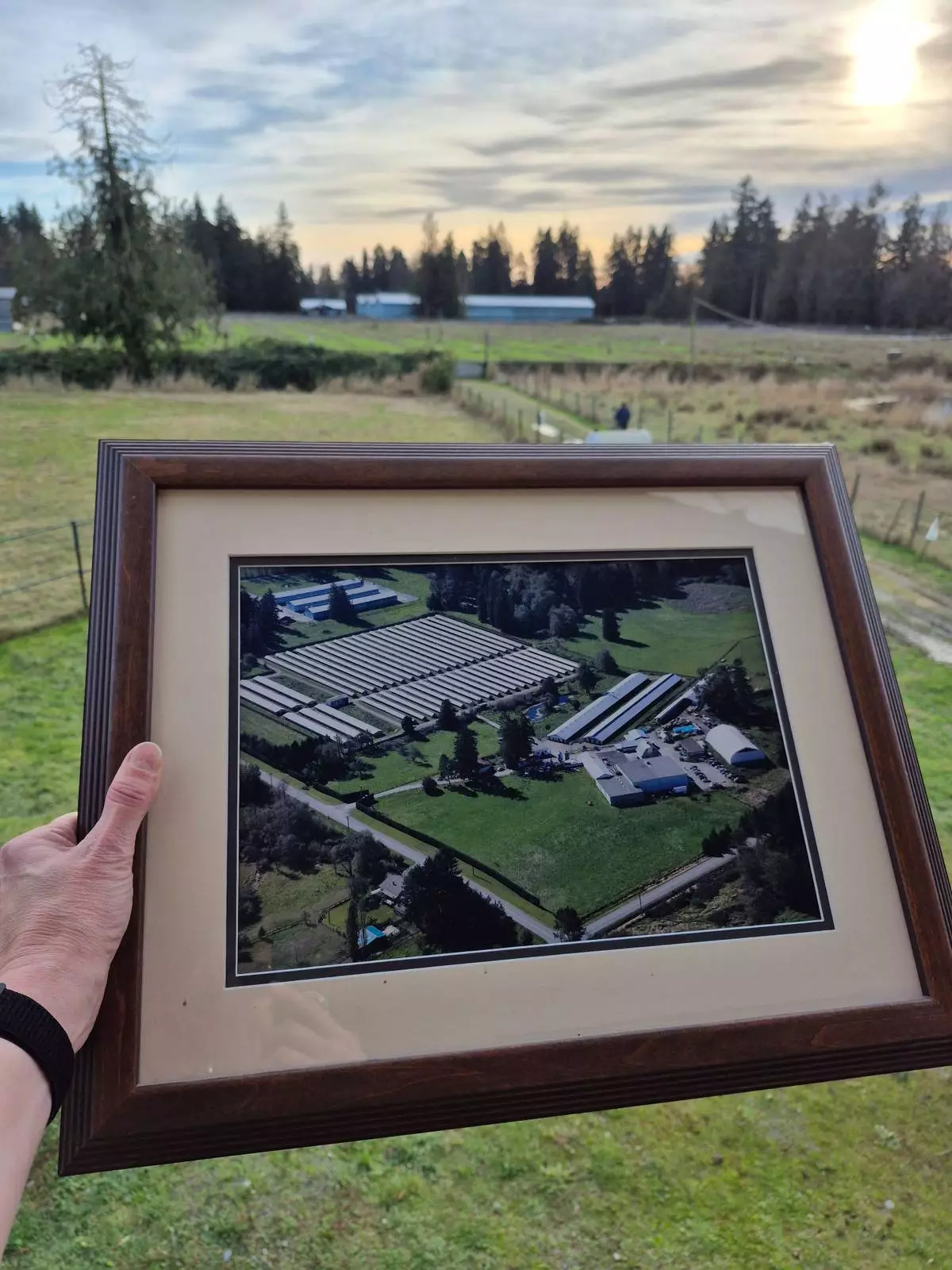
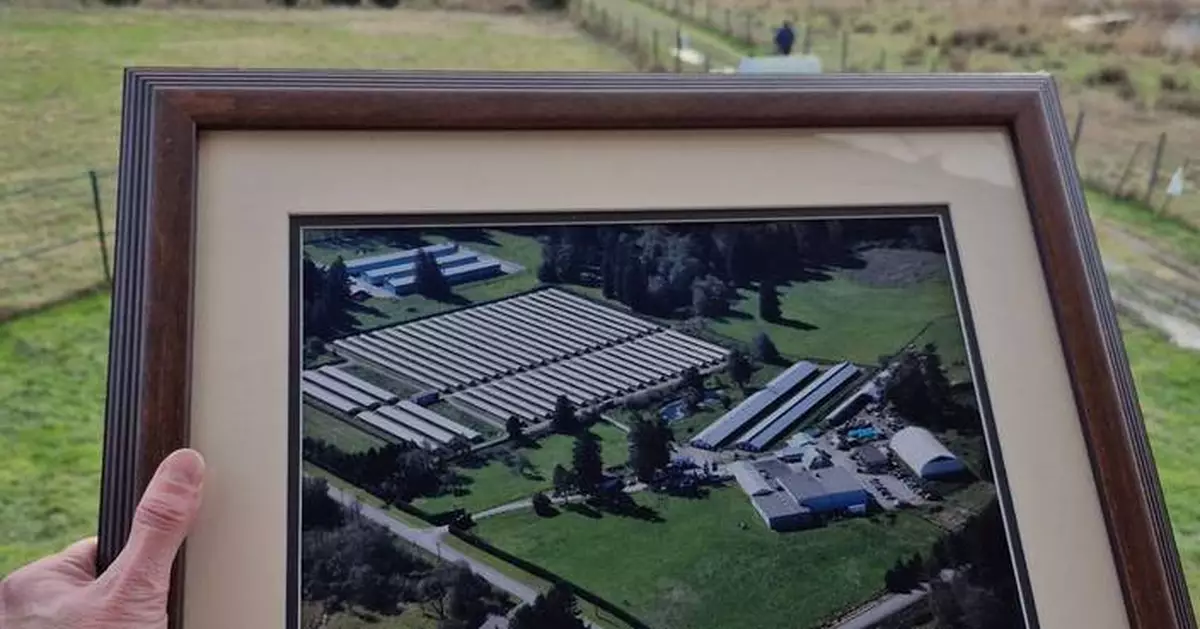
A framed photo of Dogwood Fur Farms in Aldergrove, B.C. prior to the mink farming ban is held up against the current farm, which has been decommissioned. The farm was a multigenerational business that was started in 1957. (Courtesy Angela Bernemann.)
LONDON (AP) — U.S. President Donald Trump and his Defense Secretary Pete Hegseth have been damning of the U.K.'s naval capabilities. Their jibes may have stung in a country with a long and proud maritime history, but they do carry some substance.
The U.K. has been at the forefront of Trump’s ire since the onset of the Iran war on Feb. 28, when British Prime Minister Keir Starmer refused to grant the U.S. military access to British bases.
Though that decision has been partly reversed with the decision to permit the U.S. to use the bases, including that of Diego Garcia in the Indian Ocean, for so-called defensive purposes, Trump is adamant he was let down. He has repeatedly lashed out at Starmer and branded the Royal Navy’s two aircraft carriers as “toys.”
“You don’t even have a navy,” he told Britain's Daily Telegraph in comments published Wednesday. "You’re too old and had aircraft carriers that didn’t work.”
Hegseth, meanwhile, said sarcastically that the “big, bad Royal Navy” should get involved in making the Strait of Hormuz safe for commercial shipping.
For numerous reasons, the Royal Navy is not as big and bad as it used it to be when Britannia ruled the waves. But it's not as feeble as Trump and Hegseth imply and is largely similar with the French navy, which it is often compared with.
“On the negative side, there is a grain of truth, with the Royal Navy being smaller than it has been in hundreds of years,” said professor Kevin Rowlands, editor of the Royal United Services Institute Journal. “On the positive side, the Royal Navy would say that it’s entering its first period of growth since World War II, with more ships set to be built than in decades.”
It’s not that long ago that Britain could muster a task force of 127 ships, including two aircraft carriers, to sail to the south Atlantic after Argentina’s invasion of the Falkland Islands. That 1982 campaign, which then-U.S. President Ronald Reagan was lukewarm about, marked the final hurrah of Britain’s naval pedigree.
Nothing on that scale, or even remotely, could be accomplished now. Since World War II, Britain’s combat-ready fleet has declined substantially, much of it linked to changing military and technological advances and the end of empire. But not all.
The number of vessels in the Royal Navy fleet, including aircraft carriers, destroyers frigates and submarines has fallen from 166 in 1975 to 66 in 2025, according to The Associated Press' analysis of figures from the Ministry of Defense and the House of Commons Library.
Though the Royal Navy has two aircraft carriers at its command, there was a seven-year period in the 2010s when it had none. And the number of destroyers has halved to six while the frigate fleet has been slashed from 60 to just 11.
The Royal Navy faced criticism for the time it took to send the HMS Dragon destroyer to the Middle East after the war with Iran broke out. Though naval officials worked night and day to get it shipshape for a different mission than the one it was readying for, to many it symbolized the extent to which Britain’s military has been gutted since the fall of the Berlin Wall in 1989.
For much of the Cold War, Britain was spending between 4% and 8% of its annual national income on its military. After the Cold War, that proportion steadily dropped to a low of 1.9% of GDP in 2018, fuel to Trump's fire.
Like other countries, Britain, largely under the Labour governments of Tony Blair and Gordon Brown, sought to use the so-called “peace dividend” following the collapse of the Soviet Union to divert money earmarked for defense to other priorities, such as health and education.
And the austerity measures imposed by the Conservative-led government in the wake of the global financial crisis of 2008-9 prevented any pickup in defense spending despite the clear signs of a resurgent Russia, especially after its annexation of Crimea and parts of eastern Ukraine.
In the wake of Russia's full-blown invasion of Ukraine in 2022, and with another Middle East war underway, there's a growing understanding across the political divide that the cuts have gone too far.
Following the Ukraine invasion, the Conservatives started to turn the military spending tide around. Since the Labour Party returned to power in 2024, Starmer is seeking to ramp up British defense spending, partly at the cost of cutting the country's long-vaunted aid spending.
Starmer has promised to raise U.K. defense spending to 2.5% of gross domestic product by 2027, and the updated goal is now for it to rise to 3.5% of GDP by 2035, as part of a NATO agreement pushed by Trump. That, in plain terms, will mean tens of billions pounds more being spent — a lot more kit for the armed forces.
The pressure is on for the government to speed that schedule up. But with the public finances further imperilled by the economic consequences of the Iran war, it's not clear where any additional money will come.
The jibes will likely keep coming even though the critiques are unfair and far from the truth, said RUSI's Rowlands, who was a captain in the Royal Navy.
“We are dealing with an administration that doesn’t do nuance," he said.
This story has been corrected to show there were 166 vessels in 1975, not 466.
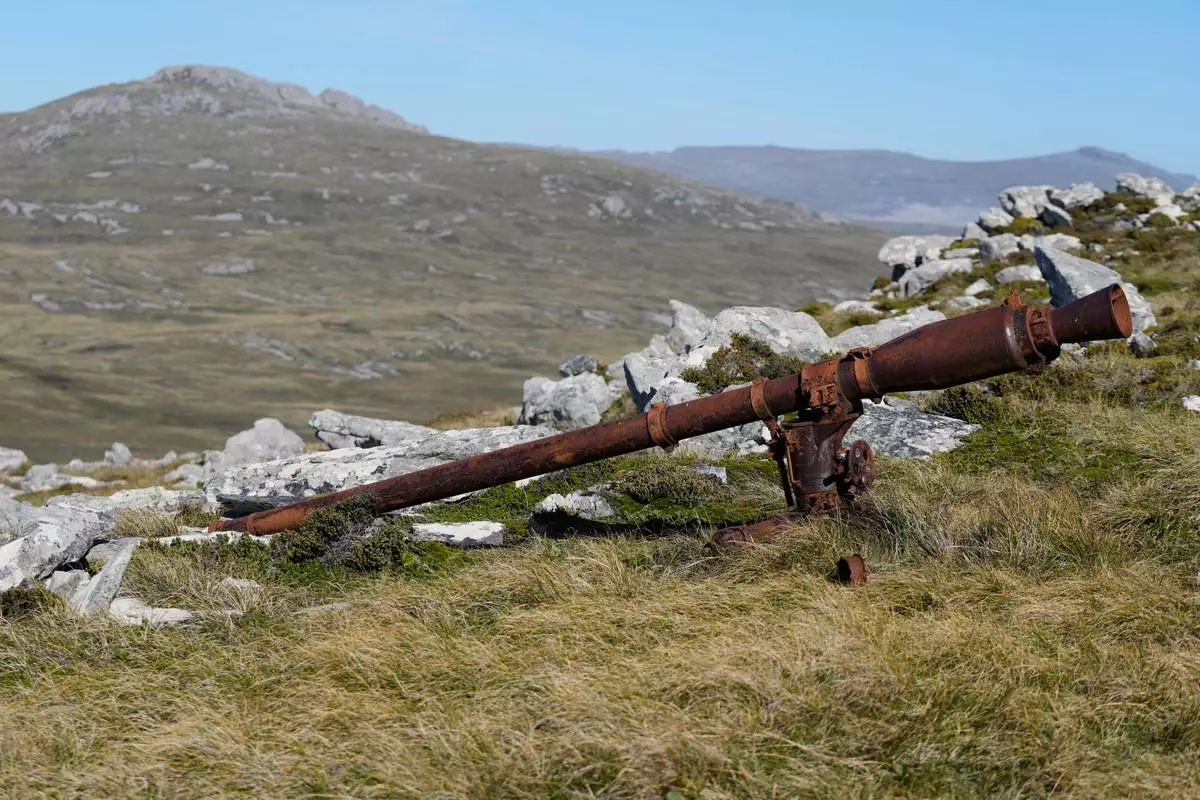
An artillery piece from the 1982 Falklands War between Argentina and Britain lies on Mount Longdon on the Falkland Islands, also known as Islas Malvinas, Monday, March 16, 2026. (AP Photo/Ricardo Mazalan)
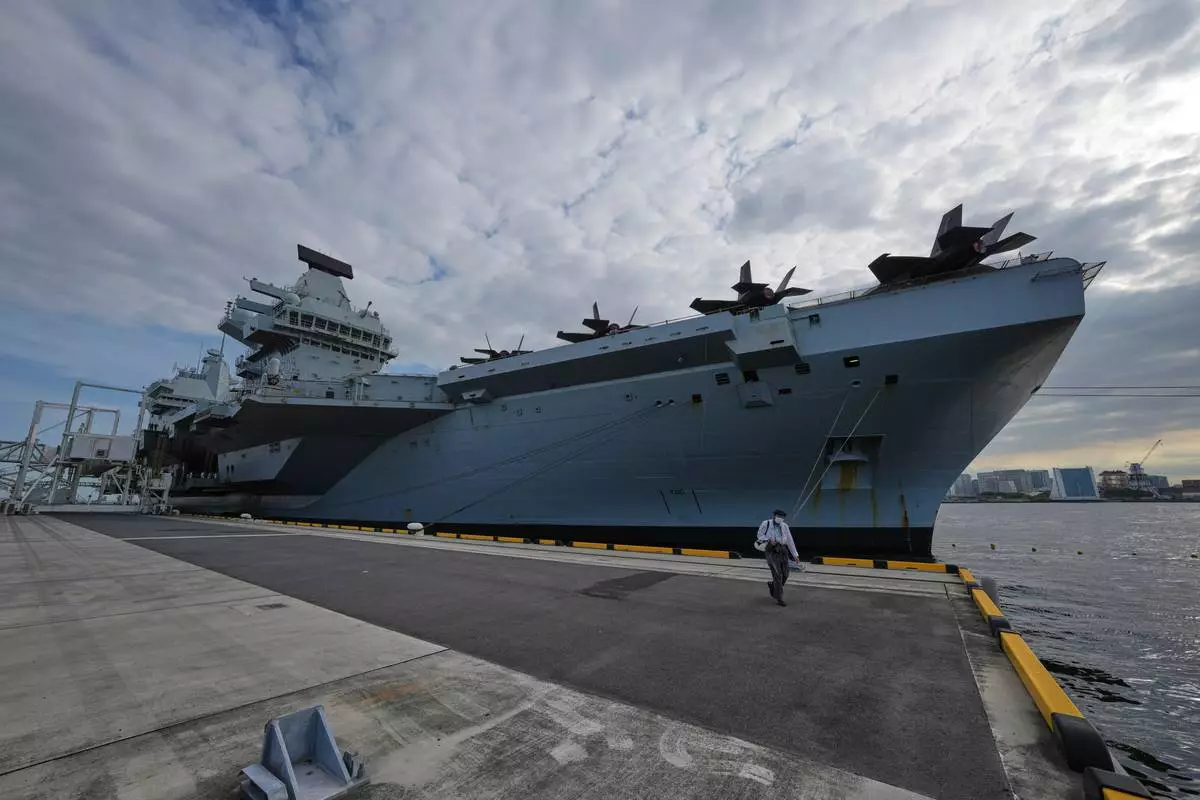
FILE - The Royal Navy aircraft carrier HMS Prince of Wales is pictured before its port call in Tokyo, Thursday, Aug. 28, 2025. (AP Photo/Eugene Hoshiko, File)
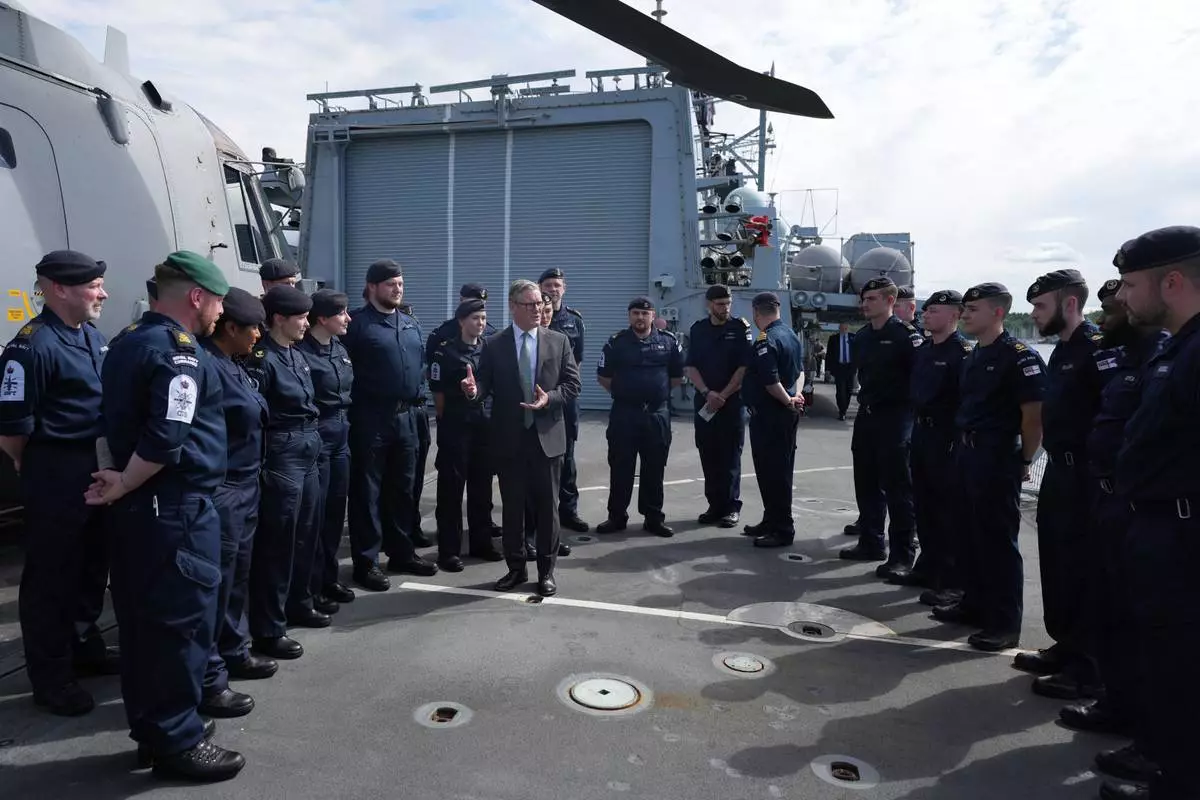
FILE - Britain's Prime Minister Keir Starmer speaks to Royal Marines onboard the HMS ST Albans in Oslo, during his visit to Norway on Friday, May 9, 2025.(AP Photo/Alastair Grant, Pool, File)
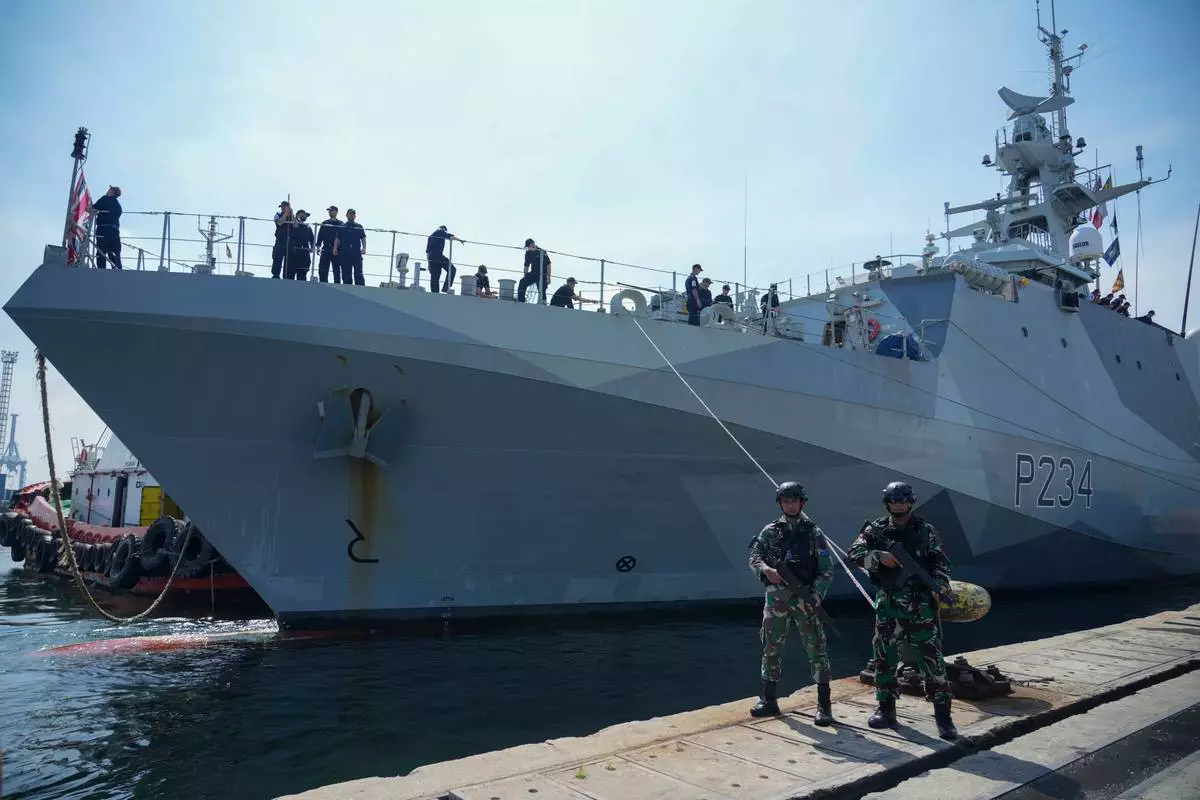
FILE - Indonesian soldiers stand guard as Royal Navy offshore patrol vessel HMS Spey is docked at Tanjung Priok Port during a port visit in Jakarta, Indonesia, Wednesday, Jan. 15, 2025. (AP Photo/Tatan Syuflana, File)
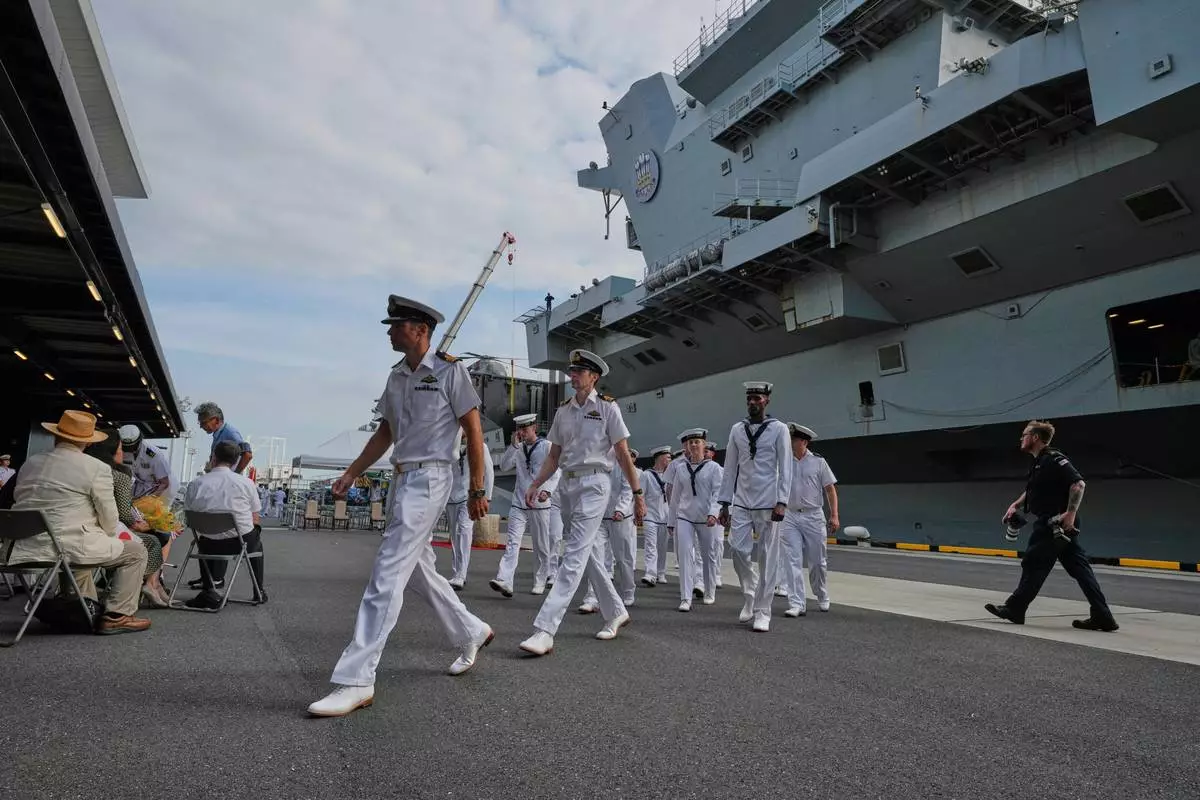
FILE - Crews walk near the Royal Navy aircraft carrier HMS Prince of Wales before its port call in Tokyo Thursday, Aug. 28, 2025. (AP Photo/Eugene Hoshiko, File)