A private investigator embroiled in a corruption scandal that rocked New Mexico’s law enforcement community for over a decade was the first to plead guilty to a slew of federal charges that include racketeering and bribery, according to court records released Friday.
Ricardo Mendez took part in a yearslong scheme between a law firm he worked for that specialized in defending those charged with driving while intoxicated and the Albuquerque Police Department, New Mexico State Police and the Bernalillo County Sheriff’s Office. Mendez admitted that since 2008 he had been offering gifts and thousands of dollars in bribes to officers in exchange for having his clients’ cases dismissed.
“I admit that, since at least 2008, this DWI scheme I participated in constituted an enterprise (the DWI Enterprise) that engaged in a pattern of racketeering activity that included multiple acts of bribery, chargeable under New Mexico state law, as well as multiple acts of interference commerce by extortion,” Mendez wrote in his plea.
Dubbed the Driving While Intoxicated Enterprise, the scheme would allow offenders who drove while intoxicated to get off scot-free, Mendez admitted.
Clients would pay Mendez or his associate an attorney retainer fee in cash, court records said. Then Mendez would pay officers in cash — $5,000 or more — or in the form of gifts or legal services to not appear in court as a necessary witness to the driving incident, resulting in the dismissal of the case, according to court records.
As the scheme continued, officers started referring DWI cases to Mendez and his associate with the ask of increased payments.
“I admit that when drivers avoid criminal culpability for DWI, they become more likely to drive while intoxicated in the future, and, the more often that a person drives while intoxicated, the more likely they are to have an accident,” Mendez said in his plea.
According to documents obtained by the Albuquerque Journal, the probe began following a stop by one of the officers in August 2023. He allegedly told the driver that he should contact a specific attorney, who, if hired, would make sure the police department would not file a case in court.
Prosecutors recommended a reduced prison sentence for Mendez as part of the plea deal.
Albuquerque Police Department’s officers had the largest share of members, according to Mendez's admission.
Albuquerque Police Department Police Chief Harold Medina vowed to conduct an internal investigation last February. Since then, over a dozen officers have resigned, been placed on administrative leave, been terminated or been temporarily reassigned, per a DWI timeline from Albuquerque Police Department communications director Gilbert Gallegos. Dozens of cases have been dismissed.
The Albuquerque Police Department has made administrative changes, including the creation of a DWI unit handbook.
Two more Albuquerque Police Department officers were placed on administrative leave Friday as apart of the federal investigation. A deputy from Bernalillo County Sheriff’s Office was placed on administrative leave Thursday.
“Corruption has no place in law enforcement, and BCSO will fully cooperate with its federal partners,” said Sheriff John Allen in a statement. Allen also confirmed that he has been in contact with the FBI regarding the reported involvement of the deputy in the scheme.
Mendez's lawyer and Gallegos did not immediately respond to requests for comment.

FILE - The Albuquerque Police Department headquarters is viewed Feb. 2, 2024, in Albuquerque, N.M. AP Photo/Susan Montoya Bryan, File)
HOUSTON (AP) — The Artemis II astronauts are already the champions of a fresh new era of lunar exploration. Now it’s time to set a new distance record.
Launched last week on humanity’s first trip to the moon since 1972, the three Americans and one Canadian are chasing after Apollo 13’s maximum range from Earth. That will make them our planet’s farthest emissaries as they swing around the moon without stopping on Monday and then hightail it back home.
Their roughly six-hour lunar flyby promises views of the moon’s far side that were too dark or too difficult to see by the 24 Apollo astronauts who preceded them. A total solar eclipse also awaits them as the moon blocks the sun, exposing snippets of shimmering corona.
“We’ll get eyes on the moon, kind of map it out and then continue to go back in force,” said flight director Judd Frieling. The goal is a moon base replete with landers, rovers, drones and habitats.
A look at Artemis II's up-close and personal brush with another world — our constant companion, the moon.
Apollo 13’s astronauts missed out on a moon landing when one of their oxygen tanks ruptured on the way there in 1970.
With the three lives in jeopardy, Mission Control pivoted to a free-return lunar trajectory to get them home as fast and efficiently as possible. This routing relies on the gravity of Earth and the moon, and minimal fuel.
It worked for Apollo 13, turning it into NASA’s greatest “successful failure.” (For the record, flight director Gene Kranz never uttered “Failure is not an option.” The line is pure Hollywood, originating with the 1995 biopic starring Tom Hanks.)
Commander Jim Lovell, Fred Haise and Jack Swigert reached a maximum 248,655 miles (400,171 kilometers) from Earth before making their life-saving U-turn on Apollo 13.
Artemis II’s astronauts are following the same figure-eight path since they are neither orbiting the moon nor landing on it. But their distance from Earth should exceed Apollo 13’s by about 4,000 miles (, 6400 kilometers).
Artemis II’s Christina Koch said late last week that she and her crewmates don’t live on superlatives, but it’s an important milestone “that people can understand and wrap their heads around,” merging the past with the present and even the future when new records are set.
During the flyby, the astronauts will split into pairs and take turns capturing the lunar views out their windows with cameras.
Because they launched on April 1, the rendezvous won’t have as much of the far lunar side illuminated as other dates would have. But the crew still will be able make out “definite chunks of the far side that have never been seen” by humans, said NASA geologist Kelsey Young, including a good portion of Orientale Basin.
They’ll call down their observations as they photograph the gray, pockmarked scenes. There's a suite of professional-quality cameras on board, and each astronaut also has an iPhone for more informal, spur-of-the-minute picture-taking.
Young’s team made lunar geography flashcards for the astronauts to study before the flight.
“They’ve practiced for many, many, many months on visualizations of the moon,” she said over the weekend, “and getting their eyes on the real thing, I’m really, really looking forward to them bringing the moon a little closer to home on Monday.”
The upside of the April 1 launch is a total solar eclipse. The eclipse won’t be visible from Earth — only from the Orion capsule — treating the astronauts to several minutes’ worth of views of the sun's outermost, radiating atmosphere, the corona.
The astronauts will be on the lookout for any unusual solar activity during the eclipse, Young said, and will use their “unique vantage point” to describe the features of the solar corona, or crown.
All four astronauts packed eclipse glasses to protect their eyes.
Orion will be out of contact with Mission Control for nearly an hour when it’s behind the moon. The same thing happened during the Apollo moonshots.
NASA is relying on its Deep Space Network to communicate with the crew, but the giant antennas in California, Spain and Australia won’t have a direct line of sight when Orion disappears behind the moon for approximately 40 minutes.
These communication blackouts were always a tense time during Apollo although, as Frieling points out, “physics takes over and physics will absolutely get us back to the front side of the moon.”
Once Artemis II departs the lunar neighborhood, it will take four days to return home. The capsule will aim for a splashdown in the Pacific near San Diego on April 10, nine days after its Florida launch.
During the flight back, the astronauts will link up via radio with the crew of the orbiting International Space Station. This is the first time that a moon crew has colleagues in space at the same time and NASA can’t pass up the opportunity for a cosmic chitchat. The conversation will include both members of the first all-female spacewalk in 2019: Koch aboard Orion and Jessica Meir, on the station.
The Associated Press Health and Science Department receives support from the Howard Hughes Medical Institute’s Department of Science Education and the Robert Wood Johnson Foundation. The AP is solely responsible for all content.
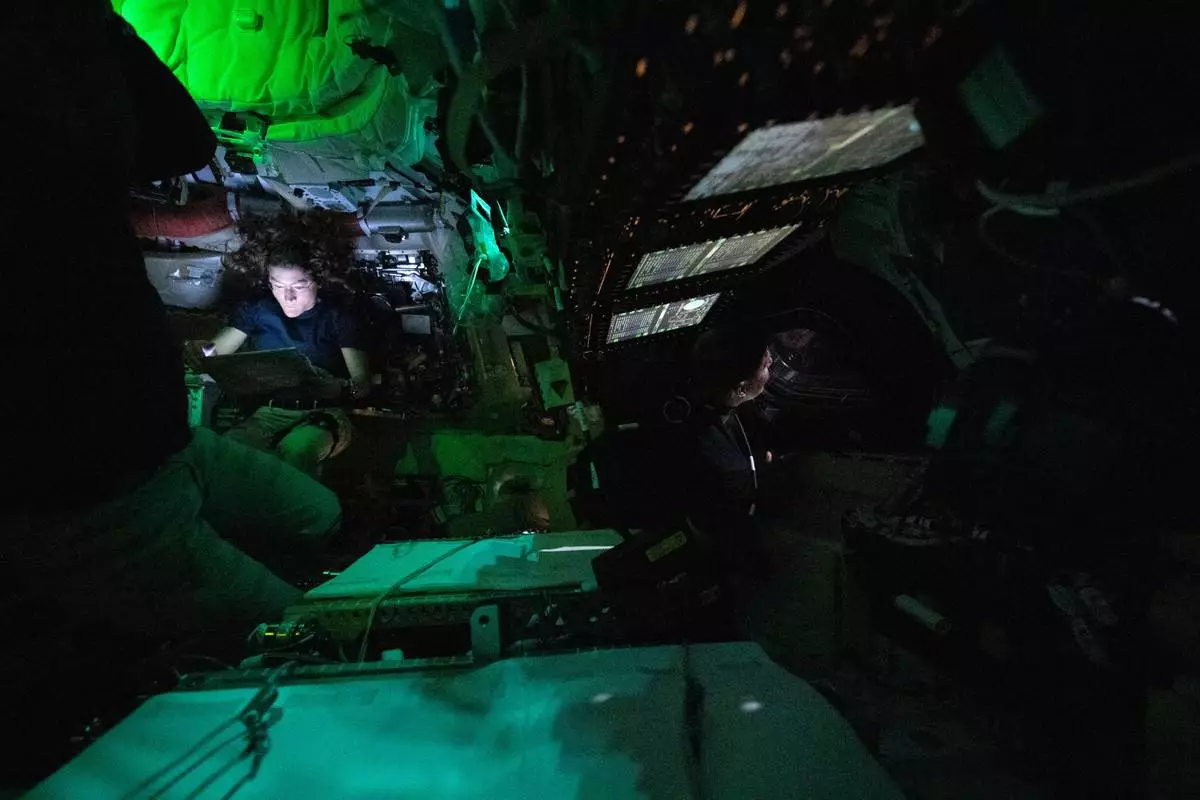
This image provided by NASA, astronaut Christina Koch is illuminated by a screen inside the darkened Orion spacecraft on the third day of the agency's Artemis II mission on Friday, April 3, 2026. (NASA via AP)
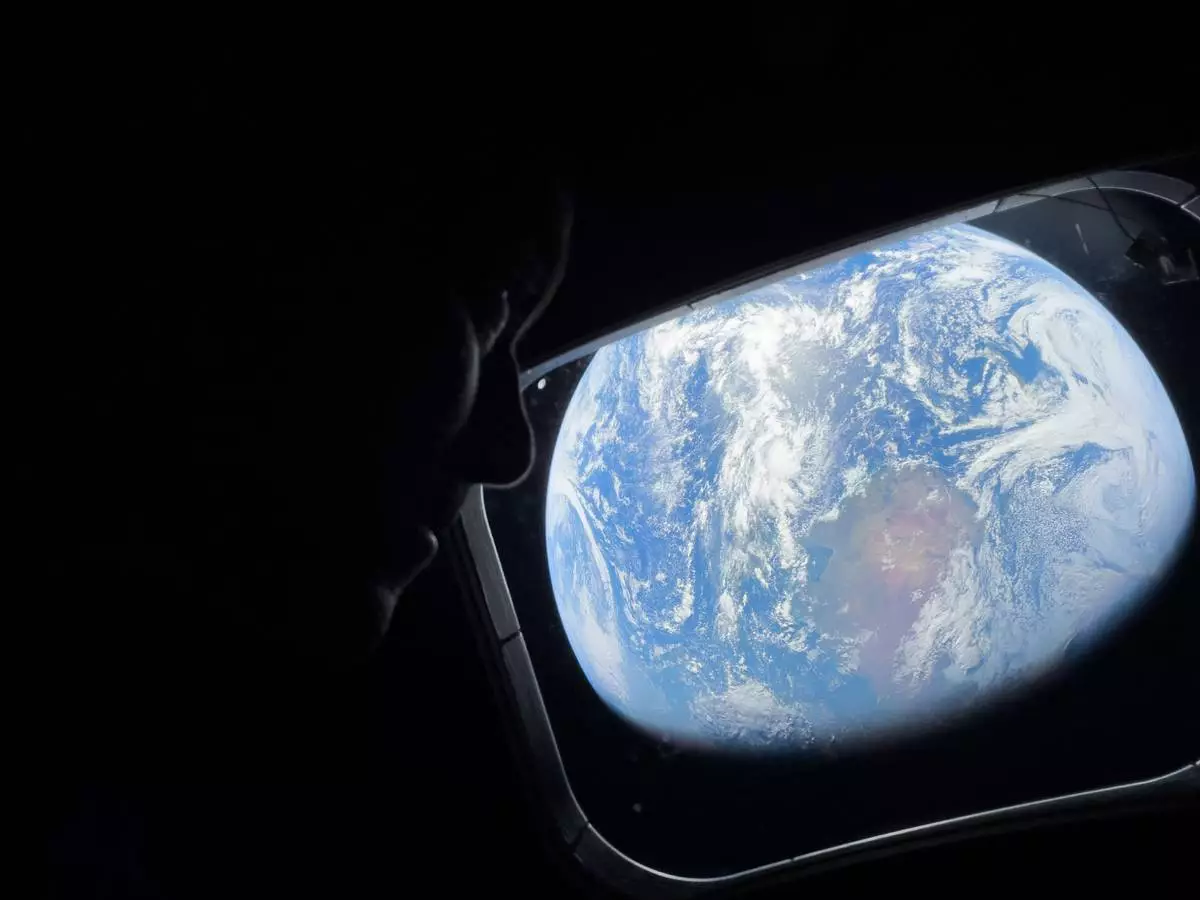
This image provided by NASA, astronaut and Artemis II Commander Reid Wiseman peers out of one of the Orion spacecraft's main cabin windows, looking back at Earth, as the crew travels towards the Moon on Thursday, April 2, 2026. (NASA via AP)
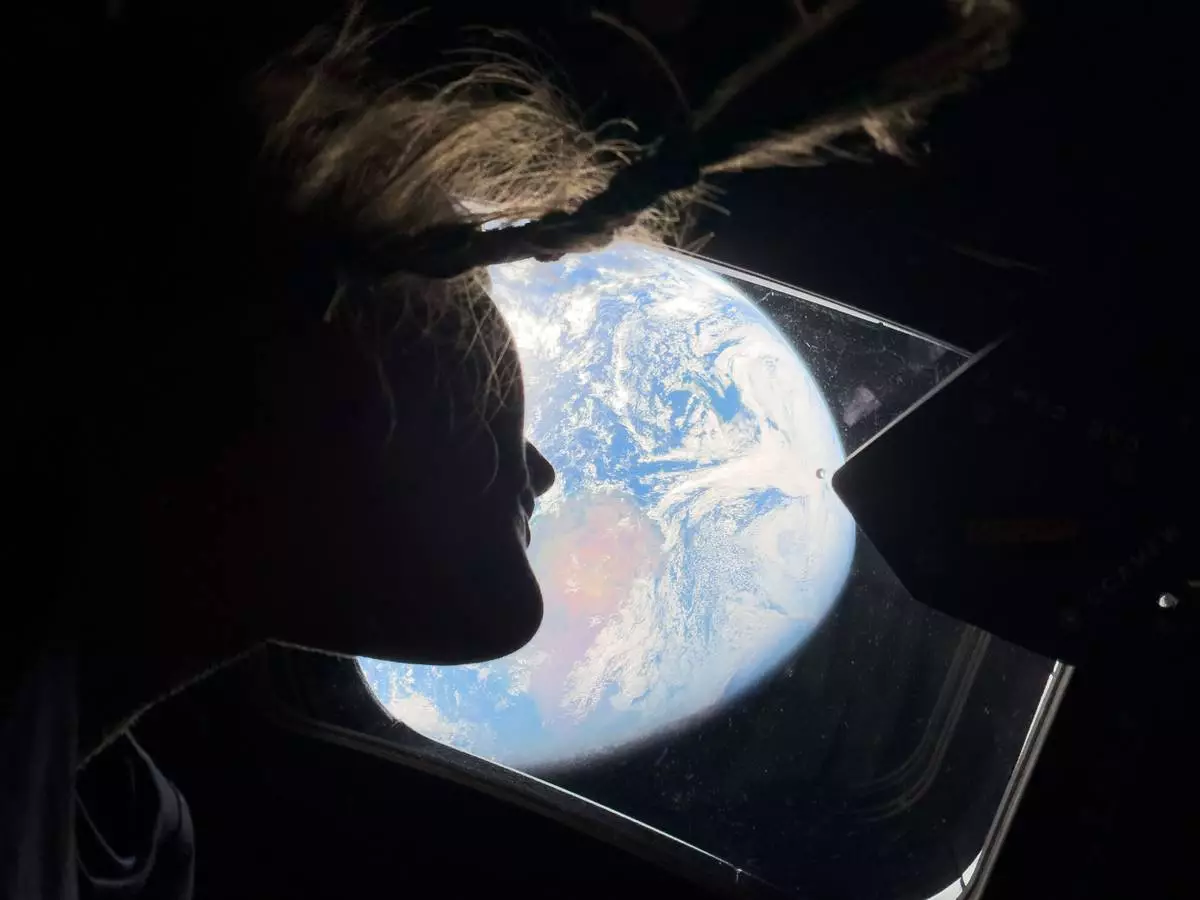
This image provided by NASA, astronaut and Artemis II mission specialist Christina Koch peers out of one of the Orion spacecraft's main cabin windows, looking back at Earth, as the crew travels towards the Moon on Thursday, April 2, 2026. (NASA via AP)
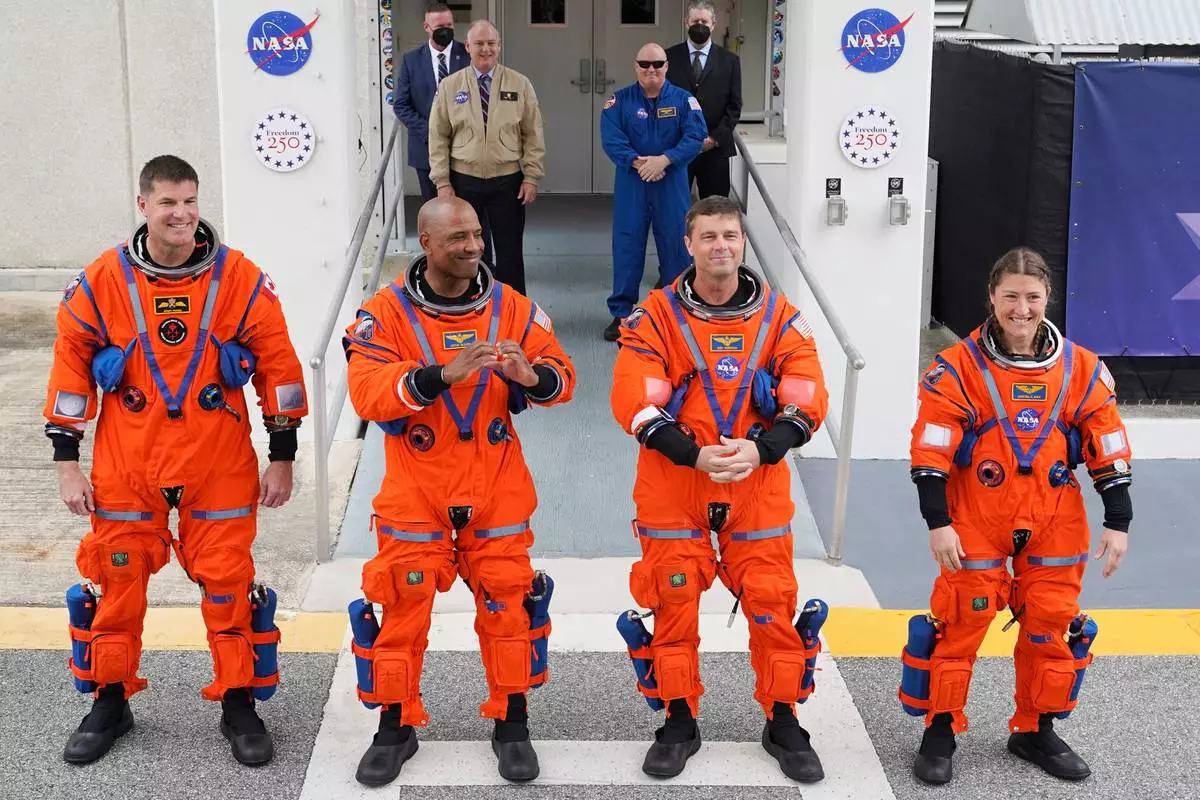
Astronauts, from left, Canadian Space Agency astronaut Jeremy Hansen, pilot Victor Glover, commander Reid Wiseman and mission specialist, Christina Koch leave the Operations and Checkout building on their way to Launch Pad 39B for a planned liftoff on NASA's Artemis II moon rocket at the Kennedy Space Center, Wednesday, April 1, 2026, in Cape Canaveral, Fla. (AP Photo/John Raoux)
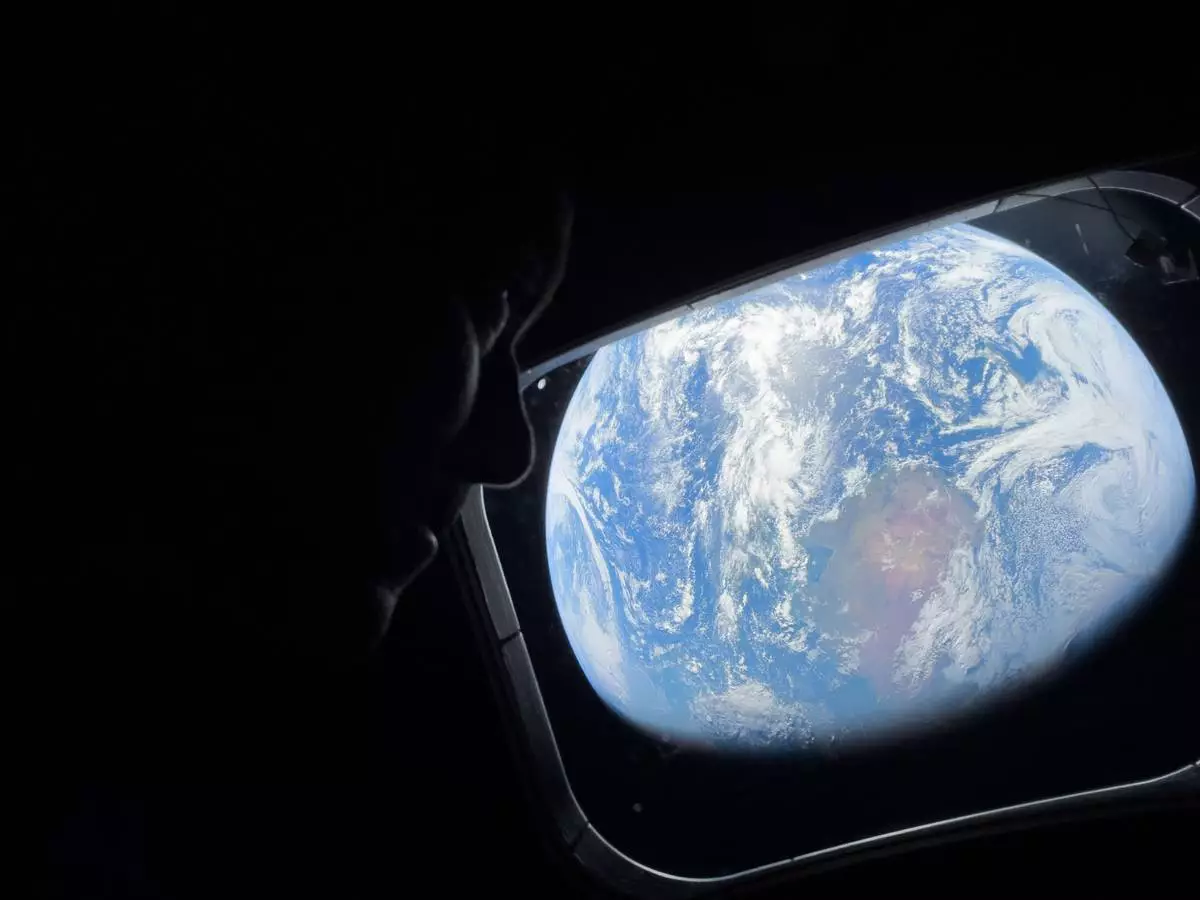
In this photo provided by NASA, Commander Reid Wiseman looks at the Earth from a window aboard the Orion spacecraft Integrity during the Artemis II mission en route to the moon on Thursday, April 2, 2026. (NASA via AP)
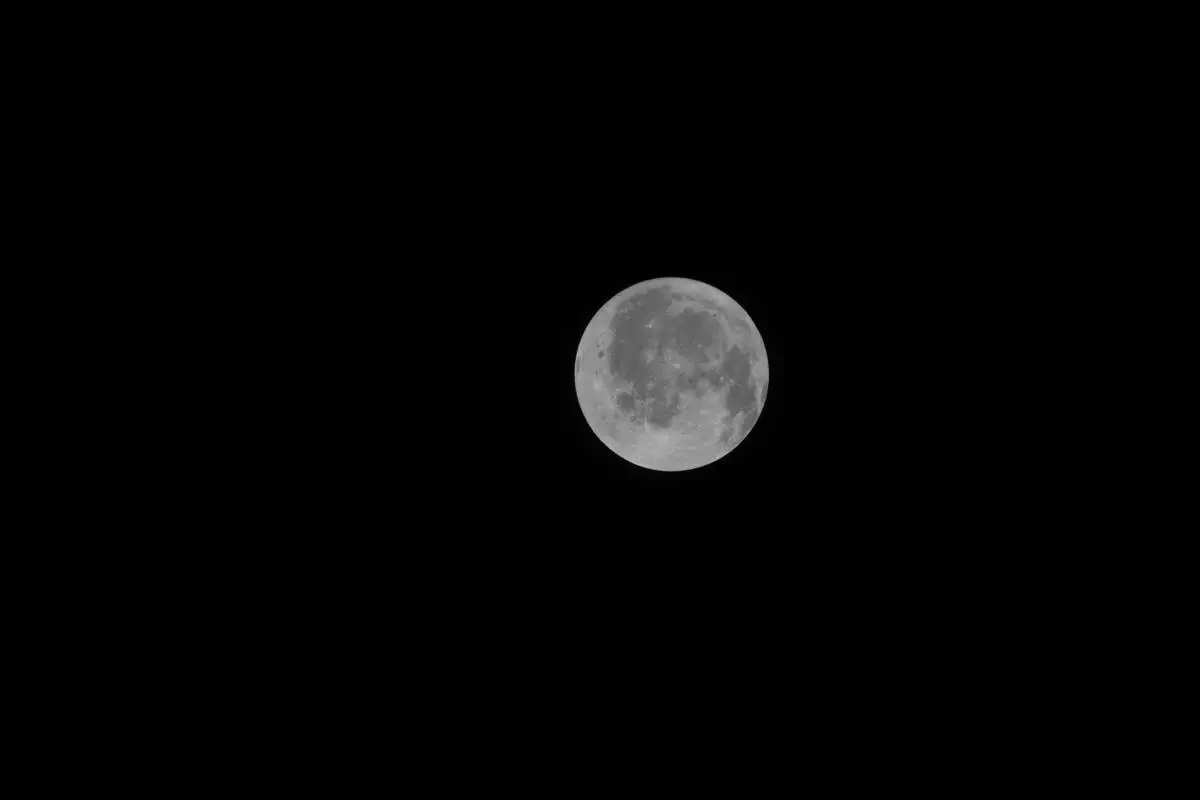
This photo provided by NASA shows the moon seen from a window on the Orion spacecraft Integrity during the Artemis II mission on Friday, April 3, 2026. (NASA via AP)