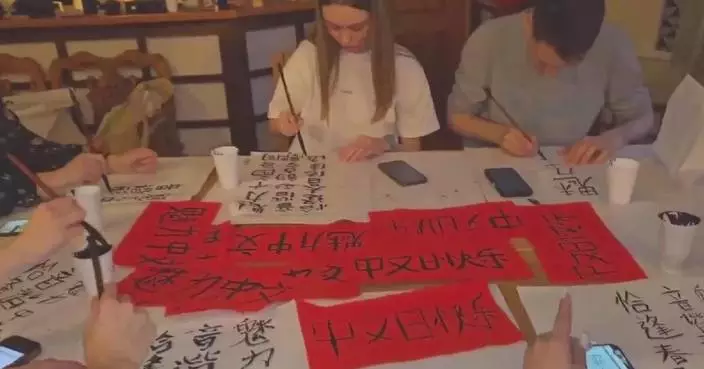
The Spring Festival vibes have increased to a peak in the Chinatown in Los Angeles as celebrations including grand parade were held there, offering visitors a rich cultural experience and an opportunity to engage in exchanges between China and the United States.
The Spring Festival has always been an occasion for family reunion and for special celebrations, and is considered one of the most important festivals of the year for the Asian-American community in the United States.
The 2025 Spring Festival falls on Wednesday with special events being scheduled in Chinatowns in large cities like Los Angeles from late January all the way into the middle of February.
The events in Los Angeles Chinatown featured captivating parade and rounds of dances, and the tourists could have the opportunity to write their best wishes for the Year of the Snake on small wooden plaques, a tradition believed to bring good luck in the new year.
Celebrations like these provide opportunities for Americans and for foreign visitors to get acquainted with Chinese traditions and customs.
"We had a lovely meal at Yang Chao's restaurant. And there's all kinds of pictures of celebrities that are frequent there as well, and the prices are very good. Yeah, it's a new experience," said Joanne, a visitor.
"It's a beautiful culture. From my heart, I admire the Chinese culture. And here we saw the Bruce Lee statue, that taught us about the martial arts and what a great discipline that is. We also visited several stores. There are beautiful clothes and something really useful," said Carolina, another visitor.
Across the United States, festive occasions held to celebrate Spring Festival serve as valuable opportunities to foster meaningful people-to-people connections between China and the U.S., underscoring the significance of cultural exchange between the two countries.
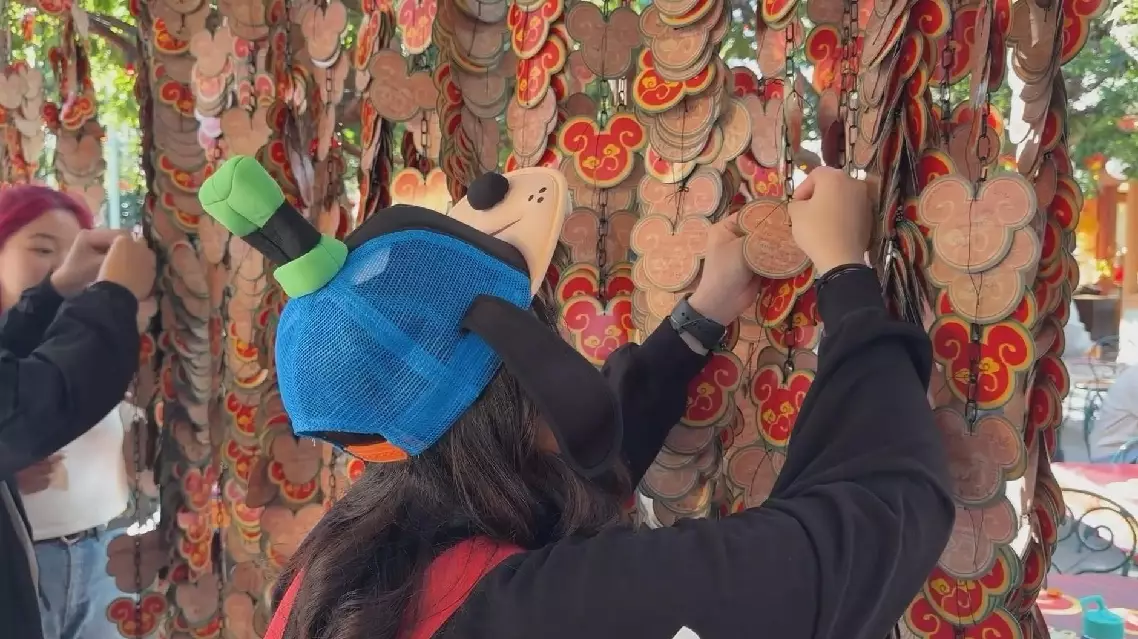
Los Angeles Chinatown holds celebrations to welcome Spring Festival
Commemorations honoring Chinese People's Volunteers (CPV) martyrs were held on the banks of the Yalu River in Dandong, Liaoning Province on Tuesday as part of ongoing tributes to those who fought in the War to Resist U.S. Aggression and Aid Korea (1950-1953).
The event was held to mark the return of the remains of 12 CPV martyrs, who were killed in the war, from the Republic of Korea (ROK) on Wednesday.
This will be the 13th such repatriation of CPV remains following the handover agreement between the two countries. Since 2014, the remains of 1,011 soldiers have been returned to China from the ROK, according to China's Ministry of Veterans Affairs.
More than 170 representatives, including veteran CPV soldiers, relatives of the martyrs, active-duty personnel, students, and other from various sectors of society, attended the event.
People boarded a ferry which slowly sailed down the Yalu River. Inside the cabin, all present stood in solemn silence as the national anthem of the People's Republic of China was played, and observed a moment of silence in honor of the CPV martyrs.
Then, they walked to the ship's railings one by one and scattered flower petals into the river to pay tribute to the martyrs.
"We, the CPV, went abroad to fight to defend our motherland, the people, and our good life and to resist U.S. imperialist aggression against the Democratic People's Republic of Korea (DPRK). I hope that our young comrades and students today will study hard and make contributions to our motherland," said Hu Changzhe, a CPV veteran.
"I feel deeply moved as these veteran soldiers are heroes who once fought for our country. Now, standing by the Yalu River, looking back on their past and remembering their comrades, they must be deeply touched," said Hong Jialu, a student at a branch of Liaoning Province Shiyan High School.
At the event, 10 student representatives from primary and middle schools read aloud a letter to express their reverence and remembrance for the heroic martyrs through their sincere words and heartfelt recitation.
The Korean War broke out in June 1950, eight months after the People's Republic of China was founded. At the request of the Democratic People's Republic of Korea (DPRK), China sent 2.9 million CPV soldiers to assist the DPRK during the war, of whom more than 360,000 were killed or injured.
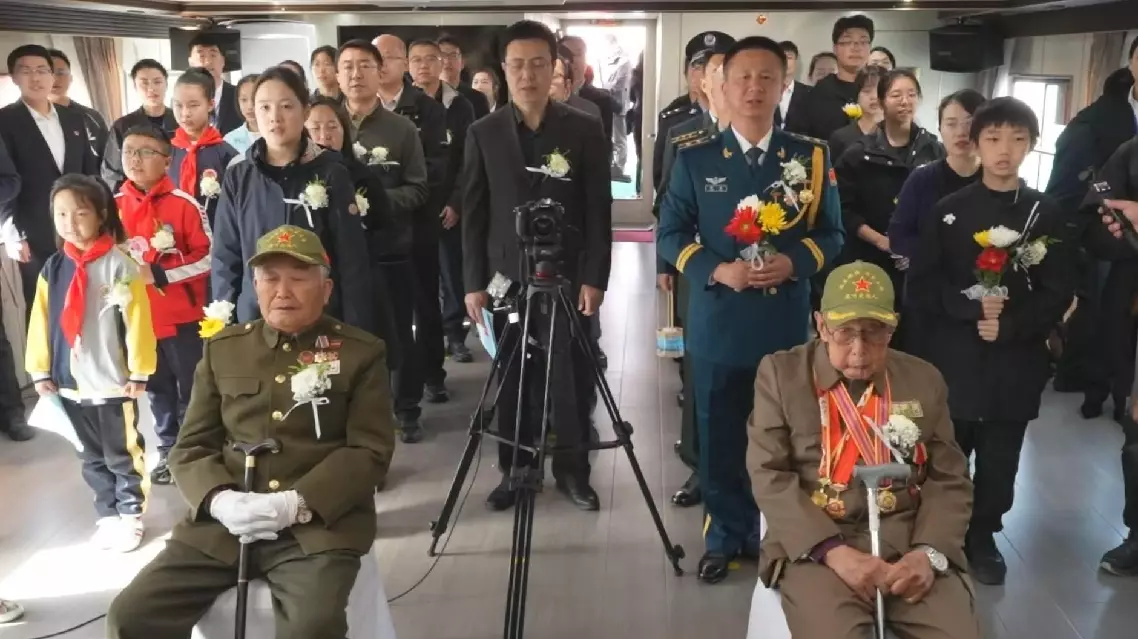
Commemorations held to pay tribute to CPV heroes in northeast China