Lang Jiaziyu, a third-generation inheritor of the "Lang Beijing Dough Figurine," a cherished national intangible cultural heritage in China, is dedicated to preserving this traditional art form, which is also part of the traditions for celebrating Spring Festival.
Dough figurines, also known as "glutinous rice figurines," are a traditional Chinese art form made from wheat flour and glutinous rice flour as the primary ingredients.
Among the various styles of dough figurines across China, "Lang Beijing Dough Figurine" stands out as a unique folk art, deeply infused with the rich history and traditions of the capital.
In 2008, "Lang Beijing Dough Figurine" was added to the National Intangible Cultural Heritage List, which brought even more attention to this unique art form.
Lang learned the skills of making dough figurines from his father Lang Zhichun.
"I started to learn making dough figurines from my father at about three or four. At first, I thought my father worked so fast. I found it amazing and interesting. I started by watching how he did it, then gradually I wanted to master his skills and create vivid characters by myself," said Lang.
Lang takes pride in the fact that his work reflects China's deep-rooted cultural values. He was especially pleased to see his creations gain international recognition when showcased in France as part of the Spring Festival celebrations, particularly since the festival has been included in UNESCO's Representative List of the Intangible Cultural Heritage of Humanity.
"Spring Festival has been inscribed into the UNESCO's intangible cultural heritage list. It is made up of a collection of intangible cultural heritage skills. Dough figurines are a small part of it. These small heritages coexist and support each other. Through Spring Festival, we can share more of our values and help others understand China better," said Lang.
Through skillful innovation, Lang has taken his art to new heights. He is currently working on a special creation inspired by the 28 constellation sculptures in the Jade Emperor Temple in north China's Shanxi Province.
Lang remains dedicated to preserving this cultural legacy for future generations.
"As representative inheritors of the intangible cultural heritage, our job is to protect these cultural genes and pass them down as our shared culture," said Lang.
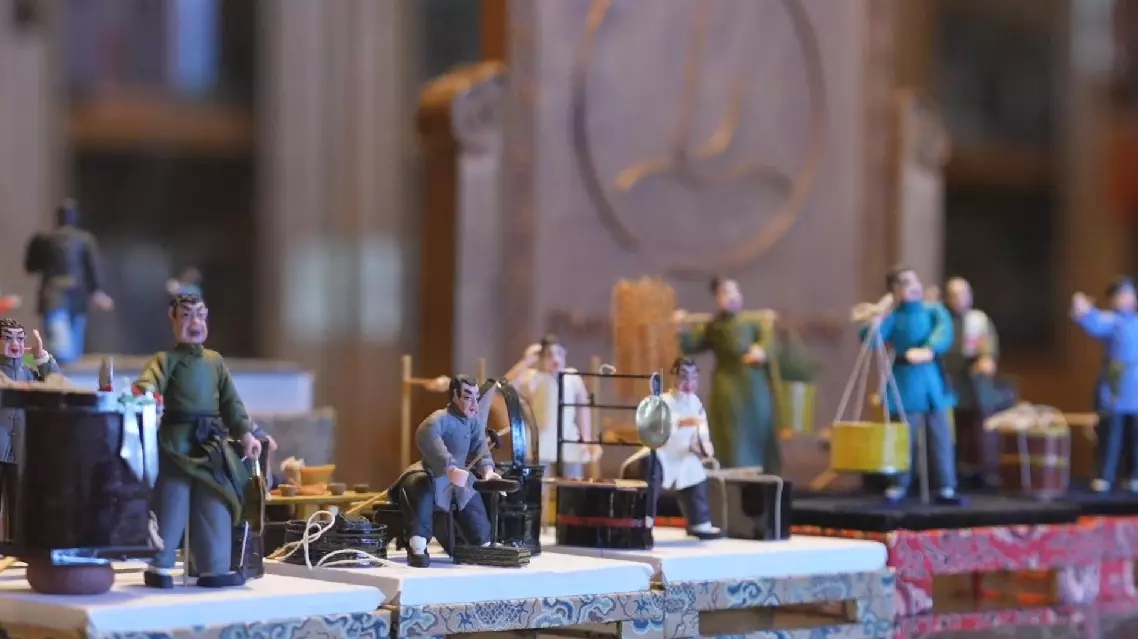
Dough figurine art inheritor in Beijing dedicated to preserve traditional art form
China and the European Union (EU) have agreed that it is necessary to provide general guidance on price undertakings for Chinese exporters of passenger battery electric vehicles to the EU, China's commerce ministry said on Monday.
The move aims to address relevant concerns in a more practical, targeted, and consistent manner with World Trade Organization (WTO) rules, according to the Ministry of Commerce in a statement.
Accordingly, the European Commission will issue a Guidance Document on Submission of Price Undertaking Offers. In the document, the EU confirms that it will assess each undertaking application under the same legal criteria, in accordance with the principle of non-discrimination and relevant WTO rules, in an objective and fair manner.
The progress fully reflects the spirit of dialogue and the outcomes of consultations between China and the EU. It shows that both China and the EU have the ability and willingness to properly resolve differences through dialogue and consultation within the framework of WTO rules, thereby maintaining the stability of automotive industrial and supply chains in China, the EU, and the whole world. This is conducive not only to ensuring the healthy development of China-EU economic and trade relations, but also to safeguarding the rules-based international trade order, the statement said.
On the same day, the China Chamber of Commerce for Import and Export of Machinery and Electronic Products (CCCME) also issued a statement welcoming the positive outcome of the consultations.
The CCCME noted that eligible Chinese EV makers may now submit price undertaking applications in accordance with the EU's guidance, and the European Commission has pledged to review all applications objectively, fairly, and under uniform standards.
The proper settlement of this case meets the shared expectations of industries along the EV supply chain in both China and Europe. It will help ensure the security and stability of related industrial and supply chains and safeguard the broader China-EU economic and trade relationship, the CCCME said.
The chamber expressed appreciation for the substantial efforts made by China's Ministry of Commerce in defending the interests of the domestic industry. It also pledged to encourage and support relevant Chinese enterprises in making full use of the consultation outcomes to protect their interests in exporting to the EU and promote healthy cooperation between the industries of both sides.
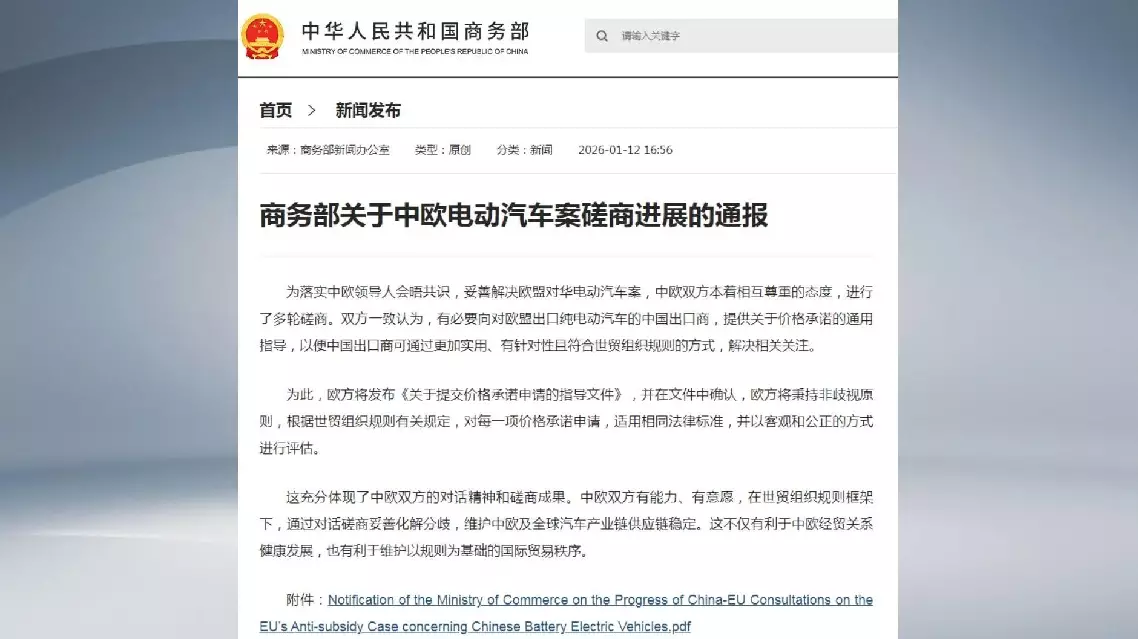
China, EU agree on price undertaking guidance for Chinese electric vehicle exporters: commerce ministry