As the Spring Festival approaches, flowers are in high demand across China and around the world, with southwest China's Yunnan Province, known as the "Kingdom of Flowers," emerging as a key exporter.
The province's dazzling blooms are not only brightening homes within China but are also gaining popularity in overseas markets, particularly in Southeast Asia.
In the first 11 months of 2024, Kunming Customs reported that the export value of fresh-cut flowers from Yunnan, where saw billions of flowers cultivated every year, surpassed 600 million yuan (around 82.67 million U.S. dollars), marking a significant year-on-year increase of over 34 percent.
This surge reflects the growing international recognition of Yunnan's high-quality flowers, a reputation built over decades of cultivation and innovation.
Xie Yaorong, a flower exporter in Yunnan, highlighted the province's competitive edge.
"Our production volume is quite considerable, and we have a wide variety of flowers with excellent quality. We also have a well-established quality grading system, ranging from Grade A to Grade E. Grades A and B are able to enter the international market," said Xie.
Southeast Asian nations, especially Vietnam and Thailand, are emerging as major markets for Yunnan's blooms.
"(In Thailand), we can ship around 20 truckloads a month. During festive seasons like now, that number rises to about 40 truckloads a month, with each truck carrying approximately 400,000 stems," said Xie.
Yunnan's strategic location, as China's gateway to Southeast Asia, and its advanced transportation networks—spanning land, air, and rail—have played a key role in expanding the province's global flower exports.
The Kunming-Bangkok Expressway, part of the Belt and Road Initiative, has significantly reduced transportation times, allowing freshly cut flowers to travel from Yunnan's highlands to Thailand in just a few days.
"I think that the highway in Thailand, we call it Asia Highway, always connecting ASEAN and connect to China. The option to have the speed train is always you make additional of the logistics support. So, if you have, that go together by the BRI, I think that it will be more value added and then it will be made more efficient," said Vikrom Kromadit, chairman of Thailand-China Business Council.
The integration of modern cold chain technology ensures that flowers arrive at their destinations in pristine condition, with vibrant, unblemished petals.
In Bangkok's flower market, Yunnan's roses, carnations, and lilies now sit alongside local blooms like orchids, creating a stunning array of floral offerings for Thai consumers.
"Roses are very popular, especially red roses. The carnations also sell well because they are long lasting. When they are in a bouquet, they last for a long time. So, customers like it," said Phatchamon Saelao, florist at the Bangkok's flower market.
"Last week, I bought some roses. They last so long so I came back to buy them again. I bought imported roses because their colors are beautiful," said Thanchanok Srithaneadchai, one of the buyers.
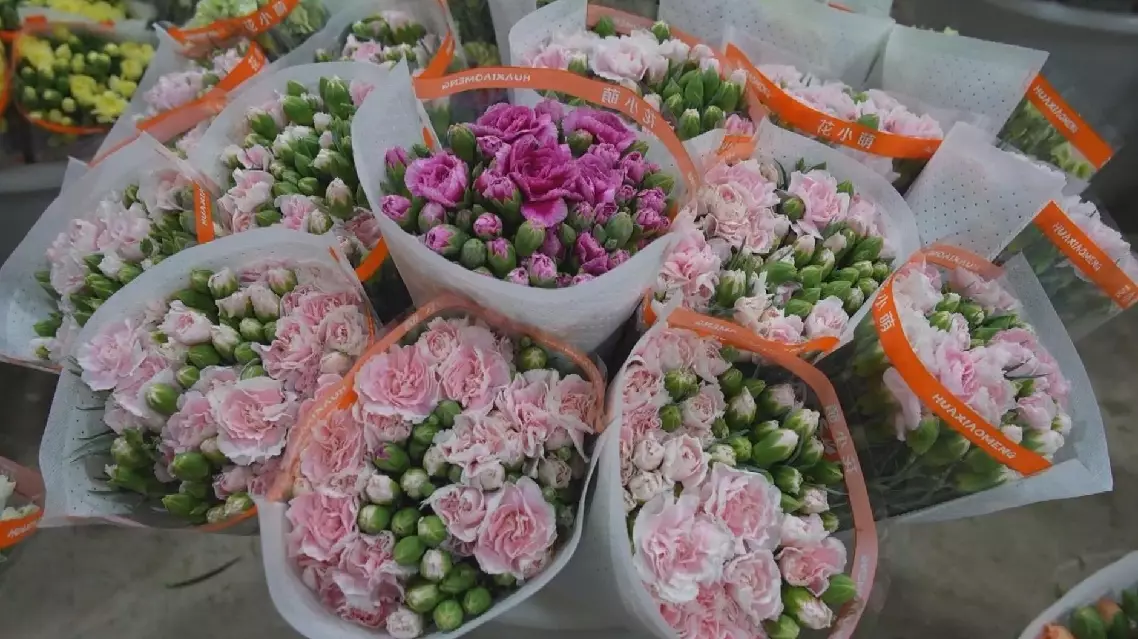
China's Yunnan emerges as key player in global flower trade