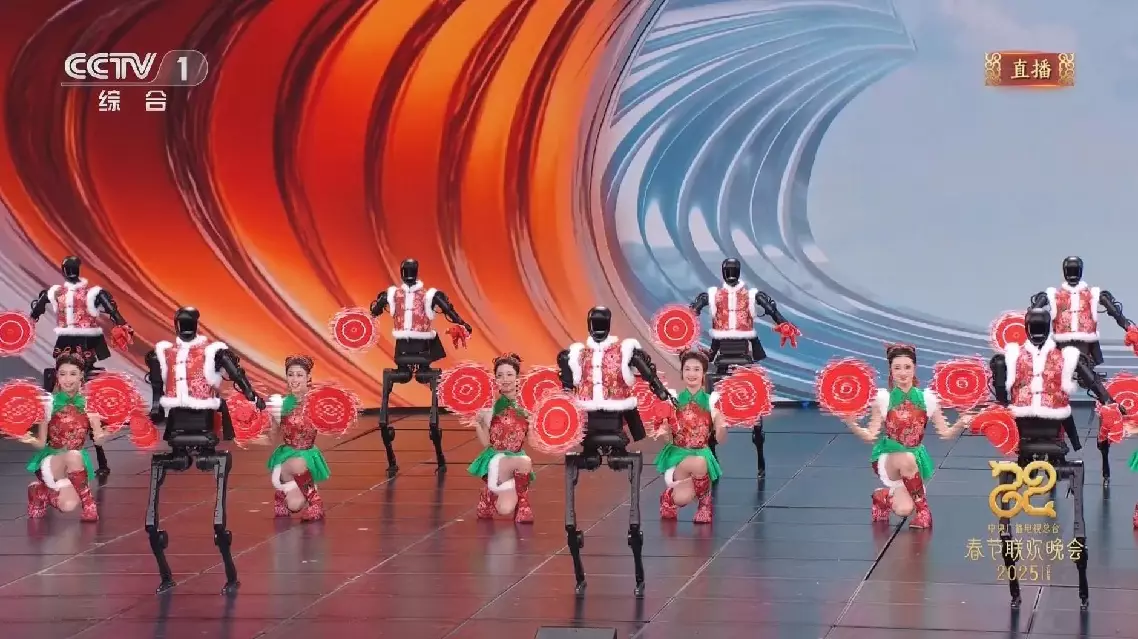
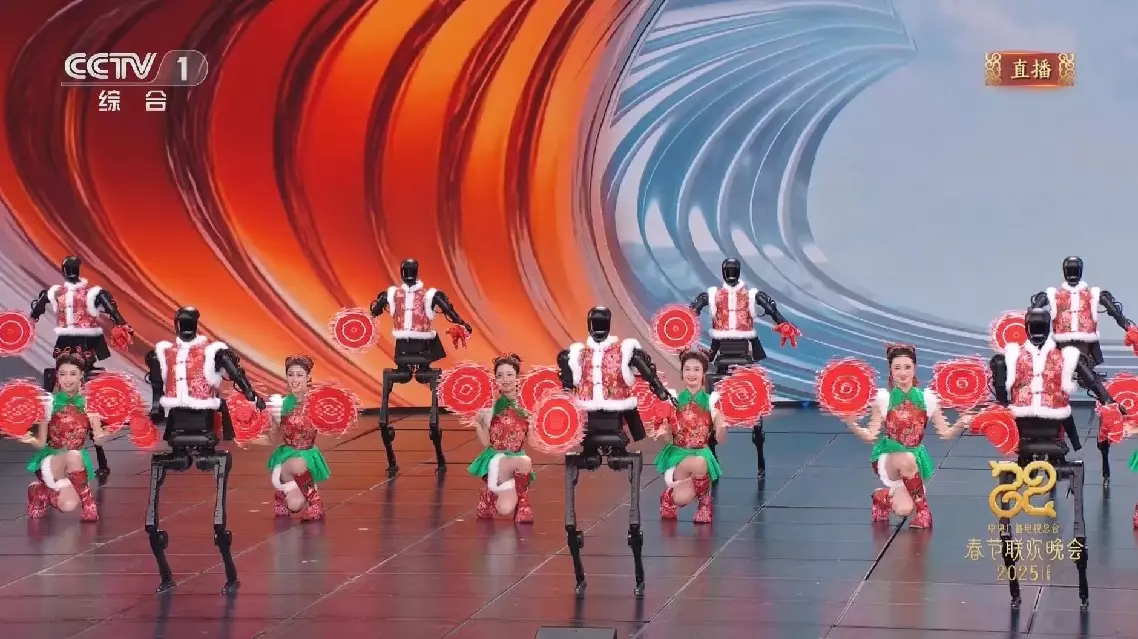
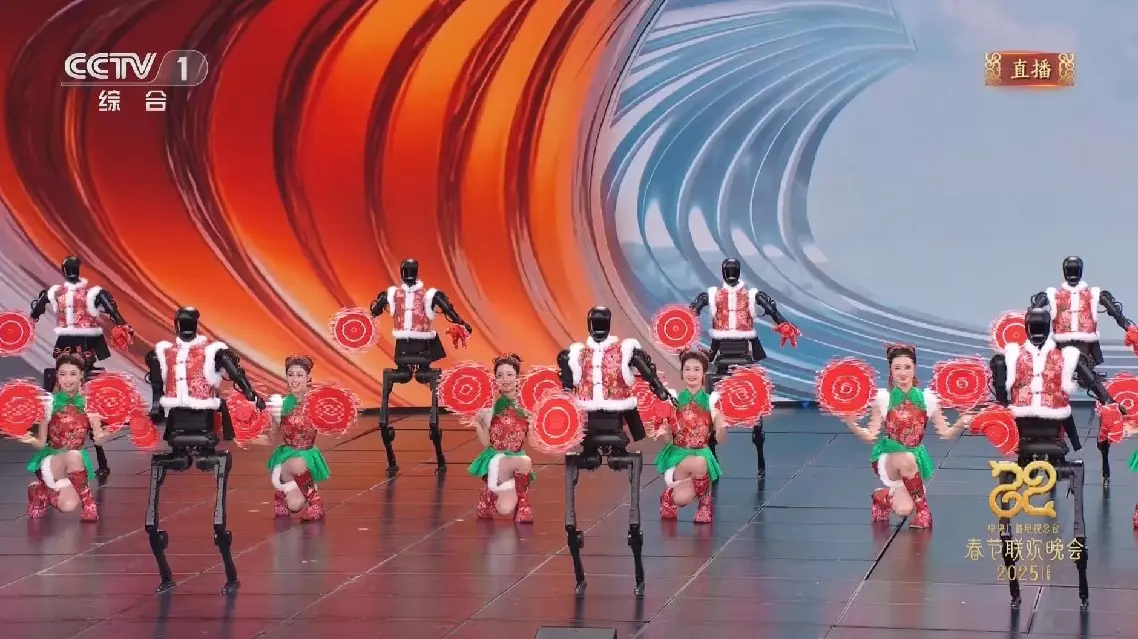
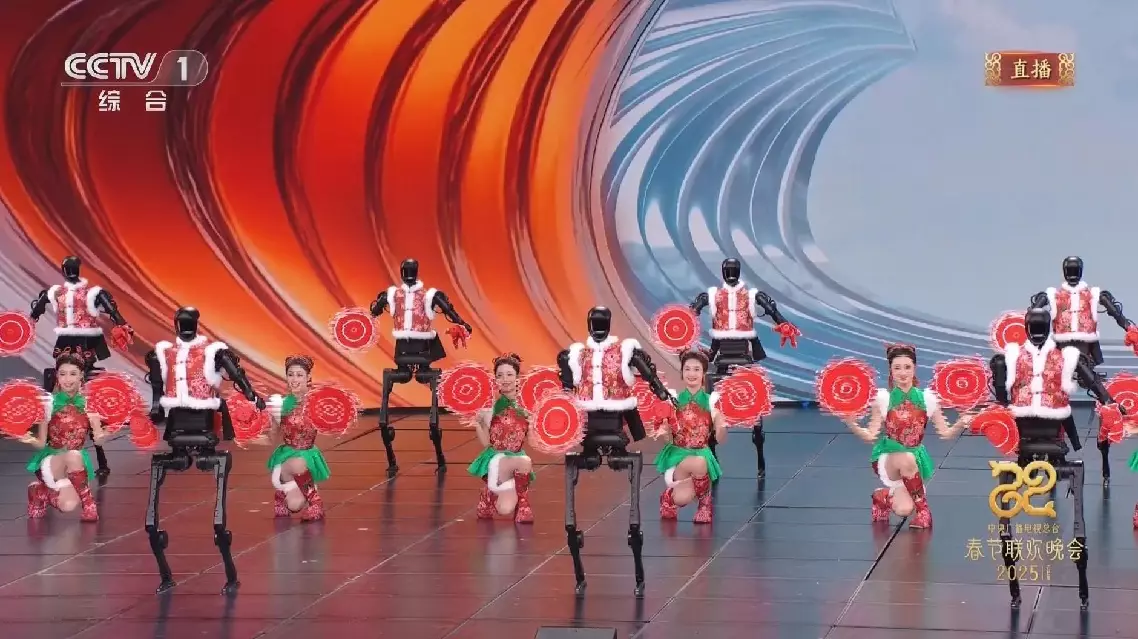
A team of robot dancers took to the stage alongside their human counterparts for a fun performance featuring the Chinese folk dance Yangge during the 2025 Spring Festival Gala on Tuesday evening.
The grand television show has integrated traditional culture with innovative means to entertain audiences on the eve of the Chinese New Year, with the robot dance being among the many memorable on-stage performances during the hours-long variety show which is being broadcast live on Tuesday.
Click to Gallery
Humanoid robots showcase folk dance skills on Spring Festival Gala stage
Humanoid robots showcase folk dance skills on Spring Festival Gala stage
Humanoid robots showcase folk dance skills on Spring Festival Gala stage
Humanoid robots showcase folk dance skills on Spring Festival Gala stage
Advanced humanoid droids adorned with bright flashy colors strutted their stuff as they danced in synchronized steps to the Chinese folk dance of Yangge, which is popular in both rural and urban areas of northern China.
The robots also impressively performed the "handkerchief spin" - a signature move in Yangge which typically requires great skill and practice.
The annual gala, also known as "Chunwan", was first broadcast in 1983 and is seen as a major cultural symbol for Spring Festival celebrations in China.
Recognized by the Guinness World Records as the world's most-watched annual TV program, the hours-long television extravaganza attracts over a billion views every year.
The 2025 Spring Festival, or the Chinese New Year, falls on Wednesday this year, ushering in the Year of the Snake.
Humanoid robots showcase folk dance skills on Spring Festival Gala stage
Humanoid robots showcase folk dance skills on Spring Festival Gala stage
Humanoid robots showcase folk dance skills on Spring Festival Gala stage
Humanoid robots showcase folk dance skills on Spring Festival Gala stage
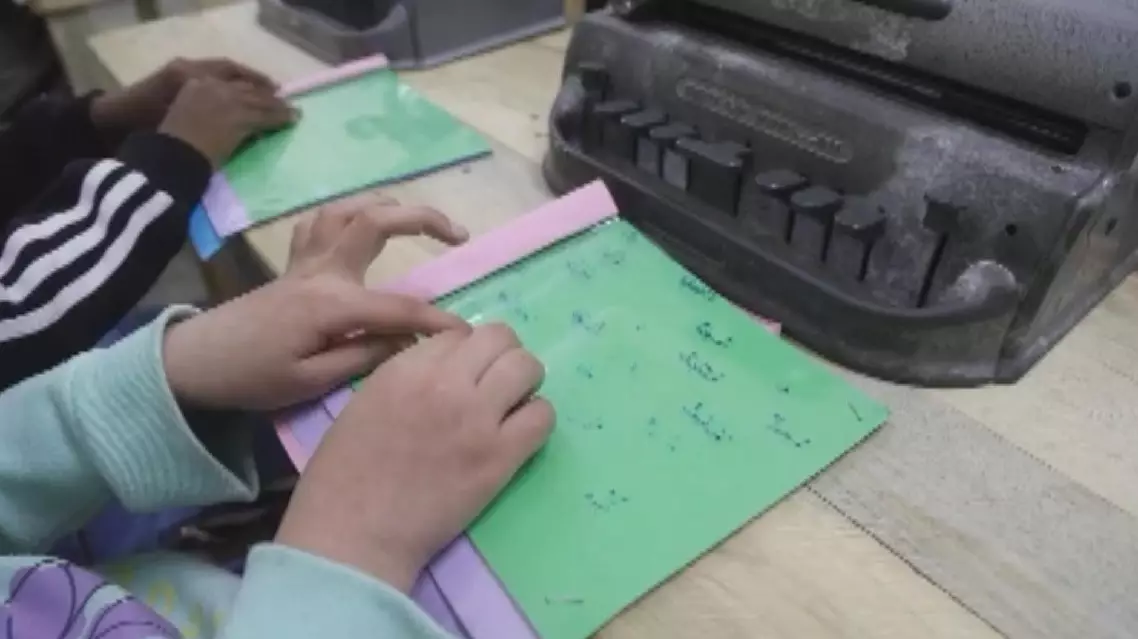
Visually impaired children at the Al-Noor Center in Deir al-Balah, a central Gaza Strip city, are learning to navigate life after losing their sight in the wake of a devastating war.
Israeli strikes on Gaza have continued despite a U.S.-brokered truce that took effect in October. Both Israel and Hamas have accused each other of ceasefire violations, which have killed more than 780 Palestinians and four Israeli soldiers.
The UN has warned that the shelling and gunfire in residential area are endangering civilians. Among those affected are hundreds of children who have lost their sight.
As the number of cases continues to rise, the Al-Noor Center functions not merely as a school but as a lifeline. The center was established in 1962 and is run by the United Nations Relief and Works Agency for Palestine Refugees (UNRWA).
Among the children it serves is Mohammad Odeh, who was injured by an unexploded remnant of war while playing among the rubble. He lost his eyesight and one of his hands in the blast.
"This center has given me a new life. I can read and write in Braille, and I can walk using a cane. I made new friends here, and we play football together," the boy said.
The impact of war continues to deepen the suffering of blind children. In displacement camps, tents, rubble and damaged streets make every step a challenge.
"I hope the world can see my son Mohammad, who cannot see them, and see the environment he lives in. Is this a life fit for any human being? Life in a tent is not suitable for an ordinary person, let alone for a blind child struggling among tents and rubble," said Hassan Odeh, Mohammad's father.
For many families, the school has become a source of hope for children learning to move forward despite blindness and loss.
"Before my son joined this school, he was inactive. His brothers went to school while he stayed at home. When the school reopened, he became active again and his movement improved. He loves going to school," said Israa Abu Jarbou, mother of a blind Palestinian child.
According to the Palestinian Ministry of Health, 17,000 Palestinians suffered eye injuries during the war. Children account for 20 percent of the cases, sharply increasing the number of visually impaired people in Gaza.
Special school in central Gaza brings hope to children blinded by war