Skip to Content Facebook Feature Image

Special school in central Gaza brings hope to children blinded by war

China

China

China

Special school in central Gaza brings hope to children blinded by war

2026-04-24 16:43 Last Updated At:19:07

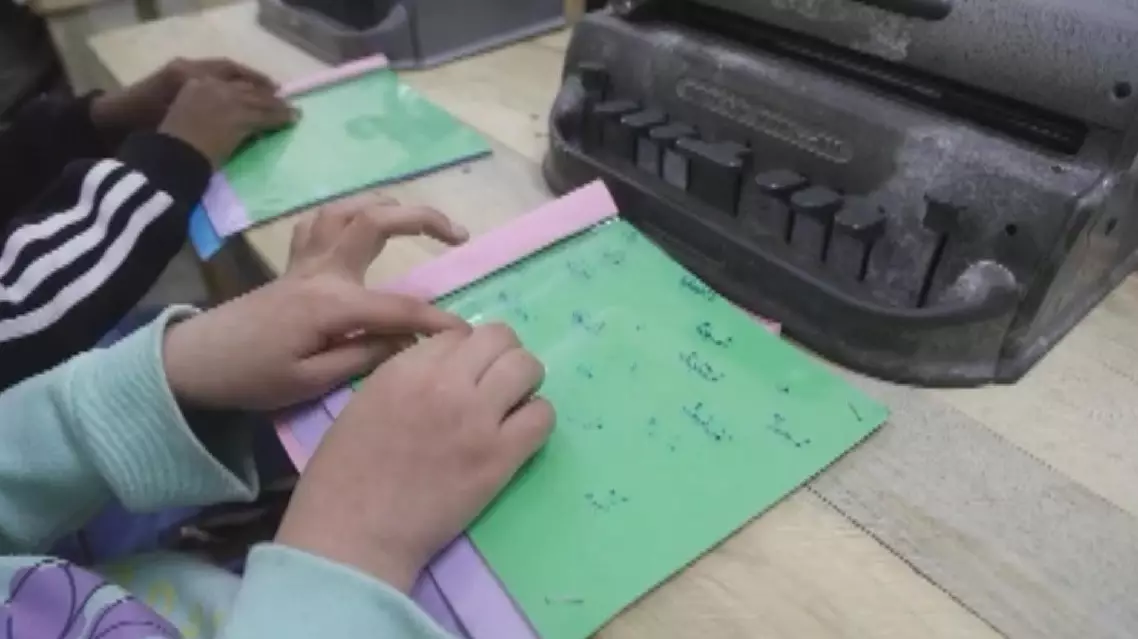
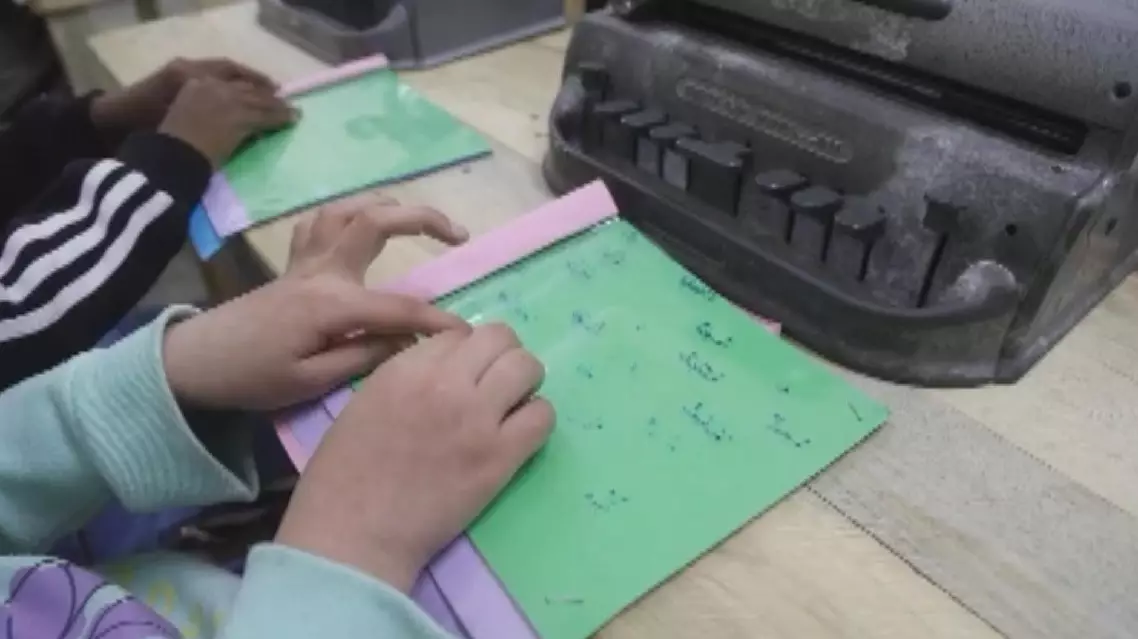
Visually impaired children at the Al-Noor Center in Deir al-Balah, a central Gaza Strip city, are learning to navigate life after losing their sight in the wake of a devastating war.

Israeli strikes on Gaza have continued despite a U.S.-brokered truce that took effect in October. Both Israel and Hamas have accused each other of ceasefire violations, which have killed more than 780 Palestinians and four Israeli soldiers.

The UN has warned that the shelling and gunfire in residential area are endangering civilians. Among those affected are hundreds of children who have lost their sight.

As the number of cases continues to rise, the Al-Noor Center functions not merely as a school but as a lifeline. The center was established in 1962 and is run by the United Nations Relief and Works Agency for Palestine Refugees (UNRWA).

Among the children it serves is Mohammad Odeh, who was injured by an unexploded remnant of war while playing among the rubble. He lost his eyesight and one of his hands in the blast.

"This center has given me a new life. I can read and write in Braille, and I can walk using a cane. I made new friends here, and we play football together," the boy said.

The impact of war continues to deepen the suffering of blind children. In displacement camps, tents, rubble and damaged streets make every step a challenge.

"I hope the world can see my son Mohammad, who cannot see them, and see the environment he lives in. Is this a life fit for any human being? Life in a tent is not suitable for an ordinary person, let alone for a blind child struggling among tents and rubble," said Hassan Odeh, Mohammad's father.

For many families, the school has become a source of hope for children learning to move forward despite blindness and loss.

"Before my son joined this school, he was inactive. His brothers went to school while he stayed at home. When the school reopened, he became active again and his movement improved. He loves going to school," said Israa Abu Jarbou, mother of a blind Palestinian child.

According to the Palestinian Ministry of Health, 17,000 Palestinians suffered eye injuries during the war. Children account for 20 percent of the cases, sharply increasing the number of visually impaired people in Gaza.
Special school in central Gaza brings hope to children blinded by war
Special school in central Gaza brings hope to children blinded by war

Special school in central Gaza brings hope to children blinded by war

Special school in central Gaza brings hope to children blinded by war

China's planned removal of tariffs on African products has opened an unprecedented opportunity for Moroccan potters, who are already adapting their ancestral craftsmanship to win over the Chinese market.

China will implement zero-tariff measures for 53 African countries with which it has diplomatic relations, starting May 1, 2026.

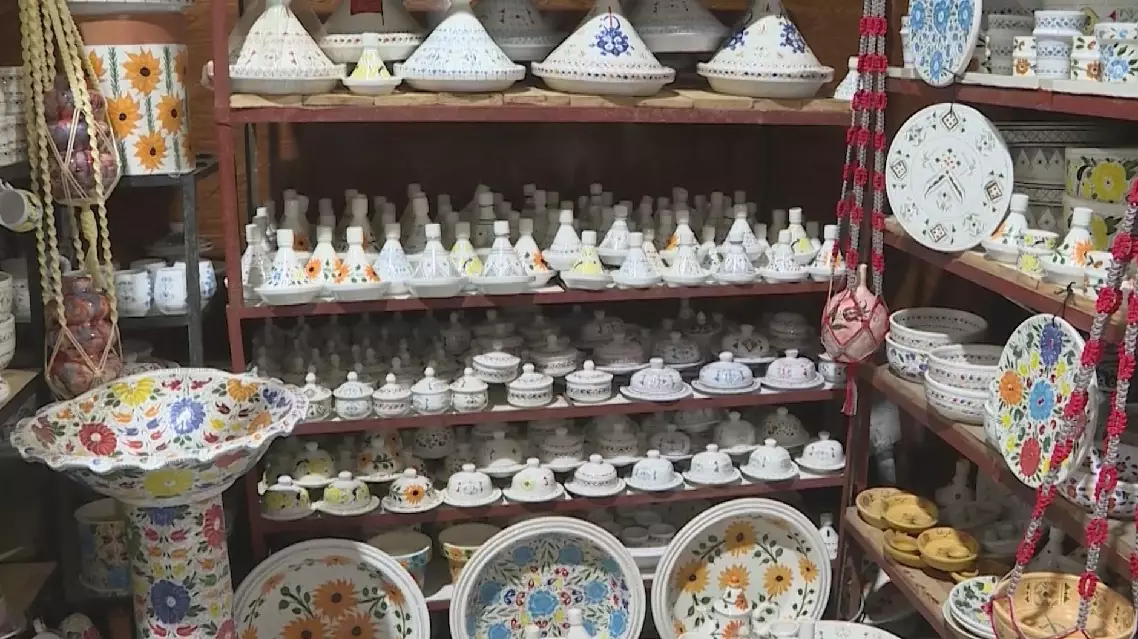
In a local pottery market in Rabat, Morocco's capital, artisans are busy fulfilling orders for decorated plates, colorful tagines, and handcrafted vases, hoping that the tariff elimination will further ease their access to China's vast consumer market.

"Pottery has a rich history, and we are committed to preserving this traditional craft. What keeps us going is the support of customers from Morocco and abroad. With the recent opening of the Chinese market and the possibility of exporting our products tariff-free, our creations can now reach that immense market, something that truly delights us," said Youssef El Rahamli, a Moroccan artisan and exporter.

For him, opening up to China represents a significant milestone. Foreign demand has allowed him to increase production and hire more workers. In his workshop, several young people are now working to shape and decorate pieces destined for export.

According to Rahamli, the zero-tariff policy could reduce costs and make Moroccan pottery more competitive, offering new income opportunities for local artisans.

Economists say they believe that easier access to the Chinese market could create new opportunities for Morocco's traditional industries.

"So I believe this measure presents real opportunities for Moroccan companies, because it will enhance the competitiveness of exporters. There will surely be an increase in export volumes, particularly for agricultural products, phosphates and their derivatives, industrial goods, and artisanal products. But all of this depends on Moroccan exporters' ability to improve their offerings and services, diversify exports, and move toward high-value-added exports. And, of course, it is also important to adopt a digital-focused trade strategy and strengthen their presence at trade fairs in China to reach Chinese consumers," said Khalid Achibane, a Moroccan economic expert.

China's tariff removal opens door for Moroccan potters

China's tariff removal opens door for Moroccan potters

Recommended Articles