 |
The first civil supersonic jet made in America breaks the sound barrier in historic Mojave airspace
XB-1 demonstrator provides the foundation for Boom's supersonic airliner, Overture
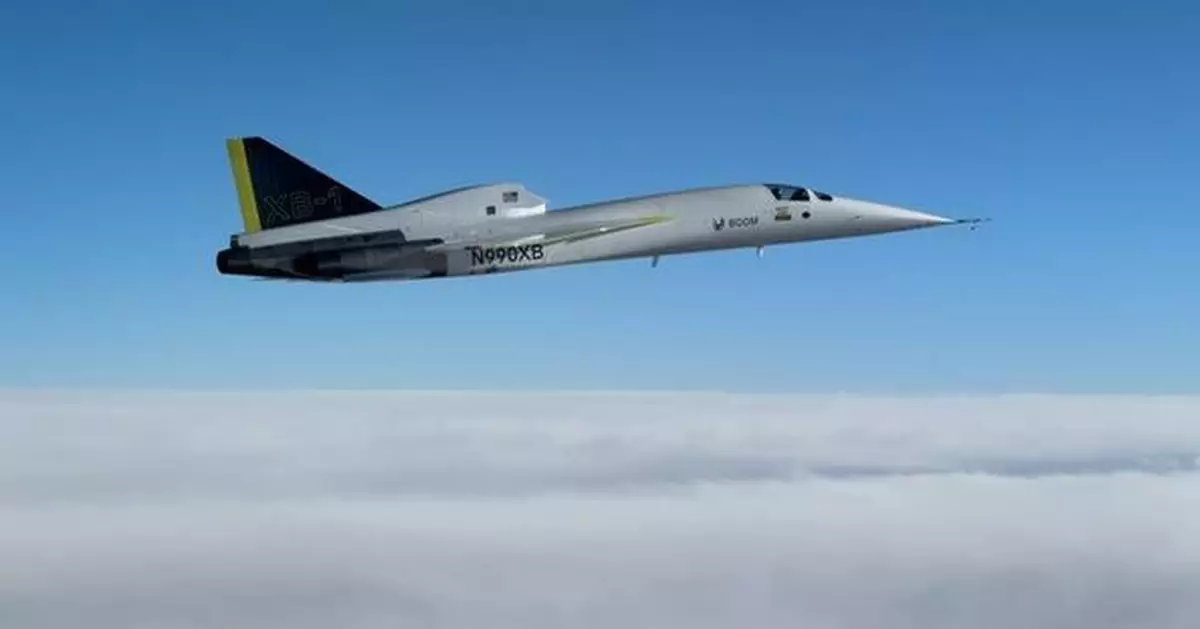
MOJAVE, Calif. and DENVER, Jan. 29, 2025 /PRNewswire/ -- Boom Supersonic, the company building the world's fastest airliner, Overture, today announced the successful first supersonic flight of its XB-1 demonstrator aircraft at the Mojave Air & Space Port in California. Boom designed, built, and flew the world's first independently developed supersonic jet—the first civil supersonic jet made in America.
Flown by Boom Chief Test Pilot Tristan "Geppetto" Brandenburg, XB-1 entered the supersonic corridor and reached an altitude of 35,290 feet before accelerating to Mach 1.122 (652 KTAS or 750 mph) – breaking the sound barrier for the first time. Historically, supersonic aircraft have been the work of nation states, developed by militaries and governments. XB-1's supersonic flight marks the first time an independently developed jet has broken the sound barrier.
"XB-1's supersonic flight demonstrates that the technology for passenger supersonic flight has arrived," said Boom Supersonic founder and CEO Blake Scholl. "A small band of talented and dedicated engineers has accomplished what previously took governments and billions of dollars. Next, we are scaling up the technology on XB-1 for the Overture supersonic airliner. Our ultimate goal is to bring the benefits of supersonic flight to everyone."
The first supersonic jet built from airliner technology, XB-1 incorporates many of the key features found on Overture, such as carbon fiber composites, digital stability augmentation, and an augmented reality vision system for landing visibility.
Following its inaugural flight in March 2024, XB-1 completed a rigorous series of 11 human-piloted test flights under increasingly challenging conditions to evaluate systems and aerodynamics. Over the course of the flight test campaign, the XB-1 team systematically expanded the flight envelope through subsonic, transonic, and supersonic speeds—while taking smart risks and maintaining safety as top priority.
"It has been a privilege and a highlight of my career to be a part of the team that achieved this milestone—every single member of this team was critical to our success," said Tristan "Geppetto" Brandenburg, Chief Test Pilot for Boom Supersonic. "Our discipline and methodical approach to this flight test program created the safety culture that made a safe and successful first supersonic flight possible. With the lessons learned from XB-1, we can continue to build the future of supersonic travel."
XB-1 provides the foundation for Overture, validating key technologies while establishing a safety-first culture. Technologies proven through XB-1's test program that will also apply to Overture include:
- Augmented reality vision system: XB-1 and Overture both have a long nose and a high angle of attack for takeoff and landing, which makes it difficult for pilots to see the runway in front of them. Both aircraft leverage an augmented reality vision system to enable excellent runway visibility—without the weight and complexity of a moveable nose like Concorde's.
- Digitally-optimized aerodynamics: Engineers used computational fluid dynamics (CFD) simulations to explore thousands of designs for XB-1. The result is an optimized design that combines safe and stable operation at takeoff and landing with efficiency at supersonic speeds. CFD is also used extensively in the Overture program.
- Carbon fiber composites: Both XB-1 and Overture are almost entirely made from carbon fiber composite materials, resulting in a sophisticated aerodynamic design with a strong, lightweight structure.
- Supersonic intakes: XB-1's engine intakes slow supersonic air to subsonic speeds, efficiently converting kinetic energy into pressure energy, allowing conventional jet engines to power XB-1 from takeoff through supersonic flight. Learnings from the development of XB-1's specialized intakes are being applied to Overture and its purpose-built turbofan engine, Symphony.
XB-1's supersonic flight took place in the same historic airspace where Chuck Yeager broke the sound barrier for the first time in 1947, among many other historic firsts. The first supersonic flight of XB-1 marks the first human-piloted civil supersonic flight since Concorde's retirement over 20 years ago, paving the way for the return of commercial supersonic flight onboard Overture. Overture will carry 64-80 passengers at Mach 1.7, about twice the speed of today's subsonic airliners, on over 600 global routes.
Overture has an order book of 130 orders and pre-orders from American Airlines, United Airlines, and Japan Airlines. In 2024, Boom completed construction on the Overture Superfactory in Greensboro, North Carolina, which will scale to produce 66 Overture aircraft per year. Optimized for speed, safety, and sustainability, Overture and its bespoke propulsion system, Symphony, are designed to run on up to 100% sustainable aviation fuel (SAF).
For more information about XB-1, please visit: https://boomsupersonic.com/xb-1
For more information about Overture, please visit: https://boomsupersonic.com/overture
About Boom Supersonic
Boom Supersonic's mission is to make the world dramatically more accessible through flights that are faster, more affordable, more convenient, and more sustainable.
Boom is developing Overture, the world's fastest airliner, optimized for speed, safety, and sustainability. Overture will fly at twice the speed of today's airliners and is optimized to run on up to 100% sustainable aviation fuel (SAF). Overture's order book stands at 130 aircraft, including orders and pre-orders from American Airlines, United Airlines, and Japan Airlines. Boom is working with Northrop Grumman for government and defense applications of Overture. Suppliers and partners collaborating with Boom on the Overture program include Aernnova, Aciturri, Collins Aerospace, Eaton, Honeywell, Latecoere, Leonardo, Safran Landing Systems, Universal Avionics, and the United States Air Force.
Symphonyâ„¢ is the purpose-built turbofan engine that will enable supersonic flight. The Boom-developed engine is supported by world-class suppliers including Florida Turbine Technologies (FTT), a Kratos company, Colibrium Additive, and StandardAero.
XB-1 is Boom's technology demonstrator aircraft and the world's first independently developed supersonic jet. The aircraft first took flight in Mojave, CA in March 2024 and completed a series of flight tests, culminating in its first supersonic flight in January 2025. For more information, visit https://boomsupersonic.com.
Photos and video available at https://boomsupersonic.com/newsroom/media-assets
Connect with Boom Supersonic on X, LinkedIn, Facebook, Instagram, YouTube
The first civil supersonic jet made in America breaks the sound barrier in historic Mojave airspace
XB-1 demonstrator provides the foundation for Boom's supersonic airliner, Overture
MOJAVE, Calif. and DENVER, Jan. 29, 2025 /PRNewswire/ -- Boom Supersonic, the company building the world's fastest airliner, Overture, today announced the successful first supersonic flight of its XB-1 demonstrator aircraft at the Mojave Air & Space Port in California. Boom designed, built, and flew the world's first independently developed supersonic jet—the first civil supersonic jet made in America.
Flown by Boom Chief Test Pilot Tristan "Geppetto" Brandenburg, XB-1 entered the supersonic corridor and reached an altitude of 35,290 feet before accelerating to Mach 1.122 (652 KTAS or 750 mph) – breaking the sound barrier for the first time. Historically, supersonic aircraft have been the work of nation states, developed by militaries and governments. XB-1's supersonic flight marks the first time an independently developed jet has broken the sound barrier.
"XB-1's supersonic flight demonstrates that the technology for passenger supersonic flight has arrived," said Boom Supersonic founder and CEO Blake Scholl. "A small band of talented and dedicated engineers has accomplished what previously took governments and billions of dollars. Next, we are scaling up the technology on XB-1 for the Overture supersonic airliner. Our ultimate goal is to bring the benefits of supersonic flight to everyone."
The first supersonic jet built from airliner technology, XB-1 incorporates many of the key features found on Overture, such as carbon fiber composites, digital stability augmentation, and an augmented reality vision system for landing visibility.
Following its inaugural flight in March 2024, XB-1 completed a rigorous series of 11 human-piloted test flights under increasingly challenging conditions to evaluate systems and aerodynamics. Over the course of the flight test campaign, the XB-1 team systematically expanded the flight envelope through subsonic, transonic, and supersonic speeds—while taking smart risks and maintaining safety as top priority.
"It has been a privilege and a highlight of my career to be a part of the team that achieved this milestone—every single member of this team was critical to our success," said Tristan "Geppetto" Brandenburg, Chief Test Pilot for Boom Supersonic. "Our discipline and methodical approach to this flight test program created the safety culture that made a safe and successful first supersonic flight possible. With the lessons learned from XB-1, we can continue to build the future of supersonic travel."
XB-1 provides the foundation for Overture, validating key technologies while establishing a safety-first culture. Technologies proven through XB-1's test program that will also apply to Overture include:
- Augmented reality vision system: XB-1 and Overture both have a long nose and a high angle of attack for takeoff and landing, which makes it difficult for pilots to see the runway in front of them. Both aircraft leverage an augmented reality vision system to enable excellent runway visibility—without the weight and complexity of a moveable nose like Concorde's.
- Digitally-optimized aerodynamics: Engineers used computational fluid dynamics (CFD) simulations to explore thousands of designs for XB-1. The result is an optimized design that combines safe and stable operation at takeoff and landing with efficiency at supersonic speeds. CFD is also used extensively in the Overture program.
- Carbon fiber composites: Both XB-1 and Overture are almost entirely made from carbon fiber composite materials, resulting in a sophisticated aerodynamic design with a strong, lightweight structure.
- Supersonic intakes: XB-1's engine intakes slow supersonic air to subsonic speeds, efficiently converting kinetic energy into pressure energy, allowing conventional jet engines to power XB-1 from takeoff through supersonic flight. Learnings from the development of XB-1's specialized intakes are being applied to Overture and its purpose-built turbofan engine, Symphony.
XB-1's supersonic flight took place in the same historic airspace where Chuck Yeager broke the sound barrier for the first time in 1947, among many other historic firsts. The first supersonic flight of XB-1 marks the first human-piloted civil supersonic flight since Concorde's retirement over 20 years ago, paving the way for the return of commercial supersonic flight onboard Overture. Overture will carry 64-80 passengers at Mach 1.7, about twice the speed of today's subsonic airliners, on over 600 global routes.
Overture has an order book of 130 orders and pre-orders from American Airlines, United Airlines, and Japan Airlines. In 2024, Boom completed construction on the Overture Superfactory in Greensboro, North Carolina, which will scale to produce 66 Overture aircraft per year. Optimized for speed, safety, and sustainability, Overture and its bespoke propulsion system, Symphony, are designed to run on up to 100% sustainable aviation fuel (SAF).
For more information about XB-1, please visit: https://boomsupersonic.com/xb-1
For more information about Overture, please visit: https://boomsupersonic.com/overture
About Boom Supersonic
Boom Supersonic's mission is to make the world dramatically more accessible through flights that are faster, more affordable, more convenient, and more sustainable.
Boom is developing Overture, the world's fastest airliner, optimized for speed, safety, and sustainability. Overture will fly at twice the speed of today's airliners and is optimized to run on up to 100% sustainable aviation fuel (SAF). Overture's order book stands at 130 aircraft, including orders and pre-orders from American Airlines, United Airlines, and Japan Airlines. Boom is working with Northrop Grumman for government and defense applications of Overture. Suppliers and partners collaborating with Boom on the Overture program include Aernnova, Aciturri, Collins Aerospace, Eaton, Honeywell, Latecoere, Leonardo, Safran Landing Systems, Universal Avionics, and the United States Air Force.
Symphonyâ„¢ is the purpose-built turbofan engine that will enable supersonic flight. The Boom-developed engine is supported by world-class suppliers including Florida Turbine Technologies (FTT), a Kratos company, Colibrium Additive, and StandardAero.
XB-1 is Boom's technology demonstrator aircraft and the world's first independently developed supersonic jet. The aircraft first took flight in Mojave, CA in March 2024 and completed a series of flight tests, culminating in its first supersonic flight in January 2025. For more information, visit https://boomsupersonic.com.
Photos and video available at https://boomsupersonic.com/newsroom/media-assets
Connect with Boom Supersonic on X, LinkedIn, Facebook, Instagram, YouTube
** The press release content is from PR Newswire. Bastille Post is not involved in its creation. **
Boom Supersonic Achieves Supersonic Flight
|
CHENGDU, China, May 30, 2026 /PRNewswire/ -- Sichuan Kelun-Biotech Biopharmaceutical Co., Ltd. (the "Company", 6990.HK) announced that at the 2026 American Society of Clinical Oncology (ASCO) Annual Meeting held in Chicago, USA, results from the pivotal Phase II study of the Company's next-generation selective RET inhibitor, lunbotinib fumarate (A400/EP0031, 宁泰莱®[1]), in advanced rearranged during transfection (RET) fusion-positive non-small cell lung cancer (NSCLC) were presented as an oral report by Professor Qing Zhou from Guangdong Provincial People's Hospital (Abstract #8505, Lung Cancer—Metastatic Non-Small Cell). Based on these results, a New Drug Application (NDA) for lunbotinib fumarate for the treatment of adult patients with locally advanced or metastatic RET fusion-positive NSCLC has been accepted by the National Medical Products Administration (NMPA) of China.
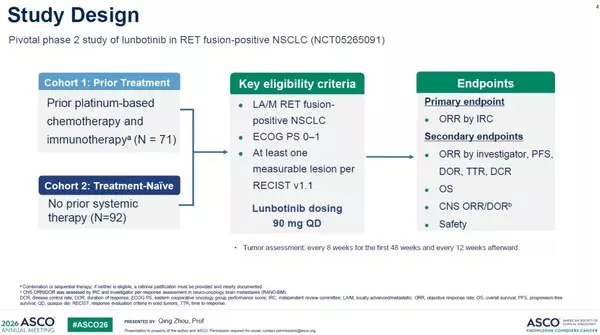
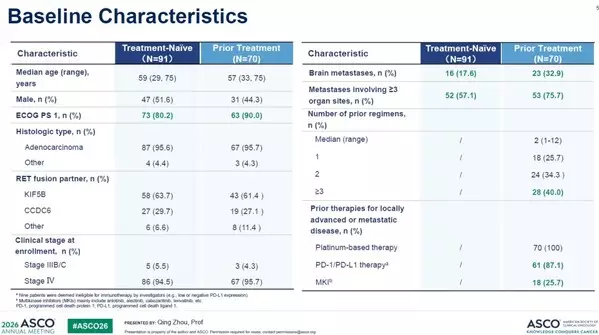
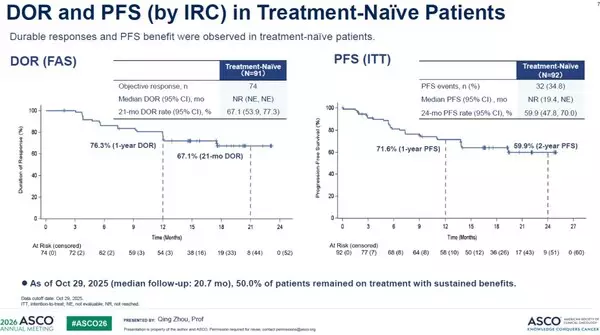
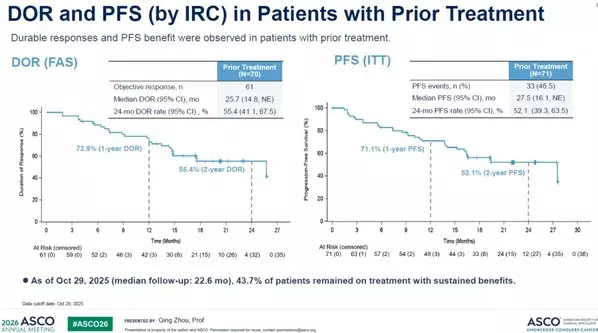
The study enrolled 71 patients who had previously received platinum-based chemotherapy and immunotherapy (pre-treated patients) and 92 patients who had not received prior systemic therapy (treatment-naïve patients). As of the data cutoff date of October 29, 2025, the median follow-up was 22.6 months and 20.7 months, respectively.
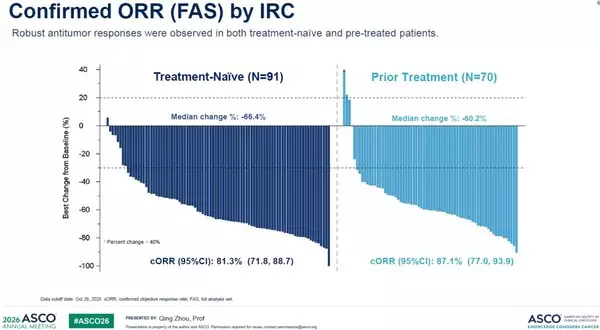
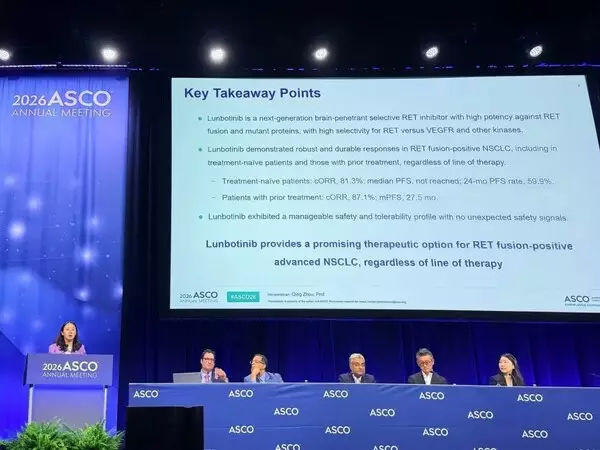
The confirmed objective response rate (ORR) assessed by Independent Review Committee (IRC) was 81.3% (95% CI: 71.8–88.7) in treatment-naïve patients and 87.1% (95% CI: 77.0–93.9) in pre-treated patients.
In treatment-naïve patients, median duration of response (mDOR) and median progression-free survival (mPFS) were not reached. In pre-treated patients, mDOR was 25.7 months, and mPFS was 27.5 months.
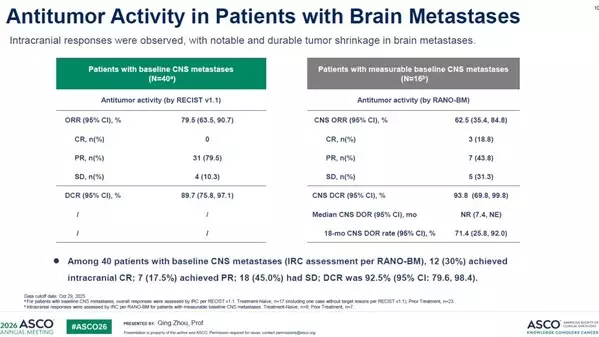
Among 40 patients with central nervous system (CNS) metastases at baseline (assessed by IRC per response assessment in neuro-oncology brain metastases (RANO-BM) criteria), the intracranial complete response (CR) rate was 30%, and the disease control rate (DCR) was 92.5% (95% CI: 79.6–98.4).
Lunbotinib fumarate was well tolerated, with treatment-related adverse events (TRAEs) being predominantly Grade 1–2. The rate of permanent discontinuation due to TRAEs was 1.2%, and no treatment-related deaths were reported.
The study shows that lunbotinib fumarate demonstrated robust and durable clinical activity in RET fusion-positive NSCLC, regardless of line of therapy, in a largely poor-prognostic patient population. Favorable CNS efficacy was observed in patients with measurable baseline CNS metastases. The safety profile was manageable, with no unexpected safety signals.
Professor Qing Zhou, principal investigator from Guangdong Provincial People's Hospital, said: "From the first presentation of Phase I data at ASCO 2023 to today's pivotal Phase II results, we have witnessed the progression of lunbotinib fumarate from early exploration to a confirmatory study. These data show that lunbotinib fumarate delivers robust and durable responses in both treatment-naïve and pre-treated patients with RET fusion-positive NSCLC, with particularly remarkable intracranial efficacy in patients with CNS metastases at baseline. As a next-generation selective RET inhibitor, it will offer an important new treatment option for patients."
| [1] Trade name to be approved by NMPA. |
|
About lunbotinib fumarate (A400/EP0031, 宁泰莱®)
Lunbotinib fumarate is a novel, next-generation selective RET inhibitor for NSCLC, medullary thyroid cancer (MTC) and other solid tumors with a high prevalence of RET alterations. The NDA of lunbotinib fumarate has been accepted for review by the NMPA of China for the treatment of adult patients with RET-fusion positive locally advanced or metastatic NSCLC. The Company is also conducting a Phase Ib/II clinical study in China for the treatment of RET-positive solid tumors.
In March 2021, the Company granted Ellipses Pharma Limited, a U.K.-based international oncology drug development company, an exclusive license to develop, manufacture and commercialize this agent outside Greater China and certain Asian countries. In April 2024, lunbotinib fumarate was cleared by the Food and Drug Administration (FDA) to progress into a Phase II clinical trial (NCT05443126) which is currently recruiting in the United States, United Kingdom, Europe and United Arab Emirates, where it is being evaluated as a monotherapy and in combination with chemotherapy in RET fusion positive advanced NSCLC.
About Kelun-Biotech
Kelun-Biotech (6990.HK) is a holding subsidiary of Kelun Pharmaceutical, which focuses on the R&D, manufacturing, commercialization and global collaboration of innovative biological drugs and small molecule drugs. Kelun-Biotech focuses on major disease areas such as solid tumors, autoimmune, and metabolic diseases, and in establishing a globalized drug development and industrialization platform to address the unmet medical needs in China and the rest of world. Kelun-Biotech is committed to becoming a leading global enterprise in the field of innovative drugs. At present, Kelun-Biotech has more than 30 ongoing key innovative drug projects, of which 4 projects with 8 indications have been approved for marketing, 1 project is in the NDA stage and more than 10 projects are in the clinical stage. Kelun-Biotech has established one of the world's leading proprietary ADC and novel DC platforms, OptiDC™, and has 2 ADC projects with 5 indications approved for marketing, and multiple ADC and novel DC assets in clinical or preclinical research stage. For more information, please visit https://en.kelun-biotech.com/.
CHENGDU, China, May 30, 2026 /PRNewswire/ -- Sichuan Kelun-Biotech Biopharmaceutical Co., Ltd. (the "Company", 6990.HK) announced that at the 2026 American Society of Clinical Oncology (ASCO) Annual Meeting held in Chicago, USA, results from the pivotal Phase II study of the Company's next-generation selective RET inhibitor, lunbotinib fumarate (A400/EP0031, 宁泰莱®[1]), in advanced rearranged during transfection (RET) fusion-positive non-small cell lung cancer (NSCLC) were presented as an oral report by Professor Qing Zhou from Guangdong Provincial People's Hospital (Abstract #8505, Lung Cancer—Metastatic Non-Small Cell). Based on these results, a New Drug Application (NDA) for lunbotinib fumarate for the treatment of adult patients with locally advanced or metastatic RET fusion-positive NSCLC has been accepted by the National Medical Products Administration (NMPA) of China.
The study enrolled 71 patients who had previously received platinum-based chemotherapy and immunotherapy (pre-treated patients) and 92 patients who had not received prior systemic therapy (treatment-naïve patients). As of the data cutoff date of October 29, 2025, the median follow-up was 22.6 months and 20.7 months, respectively.
The confirmed objective response rate (ORR) assessed by Independent Review Committee (IRC) was 81.3% (95% CI: 71.8–88.7) in treatment-naïve patients and 87.1% (95% CI: 77.0–93.9) in pre-treated patients.
In treatment-naïve patients, median duration of response (mDOR) and median progression-free survival (mPFS) were not reached. In pre-treated patients, mDOR was 25.7 months, and mPFS was 27.5 months.
Among 40 patients with central nervous system (CNS) metastases at baseline (assessed by IRC per response assessment in neuro-oncology brain metastases (RANO-BM) criteria), the intracranial complete response (CR) rate was 30%, and the disease control rate (DCR) was 92.5% (95% CI: 79.6–98.4).
Lunbotinib fumarate was well tolerated, with treatment-related adverse events (TRAEs) being predominantly Grade 1–2. The rate of permanent discontinuation due to TRAEs was 1.2%, and no treatment-related deaths were reported.
The study shows that lunbotinib fumarate demonstrated robust and durable clinical activity in RET fusion-positive NSCLC, regardless of line of therapy, in a largely poor-prognostic patient population. Favorable CNS efficacy was observed in patients with measurable baseline CNS metastases. The safety profile was manageable, with no unexpected safety signals.
Professor Qing Zhou, principal investigator from Guangdong Provincial People's Hospital, said: "From the first presentation of Phase I data at ASCO 2023 to today's pivotal Phase II results, we have witnessed the progression of lunbotinib fumarate from early exploration to a confirmatory study. These data show that lunbotinib fumarate delivers robust and durable responses in both treatment-naïve and pre-treated patients with RET fusion-positive NSCLC, with particularly remarkable intracranial efficacy in patients with CNS metastases at baseline. As a next-generation selective RET inhibitor, it will offer an important new treatment option for patients."
[1] Trade name to be approved by NMPA.
About lunbotinib fumarate (A400/EP0031, 宁泰莱®)
Lunbotinib fumarate is a novel, next-generation selective RET inhibitor for NSCLC, medullary thyroid cancer (MTC) and other solid tumors with a high prevalence of RET alterations. The NDA of lunbotinib fumarate has been accepted for review by the NMPA of China for the treatment of adult patients with RET-fusion positive locally advanced or metastatic NSCLC. The Company is also conducting a Phase Ib/II clinical study in China for the treatment of RET-positive solid tumors.
In March 2021, the Company granted Ellipses Pharma Limited, a U.K.-based international oncology drug development company, an exclusive license to develop, manufacture and commercialize this agent outside Greater China and certain Asian countries. In April 2024, lunbotinib fumarate was cleared by the Food and Drug Administration (FDA) to progress into a Phase II clinical trial (NCT05443126) which is currently recruiting in the United States, United Kingdom, Europe and United Arab Emirates, where it is being evaluated as a monotherapy and in combination with chemotherapy in RET fusion positive advanced NSCLC.
About Kelun-Biotech
Kelun-Biotech (6990.HK) is a holding subsidiary of Kelun Pharmaceutical, which focuses on the R&D, manufacturing, commercialization and global collaboration of innovative biological drugs and small molecule drugs. Kelun-Biotech focuses on major disease areas such as solid tumors, autoimmune, and metabolic diseases, and in establishing a globalized drug development and industrialization platform to address the unmet medical needs in China and the rest of world. Kelun-Biotech is committed to becoming a leading global enterprise in the field of innovative drugs. At present, Kelun-Biotech has more than 30 ongoing key innovative drug projects, of which 4 projects with 8 indications have been approved for marketing, 1 project is in the NDA stage and more than 10 projects are in the clinical stage. Kelun-Biotech has established one of the world's leading proprietary ADC and novel DC platforms, OptiDC™, and has 2 ADC projects with 5 indications approved for marketing, and multiple ADC and novel DC assets in clinical or preclinical research stage. For more information, please visit https://en.kelun-biotech.com/.
** This press release is distributed by PR Newswire through automated distribution system, for which the client assumes full responsibility. **
Kelun-Biotech Presents Pivotal Phase II Data for Lunbotinib Fumarate (A400/EP0031) in RET Fusion-Positive NSCLC at 2026 ASCO
Kelun-Biotech Presents Pivotal Phase II Data for Lunbotinib Fumarate (A400/EP0031) in RET Fusion-Positive NSCLC at 2026 ASCO
Kelun-Biotech Presents Pivotal Phase II Data for Lunbotinib Fumarate (A400/EP0031) in RET Fusion-Positive NSCLC at 2026 ASCO
Kelun-Biotech Presents Pivotal Phase II Data for Lunbotinib Fumarate (A400/EP0031) in RET Fusion-Positive NSCLC at 2026 ASCO
Kelun-Biotech Presents Pivotal Phase II Data for Lunbotinib Fumarate (A400/EP0031) in RET Fusion-Positive NSCLC at 2026 ASCO
Kelun-Biotech Presents Pivotal Phase II Data for Lunbotinib Fumarate (A400/EP0031) in RET Fusion-Positive NSCLC at 2026 ASCO
Kelun-Biotech Presents Pivotal Phase II Data for Lunbotinib Fumarate (A400/EP0031) in RET Fusion-Positive NSCLC at 2026 ASCO