Pre-sales at the box office for the Spring Festival season movies set to debut on the Chinese mainland hit a record high of over 1.3 billion yuan (about 179 million U.S. dollars) as of 22:44 Tuesday, according to data released by the box office tracker Beacon.
China's Guotai Junan Securities earlier predicted that the total box office revenue for the 2025 Spring Festival holiday from Jan. 28 to Feb. 4 is expected to reach 8.4 billion yuan. Meanwhile, China International Capital Corporation estimated that the box office revenue for the holiday could grow by about 9.7 percent year on year to 8.8 billion yuan.
A total of six films, whose productions are based on popular stories or sequels to previous blockbusters, are set to hit China's big screens on Chinese New Year's Day on Wednesday.
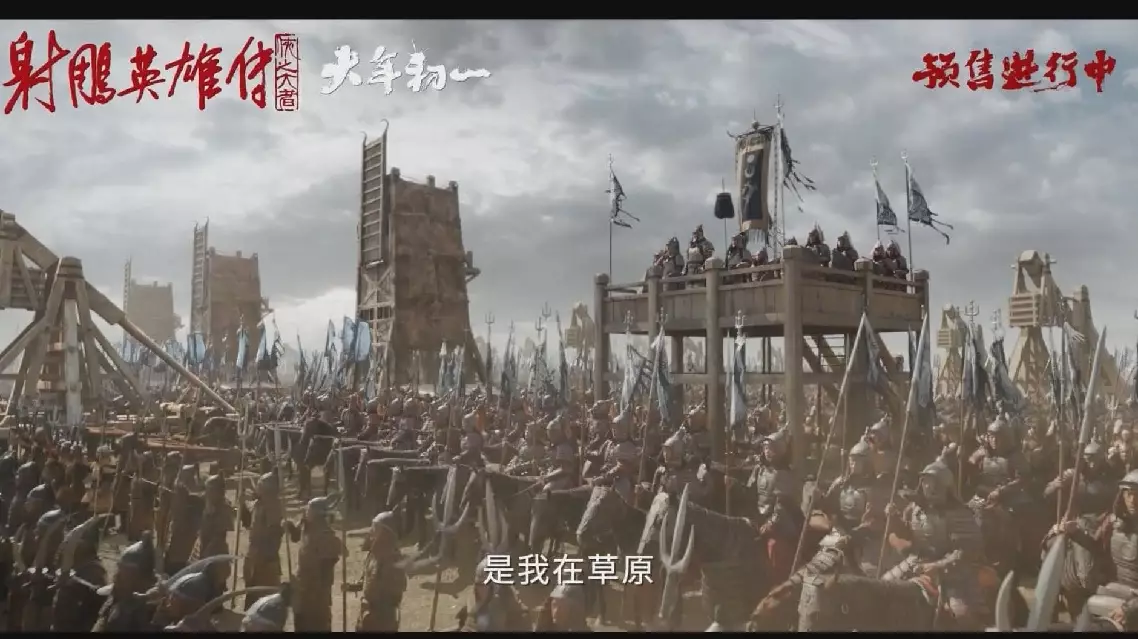
The current pre-sales leader at the box office is Tsui Hark's adaptation of Jin Yong's wuxia classic novel "The Legend of the Condor Heroes", which has been adapted into several TV dramas and inspired a number of films over the past decades. The new film, starring popular actor Xiao Zhan, has raked in over 344 million yuan (about 47.44 million U.S. dollars) in pre-sales.
The sequels include "Detective Chinatown 1900," the newest installment of the "Detective Chinatown" franchise that debuted in 2015, and "Ne Zha 2," a sequel to the 2019 animated blockbuster "Ne Zha". The two films have earned more than 290 million yuan (about 39.99 million U.S. dollars) and 276 million yuan (about 38.06 million U.S. dollars) in pre-sales, respectively.
The second episode of the Chinese myth trilogy "Creation of the Gods" has earned about 233 million yuan (about 32.13 million U.S. dollars) in pre-sales. The first installment debuted in 2023.
The other two movies are "Boonie Bears: Future Reborn", the latest film in the popular animation series "Boonie Bears", and "Operation Leviathan", a sequel to the 2018 hit military movie "Operation Red Sea". These films have each raked in about 78 million yuan (about 10.76 million U.S. dollars) in pre-sales.
In December, the China Film Administration launched a movie-going promotion in response to declining cinema audiences last year. During the promotion that runs from December 2024 through February 2025, supporting organizations including China UnionPay and online movie ticket distributor Taopiaopiao will jointly contribute around 600 million yuan (about 82.74 million U.S. dollars) in subsidies for moviegoers.
Pre-sales for Chinese holiday movies hit record high of 1.3 bln yuan
A major port in northern Venezuela came under U.S. airstrikes in the early hours of January 3, which caused extensive damage to civilian infrastructure, destroyed critical medical supplies in a warehouse, and severely impacted centuries-old cultural heritage sites, according to local residents.
The La Guaira Port, a vital hub for imports that support daily life in the region, was heavily damaged during the attack.
Large quantities of medical supplies stored at the port were destroyed. A historic cultural building dating back for some 300 years was also badly damaged by the bombardment.
Residents living near the port recalled the terrifying scenes as explosions shook nearby neighborhoods.
Humberto Bolivar, who lives in a community separated from the port by only a main road, said the blast waves shattered his home's windows, while stray shrapnel struck the water tank on his roof. According to reports, three missiles were fired at the port that night.
Bolivar said that beyond material losses, he is most concerned about the psychological impact on his children, who remain too frightened to leave their home days after the attack.
"The United States invaded our country. The children were frightened. This is not good for them, because it leaves some children with psychological trauma. They do not want to go to school or leave the house, because they are afraid that something worse might happen. We truly do not want this to happen to our country," he said.
Apart from civilian facilities, local cultural heritage site was also affected.
The La Guaira state government building, a structure with nearly 300 years of history and once served as the site of Venezuela's first national customs office, was struck by the force of the explosions.
Windows of the building were shattered, and furniture scattered across the floor.
"As people of La Guaira, we feel deep pain. Our cultural heritage has been bombed. We are living in constant anxiety and suffering, and life can no longer be the same as it was before," said a local named Henry Cumares.
The U.S. side has claimed the airstrikes targeted warehouses allegedly used to store narcotics. However, locals refuted such accusation.
"According to what Donald Trump said, they bombed this place using the excuse that the warehouses here were used to store drugs at the port. But based on the video released by our governor, these warehouses that were burned contained medicine for kidney patients and foods. Many people depend on these supplies to survive. I think the bombing is extremely despicable," said a local resident named Alejandro Capriles.
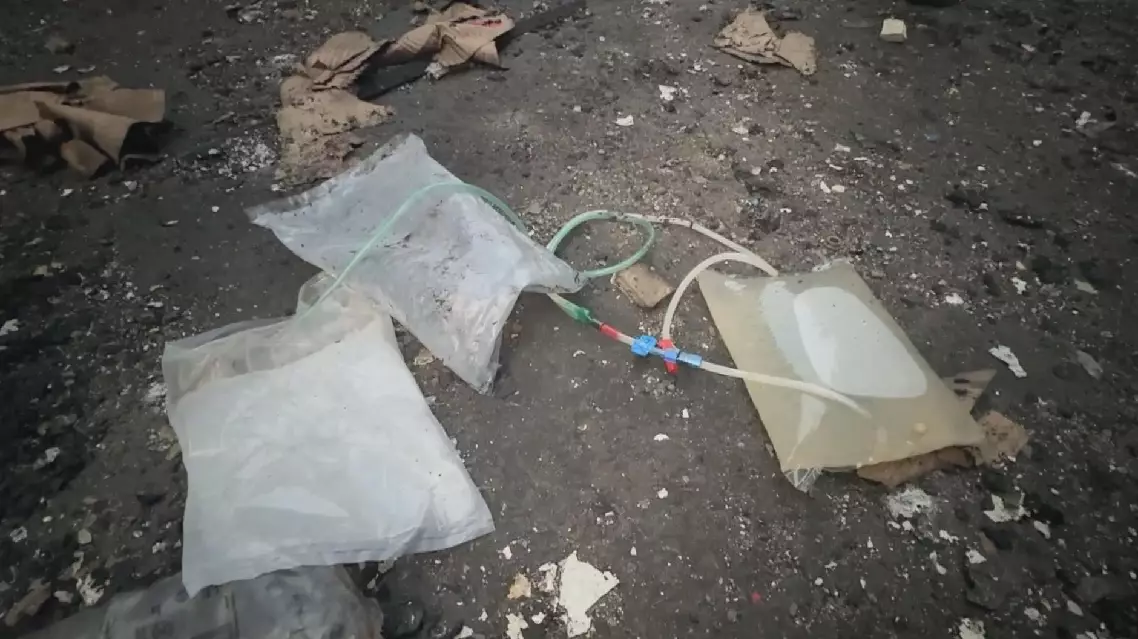
US strike hits Venezuelan port, wrecking medical supplies, heritage building