China's artificial intelligence (AI) startup DeepSeek said on Tuesday that it had been hit with large-scale malicious cyberattacks, while a Chinese cybersecurity specialist noted that the IP addresses associated with the attacks all show their geographic locations in the United States.
An analysis report from Chinese cybersecurity company QAX restored the entire timeline of the cyberattacks. According to the data, the attacks began on Jan 3 and the number of attacks surged on Monday and Tuesday.
The brute-force attacks have become the primary strategy lately, which differ from the distributed denial-of-service (DDoS) attacks previously used by the attackers, according to Wang Hui, a cybersecurity specialist from QAX.
"They are actually two types of attacks. The DDoS attack primarily consumes the server's resources or occupies its bandwidth, making it impossible for users to access the system. The brute-force attack, on the other hand, targets DeepSeek users' password. The attacker steals the user's password, and once they have it, they can access the user's account and perform actions like asking questions or searching. They can also view the user's activities on DeepSeek and potentially access the user's private information. We can monitor the traffic from these brute-force attacks. Each IP address has a geographic location, and the IP addresses associated with the attacks all show geographic locations in the United States," he said.
Wang added that several Chinese leading companies had been attacked for economic gains or political reasons.
"At least based on the incidents we've observed so far, it seems that major Chinese companies which lead their respective fields, such as the one which produces the Black Myth: Wukong and now DeepSeek, had been targeted for economic gains or political reasons," said the specialist.
In January 2025, DeepSeek released its latest model, DeepSeek-R1, which has attracted significant attention for its advanced reasoning capabilities. The model is said to have achieved performance comparable to leading AI systems, such as OpenAI's ChatGPT, but at a fraction of the development cost.

Chinese AI startup hit by large-scale malicious cyberattacks
The international community on Thursday continued to lash out at Israeli National Security Minister Ben-Gvir for releasing a video which mocks the participants of the Global Sumud Flotilla.
On Thursday local time, the Israeli Foreign Ministry issued a statement saying that all foreign activists who had recently participated in the flotilla had been expelled from the country, and that Israel would not tolerate any violations of the maritime blockade of the Gaza Strip.
Hundreds of members from a Gaza-bound aid flotilla were brought to Israel's Ashdod Port on Wednesday, as Ben-Gvir released the video showing some of them shackled and forced to the ground.
In the video, released by Ben-Gvir on his social media channels, dozens of activists are shown kneeling on the floor, bent forward with their heads down and hands bound behind their backs with zip ties, as the Israeli national anthem is played loudly over speakers.
Organizers of the Global Sumud Flotilla said Israeli naval vessels intercepted all ships in the convoy in international waters, about 250 nautical miles off the coast of Gaza. According to the organizers, 428 activists were "kidnapped" by Israel after the interception began on Monday morning.
On Thursday, the British government issued a statement saying that the Britain had summoned the charge d'affaires of the Israeli Embassy that day to express strong denunciation of the video released by Ben-Gvir on Wednesday.
Britain accused the relevant actions of violating the most basic principles of respect for human dignity and demanded that the Israeli government provide an explanation regarding the detention.
Italian Deputy Prime Minister and Minister of Foreign Affairs and International Cooperation Antonio Tajani on Thursday said on social media that he had requested the European Union (EU) to impose sanctions on Ben-Gvir.
Tajani said that the Israeli side detained activists in international waters and subjected them to harassment and humiliation, describing such actions as "unacceptable" and "a violation of the most basic human rights."
On the same day, the Polish foreign affairs ministry issued a statement saying that Poland had summoned the charge d'affaires of the Israeli Embassy in Poland, demanding that Israel launch an investigation into the detention and issue an official apology to the detained activists.
Earlier that day, Polish Deputy Prime Minister and Foreign Minister Radoslaw Sikorski decided to seek a ban on Ben-Gvir's entry into Poland.
On Thursday, Polish Minister of Interior and Administration Marcin Kierwinski also said that he had ordered the initiation of formal procedures to designate Ben-Gvir as a persona non grata.
Additionally, on Thursday, Danilo Della Valle, a member of the European Parliament, said that he had written to European Council President Antonio Costa, calling on the EU to impose sanctions on Ben-Gvir. The letter was co-signed by nearly 30 members of the European Parliament.
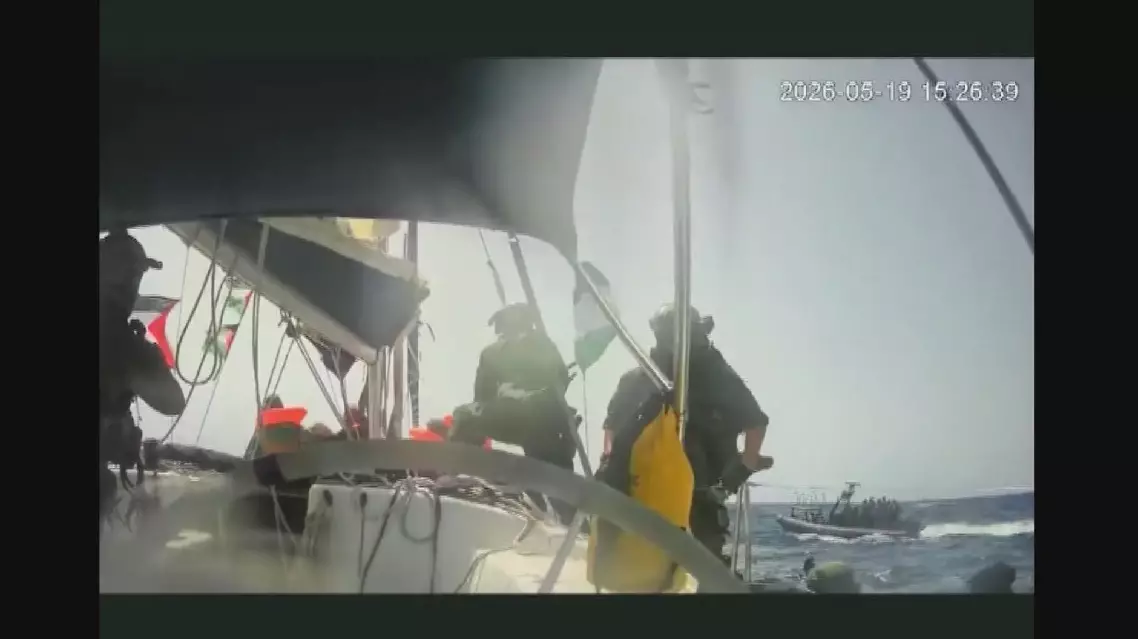
Int'l community continues to slam Israel for maltreating Gaza aid flotilla members