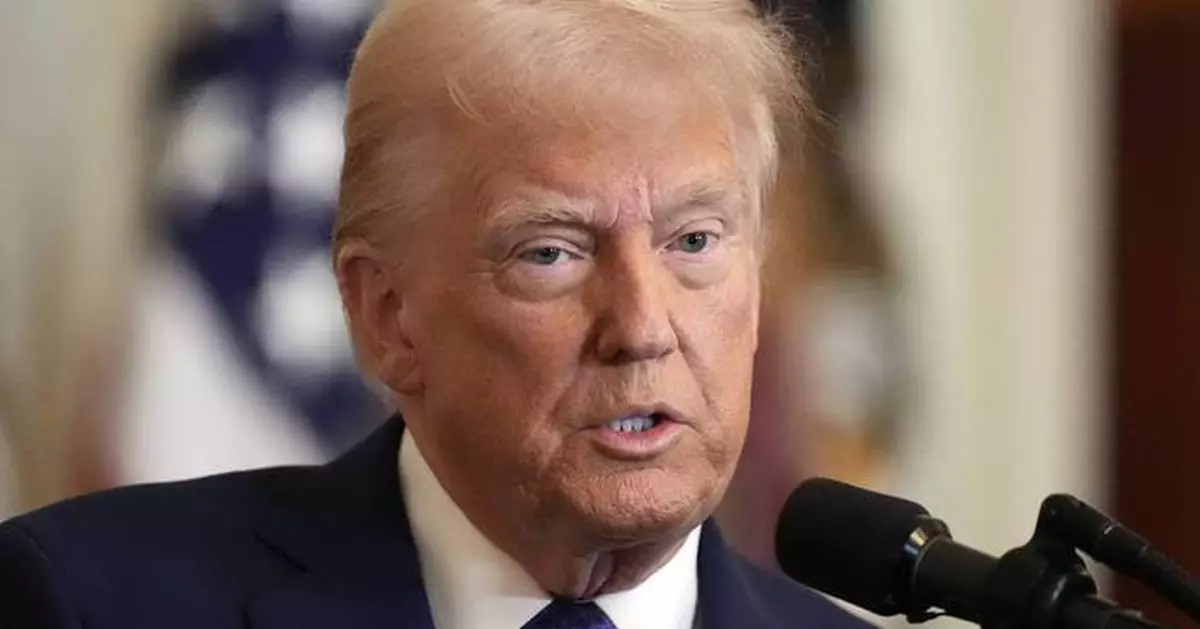
WASHINGTON (AP) — President Donald Trump is ordering U.S. schools to stop teaching what he views as “critical race theory” and other material dealing with race and sexuality or risk losing their federal money.
A separate plan announced Wednesday calls for aggressive action to fight antisemitism on college campuses, promising to prosecute offenders and revoke visas for international students found to be “Hamas sympathizers.”
Both plans were outlined in executive orders signed by Trump on Wednesday. The measures seek to fulfill some of the Republican president's core campaign promises around education, though it's unclear how much power he has to enact the proposals.
His order on K-12 schools declares that federal money cannot be used on the “indoctrination” of children, including “radical gender ideology and critical race theory.” It says civil rights laws barring discrimination based on sex and race would be used to enforce the order, calling critical race theory an “inherently racist policy.”
Examples cited by the White House include a policy at Harrisonburg City Public Schools in Virginia requiring teachers to use students' preferred names and pronouns. Another policy at Madison Metropolitan School District in Wisconsin says schools should “disrupt the gender binary” by teaching students to embrace different gender identities, according to the order.
Michael Richards, superintendent of Harrisonburg schools, said the district has no policy that indoctrinates children or violates anyone's rights.
“What we do have is a culture of respect — one that honors the dignity and diversity of all students, families, and educators,” Richards said in a statement. “I will not be intimidated. I stand firm in my commitment to ensuring that HCPS remains a safe, welcoming place for all.”
The Education Department’s Office for Civil Rights investigates allegations of civil rights violations and can impose sanctions up to a total loss of federal money, though that penalty has almost never been used and must be approved by a judge.
The order unfairly tarnishes teachers and makes it harder for them to do their jobs, said Randi Weingarten, president of the American Federation of Teachers.
“Today is a sad day because the Trump administration is doing exactly what it accuses others of: creating division and fear in classrooms across America,” she said.
Trump also directs the education secretary to craft a strategy within 90 days to “end indoctrination in K-12 education.” Trump has appointed billionaire professional wrestling mogul Linda McMahon as his education chief, but her Senate confirmation hearing has not been scheduled.
During his campaign, Trump said he would sign an order “on day one” to cut federal money for schools that push critical race theory or other “inappropriate” content. The federal government provides billions of dollars to schools every year, though the vast majority of their money comes from state and local sources.
The measure taps into a wave of conservative anger that has taken aim at classroom lessons that some see as too liberal. A growing number of Republican states have adopted laws or rules barring the teaching of critical race theory or “divisive concepts” in public schools and universities.
Opponents say the rules impose vague restrictions on teachers and create a chilling effect on discussions about history and other subjects.
The term “critical race theory” is used by conservatives as a catchall for subjects they don’t want to be taught in the classroom, though, in reality, it refers to a complex academic and legal framework centered on the idea that racism is embedded in the nation’s systems.
Trey Walk, a researcher and advocate with Human Rights Watch, said students have a right to learn about how discrimination can be entrenched in law and society. “If the US denies young people this knowledge, it has little hope of eradicating racism,” he said.
Trump's plan to fight antisemitism would “marshal all federal resources" and bring immediate action from the Justice Department to investigate and punish offenders on U.S. campuses. It calls for the deportation of nonresident aliens who “violate our laws,” citing previous threats by Trump to revoke student visas for international students who attended pro-Palestinian protests.
Trump's action promises to “protect law and order, quell pro-Hamas vandalism and intimidation, and investigate and punish anti-Jewish racism in leftist, anti-American colleges and universities.”
It drew swift backlash from civil rights groups who said campus protests have mostly been peaceful and are protected by constitutional free speech rights.
Edward Ahmed Mitchell, national deputy director for the Council on American-Islamic Relations, said the action is discriminatory and wrongly characterizes protesters as “pro-jihadist” or “pro-Hamas.”
“These college students were Jewish, Muslim, Black, Palestinian and various other races who were simply protesting what they viewed as a genocide in Gaza,” Mitchell said. “They are no different than the students who protested Vietnam or segregation or apartheid in South Africa.”
Tensions over the Israel-Hamas war led to emotional demonstrations on U.S. campuses, including a wave of pro-Palestinian tent encampments that led to some 3,200 arrests.
The Biden administration opened more than 100 investigations into alleged antisemitism and Islamophobia at schools and universities after Hamas' Oct. 7, 2023 attack on Israel. A flurry of schools reached deals to settle the cases before Trump took office amid fears that he would issue heavier sanctions.
The White House on Wednesday also reinstated an order from Trump's first term establishing the 1776 Commission to promote “patriotic education” in U.S. schools.
Biden revoked the order and the commission's guide for teaching history. The guide played down America’s role in slavery and argued that the civil rights movement ran afoul of the “lofty ideals” espoused by the Founding Fathers. It was widely panned by historians, who said it was outdated and ignored decades of research.
Associated Press writer Jocelyn Gecker in San Francisco contributed to this report.
The Associated Press’ education coverage receives financial support from multiple private foundations. AP is solely responsible for all content. Find AP’s standards for working with philanthropies, a list of supporters and funded coverage areas at AP.org.
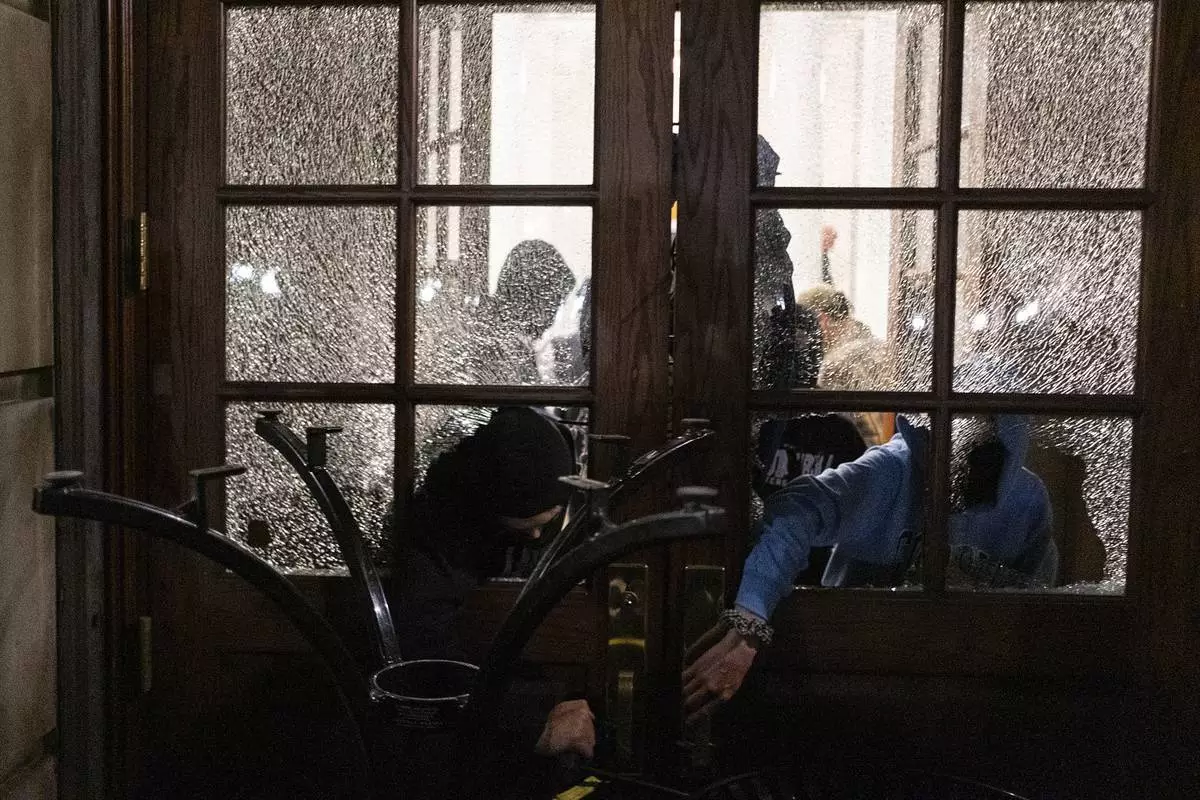
FILE - Students with the Gaza Solidarity Encampment block the entrance of Hamilton Hall at Columbia University after taking over it, April 30, 2024 in New York. (Marco Postigo Storel via AP, File)
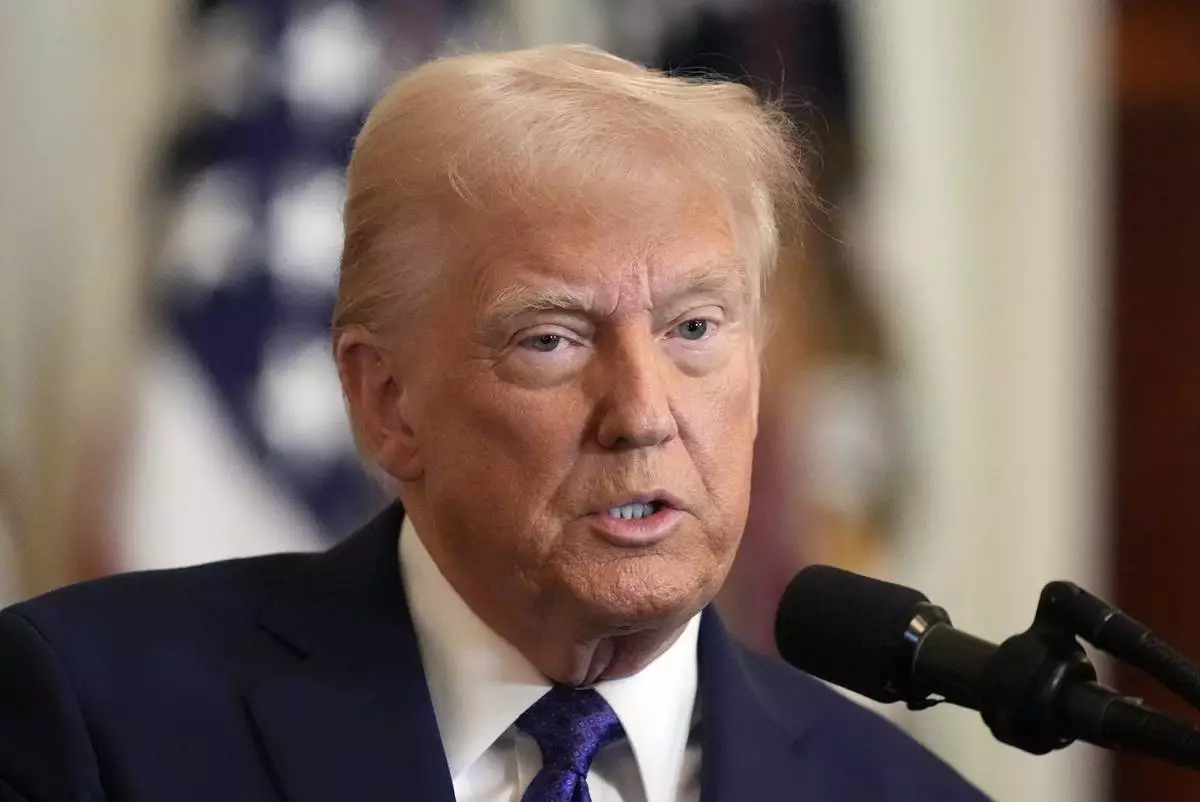
President Donald Trump speaks before signing the Laken Riley Act in the East Room of the White House, Wednesday, Jan. 29, 2025, in Washington. (AP Photo/Alex Brandon)