As the Chinese people are celebrating the Spring Festival, or the Chinese New Year, they have been joined this year by an increasing number of foreign tourists flocking to iconic landmarks, scenic spots and shopping venues to experience Chinese culture following the implementation of a new visa-free transit policy.
China continued easing its visa policies in 2024 to boost openness and people-to-people exchanges, allowing more foreign travelers and businesspeople to visit the country visa-free. Its latest move was an extension of its visa-free transit policy, which has permitted eligible foreign travelers to stay in the country for 240 hours without a visa.
Lee Soo-youn from South Korea is among those foreign tourists. She came to China in mid-January to visit her aunt who settled down in Shanghai and decided to stay there for the Chinese New Year.
"Today I went to the Oriental Pearl Tower and Yuyuan Garden, and had Peking roast duck. The visa-free policy provides me with a great opportunity to spend the Chinese New Year with my family," she said.
Data showed that Shanghai's homestay reservations by foreigners increased 2.3 times year on year during the Spring Festival.
"Currently, foreign tourists account for more than 30 percent of our reception volume. A large number of tourists from Malaysia and Thailand came after the visa-free policy was implemented," said Sun Yifeng, an owner of a bed and breakfast.
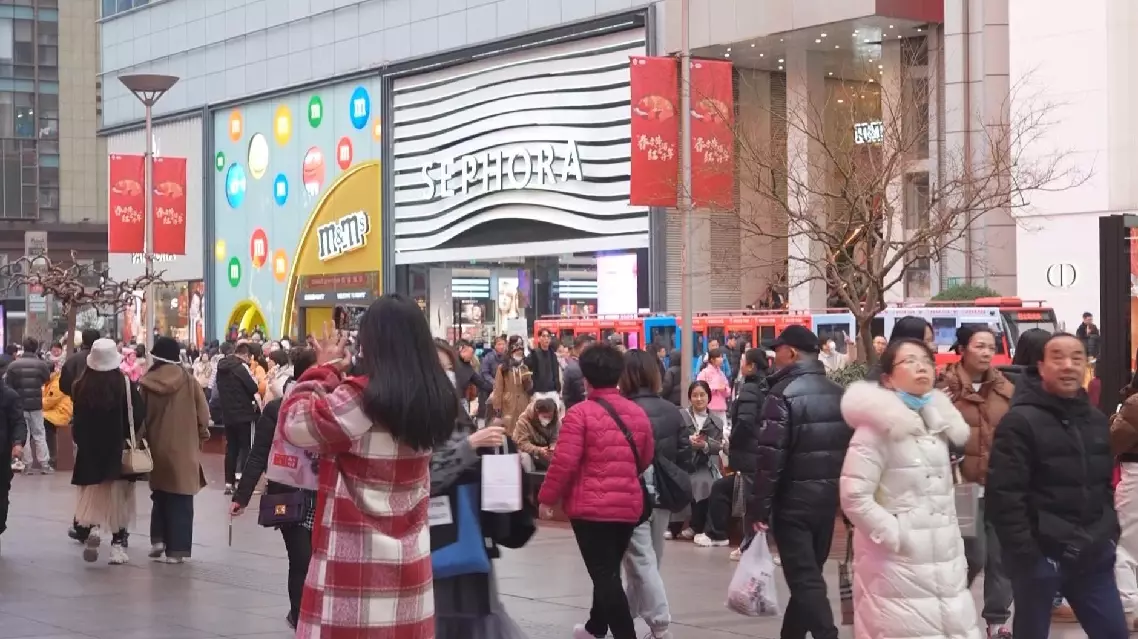
Shanghai's shopping streets and malls also saw a significant increase in the number of overseas consumers.
"We estimate that we will welcome an average of 100,000 customers per day, and a total of 700,000 to 800,000 customers during the entire holiday. Thanks to this visa-free policy, our tax refund amount has increased by more than 200 percent compared with the same period last year," said Zhou Jiong, general manager of the operations department of the Shanghai No. 1 Department Store.
On Dec 4, 2024, the United Nations Educational, Scientific and Cultural Organization (UNESCO) inscribed the Spring Festival and its social practices of the Chinese people in celebration of the traditional new year on the Representative List of the Intangible Cultural Heritage of Humanity, marking a global recognition of this vibrant celebration and cherished cultural tradition.
During this year's Spring Festival holiday, local cultural and tourism departments have launched distinctive tour packages featuring cultural elements while providing new experiences.
At the Shanghai Haichang Ocean Park, a parade took center stage, attracting people of all ages to watch and interact with performers.
According to the park, the number of visitors in the first three days of the Spring Festival holiday from Tuesday to Thursday went up by over 25 percent year on year, and the average daily visitor flow is expected to exceed 50,000 from Friday to Sunday.
The park has added night shows and launched a variety of folk performances at different times to meet the needs of tourists.
"My friends and I came to this park for a walk and had a lot of fun. It is beautiful and there are many marine animals. I am very happy to be here. (Switch to Chinese) Happy New Year," said a Russian tourist.
The Spring Festival fell on Jan. 29 this year. It is the most important holiday on the Chinese calendar and an occasion for family reunions.
Shanghai welcomes surging int'l tourists during Spring Festival holiday