It's one of the most important pieces of forensic evidence following a plane crash: The so-called “black box."
There are actually two of these remarkably sturdy devices: the cockpit voice recorder and the flight data recorder. And they're typically orange, not black.
Click to Gallery
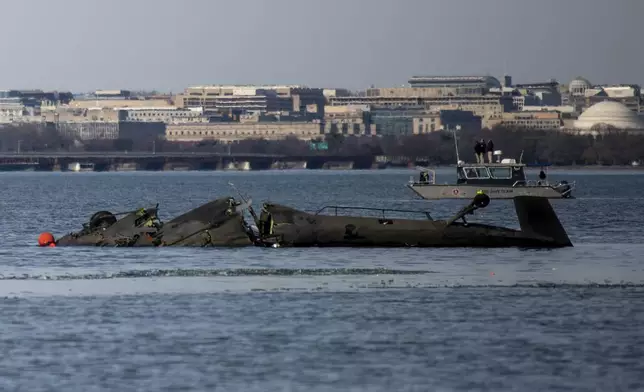
In this image provided by the U.S. Coast Guard, wreckage is seen in the Potomac River near Ronald Reagan Washington National Airport, Thursday, Jan. 30, 2025 in Washington. (Petty Officer 2nd Class Taylor Bacon, U.S. Coast Guard via AP)
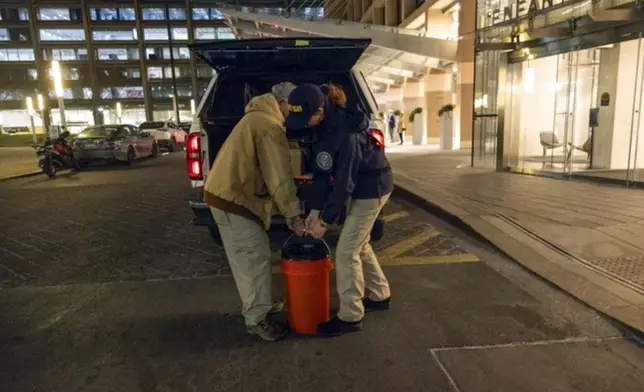
In this image provided by the National Transportation Safety Board, NTSB investigators deliver the cockpit voice recorder and flight data recorder to NTSB headquarters in Washington, Thursday, Jan. 30, 2025, that were recovered from the American Airlines passenger jet that crashed with an Army helicopter Wednesday night near Ronald Reagan Washington National Airport. (NTSB via AP)
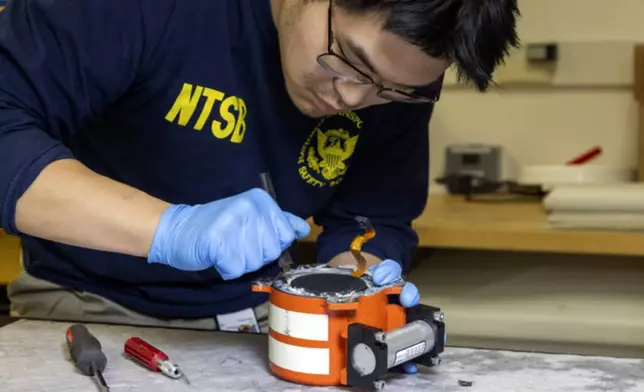
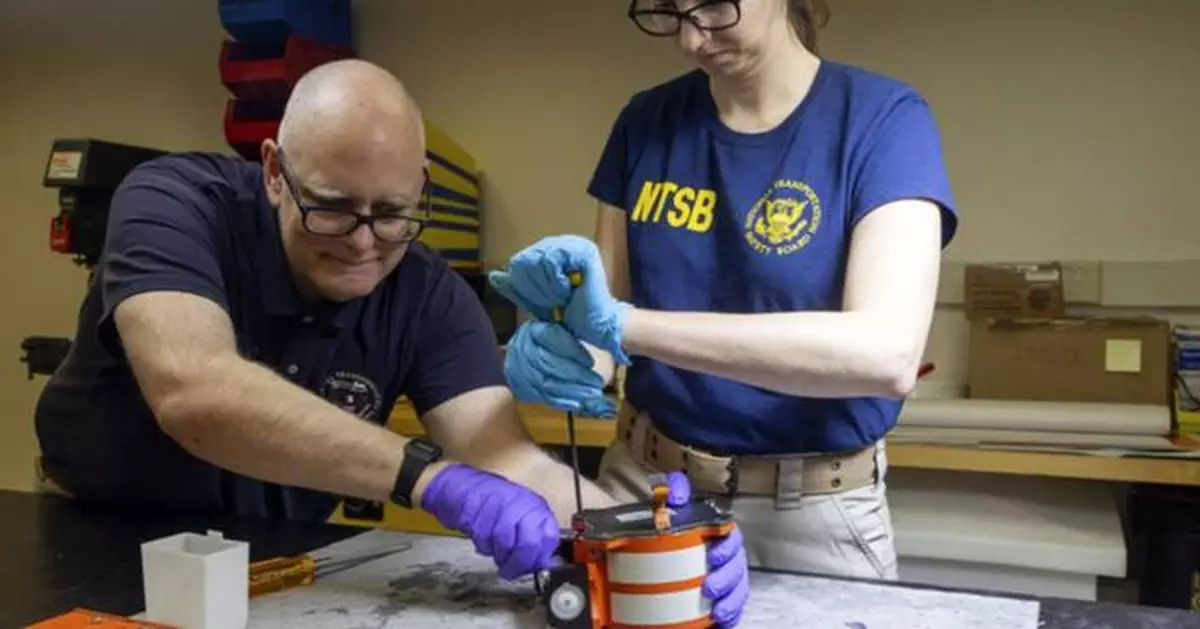
In this image provided by the National Transportation Safety Board, a NTSB investigator examine cockpit voice recorder and flight data recorder in Washington, Thursday, Jan. 30, 2025, recovered from the American Airlines passenger jet that crashed with an Army helicopter Wednesday night near Ronald Reagan Washington National Airport. (NTSB via AP)
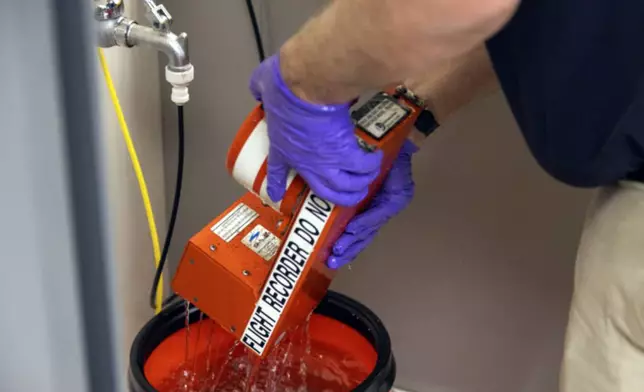
In this image provided by the National Transportation Safety Board, NTSB investigators examine the flight data recorder in Washington, Thursday, Jan. 30, 2025, recovered from the American Airlines passenger jet that crashed with an Army helicopter Wednesday night near Ronald Reagan Washington National Airport. (NTSB via AP)
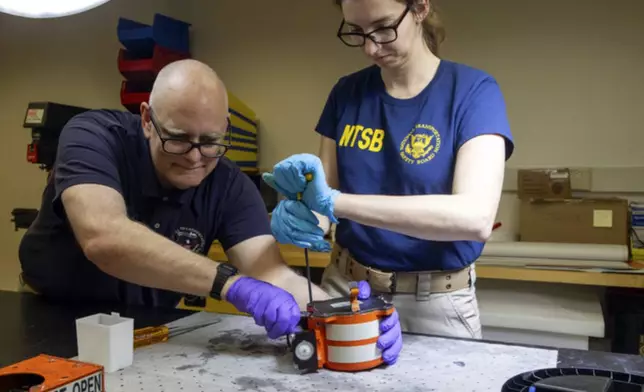
In this image provided by the National Transportation Safety Board, NTSB investigators examine cockpit voice recorder and flight data recorder in Washington, Thursday, Jan. 30, 2025, recovered from the American Airlines passenger jet that crashed with an Army helicopter Wednesday night near Ronald Reagan Washington National Airport. (NTSB via AP)
Federal investigators on Friday recovered the black boxes from the passenger jet that crashed in the Potomac River just outside Washington on Wednesday, while authorities were still searching for similar devices in the military helicopter that also went down.
One recovered flight data recorder was in good condition and its information is expected to be downloaded shortly. Water had gotten inside the cockpit voice recorder, which will make downloading the data more difficult. The collision killed 67 people in the deadliest U.S. aviation disaster since 2001.
Here is an explanation of what black boxes are and what they can do:
The cockpit voice recorder and the flight data recorder are tools that help investigators reconstruct the events that lead up to a plane crash.
They're orange in color to make them easier to find in wreckage, sometimes at great ocean depths. They're usually installed a plane's tail section, which is considered the most survivable part of the aircraft, according to the National Transportation Safety Board’s website.
They're also equipped with beacons that activate when immersed in water and can transmit from depths of 14,000 feet (4,267 meters). While the battery that powers the beacon will run down after about one month, there’s no definitive shelf-life for the data itself, NTSB investigators told The Associated Press in 2014.
For example, black boxes of an Air France flight that crashed in the Atlantic Ocean in 2009 were found two years later from a depth of more than 10,000 feet, and technicians were able to recover most of the information.
If a black box has been submerged in seawater, technicians will keep them submerged in fresh water to wash away the corrosive salt. If water seeps in, the devices must be carefully dried for hours or even days using a vacuum oven to prevent memory chips from cracking.
The electronics and memory are checked, and any necessary repairs made. Chips are scrutinized under a microscope.
The cockpit voice recorder collects radio transmissions and sounds such as the pilot’s voices and engine noises, according to the NTSB's website.
Depending on what happened, investigators may pay close attention to the engine noise, stall warnings and other clicks and pops, the NTSB said. And from those sounds, investigators can often determine engine speed and the failure of some systems.
Investigators are also listening to conversations between the pilots and crew and communications with air traffic control. Experts make a meticulous transcript of the voice recording, which can take up to a week.
The flight data recorder monitors a plane's altitude, airspeed and heading, according to the NTSB. Those factors are among at least 88 parameters that newly built planes must monitor.
Some can collect the status of more than 1,000 other characteristics, from a wing's flap position to the smoke alarms. The NTSB said it can generate a computer animated video reconstruction of the flight from the information collected.
NTBS investigators told the AP in 2014 that a flight data recorder carries 25 hours of information, including prior flights within that time span, which can sometimes provide hints about the cause of a mechanical failure on a later flight. An initial assessment of the data is provided to investigators within 24 hours, but analysis will continue for weeks more.
At least two people have been credited with creating devices that record what happens on an airplane.
One is French aviation engineer François Hussenot. In the 1930s, he found a way to record a plane's speed, altitude and other parameters onto photographic film, according to the website for European plane-maker Airbus.
In the 1950s, Australian scientist David Warren came up with the idea for the cockpit voice recorder, according to his 2010 AP obituary.
Warren had been investigating the crash of the world’s first commercial jet airliner, the Comet, in 1953, and thought it would be helpful for airline accident investigators to have a recording of voices in the cockpit, the Australian Department of Defence said in a statement after his death.
Warren designed and constructed a prototype in 1956. But it took several years before officials understood just how valuable the device could be and began installing them in commercial airlines worldwide. Warren's father had been killed in a plane crash in Australia in 1934.
Some have suggested that it stems from Hussenot's device because it used film and “ran continuously in a light-tight box, hence the name ‘black box,'” according to Airbus, which noted that orange was the box's chosen color from the beginning to make it easy to find.
Other theories include the boxes turning black when they get charred in a crash, the Smithsonian Magazine wrote in 2019.
“The truth is much more mundane,” the magazine wrote. “In the post-World War II field of electronic circuitry, black box became the ubiquitous term for a self-contained electronic device whose input and output were more defining than its internal operations.”
The media continues to use the term, the magazine wrote, "because of the sense of mystery it conveys in the aftermath of an air disaster.”
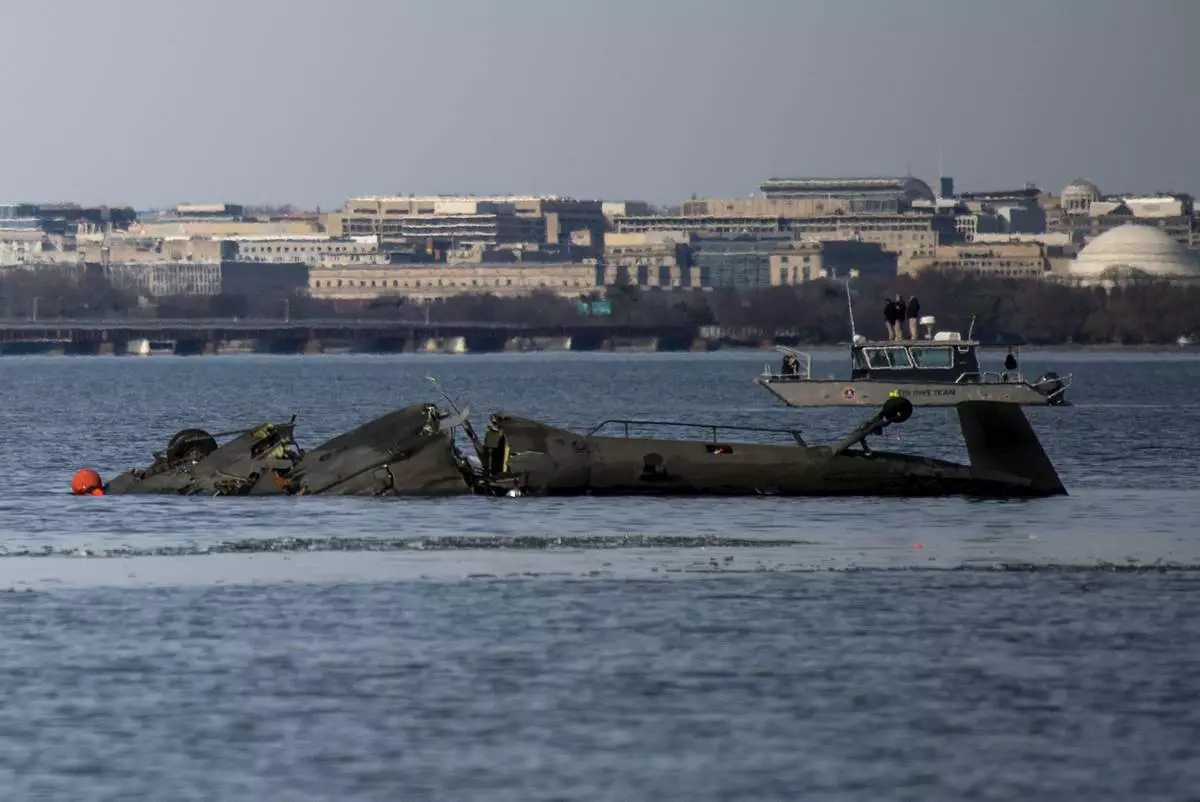
In this image provided by the U.S. Coast Guard, wreckage is seen in the Potomac River near Ronald Reagan Washington National Airport, Thursday, Jan. 30, 2025 in Washington. (Petty Officer 2nd Class Taylor Bacon, U.S. Coast Guard via AP)
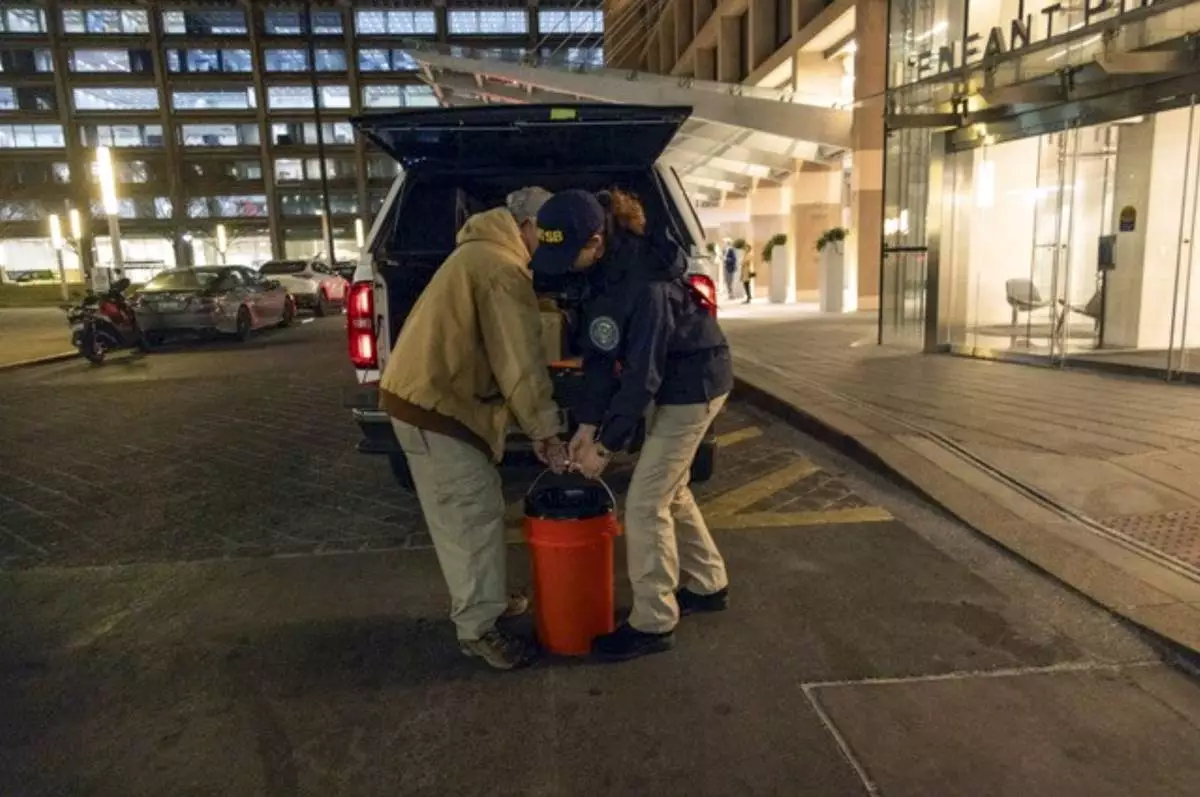
In this image provided by the National Transportation Safety Board, NTSB investigators deliver the cockpit voice recorder and flight data recorder to NTSB headquarters in Washington, Thursday, Jan. 30, 2025, that were recovered from the American Airlines passenger jet that crashed with an Army helicopter Wednesday night near Ronald Reagan Washington National Airport. (NTSB via AP)
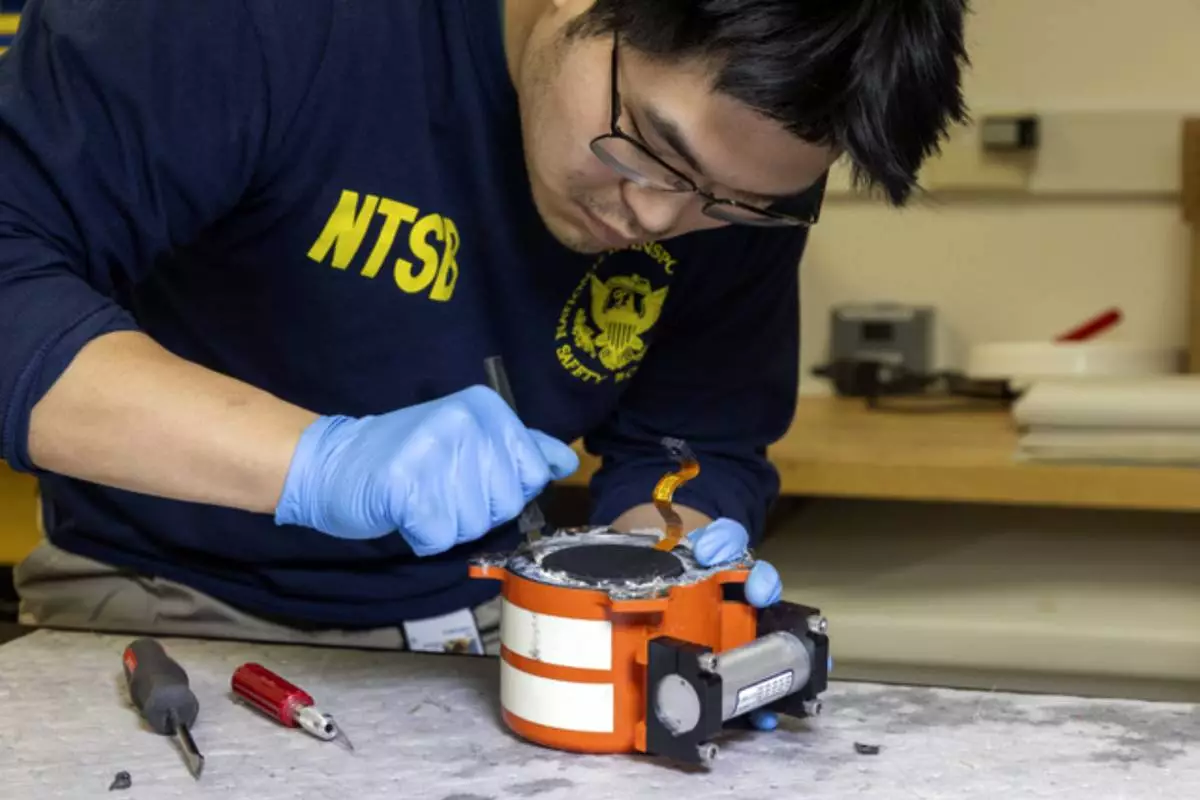
In this image provided by the National Transportation Safety Board, a NTSB investigator examine cockpit voice recorder and flight data recorder in Washington, Thursday, Jan. 30, 2025, recovered from the American Airlines passenger jet that crashed with an Army helicopter Wednesday night near Ronald Reagan Washington National Airport. (NTSB via AP)
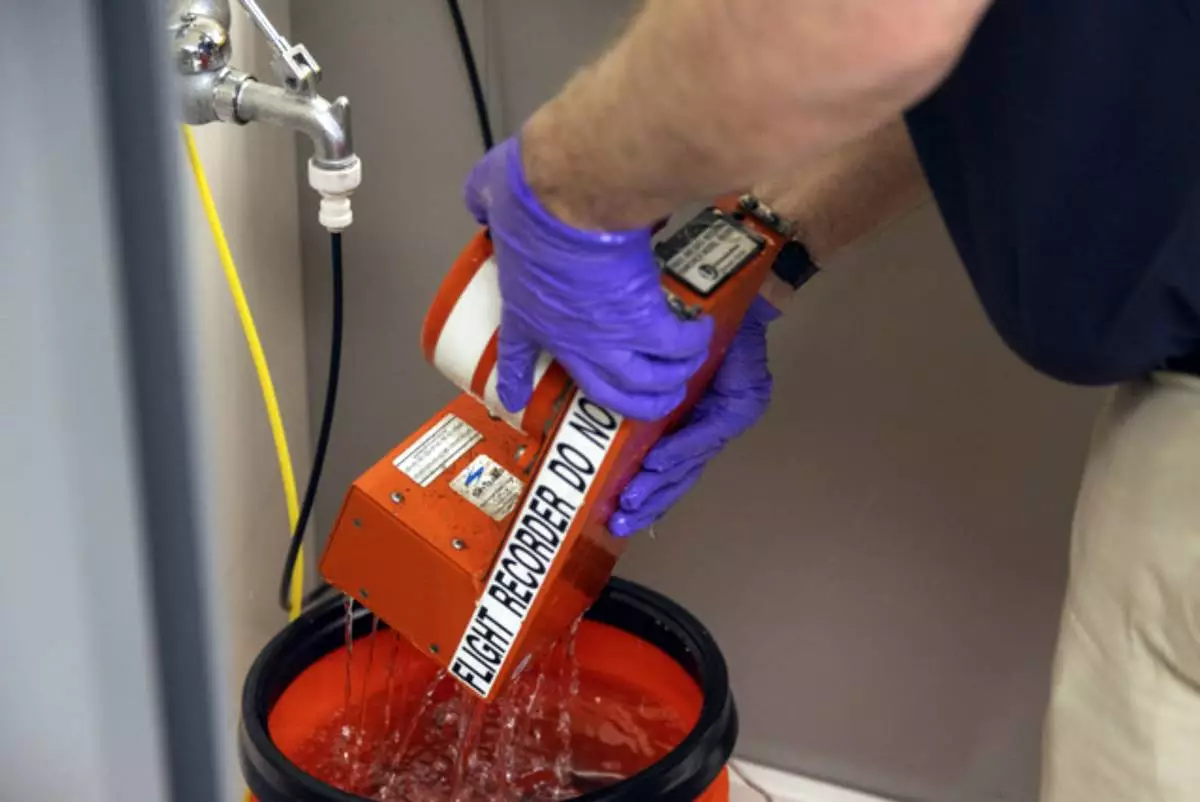
In this image provided by the National Transportation Safety Board, NTSB investigators examine the flight data recorder in Washington, Thursday, Jan. 30, 2025, recovered from the American Airlines passenger jet that crashed with an Army helicopter Wednesday night near Ronald Reagan Washington National Airport. (NTSB via AP)
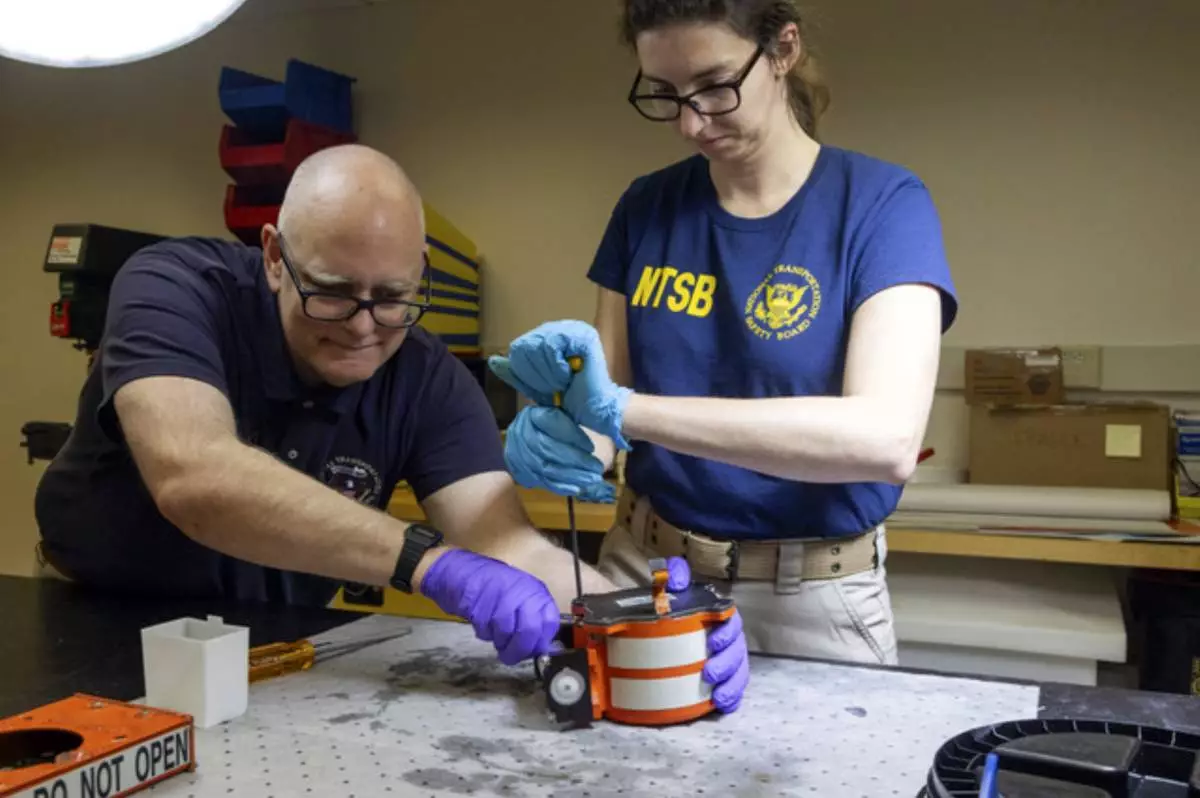
In this image provided by the National Transportation Safety Board, NTSB investigators examine cockpit voice recorder and flight data recorder in Washington, Thursday, Jan. 30, 2025, recovered from the American Airlines passenger jet that crashed with an Army helicopter Wednesday night near Ronald Reagan Washington National Airport. (NTSB via AP)