KAMPALA, Uganda (AP) — After Rwanda-backed M23 rebels took control of the biggest city in eastern Congo this week, the man who emerged from the shadows to assert his leadership was not the group's long-time military leader.
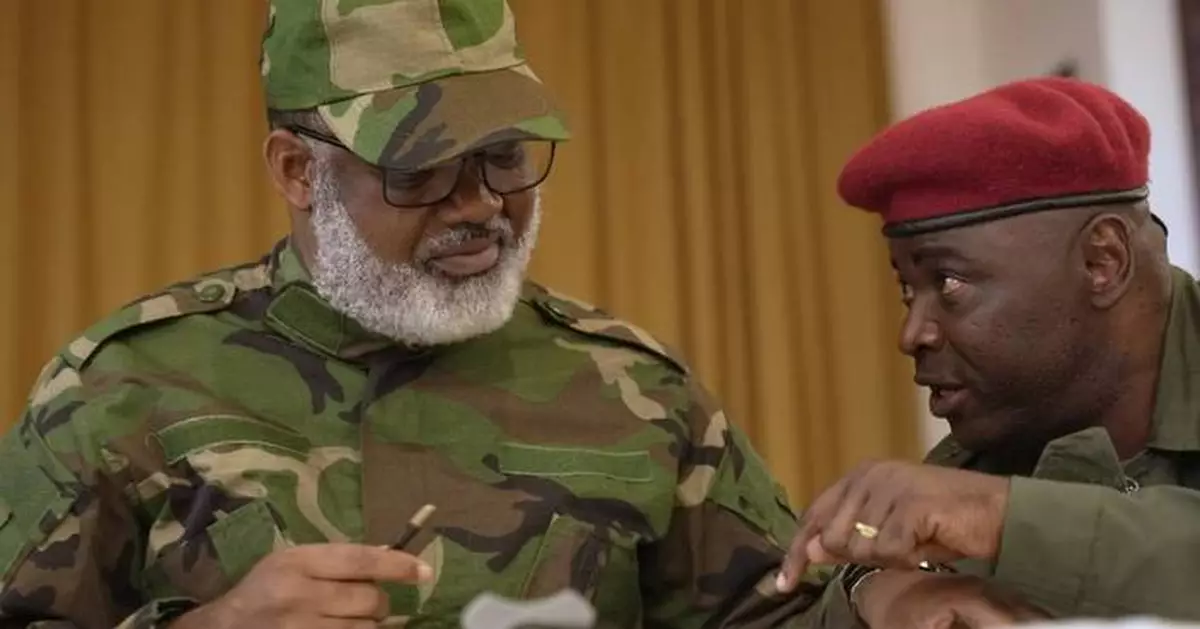
Sultani Makenga, an ethnic Tutsi rebel leader sanctioned by both the U.S. and the U.N., was nowhere to be seen in Goma’s Serena Hotel as the bearded Corneille Nangaa, in military fatigues, was ushered into the hall. Nangaa, who is not a Tutsi and who analysts say brings a more diverse, Congolese face to the group, told reporters of his plan to fight all the way to Kinshasa, the national capital a thousand miles away.
The spectacle was significant because it captures the evolution of M23 from an ethnic Tutsi-dominated outfit more than a decade ago to one that’s now actively seeking to be seen as a Congolese nationalist group. That's the case despite the military support it gets from neighboring Rwanda, according to observers and analysts in Africa’s Great Lakes region.
Nangaa is the former head of Congo's electoral body who oversaw the 2018 presidential election won by President Félix Tshisekedi. He has been a controversial figure in Congolese politics for years. As the election commission chair, he oversaw the heavily criticized vote that elected Tshisekedi and led the U.S. to sanction him in 2019 for undermining Congo's democracy.
A falling-out with Congolese authorities, including a dispute over a mining concession, sent Nangaa into exile in Kenya. In 2023, he joined the Congo River Alliance, a political-military coalition including 17 parties and rebel groups opposed to the government of Tshisekedi and became a top political figure.
Besides the mining, his grievance is also believed to be due to the president’s alleged refusal to advocate for the U.S. dropping Nangaa from its sanctions list, according to Christian Moleka, a political scientist at the Congolese think tank Dypol. “His perception that he had been mistreated by the authorities is what pushed him towards radicalization,” Moleka said.
Last year, Makenga’s M23 joined Nangaa’s Congo River Alliance and with Nangaa at the helm of the revamped outfit, the M23 looked even more menacing to Congolese authorities, analysts say.
M23 is more of a threat now because the group is trying to “decouple the question of self-determination in eastern Congo” from evidence of Rwandan support, said Angelo Izama, an analyst with the Uganda-based Fanaka Kwawote think tank.
The rebels want to provoke a national discussion on widespread feelings of neglect in eastern Congo while gaining “as much territory as possible such that they can force the Congolese state to deal with questions of genuine autonomy and to force some kind of negotiation,” he said.
Forcing political negotiations is “a smart move” for the rebels, “the only path out of this crisis,” he added.
Unlike in 2012, when the M23 took Goma in a campaign led by Kinyarwanda-speaking fighters pushing mainly for their full integration into the Congolese army, “this time it has a national agenda,” the Crisis Group think tank said of M23 in a recent assessment.
With Nangaa’s Congo River Alliance as the “political umbrella" for the M23, the think tank said the rebels have accumulated resources and allies that made them “attractive partners not only to armed groups in eastern (Congo) but to others aiming to undermine Tshisekedi.”
“This is in line with (Rwanda's) probable strategy of creating a deniable but powerful Congolese front to exact the maximum leverage over Kinshasa and confirm its dominance of North Kivu (province), at a minimum,” the think tank said.
United Nations experts have asserted that some 4,000 Rwandan troops back M23 rebels in North Kivu. To take Goma, which is strategically located close to the Rwanda border, the rebels defeated Congolese government troops who long had been supported by local militias known as Wazalendo as well as U.N. and regional peacekeepers and mercenaries from Europe.
M23 has about 6,500 fighters, according to U.N. estimates. It emerged in 2012 as a rebel group led by Congolese ethnic Tutsis who said a 2009 agreement signed to look after their interests — including integration into the army and the return of refugees from elsewhere in east Africa — had been violated by Congo’s government.
Led by Makenga, a Congolese Tutsi, M23 took Goma in a November 2012 offensive and pulled out days later under international pressure. They were later repulsed by U.N. forces fighting alongside Congolese government troops in a military campaign that forced hundreds of them to flee to Rwanda and Uganda. Makenga, a self-appointed major-general often seen wielding a herder’s staff in the bush, was among those who fled to Uganda.
In December 2013, with hundreds of the rebels cantoned in a remote forested area of western Uganda, M23 signed an agreement with Congo’s government that called for the repatriation of the rebels to Congo within a year. That proved difficult to achieve because of a dispute over the rebels’ demand for a blanket amnesty while Congo’s government wanted commanders such as Makenga tried for their alleged crimes against civilians.
In 2016, hundreds of M23 rebels fled custody in Uganda, from where they were to be airlifted back to Congo. The rebels resurfaced in 2021 and became the most potent of more than 100 armed groups vying for control in the mineral-rich territory. The U.S. Department of Commerce estimates mineral deposits there to be worth $24 trillion, most of them crucial to global technology.
Unlike in 2012, Nangaa's selling point as the face of M23 is that he is from the Haut-Uele province and not Tutsi," said Moleka with the Dypol Congolese think tank. "This allows M23 to give itself a new, more diverse, Congolese face, as M23 has always been seen as a Rwanda-backed armed group defending Tutsi minorities,” said Moleka.
The Washington-based Africa Center for Strategic Studies, in an analysis published Wednesday, cited “a shifting political calculus by sponsors" of M23. Efforts to establish a parallel civilian administration and expand the illicit exploitation of minerals “suggests that the rebel group and their regional backers have longer-term objectives in holding and potentially expanding their territorial control," according to the assessment by Paul Nantulya, a Ugandan analyst with the group.
At an M23 news conference in Goma on Thursday, Nangaa said the rebels aim to set up a new administration in the city of 2 million people that's now home to hundreds of thousands of displaced Congolese. The rebels spoke to reporters of their plans to return displaced people to their homes, presenting a major challenge to Tshisekedi.
"We are here in Goma to stay as Congolese,” Nangaa said. “We will continue the march for liberation all the way to Kinshasa.”
Associated Press writer Mark Banchereau in Paris contributed to this report.
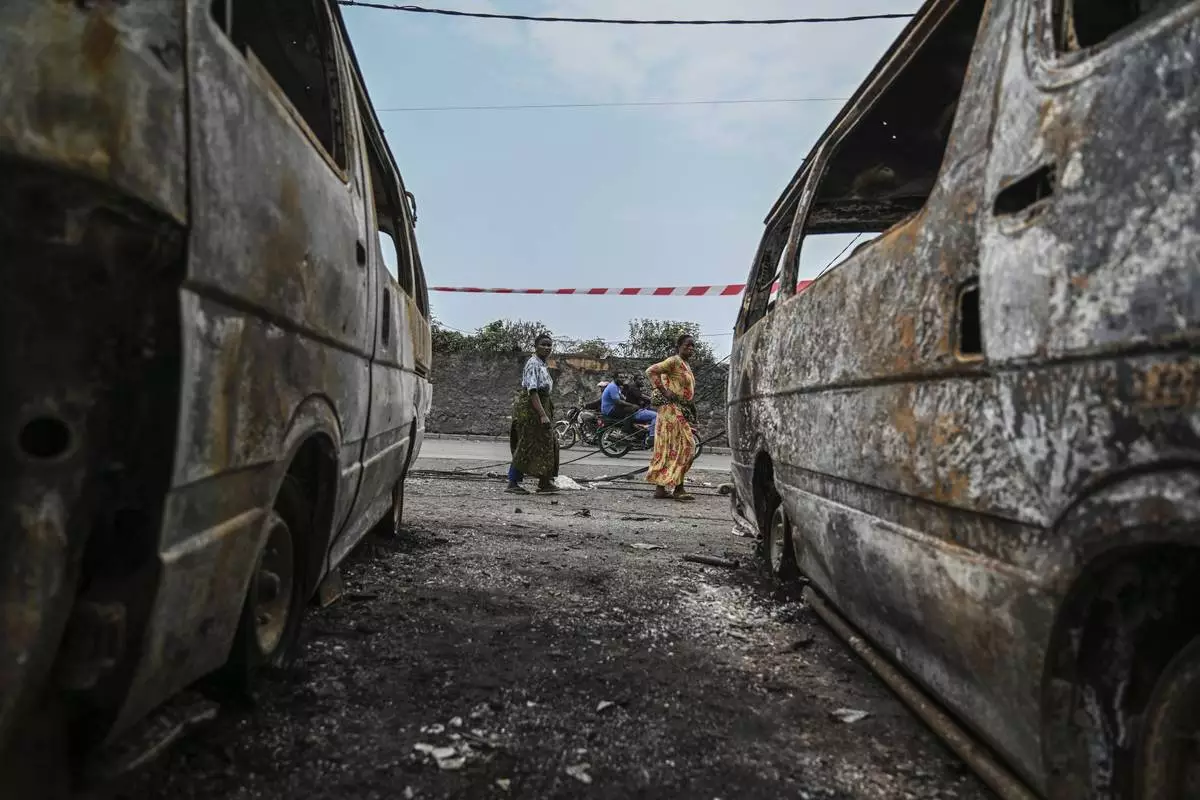
Residents walk by charred vehicles in Goma, Democratic republic of the Congo, Friday, Jan. 31, 2025. (AP Photo/Moses Sawasawa)
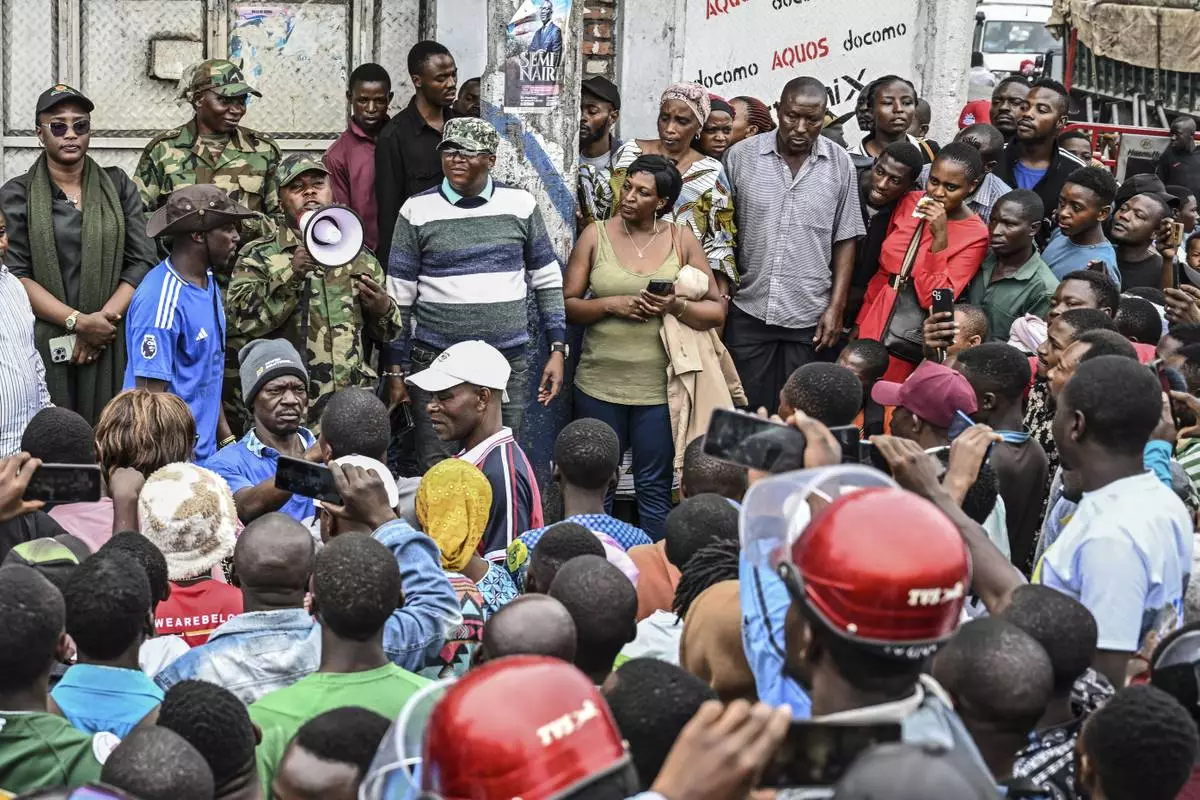
Residents listen to M23 rebel soldiers in Goma, Democratic republic of the Congo, Friday, Jan. 31, 2025. (AP Photo/Moses Sawasawa)
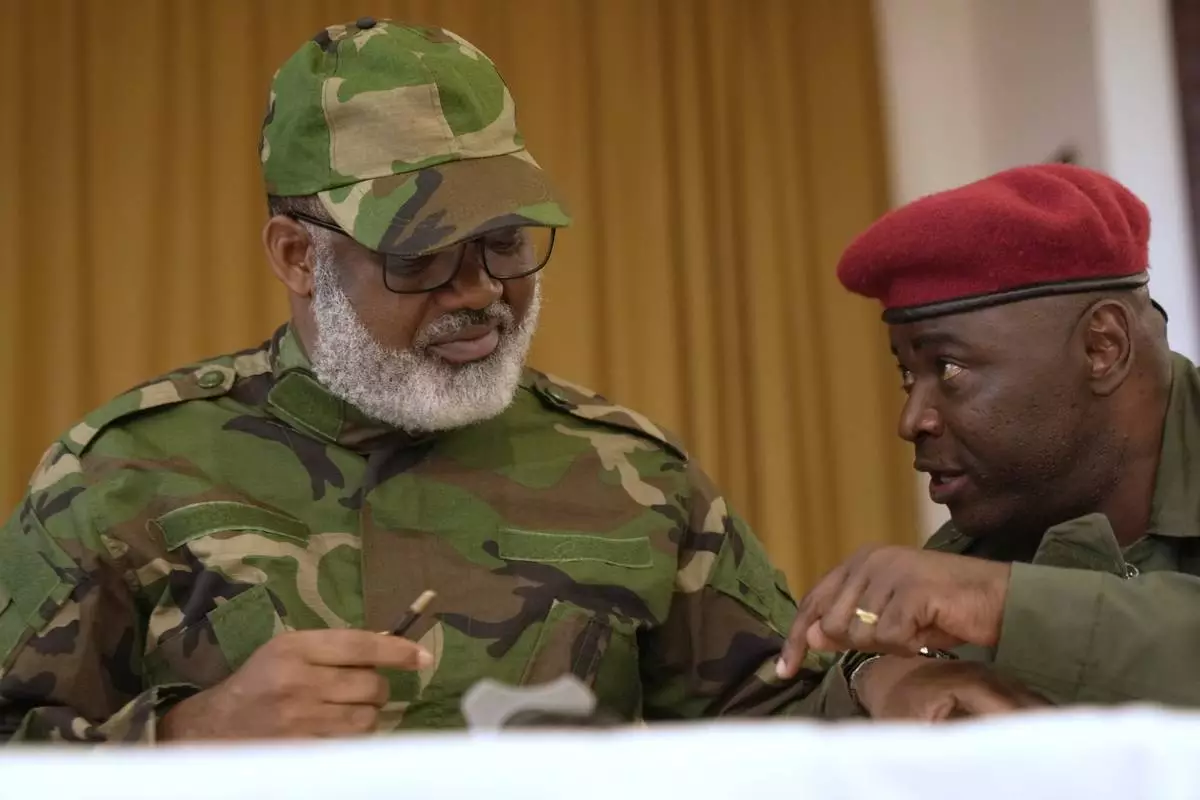
Rebel leader of rebel group of Alliance Fleuve Congo (AFC) including M23, Corneille Nangaa, addresses a news conference in Goma, Democratic republic of the Congo, Thursday, Jan. 30, 2025. (AP Photo/Brian Inganga)
LONDON (AP) — British Prime Minister Keir Starmer pledged to revive his struggling government but faced growing calls to resign after a disastrous set of local and regional elections for his Labour Party.
As the final results came in Saturday, Labour suffered a net loss of more than 1,100 local council seats across England, lost control of several local authorities it had held for decades and was booted from power in Wales after 27 years. Anti-immigration party Reform UK gained over 1,300 seats across England and made significant gains in legislative elections in Wales and Scotland.
It was a blunt verdict from voters in elections widely seen as an unofficial referendum on Starmer, whose popularity has plummeted since he led the center-left party to power less than two years ago.
Here are five things we’ve learned from the elections.
Starmer insisted he would not walk away and "plunge the country into chaos,” and the dire election results did not produce an immediate challenge to his leadership.
"The right thing to do is rebuild and show the path forward,” Starmer said Saturday. “That’s what I’m going to do in the coming days.”
Starmer’s Cabinet colleagues expressed support, and none of the high-profile Labour politicians considered potential challengers has made a move. Health Secretary Wes Streeting, former Deputy Prime Minister Angela Rayner and Greater Manchester Mayor Andy Burnham are keeping quiet for now.
But a growing number of Labour lawmakers urged the prime minister to set a timetable for his departure this year. British politics allows parties to change leader midterm without the need for a new election.
“There has to be a timetable,” legislator Clive Betts told the BBC. Another lawmaker, Tony Vaughan, said there should be an “orderly transition of leadership.”
Starmer tried to demonstrate change on Saturday by bringing back two figures from past Labour governments. He made former Prime Minister Gordon Brown a special envoy on global finance, and appointed the party's ex-deputy leader Harriet Harman an adviser on women and girls.
Starmer is due to make a speech on Monday in an attempt to regain momentum, before the government sets out its legislative plans on Wednesday in a speech delivered by King Charles III at the State Opening of Parliament.
The elections were a breakthrough for Reform UK, the latest hard-right party led by the veteran nationalist politician Nigel Farage.
Running on an anti-establishment and anti-immigration message, the party won hundreds of local council seats in working-class areas in England’s north, such as Sunderland, that were solid Labour turf for decades. It also made gains from the Conservatives in areas like the county of Essex, east of London, and increased its vote share in Wales and Scotland, new terrain for the party.
Farage said the results marked a “historic change in British politics.” He said he's confident that “voters who have come to us are not doing it as a short-term protest.”
Reform UK currently holds just eight of the 650 seats in the House of Commons and it’s unclear whether it could repeat its success in a national election.
The elections produced semiautonomous administrations in Scotland and Wales led by parties devoted to independence and the breakup of the United Kingdom — though neither has that policy on the front burner.
The Scottish National Party, which has governed in Edinburgh since 2007, won another term but fell short of a majority, meaning an independence referendum is unlikely. Labour and Reform tied in a distant second place.
Plaid Cymru (The Party of Wales) won the most seats in the Cardiff-based legislature, the Senedd. The party, which has an ambition for Wales to leave the U.K. but no plan to do so anytime soon, fell short of a majority but will likely form the new government. Reform came second and Labour a distant third in one of its most historic heartlands, with outgoing First Minister Eluned Morgan losing her seat.
The economy lies at the heart of Labour’s troubles, as it does for many incumbent governments.
Since ending 14 years of Conservative rule roiled by austerity and the COVID-19 pandemic, Labour has struggled to ease the cost of living and jump-start a sluggish economy against the tough economic backdrop of war in Ukraine and, more recently, Iran. Starmer also has angered supporters with attempts to cut welfare spending, some of which were reversed after Labour revolts.
Some in Labour say the government's achievements, including protections for renters and a higher minimum wage, are going unnoticed. Many blame Starmer, an uninspiring leader distracted by scandals including his disastrous decision to appoint Peter Mandelson, a scandal-tarnished friend of Jeffrey Epstein, as Britain’s ambassador to Washington.
But Stephen Houghton, the outgoing leader of Barnsley council in northern England, where Labour lost to Reform, said the problem “goes deeper than the prime minister.”
“This has been coming for 30 years around the country, in post-industrial communities, coastal communities, that have been left behind,” he said. “You can change prime ministers all day long. If you don’t change policy, it’s not going to change.”
The results reflect a fragmentation of U.K. politics after decades of domination by Labour and the Conservative Party, which also suffered major losses on Thursday.
The elections offered voters a rainbow of choices, including the centrist Liberal Democrats and the nationalist parties in Scotland and Wales.
But the big winners were populist insurgents, Reform UK and the Green Party, whose focus has expanded from the environment to social justice and the Palestinian cause under self-described “eco populist” leader Zack Polanski. The Greens won hundreds of council seats from Labour in urban centers and university towns and took control of several local authorities.
Tony Travers, professor of government at the London School of Economics, said the results suggest the next national election, due by 2029, won’t produce a majority for any party.
“So then you’re in the world of, after the election, two or three big minority parties trying to work out how they would govern,” he said — something traditionally considered “very un-British.”
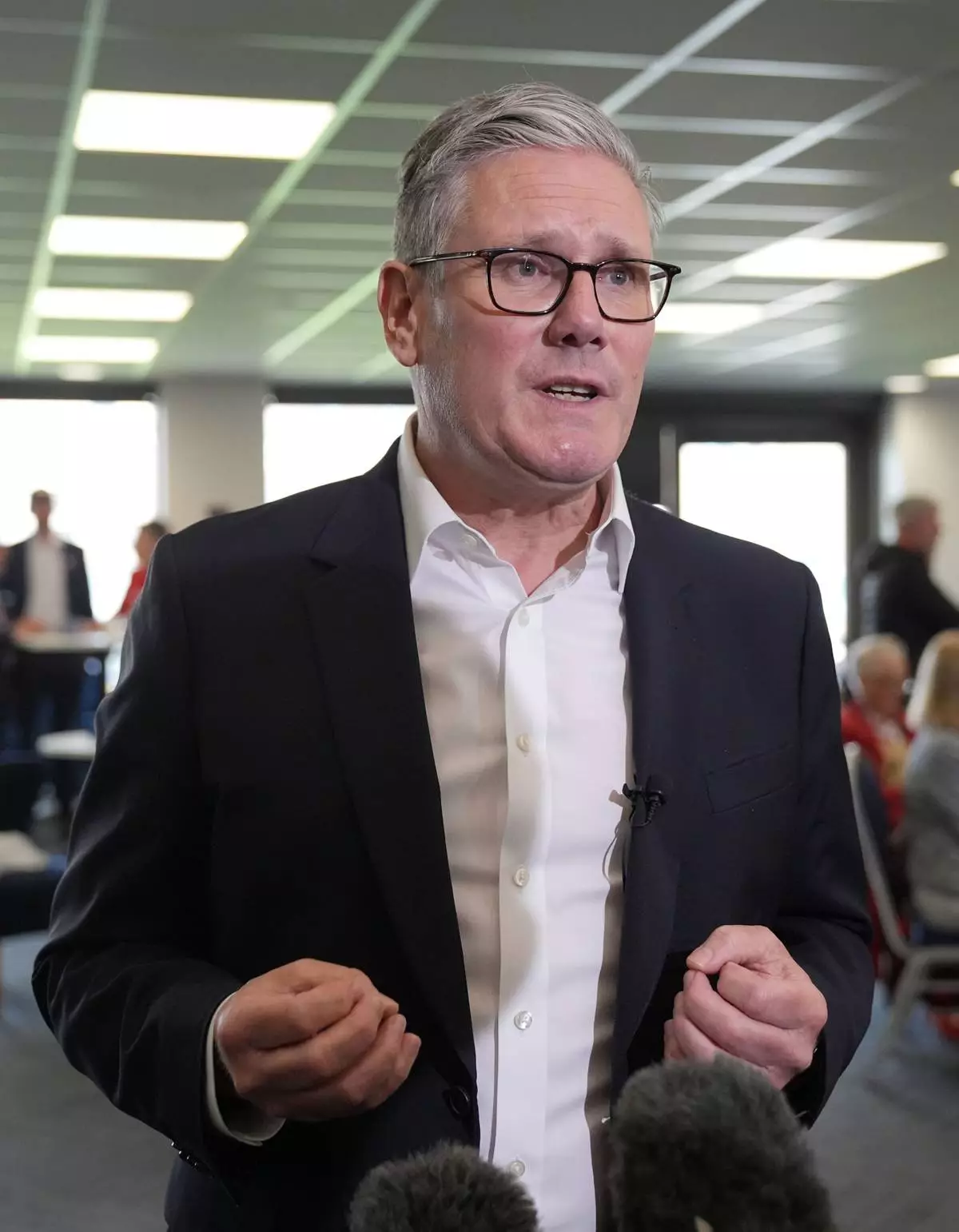
British Prime Minister Sir Keir Starmer speaking to the media after meeting Labour Party members during a visit to AFC Wimbledon in south London, Saturday May 9, 2026. (Maja Smiejkowska/PA via AP)
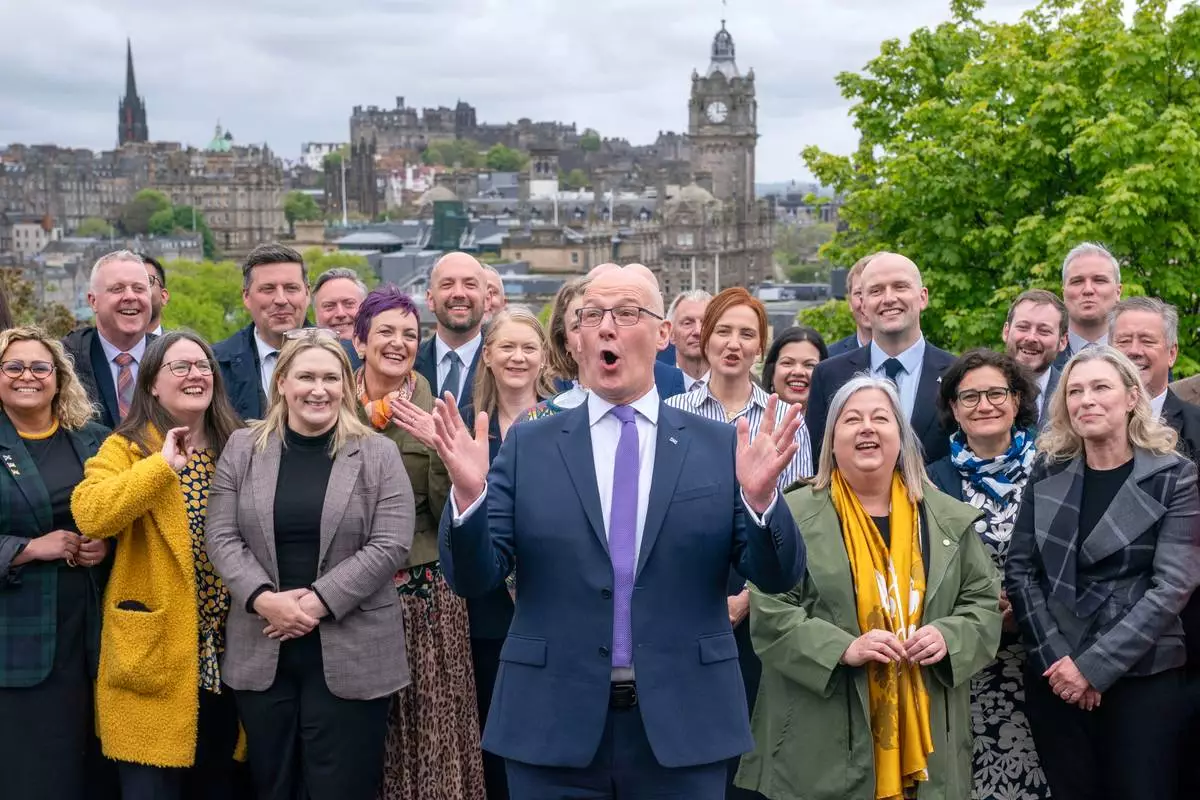
First Minister and SNP leader John Swinney with some of the newly elected SNP MSPs in Edinburgh, Saturday May 9, 2026, following the 2026 Holyrood elections. (Jane Barlow/PA via AP)
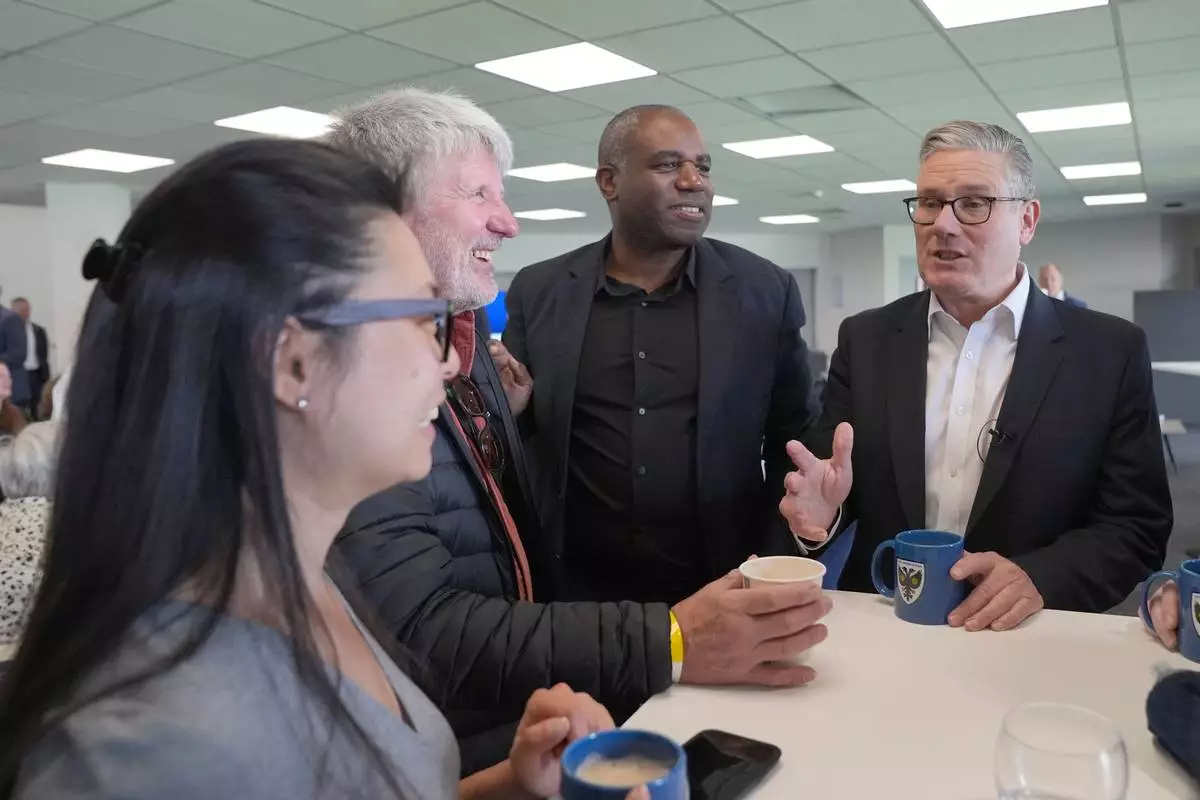
British Prime Minister Sir Keir Starmer and Foreign Secretary David Lammy meeting Labour Party members during a visit to AFC Wimbledon in south London, Saturday May 9, 2026. (Maja Smiejkowska/PA via AP)
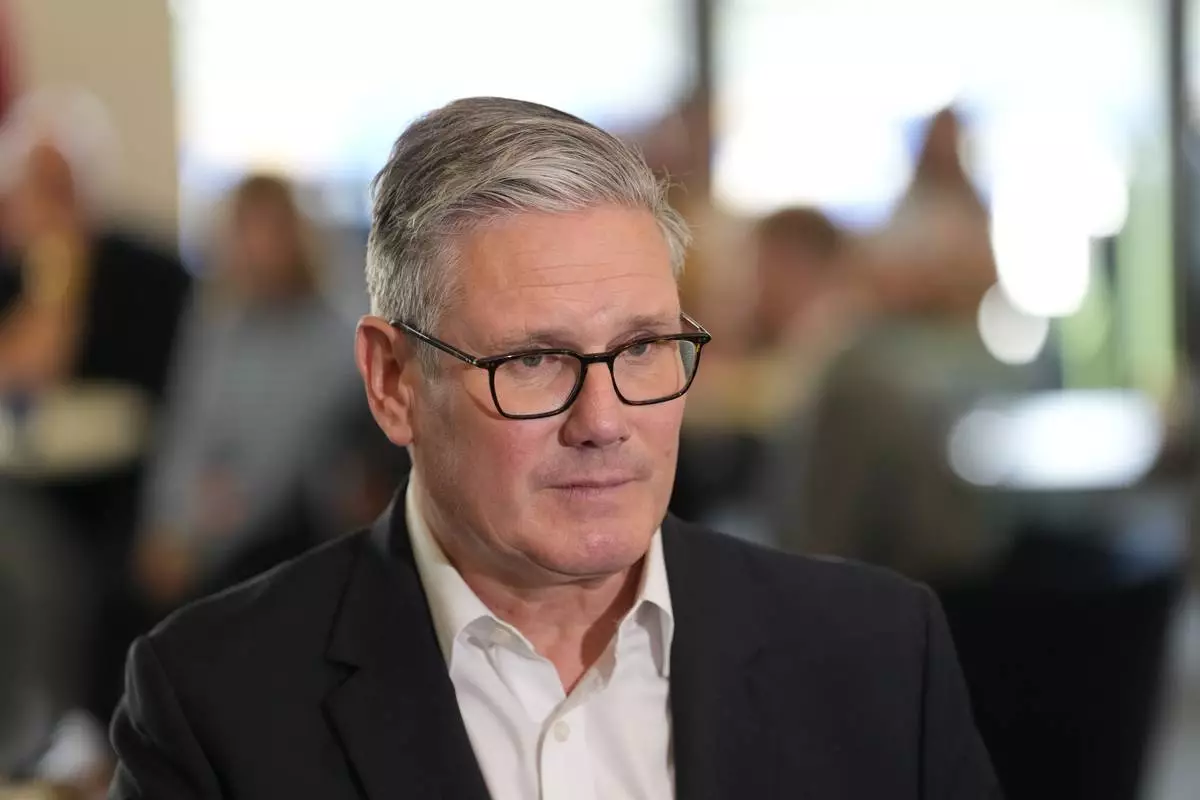
British Prime Minister Sir Keir Starmer speaking to the media after meeting Labour Party members during a visit to AFC Wimbledon in south London, Saturday May 9, 2026. (Maja Smiejkowska/PA via AP)
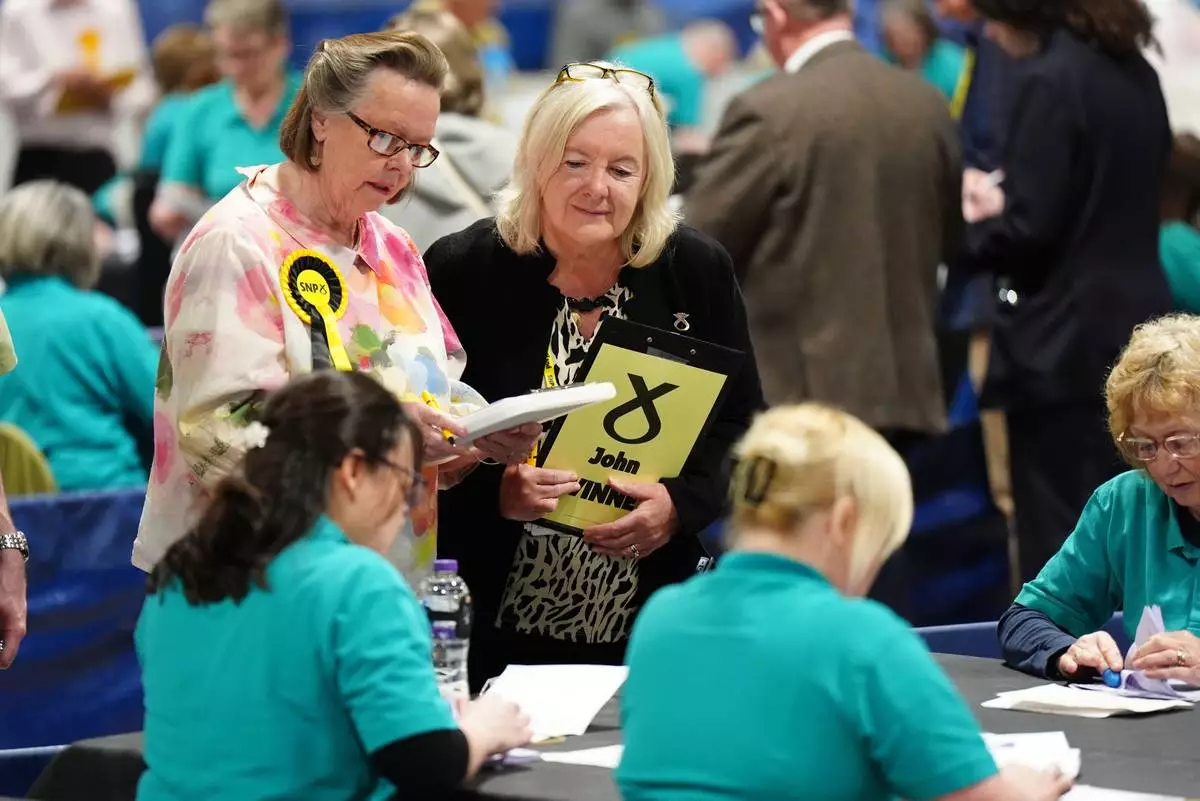
Observers from the Scottish National Party (SNP) watch as votes are counted for the 2026 Holyrood elections, at Dewars Centre in Perth, Scotland, Friday May 8, 2026. (Jane Barlow/PA via AP)
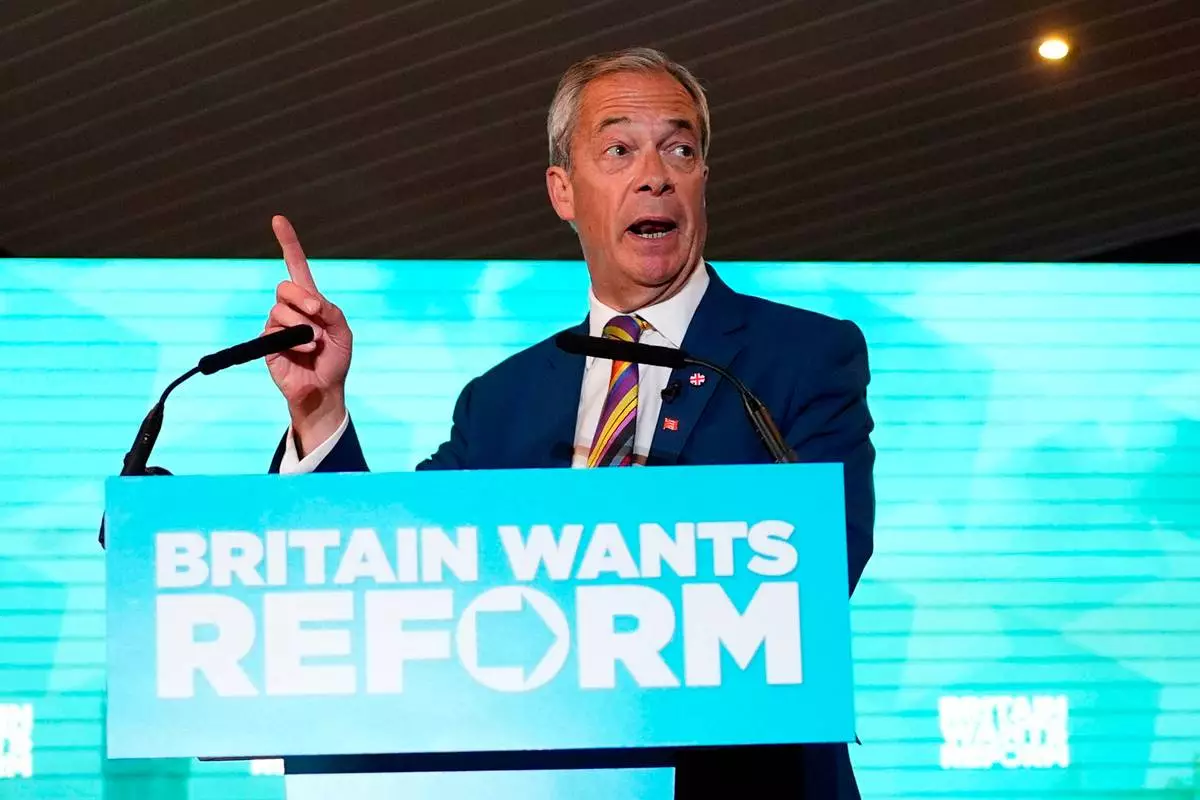
Reform UK leader Nigel Farage speaks to supporters at Chelmsford City Racecourse, Friday May 8, 2026, in Essex, England, following the 2026 local election results. (Jordan Pettitt/PA via AP)
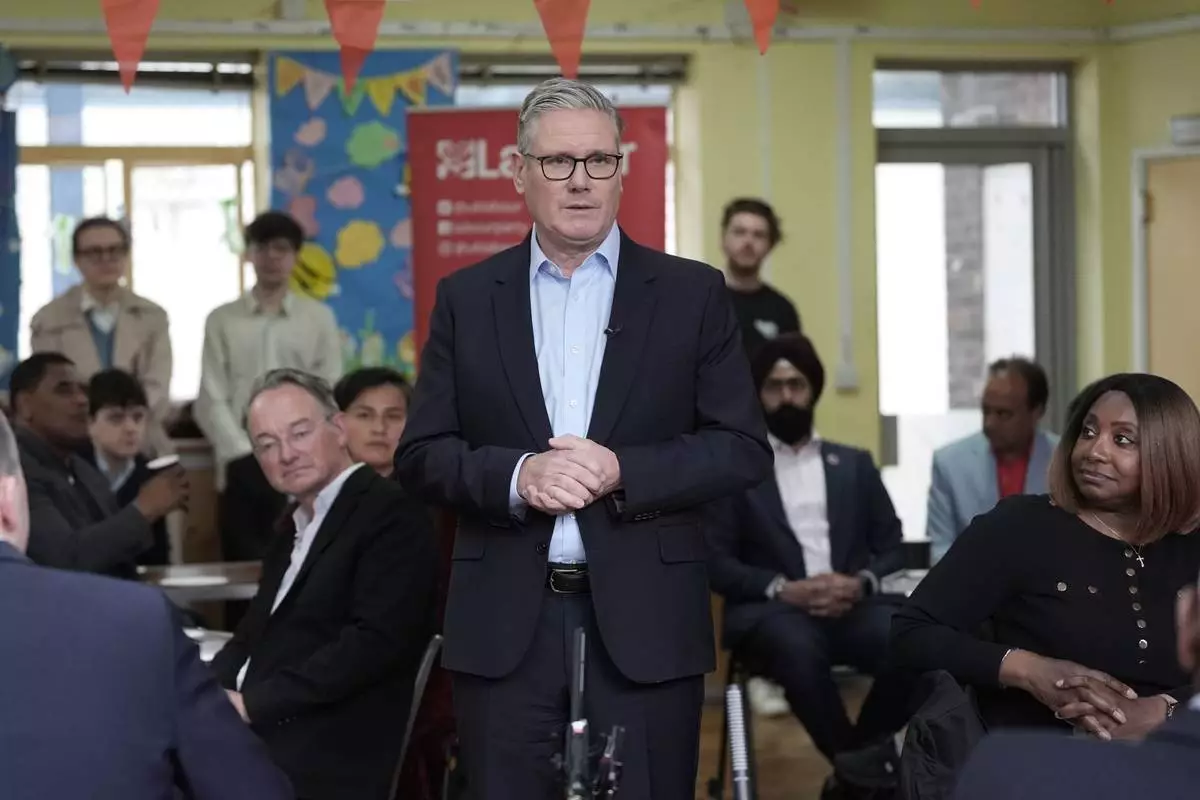
Britain's Prime Minister Sir Keir Starmer speaks to Labour Party members at Kingsdown Methodist Church Hall, in Ealing, west London, Friday May 8, 2026, a day after the local elections. (Stefan Rousseau/PA via AP)