As the Mexican government prepares for the possibility of receiving tens of thousands of deported migrants in the coming weeks and months, uncertainty is rising in Mexican towns and cities on the border with the United States.
U.S. President Donald Trump signed on his inauguration day an executive order that declared a national emergency along the U.S.-Mexico border, called for mass deportations of undocumented migrants, deployed military forces to the border and took steps to restrict citizenship for children born on U.S. soil.
Click to Gallery
US mass deportations spark fear, uncertainty in Mexican border cities
US mass deportations spark fear, uncertainty in Mexican border cities
US mass deportations spark fear, uncertainty in Mexican border cities
US mass deportations spark fear, uncertainty in Mexican border cities
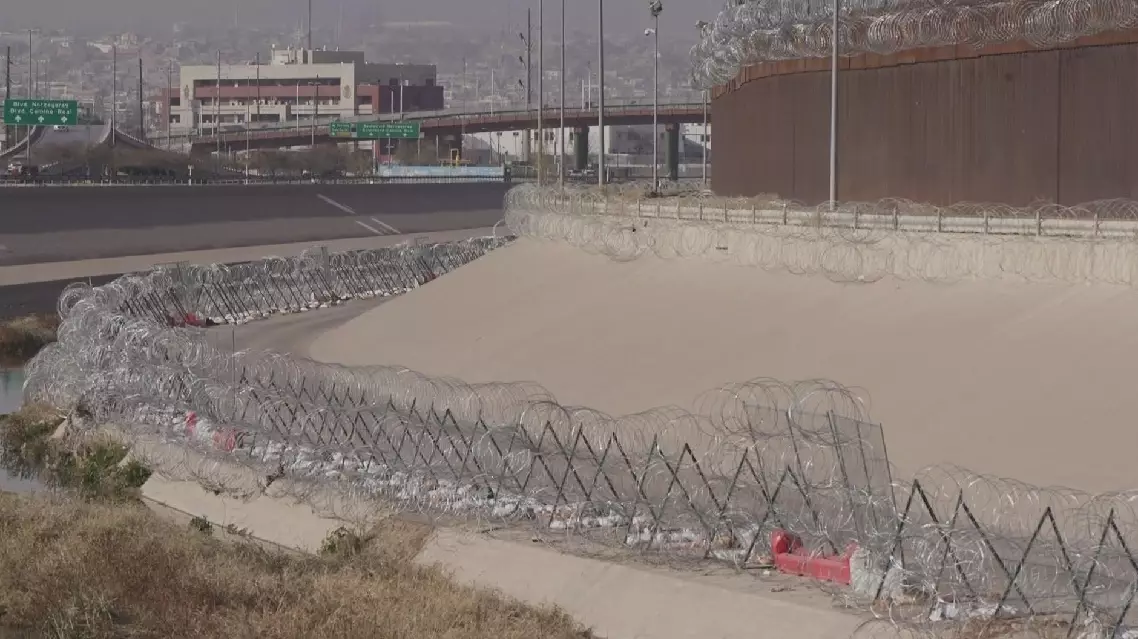
At a section of the border wall between Mexico and the United States, in Ciudad Juarez, the number of U.S. Border Patrol vehicles is currently noticeably fewer, and the streets of the large border city are clear of migrants.
Media reports indicate that large numbers of U.S. troops are stationed at the Fort Bliss Army Base, but so far access has not been granted to report from that military base.
A consultant specializing in migrant families from the EL Paso community in the United States, Maria Limon, notes that fear and concern are widespread among migrant families.
"They're not coming out for help because it's too dangerous, for fear of deportation. And so, in terms of the funding support for these programs, that's another huge pressure. As it is, most programs are severely underfunded. And, so to have the threat of that funding pulled, because it is considered DEI (diversity, equity and inclusion) work, is creating horrific pressure for programs," she said.
Non-profit organizations and government officials on both sides of the border say there is nothing left to do but wait and see how the threat of mass deportations actually plays out.
US mass deportations spark fear, uncertainty in Mexican border cities
US mass deportations spark fear, uncertainty in Mexican border cities
US mass deportations spark fear, uncertainty in Mexican border cities
US mass deportations spark fear, uncertainty in Mexican border cities