As he prepares to turn 70 later this year, Microsoft founder Bill Gates' new memoir explores how his childhood quirks, upbringing, friendships and experiences coalesced into shaping his internal operating system.
In “Source Code: My Beginnings,” the first installment of a trilogy retracing his journey from an often misunderstood kid to a polarizing technology titan to an influential philanthropist, Gates dissects his brain’s unusual wiring, delves into the emotional trauma of his best friend dying while they were both in high school, and revisits the birth of Traf-O-Data, a startup that he launched in Albuquerque, New Mexico, with another childhood friend, Paul Allen.
Traf-O-Data, conceived to create software for the groundbreaking Altair computer made Micro Instrumentation and Telemetry Systems, became Microsoft in 1975 — a year it booked $16,005 in revenue while Gates and Allen were making $9 per hour.
By 1977, Microsoft had become successful enough to embolden Gates to drop out of Harvard University. In 1979, he had decided to move Microsoft to the Seattle area where he grew up. Although Gates stepped down as Microsoft's CEO 25 years ago, the Windows operating system and other software created under his reign remain the main pillar in a company that now generates $212 billion in annual revenue, boasts a $3.1 trillion market value, and accounts for most of Gates' $100 billion personal fortune.
“Source Code” ends with Gates's drive back to Seattle in 1979, meaning it doesn't touch upon his 1994 marriage to Melinda French, nor their 2021 divorce.
“I am being reflective, which is not my normal mode, but it’s kind of time,” Gates said during an interview about the book with The Associated Press. “As we went back and got teacher’s comments or people I worked with at Harvard, it was fascinating. I had confused myself into thinking I got straight A’s in ninth grade.”
That might not sound like much of a revelation, but it was a surprise to the cerebral Gates, who paints himself in the book as a “bratty smartass” prone to dismissively sneering, “That's the stupidest thing I ever heard,” about remarks that seemed nonsensical to him.
Gate's self-portrait is that of a nerd nicknamed “Trey” by his card-playing grandmother because he was the third male on this father's side of the family to be named Bill. He was a pipsqueak who had difficulty making friends and preferred living in his own head before he discovered computers, which became like slot machines that rewarded him for writing elegant lines of code.
When he did talk, the young Gates rocked back and forth like a metronome setting a rhythm for his brain — a habit that surfaced during parts of his 45-minute interview with the AP.
“It was a little weird because it was hard to direct my attention,” Gates recalled during the interview. “I had one year in school where they said, ‘Oh we should put you ahead a couple grades.’ And then another time, they said, ‘No, we should hold you back.’ And it’s like, ‘Well make up your mind.’ They were a little confounded.”
Although he didn't realize it as a boy, Gates has no doubt he was and still is neurodivergent who channeled that anomaly into learning to program computers at the right time in the right place with the patient support of his late parents (the book is dedicated to them, along with his sister, Kristi and Libby).
“It wasn’t until I was an adult that there was this idea that there are kids that have this kind of unique ability to concentrate but less social skills. I certainly would be included in that,” Gates said. “I encourage people who have strengths and deficits to kind of map their ambition onto something that plays to their strengths. Being able to think just about programming and how you do it better ended up being invaluable for me.”
Gates also had the advantage of growing up in a family that could afford to pay for him to attend a private high school in Seattle. Still, that privilege didn't insulate him from the trauma he experienced when his best friend, Kent Evans, died in a mountain climbing accident in May 1972 — a year before they were going to graduate.
Evans' death occurred while he and Gates were preparing to spend much of the summer working on a program for their school, but what hurt far more was the loss of someone who understood him and helped give him a sense of purpose for the first time in his life.
“I had no notion of a friend just being gone. It was the only negative thing in my childhood,” Gates said. “It shapes you, that someone can just disappear — somebody you loved and would have done things with. He would have been part of whatever I ended up going on to do. I give Kent credit, along with Paul (Allen), for setting the direction that I ended up going down.”
Evans' death provided the impetus for Gates to reconnect with Allen, who was already attending college, to help him with his programming projects. Allen, three years older than Gates and a passionate fan of legendary guitarist Jimi Hendrix, did more than just help with the coding. He also offered Gates some LSD in an attempt to lure his partner down a more psychedelic path.
Gates rebuffed Allen at first but decided to drop acid with a group of high school friends shortly before his 1973 graduation, according to the book.
It wasn't a pleasant experience, a reaction that Gates thought might have been related to the dental surgery he underwent the day after his LSD trip. He tried LSD again with Allen in October 1974 while they were watching an episode of the old "Kung Fu" series on TV, and decided he would be better off without psychedelic drugs even though Apple co-founder Steve Jobs contended Microsoft would have created better products had Gates taken more acid.
"I thought maybe I’d seem cool if I took it, but that didn’t happen," Gates said during the interview. “I would say Steve was definitely more hip than I was. He took a lot more acid than I did. He had a sense of style. I had some charisma in terms of motivating engineers and saying this great thing (with personal computers) would happen, but Steve had natural speaking and charisma capabilities, even beyond mine. So I always envied him for the things he did."
Gates' mind is now being blown by the recent advances in artificial intelligence — a technology being planted into Microsoft's software as part of its partnership with ChatGPT creator OpenAI.
“When I finally see ChatGPT-4, where the OpenAI guys show me a very early version, I am just blown away completely,” Gates said. He views AI as an “amazing and scary” technology that should be rigorously monitored.
“You should be nervous. We have to acknowledge that AI is almost uniquely dangerous because it’s unbounded in terms of how good it will get and it’s happening within a generation,” Gates said. “Hopefully, the politicians and the technologists will share with each other, and we can shape this thing. We better get on top of that now.”
If nothing else, Gates is hoping “Source Code” will help people see a more human side of him, even if he might never been seen as the cultural tastemaker that Jobs was.
“I wouldn’t say I was completely uncool,” Gates said. “But once I got going on Microsoft, I was willing to be pretty monomaniacal. Even people I competed with found it very intimidating how focused I was. I really didn’t goof off in my 20s because my whole thing was having Microsoft move at full speed.”
Perhaps Gates will delve deeper into the monomania that made him so rich, famous and sometimes reviled in the next book about his life — an installment that he says won't be done until sometime in 2027, at the earliest.
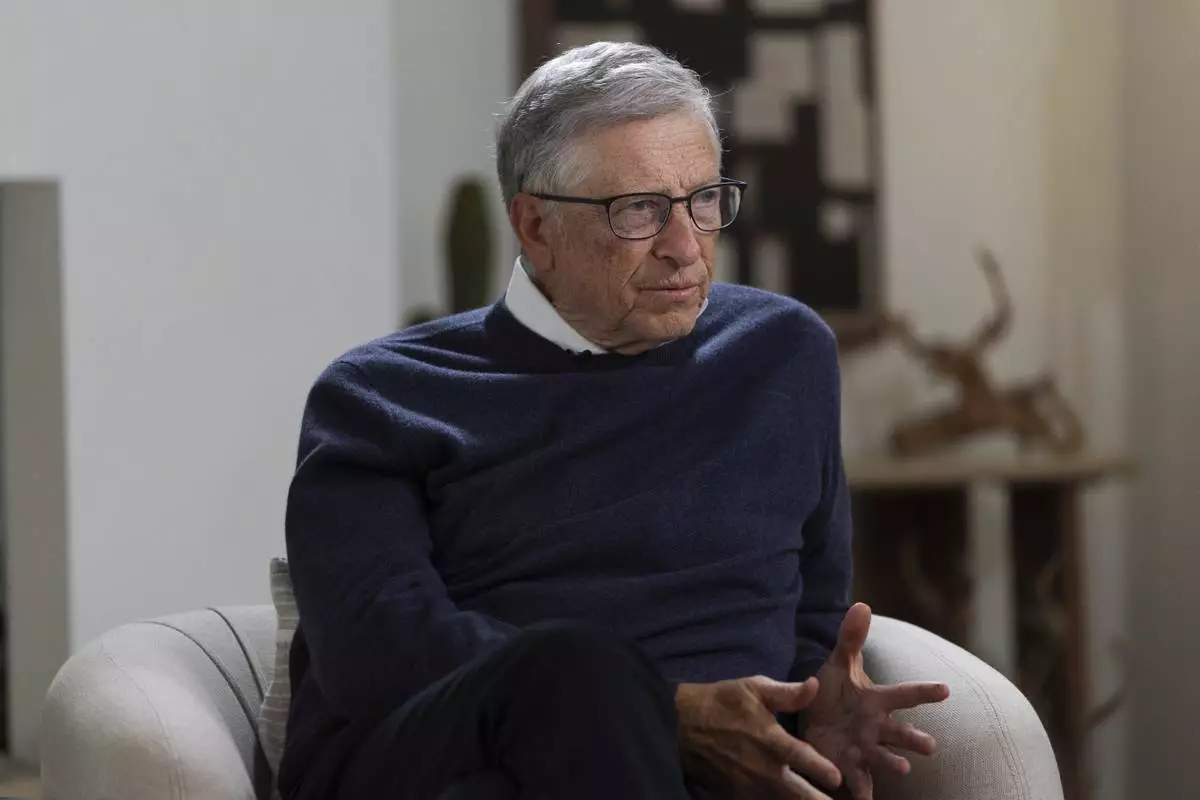
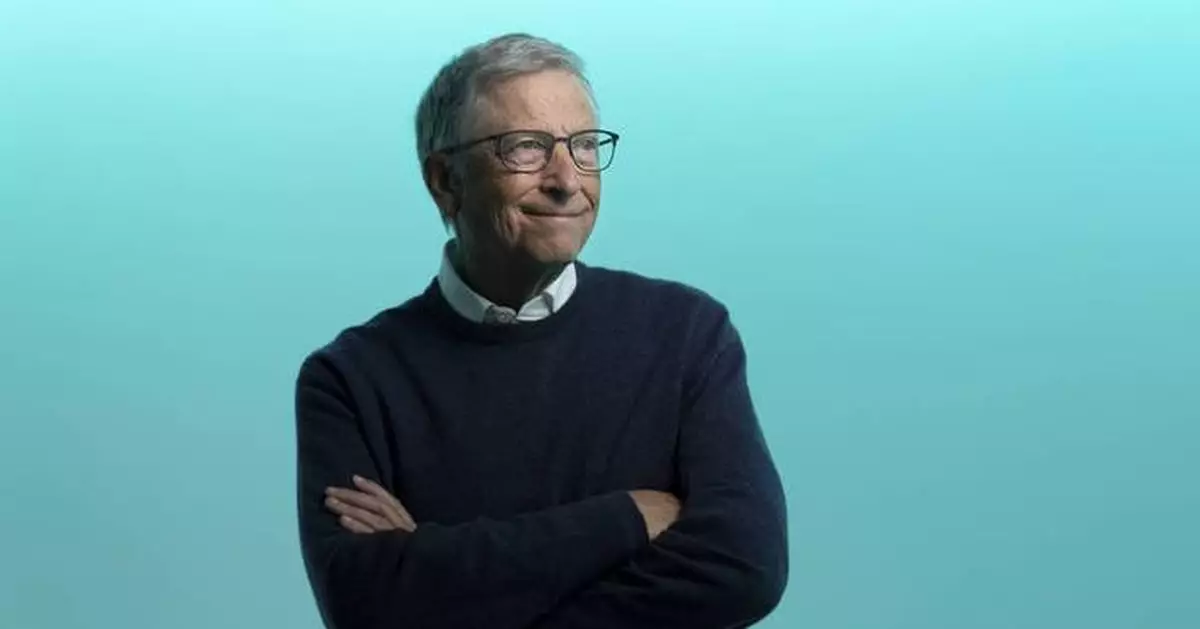
Bill Gates speaks during an interview with The Associated Press in Indian Wells, Calif., Wednesday, Jan. 8, 2025. (AP Photo/Jae C. Hong)
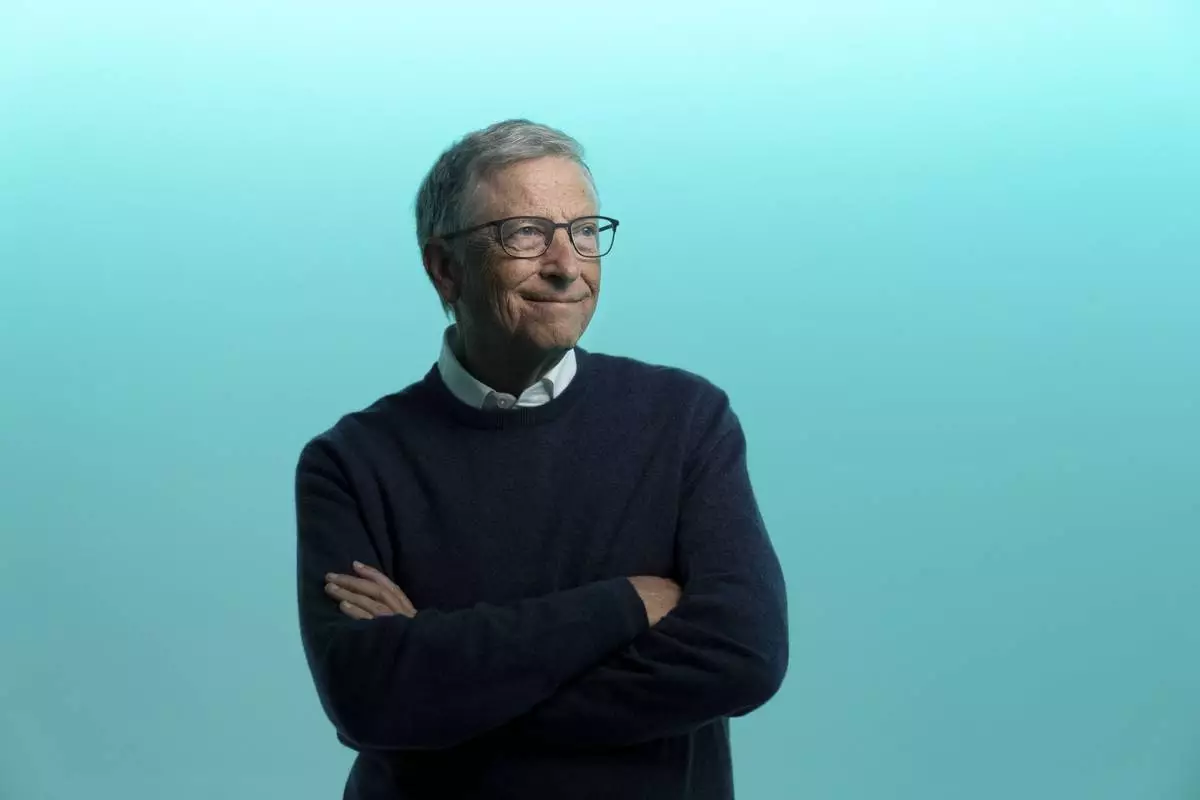
Bill Gates stands for a photo after an interview with The Associated Press in Indian Wells, Calif., Wednesday, Jan. 8, 2025. (AP Photo/Jae C. Hong)
TALLINN, Estonia (AP) — The only official document human rights advocate Uladzimir Labkovich had with him when he was suddenly released from a Belarus prison, blindfolded and driven to neighboring Ukraine was a piece of paper with his name and mugshot on it.
“After four and half years of abuse in prison, I was thrown out of my own country without a passport or valid documents,” Labkovich told The Associated Press by phone from Ukraine on Wednesday. “This is yet another dirty trick by the Belarusian authorities, who continue to make our lives difficult.”
Labkovich, 47, was one of 123 prisoners released by Belarus on Dec. 13 in exchange for the U.S. lifting some trade sanctions on the authoritarian government of President Alexander Lukashenko. All but nine were taken to Ukraine; the rest — including Nobel Peace Prize laureate Ales Bialiatski — were driven to Lithuania.
A close ally of Russia, Lukashenko has ruled his nation of 9.5 million with an iron fist for over three decades. Belarus has faced years of Western isolation and sanctions for its crackdown on human rights and for allowing Moscow to use its territory in the 2022 invasion of Ukraine.
Recently, Lukashenko has sought better relations with the West, releasing hundreds of prisoners since July 2024.
But in a final act of indignity and repression, the newly freed prisoners often are not told they are being deported without passports or other identity papers. They must rebuild their lives abroad, facing bureaucratic obstacles without any help from their homeland.
Because he was blindfolded, Labkovich said he and others could only tell they were heading south. At least 18 prisoners taken to Ukraine — including Labkovich and Belarusian opposition figures Vitkar Babaryka and Maria Kolesnikova — had no documents with them, according to rights advocates. Germany has promised to provide shelter to Babaryka and Kolesnikova.
“I dream of hugging my three children and wife in (the Lithuanian capital) Vilnius, but instead I have to deal with absurd bureaucratic procedures,” Labkovich said.
Belarusian opposition leader Sviatlana Tsikhanouskaya, who fled the country in 2020, told AP in written comments that the way the prisoners were taken out of Belarus was “a forced deportation in violation of all international norms and regulations,” adding it was inhumane treatment.
“Even after pardoning people, Lukashenko continues to retaliate against them,” Tsikhanouskaya said. “They bar people from staying in the country, they forcibly drive them out of Belarus without documents in order to humiliate them even further.”
In September, Lukashenko pardoned more than 50 political prisoners who were taken to the Lithuanian border.
One of them, prominent opposition activist Mikola Statkevich refused to leave Belarus. The 69-year-old, who called the government’s actions a “forced deportation,” pushed his way out of the bus and stayed for several hours in the no-man’s land between the borders before being taken away by Belarusian police and returned to prison.
Fourteen others who had crossed into Lithuania from the September release didn't have passports. Freed activist Mikalai Dziadok said Belarusian security operatives tore up his passport in front of him. Freed journalist Ihar Losik said all of his papers — including diaries — were confiscated.
“My passport was simply stolen. We came here (to Lithuania) — no one had passports. They took photos, all papers, the verdict, notebooks — they took everything,” Losik said.
Nils Muižnieks, the U.N. special rapporteur on human rights in Belarus, described what happened to the prisoners as “not pardons, but forced exile.”
“These people were looking forward to returning to their homes and families," he said in a statement. "Instead, they were expelled from the country, left without means of subsistence and, in some cases, stripped of identity documents.”
One activist group has raised more than 245,000 euros (about $278,000) for the released prisoners, and Tsikhanouskaya said she's asked Western governments for help.
“People went through real hell, and now we are working together to help them and facilitate their legalization and settlement, engaging all contacts with both American and European allies," she said.
Bialiatski, Labkovich and five other members of Viasna, Belarus' oldest and most prominent rights group, were arrested in Lukashenko's crackdown on mass protests after a 2020 election that kept him in power and was denounced as rigged by the opposition and the West. Tens of thousands were arrested, with many brutally beaten, while hundreds of thousands fled abroad.
Along with Bialiatski, Labkovich was accused of “financing public unrest” and helping those affected by the crackdown. Bialiatski was sentenced to 10 years in prison; Labkovich got seven.
Prison authorities tried to coerce Labkovich to cooperate and launched two more criminal cases against him — refusing to obey orders of prison officials and high treason, which could have added another 15 years to his sentence.
Labkovich said he spent more than 200 days in solitary confinement and “and lost count of the nights on the concrete floor in the icy cell.”
Two other Viasna activists — Marfa Rabkova and Valiantsin Stefanovic — remain imprisoned. Labkovich believes they and others are still held so that authorities “can influence the behavior and statements of those released.”
Babaryka, 62, recalled that while in prison in 2023, he started having fainting episodes and once woke up with a broken rib, torn lung, pneumonia and 23 cuts in his scalp. He said he didn't know what had happened while he was unconscious and didn't want to elaborate on the conditions behind bars.
“I'll tell you the truth: Those who come out shouldn't talk about how they were and what they felt, because many people remain inside the system and depending on what they say, they will generally get disadvantages rather than advantages,” Babaryka said Sunday in Chernihiv, Ukraine.
His 35-year-old son, Eduard Babaryka, is among more than 1,100 political prisoners still held in Belarus, serving a 10-year sentence on charges of organizing mass unrest.
While prisoner releases have become more regular recently, Lukashenko's crackdown continues, targeting critics wherever they live. Belarusians living abroad cannot renew their passports or get new ones at embassies and consulates, making life difficult for thousands who fled the repression.
Opposition activists, rights advocates and journalists in exile face criminal trials in absentia. Authorities seize their apartments and other property, with courts rejecting attempts to contest those moves.
Activists say there is a “revolving door” of prisoner releases and arrests. Since the Dec. 13 release, Viasna declared seven more people to be political prisoners, and 176 since September.
Despite this month's pardons, Amnesty International's director for Eastern Europe Marie Struthers urged people not to forget those whose freedom "is long overdue.”
“If this release is a part of political bargain, it only underscores the Belarusian authorities’ cynical treatment of people as pawns,” she said.
Earlier this week, activist Aliaksandr Zdaravennau, 46, of the southern city of Rechytsa, was convicted of high treason and participating in extremist activities and sentenced to 10 years. Subway engineer Yury Karnitski, 44, and shop clerk Alena Hartanovich, 52, were added to the Interior Ministry's list of extremists.
“While the prisoner releases are certainly a relief, there are no signs from Belarusian authorities of a change in the policy or practice of repression," Muižnieks said. “Belarus continues to rank among the countries with the highest number of political prisoners per capita.”
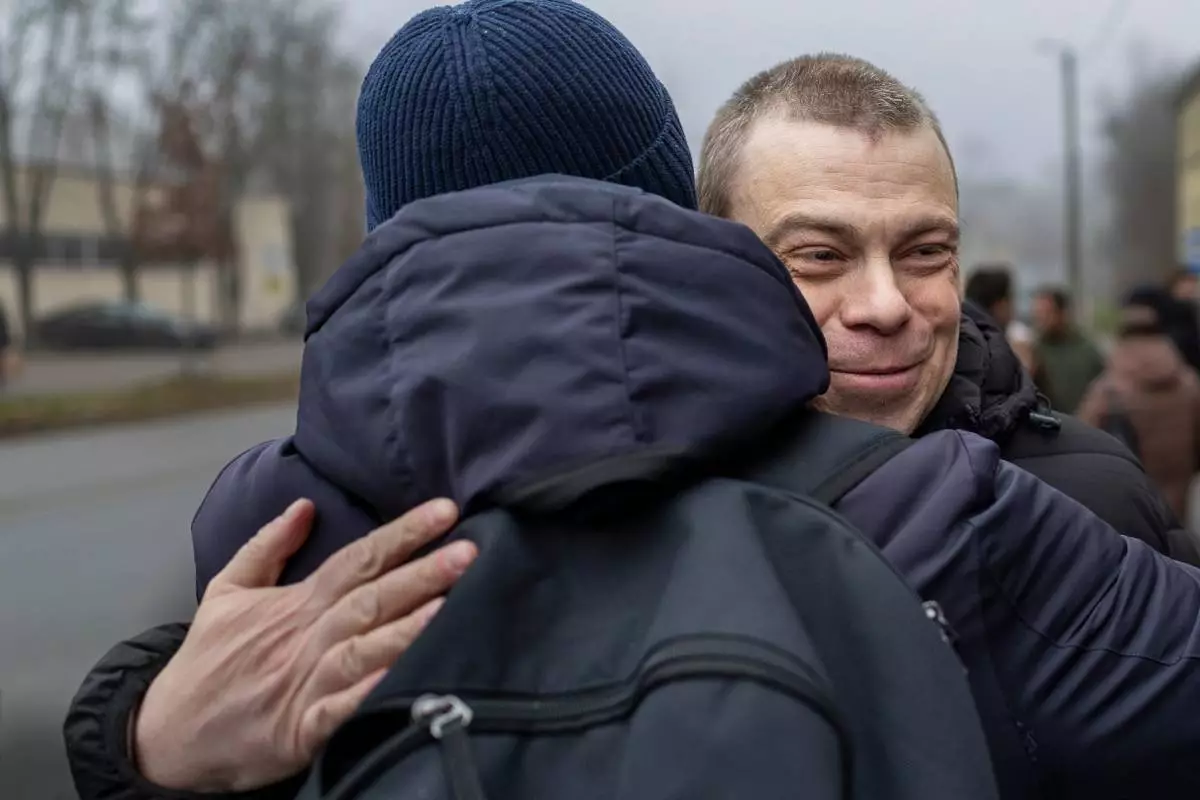
Uladzimir Labkovich, one of the released Belarusian prisoners embraces a relative as he arrives in Vilnius, Lithuania, Thursday, Dec. 18, 2025. (AP Photo/Mindaugas Kulbis)
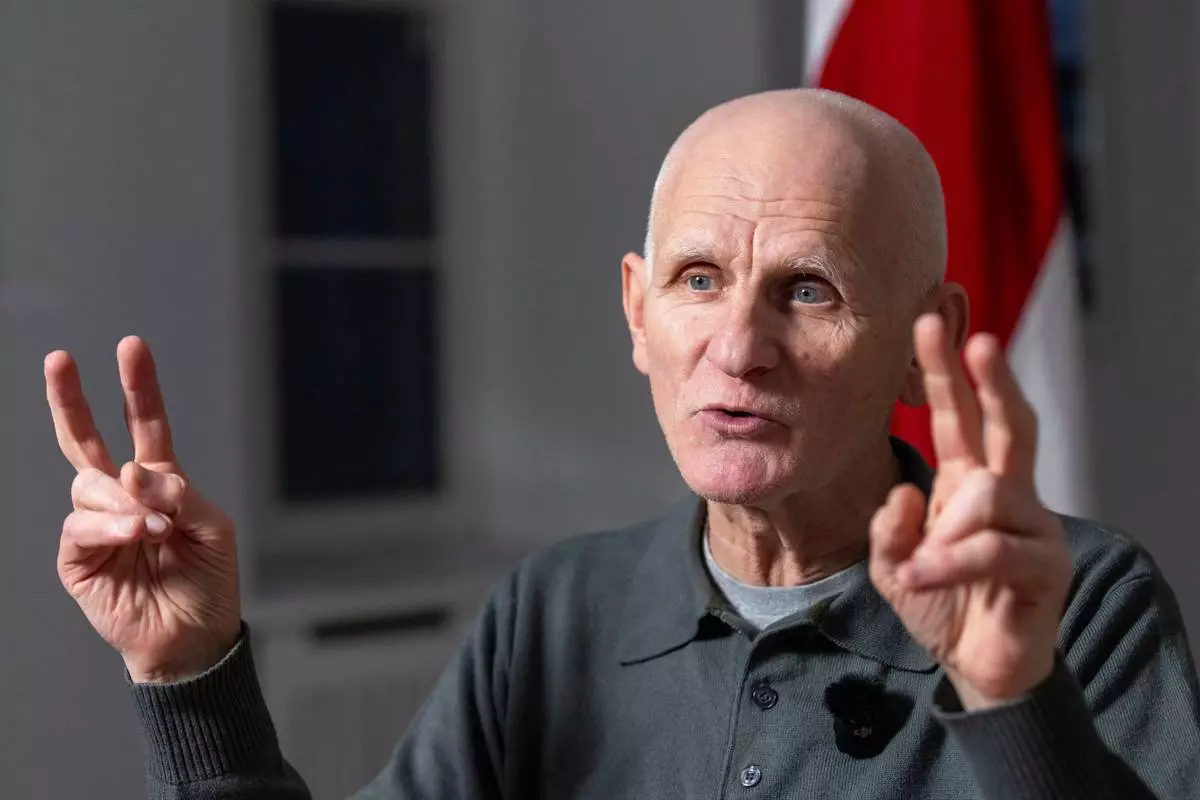
Nobel Peace Prize laureate Ales Bialiatski, one of the Belarusian prisoners released on Saturday, gestures during an interview with the Associated Press in Vilnius, Lithuania, on Sunday, Dec. 14, 2025. (AP Photo/Mindaugas Kulbis)
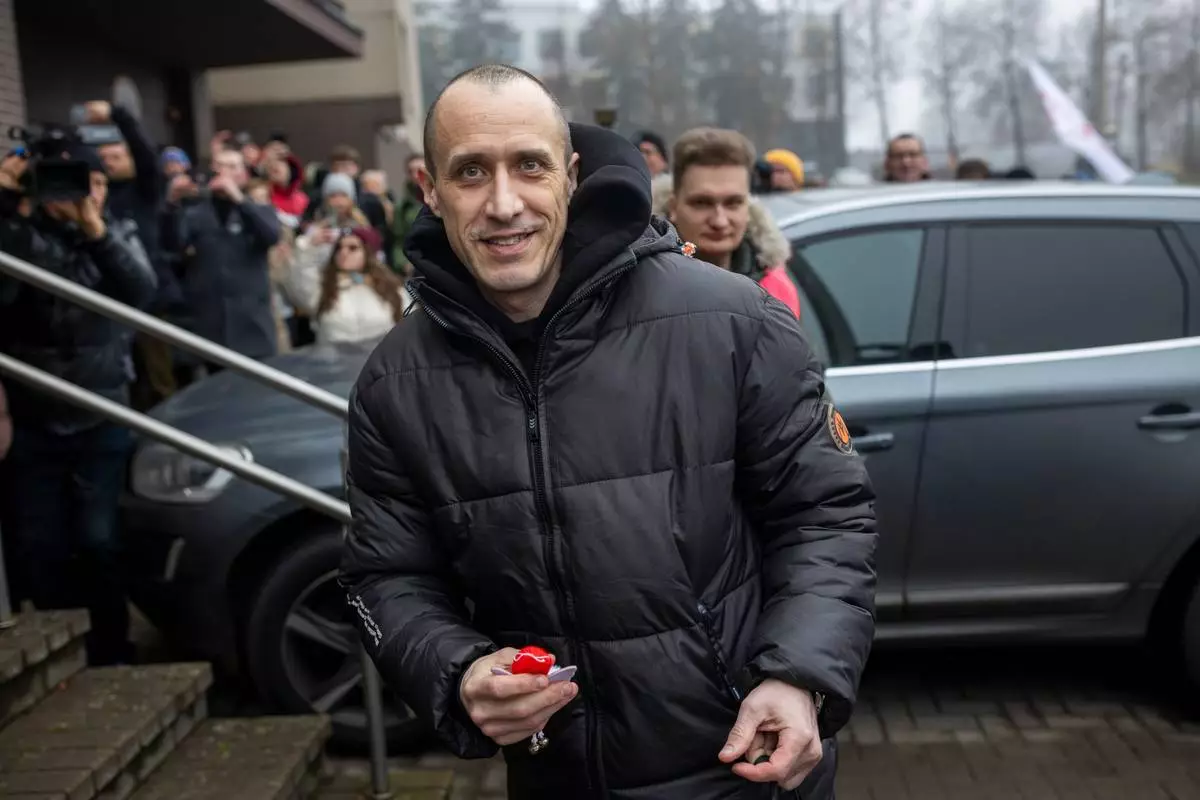
Pavel Seviarynets, one of the released Belarusian prisoners smiles as he arrives in Vilnius, Lithuania, Thursday, Dec. 18, 2025. (AP Photo/Mindaugas Kulbis)
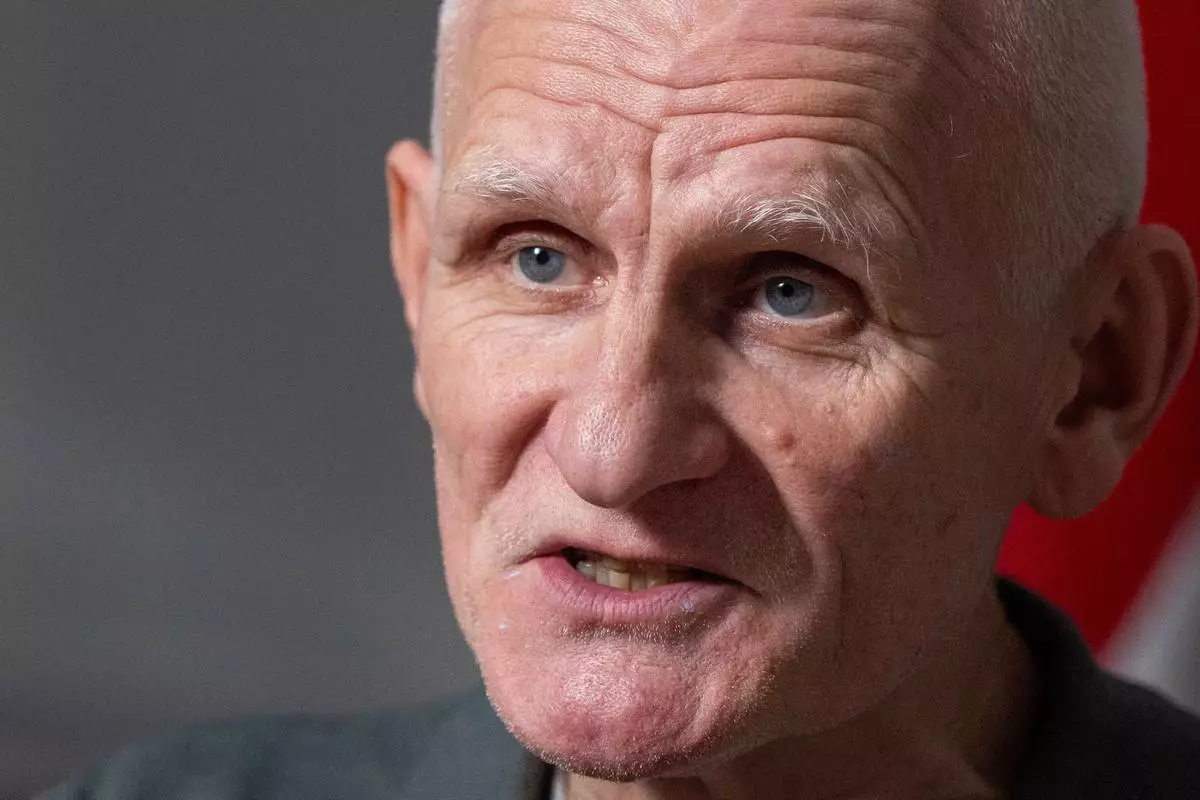
Nobel Peace Prize laureate Ales Bialiatski, one of the Belarusian prisoners released on Saturday, speaks during an interview with the Associated Press in Vilnius, Lithuania, on Sunday, Dec. 14, 2025. (AP Photo/Mindaugas Kulbis)

Viktar Babaryka, key Belorussian opposition figure looks on during a joint press conference with Uladzimir Labkovich, human rights activist, Maria Kolesnikova, key Belorussian opposition figure and Alyaksandr Feduta, Belarusian politician after being released from detention in Belarus, in Chernihiv, Ukraine, Sunday, Dec. 14, 2025. (AP Photo/Evgeniy Maloletka)
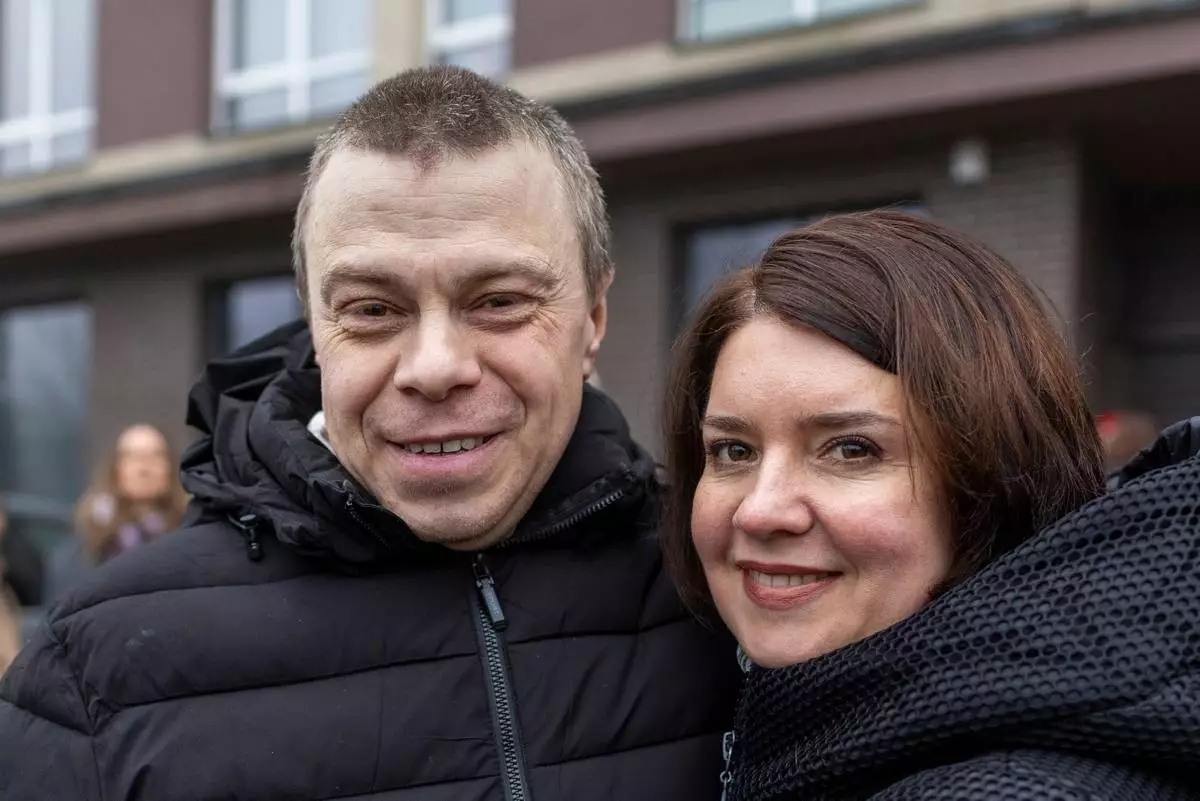
Uladzimir Labkovich, one of the released Belarusian prisoners and his wife Nina Labkovich smile as he arrives in Vilnius, Lithuania, Thursday, Dec. 18, 2025. (AP Photo/Mindaugas Kulbis)