LAKEWOOD RANCH, Fla.--(BUSINESS WIRE)--Feb 3, 2025--
DunhamTrimmer, the global leader in business intelligence for the biocontrol and biostimulants industries, has released its 2024 Global Value-Added Fertilizer Market Report. Spanning more than 500 pages, the groundbreaking Report focuses on the emerging science and business opportunity of a global value-added fertilizer (VAF) industry priced at nearly $20 billion.
This press release features multimedia. View the full release here: https://www.businesswire.com/news/home/20250203916972/en/
Value-added fertilizers are combinations of biostimulants and premium soluble fertilizers brought together in performance-enhancing formulations to boost crop productivity. Their unique properties, precise rates, and application timing can greatly reduce waste and lower environmental impact while positively impacting crop performance.
DunhamTrimmer Chief Technical Officer Vatren Jurin, lead author of the Report, says the rapid growth of the industry centers around the adaptability of the technologies, which delivers tremendous value to the formulator, distribution partner, and end-user.
“The ability to customize has been one of the key VAF growth drivers,” Jurin says. “VAFs allow companies to differentiate by developing tailor-made products for specific crops and regions. They can then use these products to tout their superior science and the agronomic value of what they’re inventing. It’s a good way to stand out in a crowded market.”
DunhamTrimmer’s 2024 Global Value-Added Fertilizer Market Report features more than 800 charts and graphs interpreting global, regional, and local trends. It unpacks the technical aspects of VAF product development and positioning supported by the unparalleled market data DunhamTrimmer is known for.
The Report includes dedicated sections on Market Trends and Drivers, the Global Regulatory Landscape, Global and Regional Market Values & Volumes, 5 Global Regions, 26 Key Countries and subregions, 9 Crop Groups, VAF-Treated Hectares by Crop, Application Type Shares by Crop by Country, Premium Soluble Fertilizers, and Leading Companies scored with the DunhamTrimmer Consolidated Strength Rating (CSR) system.
For more information visit https://dunhamtrimmer.com/reports/.

DunhamTrimmer Global Value-Added Fertilizer Market Report (Photo: Business Wire)
ISLAMABAD (AP) — Pakistanis faced record fuel price increases Friday, as petrol and diesel prices rose by up to 54% driven by the war in the Middle East that has caused global oil prices to surge.
The increase adds pressure to a cash-strapped nation already grappling with high inflation, as economists warned the hike would push up food prices and living costs.
Pakistan's Petroleum Minister Pervez Malik said late Thursday that the increase was “unavoidable.” He said the government was compelled to raise petrol prices by 137 rupees (49 cents) per liter, following a 20% increase last month.
Diesel prices were increased overnight by 184.49 rupees (67 cents) per liter, a rise of about 54.9%.
Malik said the adjustments were “necessary and unavoidable” in line with global market trends, adding that the government plans to subsidize fuel for motorcyclists, though a mechanism has yet to be finalized. Motorcycles overwhelmingly outnumber cars in Pakistan, accounting for nearly 78% of all vehicles on the road, as they are among the most affordable modes of commuting.
On Friday, Interior Minister Mohsin Naqvi said public transport in Islamabad will be free for 30 days from Saturday on the prime minister’s instructions, and his ministry will cover the fuel costs.
Pakistan in recent weeks has used alternate routes to get oil due to the closure of the Strait of Hormuz.
The unprecedented price increase came after Prime Minister Shehbaz Sharif said regional instability had affected Pakistan’s fragile economy. He said the government was pursuing diplomatic efforts to ease tensions and encourage dialogue between the parties involved.
Pakistan has offered to host peace talks, though no dates have been announced for any such meetings in Islamabad.
However, for many citizens, the impact of the ongoing tensions and recent fuel price increases was immediate, with households and commuters bracing for higher transportation and daily living costs.
“It’s not just gas,” said Mohammad Zain Alvi, a commuter waiting for a bus in Islamabad. “Life was already very difficult for us, and now everything will become more expensive.”
Across major cities Friday, fuel stations were unusually quiet and traffic noticeably lighter as many people stayed home, unable or unwilling to bear the higher costs. At some stations, customers stood in silence after hearing the new rates.
“We have nothing to do with the war,” said Azhar Ali, a junior government employee who uses an old motorcycle to commute from Rawalpindi to Islamabad. “Why are we being made to pay for it? This will affect everything — transport, food, our entire lives.”
In the northwestern city of Peshawar, motorcycle rider Sher Khan said he was uncertain how he would continue working after the spike in fuel prices. He delivers food in the capital of Khyber Pakhtunkhwa province.
“I earn so little for each ride, and now most of it will go into fuel,” he told The Associated Press.
Jabran Sarfraz, a prominent economist in Karachi, said the immediate burden would fall on consumers, warning that higher fuel prices would raise the cost of daily necessities and disproportionately affect lower-income groups. He said the duration of the impact would depend on how quickly global prices ease.
__
Khan reported from Peshawar, Pakistan.
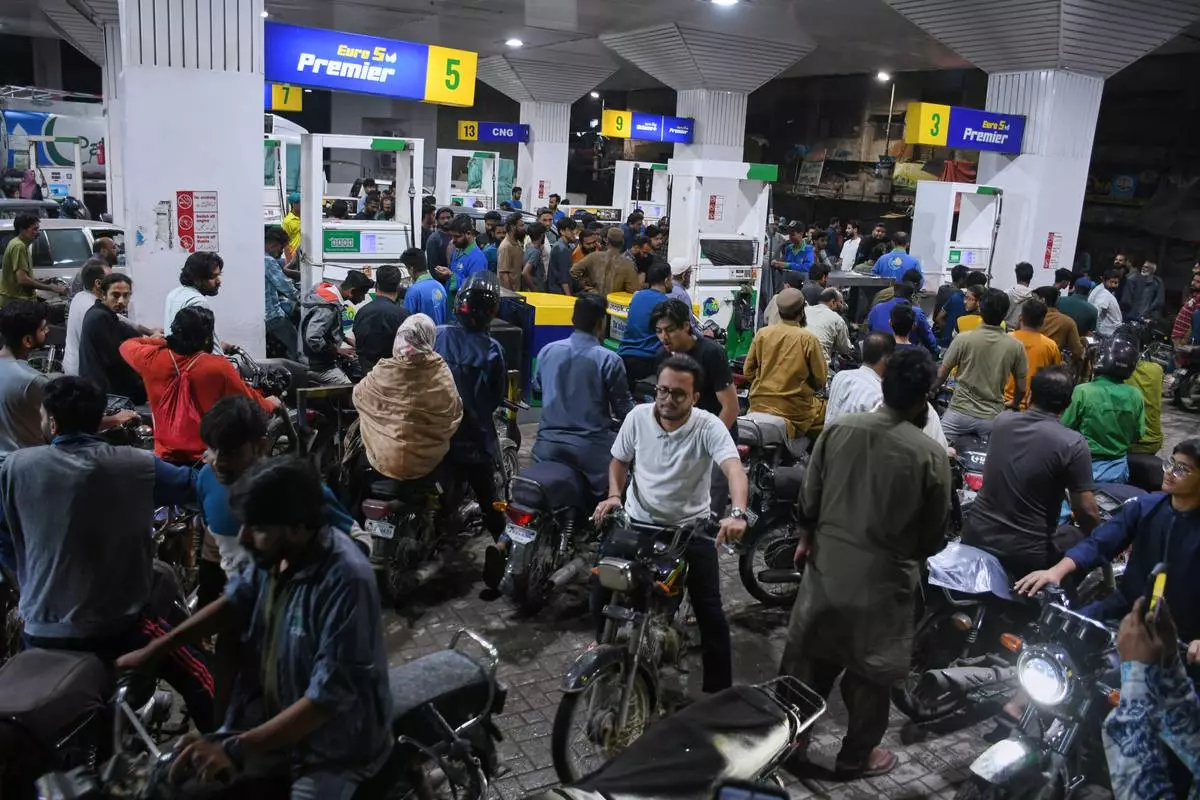
Motorcyclists crowd into a filling station as they wait their turn to buy fuel, in Karachi, Pakistan, Thursday, April 2, 2026. (AP Photo/Ali Raza)
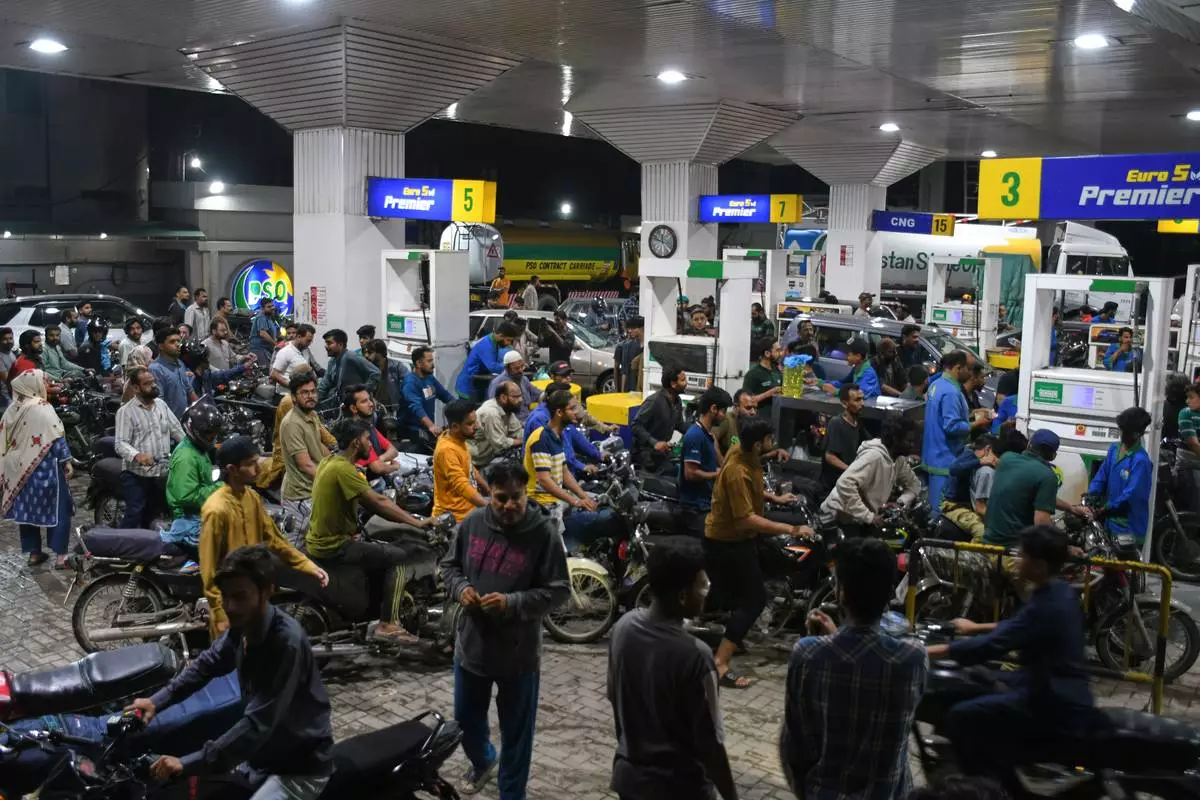
Motorcyclists crowd into a filling station as they wait their turn to buy fuel, in Karachi, Pakistan, Thursday, April 2, 2026. (AP Photo/Ali Raza)
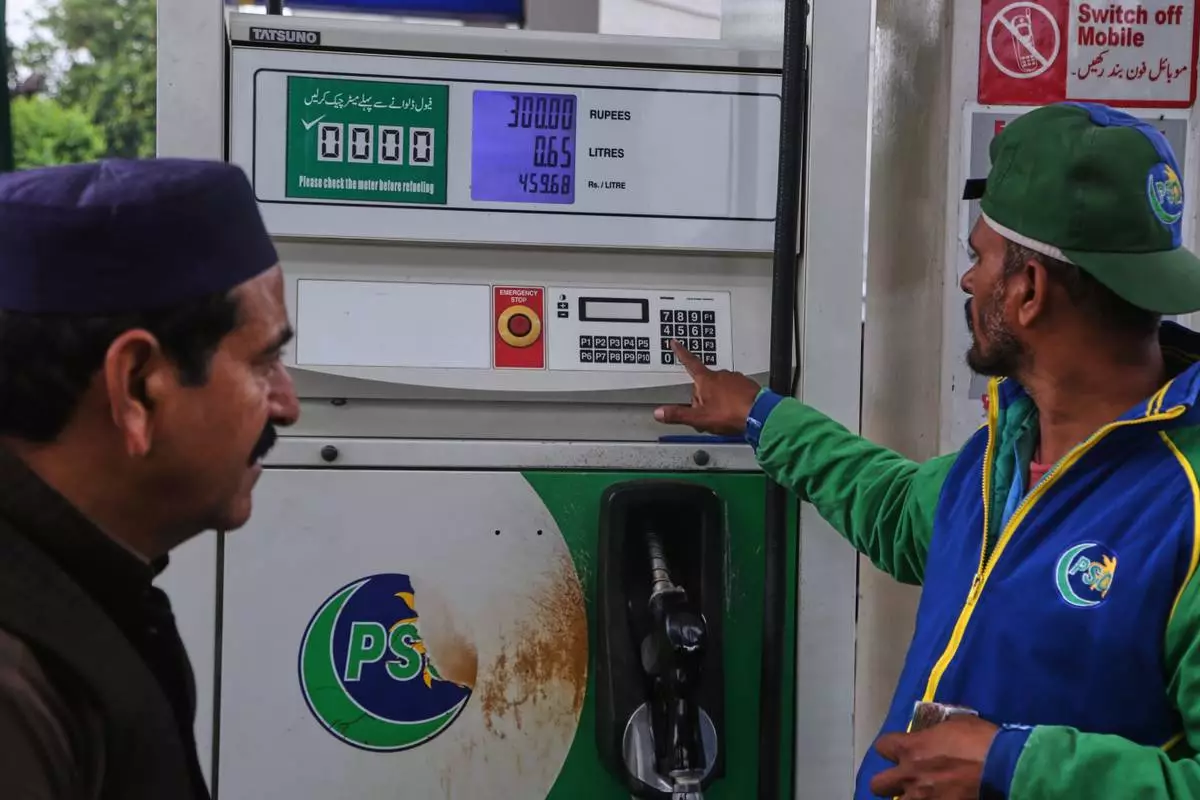
A motorcyclist looks at the display at a fuel station as he buys fuel after the government increased fuel prices amid surging global oil prices due to the Iran war, in Peshawar, Pakistan, Friday, April 3, 2026. (AP Photo/Muhammad Sajjad)
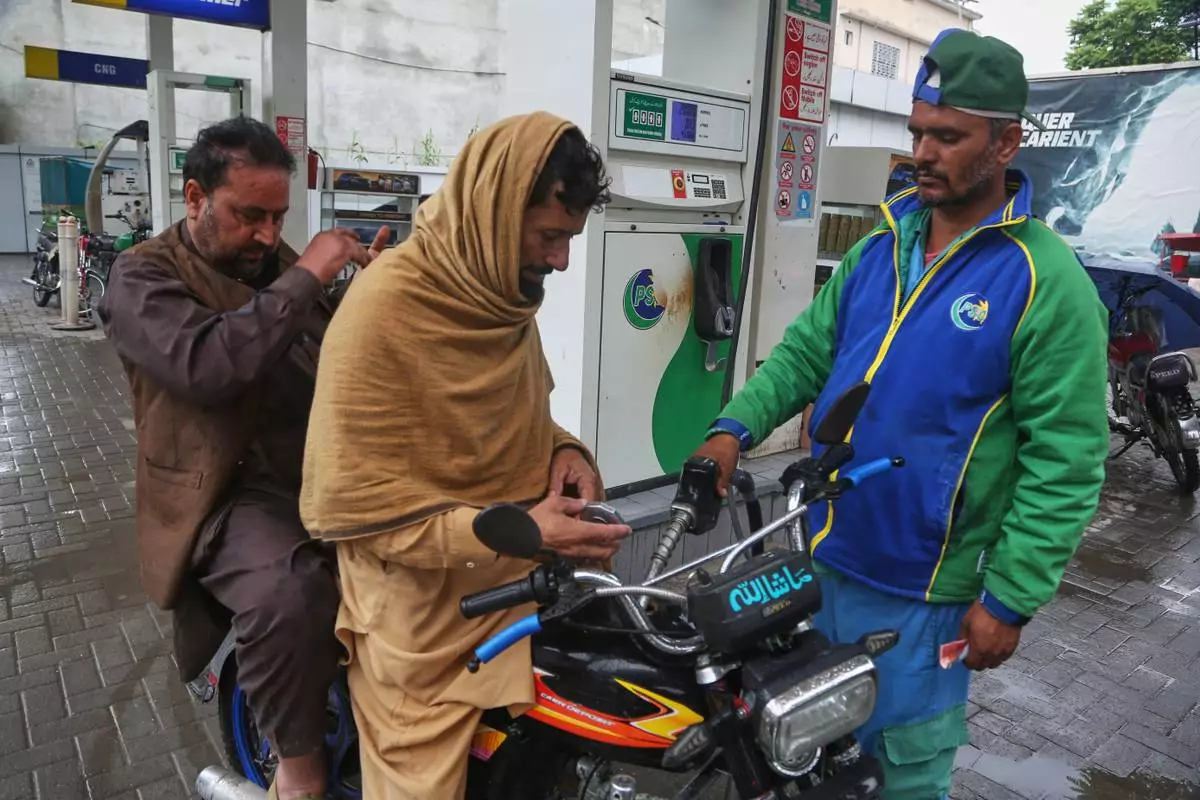
A motorcyclist buys fuel after the government increased fuel prices amid surging global oil prices due to the Iran war, in Peshawar, Pakistan, Friday, April 3, 2026. (AP Photo/Muhammad Sajjad)
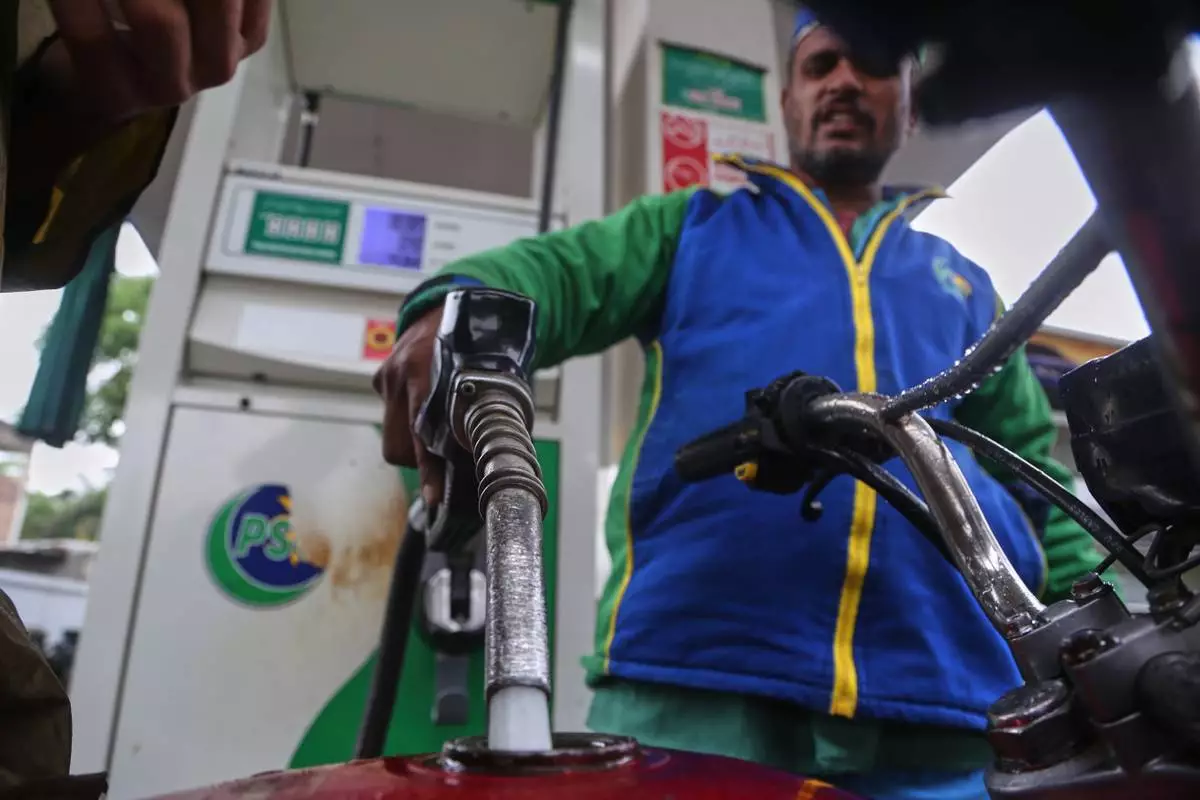
A worker fills fuel into a motorbike after the government increased fuel prices amid surging global oil prices due to the Iran war, in Peshawar, Pakistan, Friday, April 3, 2026. (AP Photo/Muhammad Sajjad)