Skip to Content Facebook Feature Image

Thousands flee Greece's Santorini Island after earthquakes

China

China

China

Thousands flee Greece's Santorini Island after earthquakes

2025-02-05 17:25 Last Updated At:02-06 00:27

Thousands of people have fled the Greek island of Santorini by sea and air, after hundreds of earthquakes shook the volcanic island since Jan 28.

Home to around 20,000 permanent residents, Santorini attracts over 3 million tourists annually for its spectacular cliffside views and dormant volcano. Even in the off-season, groups of visitors were on the island when the tremors struck.

Flights and ferries were fully booked on Sunday and Monday, prompting airlines and ferry companies to add extra services to accommodate travelers.

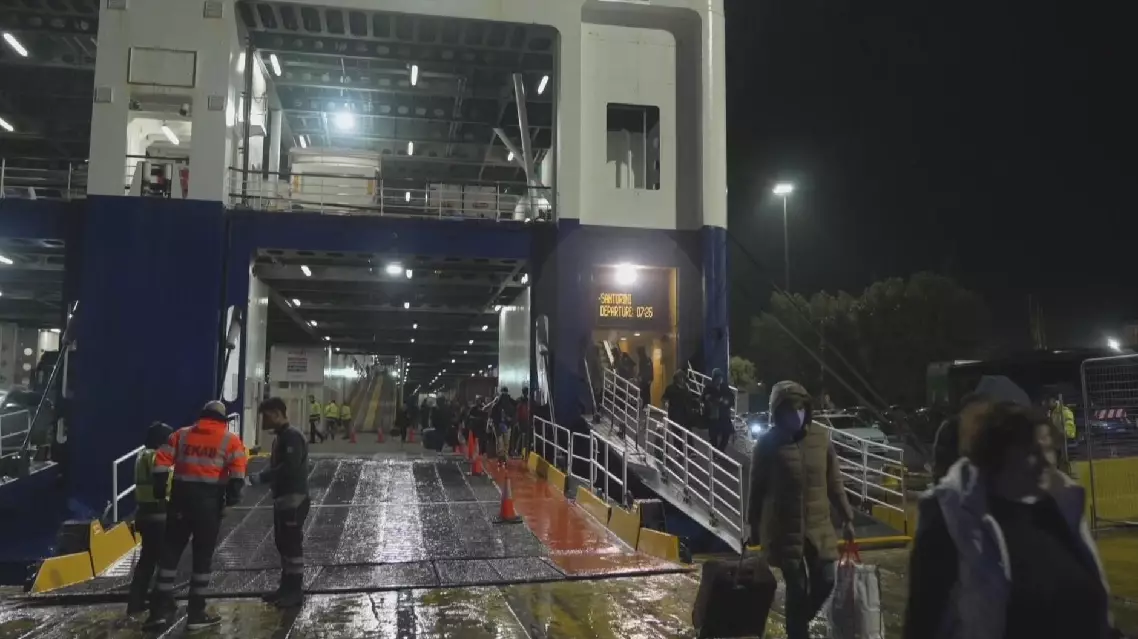
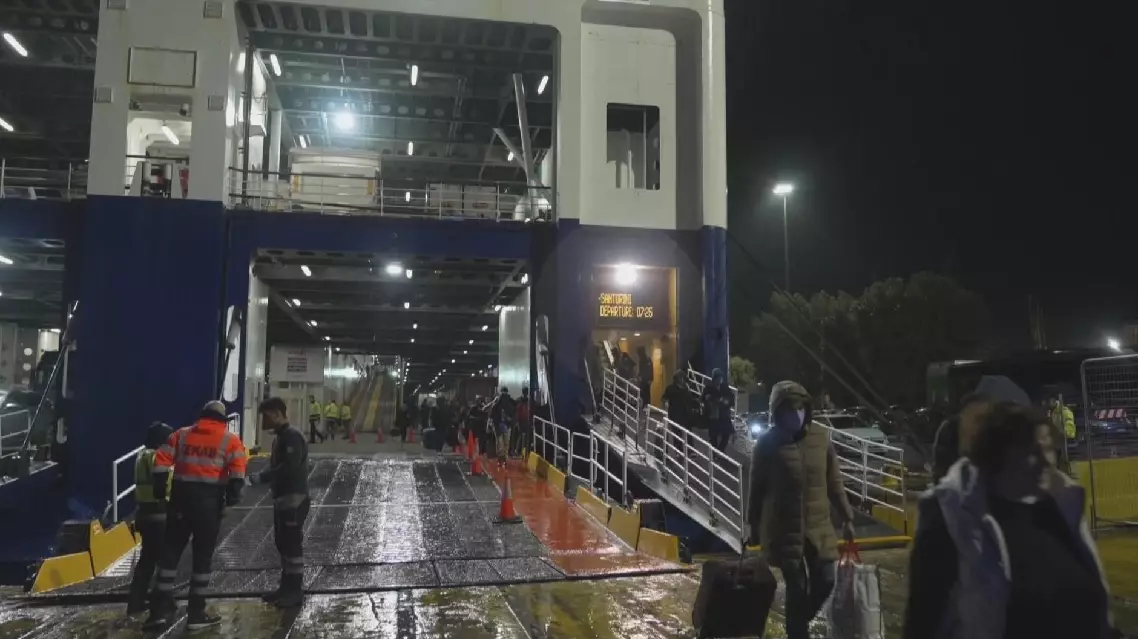
At the Port of Piraeus in Athens, ferries from Santorini have been arriving throughout the night. There has been a steady flow of exhausted and anxious passengers coming off the ferries, describing an eerie, constant shaking that wouldn't stop.

"We came here because the strong tremors started two, three, four days ago. And just a little while ago, there was a 5.1-magnitude tremor. My little one is in a strange state of shock, and things are pretty dangerous," said a woman from Santorini.

"I felt terror. At first, I couldn't believe it because we've never experienced anything like this before," said another woman from Santorini.

Similar scenes have been seen at the Athens airport.

"Every five minutes we were shaking, three times an emergency text was sent out for us to evacuate. The last text we received was because of a larger tremor. That's when we decided to leave. And while we were at the airport an even larger tremor took place," said an elderly woman from Santorini.

This surge in seismic activity has led authorities to implement precautionary measures. The Climate Crisis and Civil Protection Ministry has ordered schools closed for the week and advised people to avoid large indoor gatherings and stay clear of cliffs in certain areas.

"In just a few days, we've recorded 50 earthquakes over magnitude 4, and in total, more than 300 tremors have been detected in the region. This level of activity is unusual, even on a global scale," said Vassilis Karastathis, research director of the Institute of Geodynamics of the National Observatory of Athens.

With more than 300 tremors in just 10 days, scientists are closely monitoring, tracking patterns, and trying to figure out what's coming next.

"There are two possible scenarios. One is that the activity continues at the same rate and magnitude for some time before gradually subsiding. What we need to see is a decrease in daily tremors, but that hasn't happened yet. The second scenario is that a larger earthquake occurs, after which the phenomenon begins to fade. Right now, we don't have enough data to predict which scenario will unfold," he said.
Thousands flee Greece's Santorini Island after earthquakes
Thousands flee Greece's Santorini Island after earthquakes
Thousands flee Greece's Santorini Island after earthquakes

Thousands flee Greece's Santorini Island after earthquakes
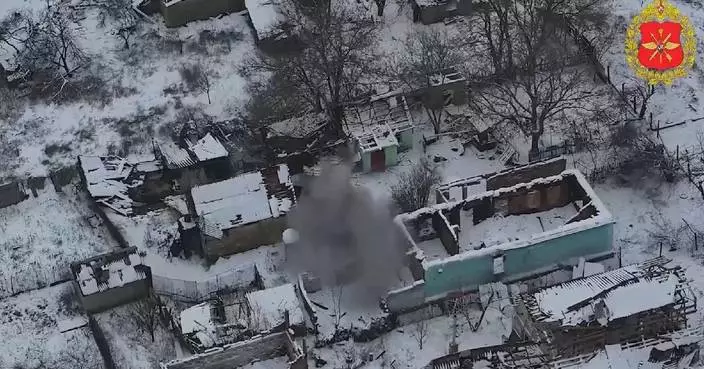
A major port in northern Venezuela came under U.S. airstrikes in the early hours of January 3, which caused extensive damage to civilian infrastructure, destroyed critical medical supplies in a warehouse, and severely impacted centuries-old cultural heritage sites, according to local residents.

The La Guaira Port, a vital hub for imports that support daily life in the region, was heavily damaged during the attack.

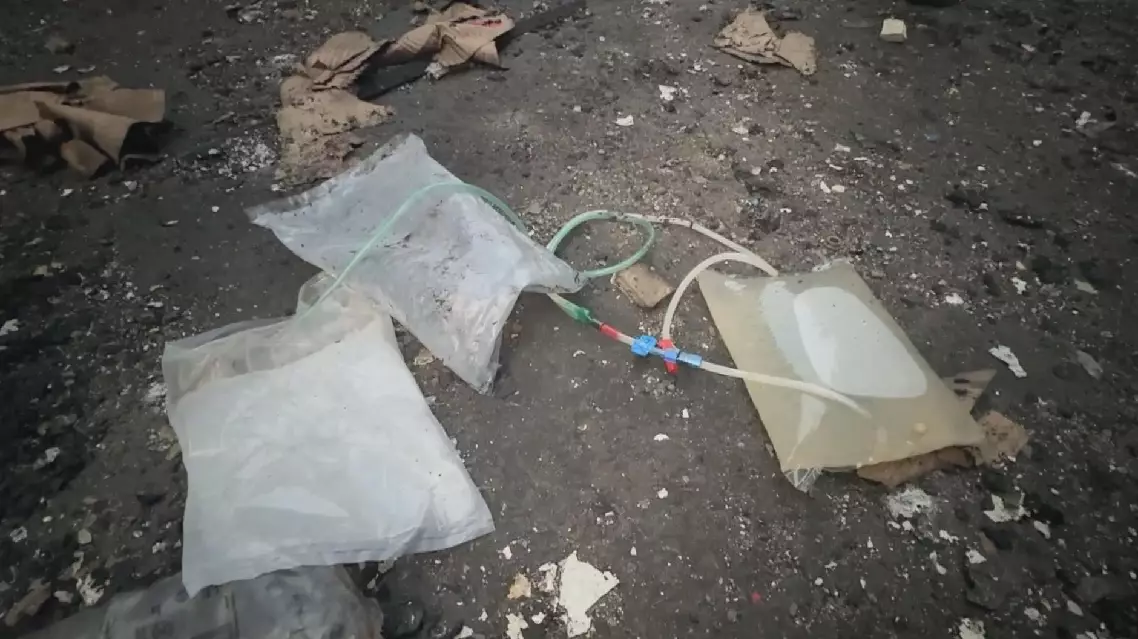
Large quantities of medical supplies stored at the port were destroyed. A historic cultural building dating back for some 300 years was also badly damaged by the bombardment.

Residents living near the port recalled the terrifying scenes as explosions shook nearby neighborhoods.

Humberto Bolivar, who lives in a community separated from the port by only a main road, said the blast waves shattered his home's windows, while stray shrapnel struck the water tank on his roof. According to reports, three missiles were fired at the port that night.

Bolivar said that beyond material losses, he is most concerned about the psychological impact on his children, who remain too frightened to leave their home days after the attack.

"The United States invaded our country. The children were frightened. This is not good for them, because it leaves some children with psychological trauma. They do not want to go to school or leave the house, because they are afraid that something worse might happen. We truly do not want this to happen to our country," he said.

Apart from civilian facilities, local cultural heritage site was also affected.

The La Guaira state government building, a structure with nearly 300 years of history and once served as the site of Venezuela's first national customs office, was struck by the force of the explosions.

Windows of the building were shattered, and furniture scattered across the floor.

"As people of La Guaira, we feel deep pain. Our cultural heritage has been bombed. We are living in constant anxiety and suffering, and life can no longer be the same as it was before," said a local named Henry Cumares.

The U.S. side has claimed the airstrikes targeted warehouses allegedly used to store narcotics. However, locals refuted such accusation.

"According to what Donald Trump said, they bombed this place using the excuse that the warehouses here were used to store drugs at the port. But based on the video released by our governor, these warehouses that were burned contained medicine for kidney patients and foods. Many people depend on these supplies to survive. I think the bombing is extremely despicable," said a local resident named Alejandro Capriles.

US strike hits Venezuelan port, wrecking medical supplies, heritage building

US strike hits Venezuelan port, wrecking medical supplies, heritage building

Recommended Articles