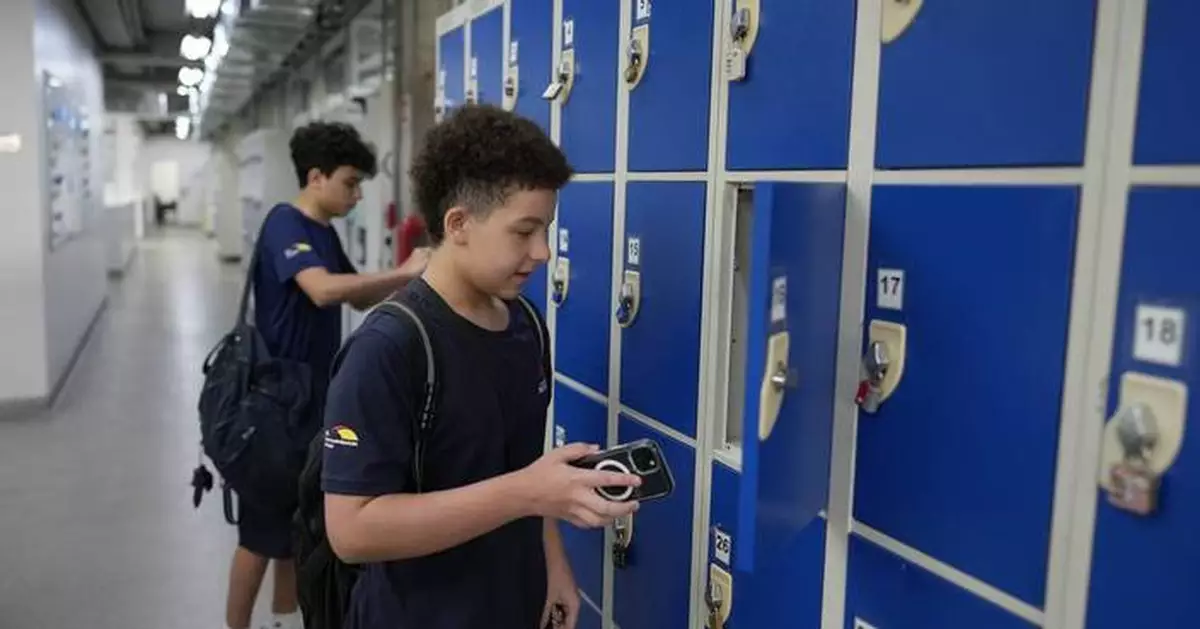
SAO PAULO (AP) — Brazilian students returned to class this week with a new task: staying away from their smartphones as a new law restricting their use in schools took effect.
President Luiz Inácio Lula da Silva signed a bill in January limiting smartphone access at schools, in line with a trend seen in the U.S. and Europe. It applies to public and private schools, and applies to classrooms and the halls.
Click to Gallery
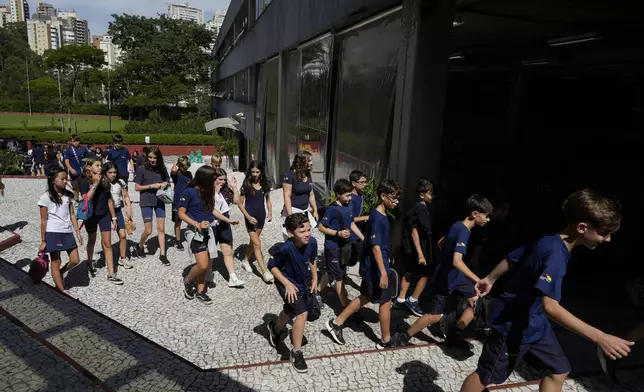
Students return to class after recess during their first week in school under a new law restricting the use mobile phones in school classrooms at Porto Seguro School in Sao Paulo, Thursday, Feb. 6, 2025. (AP Photo/Andre Penner)
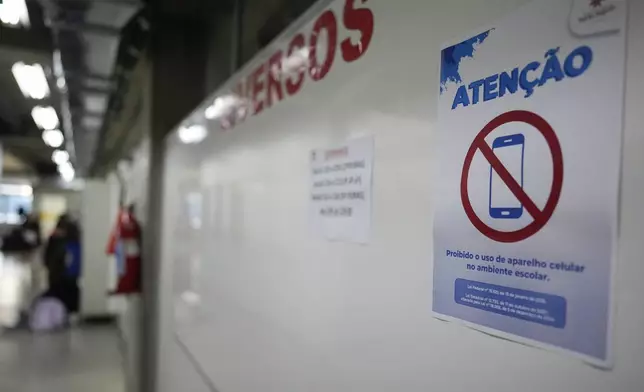
A sign reads in Portuguese " The use of cell phones in the school is prohibited" at Porto Seguro school in Sao Paulo, Thursday, Feb. 6, 2025. (AP Photo/Andre Penner)
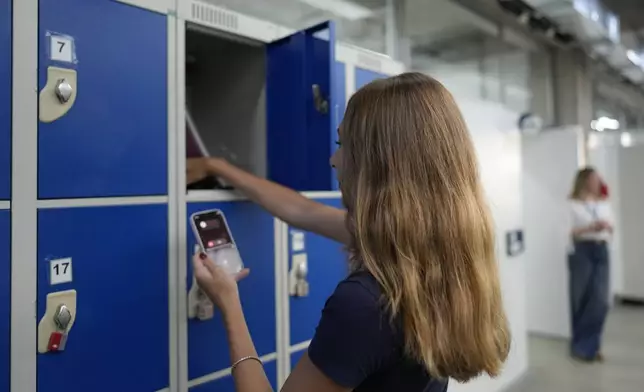
A student stores her mobile phone in a locker at Porto Seguro School in Sao Paulo, Thursday, Feb. 6, 2025, before heading to class under a new law restricting their use in schools. (AP Photo/Andre Penner)
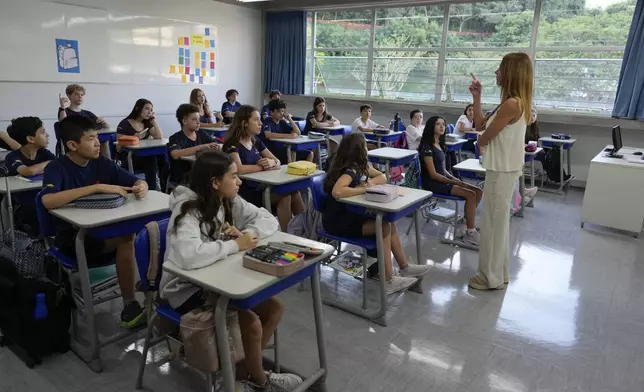
Students attend a class at Porto Seguro School on their first week at school under a new law that forbids the use of mobile phones on campus, in Sao Paulo, Thursday, Feb. 6, 2025. (AP Photo/Andre Penner)
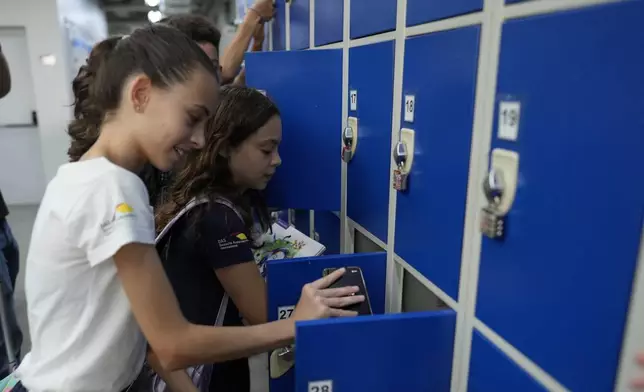
Students store their mobile phones in lockers at Porto Seguro School in Sao Paulo, Thursday, Feb. 6, 2025, as they head to class under a new law that forbids their use in schools. (AP Photo/Andre Penner)
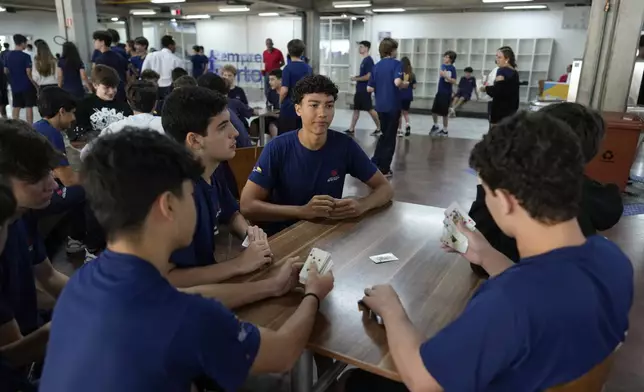
Students play cards during recess in their first week at school under a new law that forbids the use of mobile phones on campus, at Porto Seguro School in Sao Paulo, Thursday, Feb. 6, 2025. (AP Photo/Andre Penner)
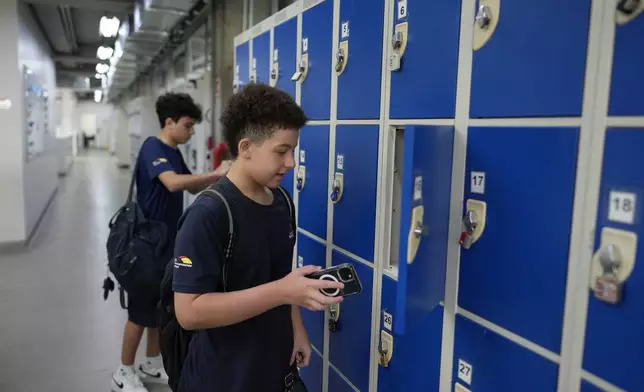
Students store their mobile phones in lockers as they head to class under a new law restricting their use on campus at Porto Seguro School in Sao Paulo, Thursday, Feb. 6, 2025.. (AP Photo/Andre Penner)
Phones are still allowed for educational purposes, with the teacher’s permission, and when needed for the student's accessibility and health. Schools can set their own guidelines, such as whether students can keep phones in backpacks or store them in lockers or designated baskets.
Before the federal law, most of Brazil's 26 states — including Rio de Janeiro, Maranhao and Goias — had already applied some restrictions to phone use in schools. As of 2023, nearly two-thirds of Brazilian schools had some limitations, with 28% banning them entirely, according to a survey last year by the Brazilian Internet Steering Committee.
But rules varied between states and between schools, and authorities and administrators struggled with enforcement.
That may have contributed to support for federal legislation from across the political spectrum — both allies of leftist Lula and the far-right former President Jair Bolsonaro. A survey released in October by Brazilian pollster Datafolha said that almost two-thirds of respondents wanted to ban smartphone use by children and teenagers at schools. More than three-quarters said those devices do more harm than good to their children.
Porto Seguro, a nearly 150-year-old private school in Sao Paulo, prohibited smartphones in classrooms last year and encouraged students to disconnect completely once a week. This year, it expanded its ban to include hallways, requiring students to keep their phones in lockers for the entire school day, including breaks.
“Students were having trouble concentrating," school principal Meire Nocito said in an interview Thursday. “There was also the issue of social isolation. Many students who used technology excessively would isolate themselves during breaks, interacting only through social media.”
“Banning cellphone use has helped create a space for social interaction, fostering relationships and teaching students to navigate conflicts, which are a natural part of human interactions. It has been very positive,” she added.
Brazil’s Ministry of Education said in a statement Monday that the restriction aims to protect students’ mental and physical health while promoting more rational use of technology.
In May, Fundacao Getulio Vargas, a leading think-tank and university, said Brazil had more smartphones than people, with 258 million devices for a population of 203 million Brazilians. Local market researchers said last year that Brazilians spend 9 hours and 13 minutes per day on screens, which is among one of the world’s highest rates of use.
Institutions, governments, parents and others have for years associated smartphone use by children with bullying, suicidal ideation, anxiety and loss of concentration necessary for learning. China moved last year to limit children’s use of smartphones, while France has in place a ban on smartphones in schools for kids aged six to 15.
Cell phone bans have gained traction across the United States, where eight states have passed laws or policies that ban or restrict cellphone use to try to curb student phone access and minimize distractions in classrooms.
An increasing number of parents across Europe who are concerned by evidence that smartphone use among young kids jeopardizes their safety and mental health.
A report published in September by the U.N.'s Educational, Scientific and Cultural Organization, or UNESCO, said one in four countries has already restricted the use of such devices at schools.
Meta chief executive Mark Zuckerberg apologized used a U.S. Senate hearing last year to apologize to parents of children exploited, bullied or driven to self harm via social media. He also noted Meta’s continued investments in “industrywide” efforts to protect children.
Mariana Waetge, a 13-year-old student at Porto Seguro, has owned a smartphone for five years. She uses it to communicate with friends and family and to find entertainment on social media, especially Instagram. Being forced to stay away from her phone made her find new ways to interact with friends, improved her focus and even strengthened her relationship with her family.
The restriction also helped "include people who didn’t have many friends and would use their phones to hide from making new friends or to avoid being out there,” she said in an interview. “Now they don’t have that option anymore. These people end up playing board games or reading books.”
AP videojournalist Thiago Mostazo contributed to this report.
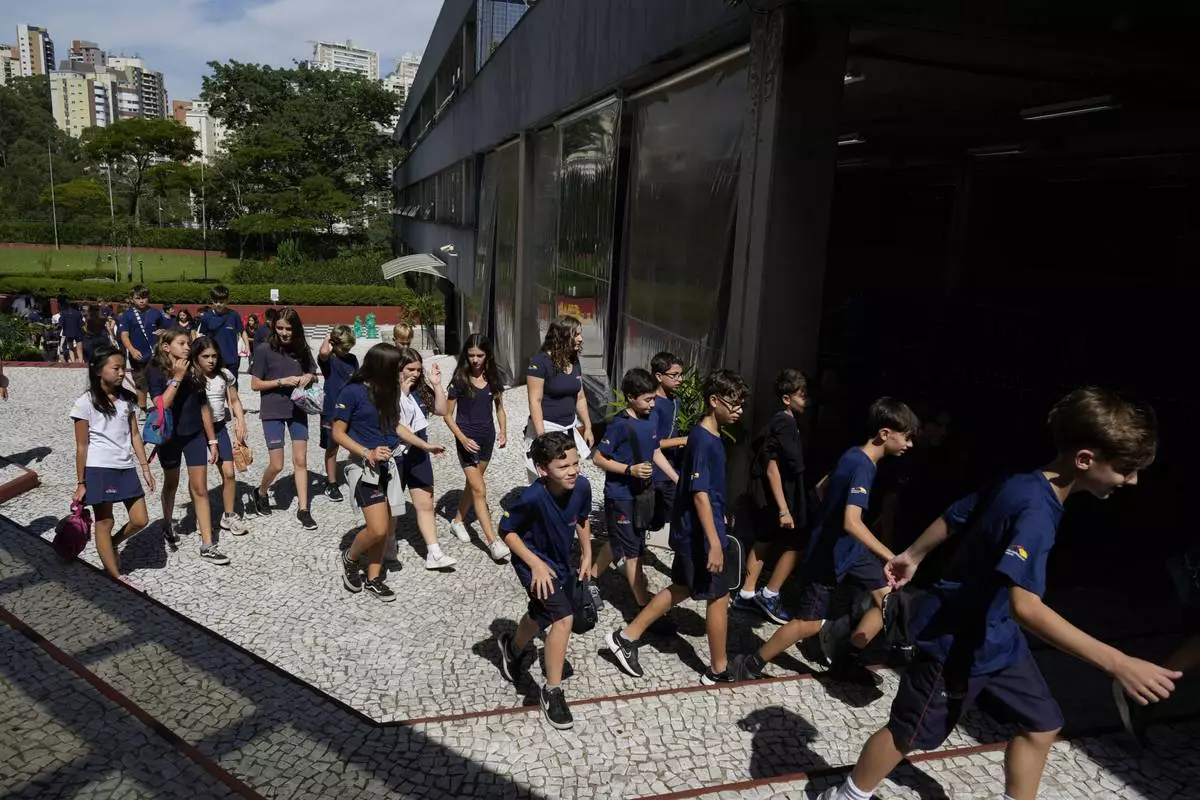
Students return to class after recess during their first week in school under a new law restricting the use mobile phones in school classrooms at Porto Seguro School in Sao Paulo, Thursday, Feb. 6, 2025. (AP Photo/Andre Penner)
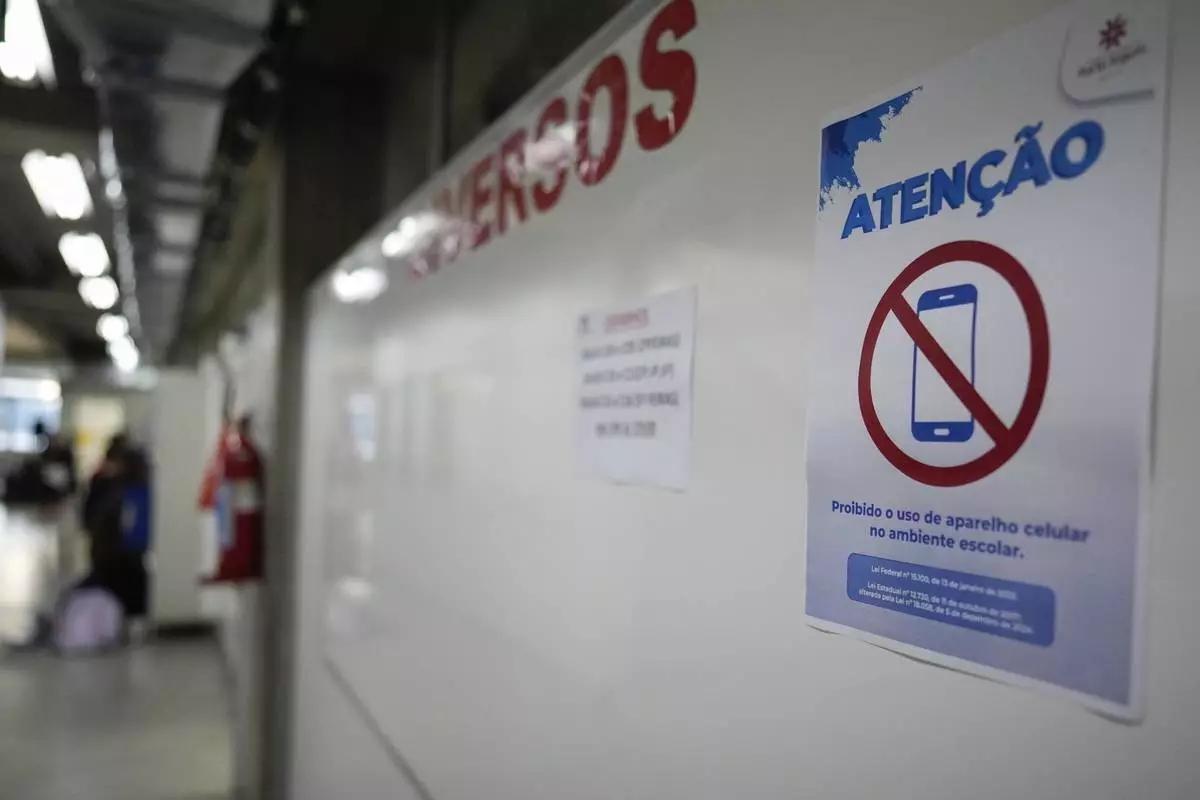
A sign reads in Portuguese " The use of cell phones in the school is prohibited" at Porto Seguro school in Sao Paulo, Thursday, Feb. 6, 2025. (AP Photo/Andre Penner)
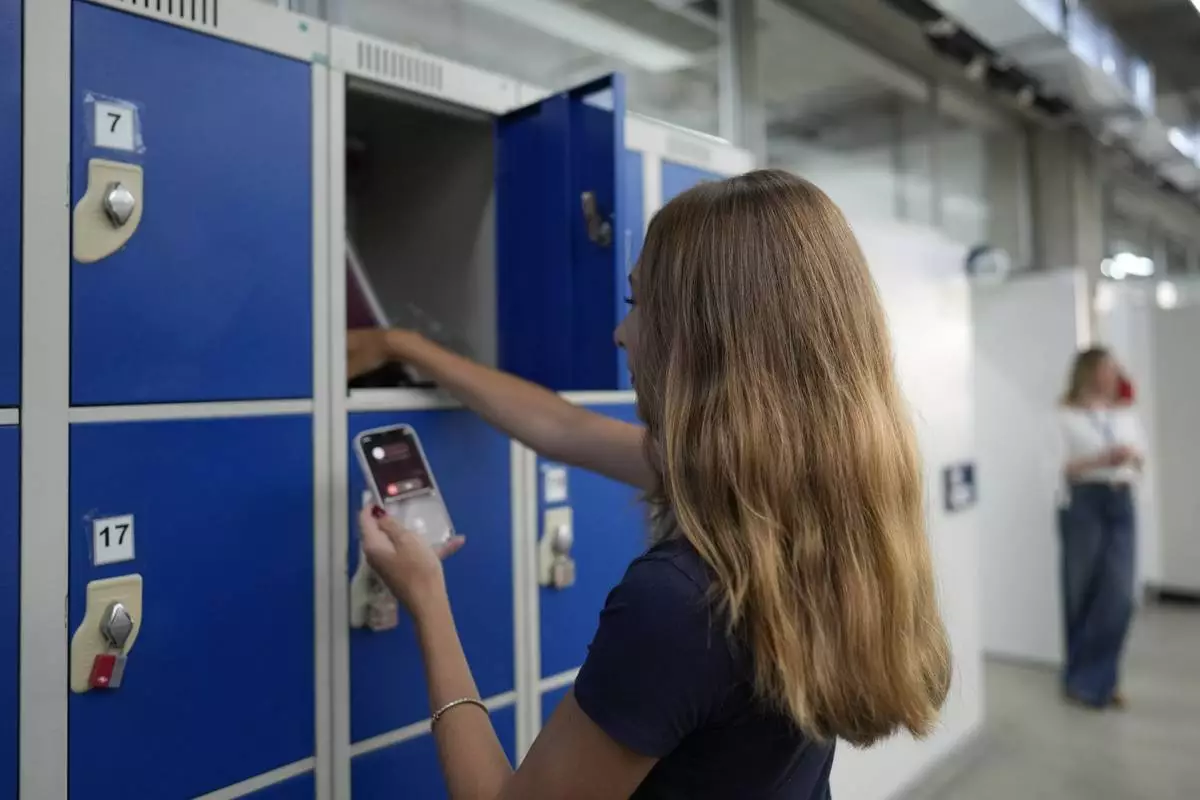
A student stores her mobile phone in a locker at Porto Seguro School in Sao Paulo, Thursday, Feb. 6, 2025, before heading to class under a new law restricting their use in schools. (AP Photo/Andre Penner)
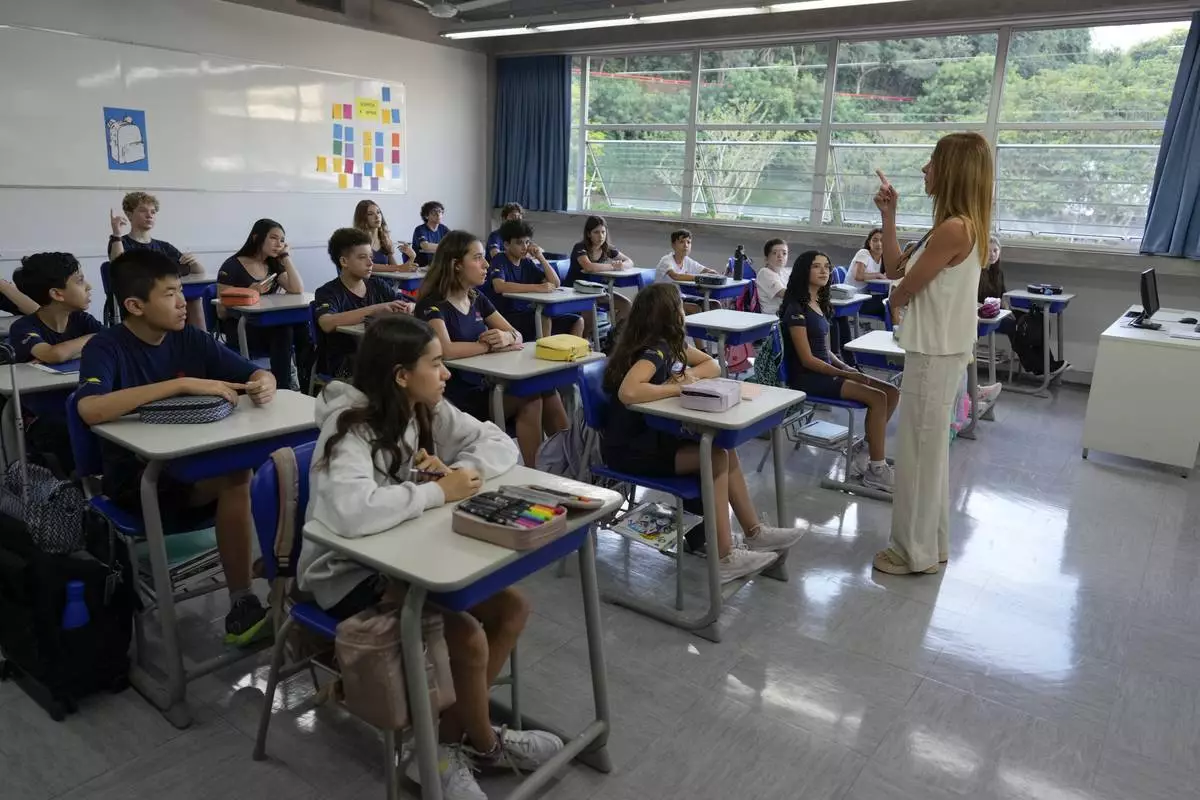
Students attend a class at Porto Seguro School on their first week at school under a new law that forbids the use of mobile phones on campus, in Sao Paulo, Thursday, Feb. 6, 2025. (AP Photo/Andre Penner)
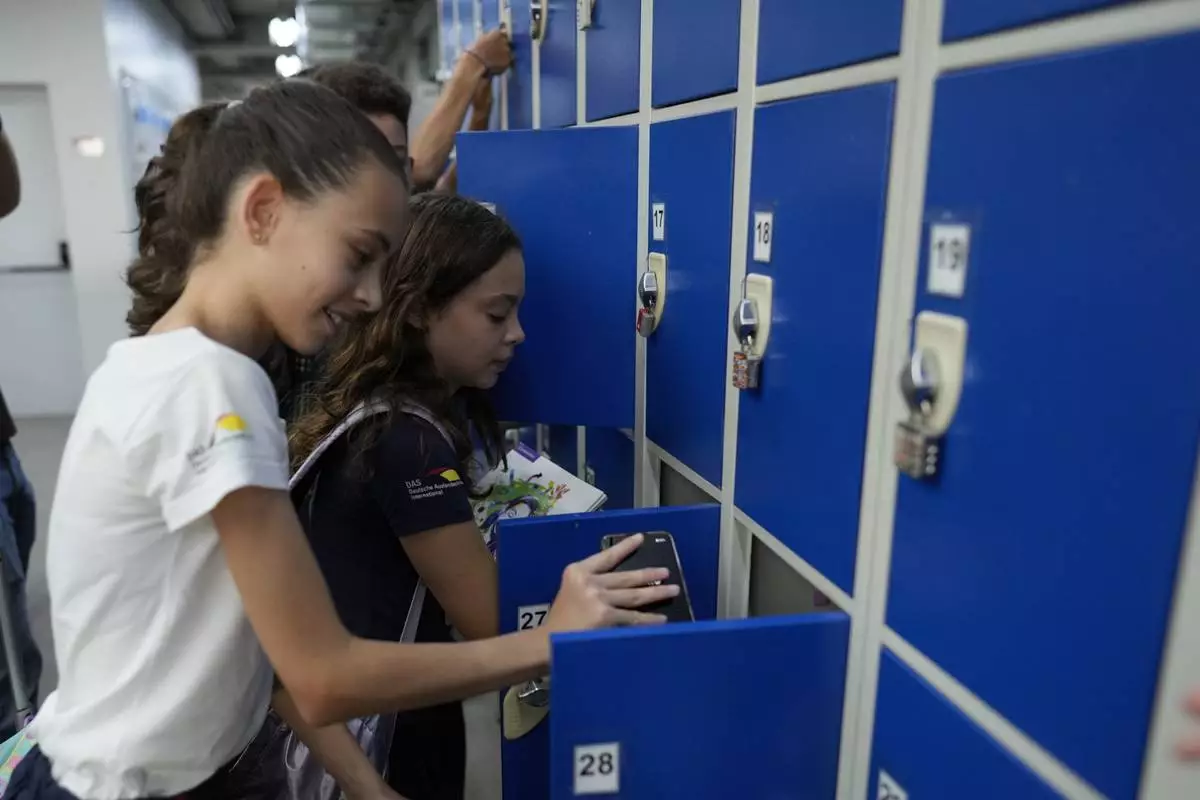
Students store their mobile phones in lockers at Porto Seguro School in Sao Paulo, Thursday, Feb. 6, 2025, as they head to class under a new law that forbids their use in schools. (AP Photo/Andre Penner)
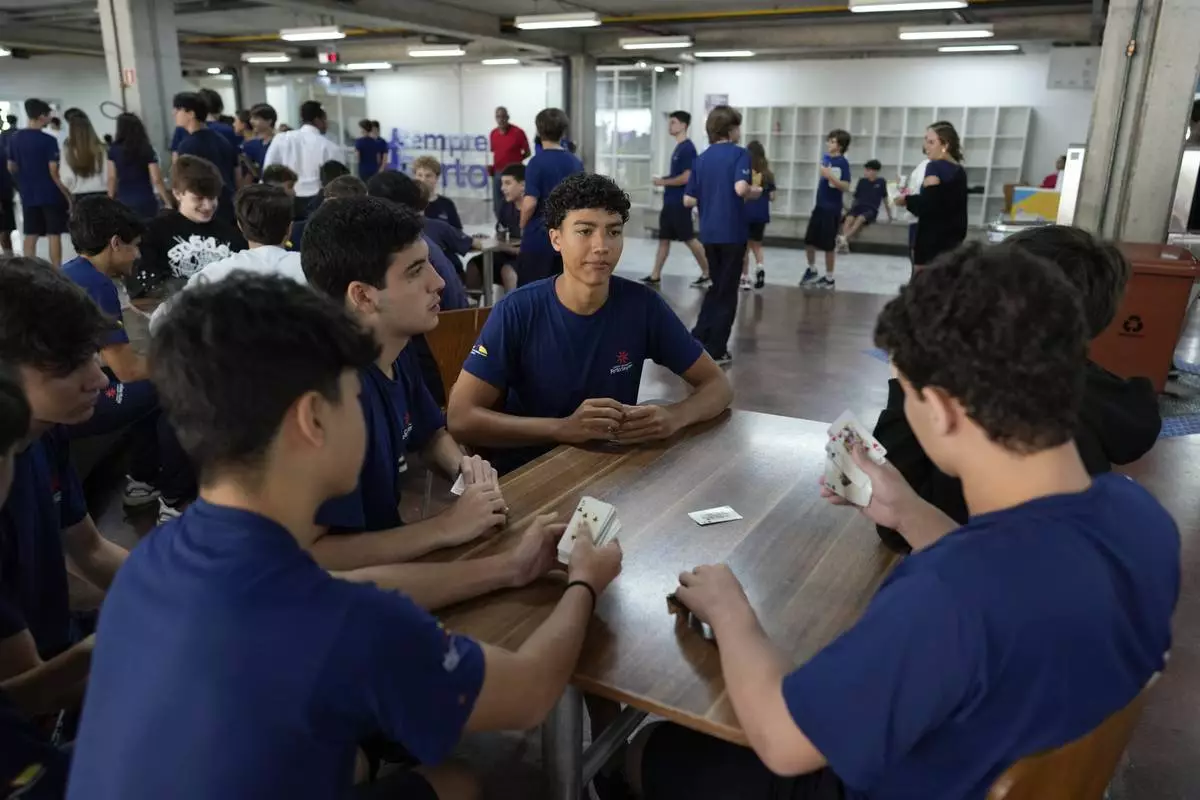
Students play cards during recess in their first week at school under a new law that forbids the use of mobile phones on campus, at Porto Seguro School in Sao Paulo, Thursday, Feb. 6, 2025. (AP Photo/Andre Penner)
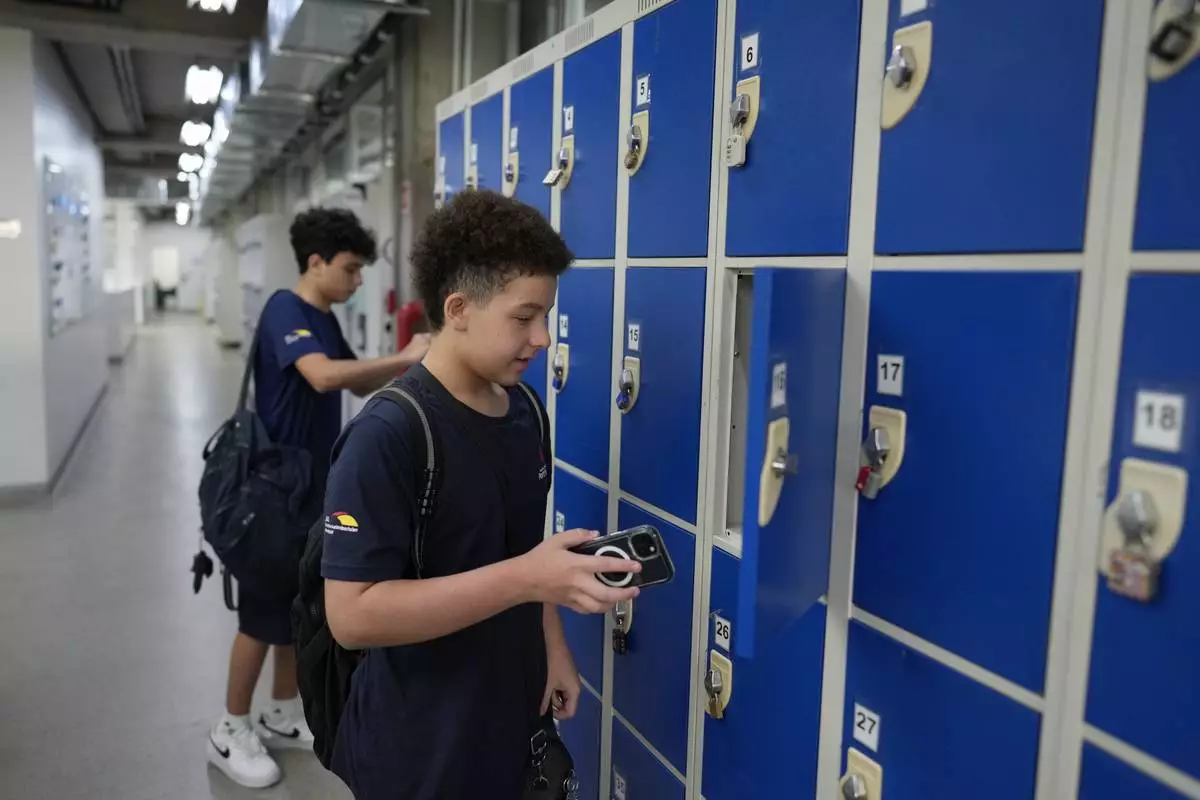
Students store their mobile phones in lockers as they head to class under a new law restricting their use on campus at Porto Seguro School in Sao Paulo, Thursday, Feb. 6, 2025.. (AP Photo/Andre Penner)