Skip to Content Facebook Feature Image

Designer explains unique concept for Asian Winter Games medal

China

China

China

Designer explains unique concept for Asian Winter Games medal

2025-02-08 17:05 Last Updated At:19:07

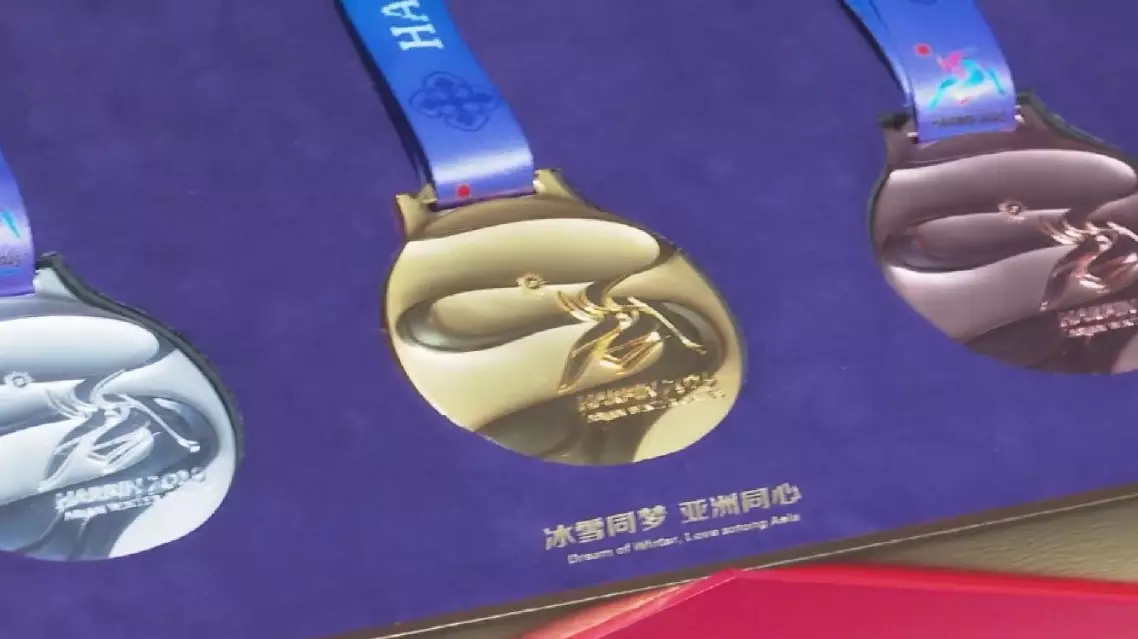
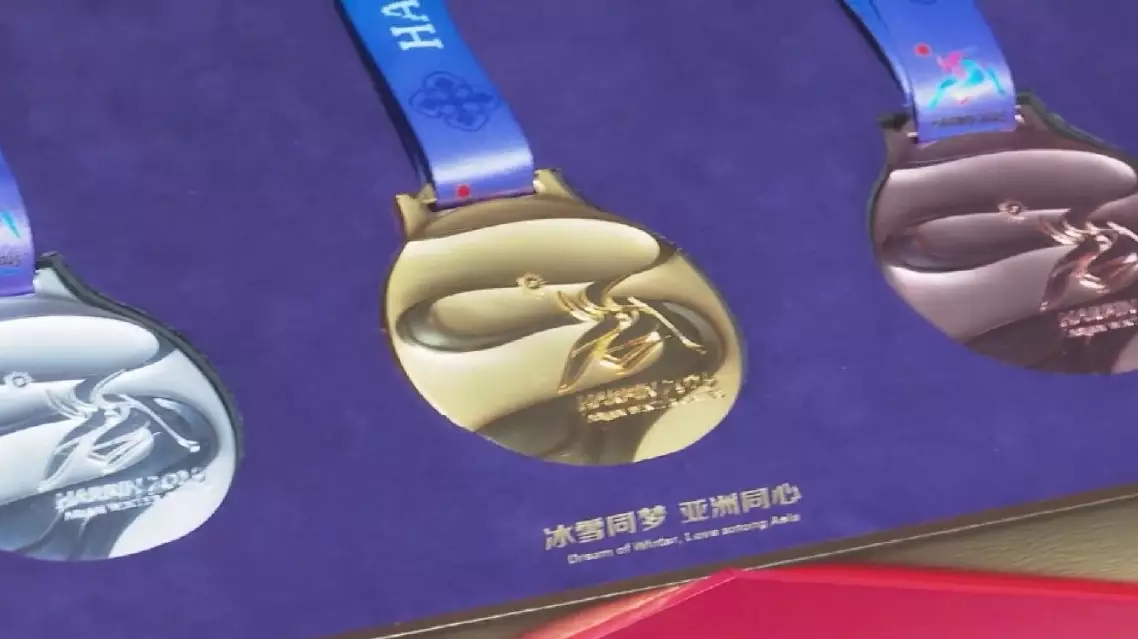
The design team for the 9th Asian Winter Games medal explained its unique design concept embodied in the medal, which combines the sports elements with the distinctive character of the event's host city Harbin.

The week-long 9th Asian Winter Games officially opened on Friday in the "ice city" Harbin, northeast China's Heilongjiang Province, bringing together over 1,200 competitors from 34 countries and regions, aiming to deliver their best performances in pursuit of glory.

The medal for the international sports event, featuring a round design with an eight-centimeter diameter, is titled "Spirit of Speed." It signifies an event brimming with energy, showcasing the fervor and zeal for winter sports alongside the unity and friendship among Asian countries.

Zou Cunliang, leader of the medal design team, said it was a challenging task to include the emblems of the Asian Winter Games and the Olympic Council of Asia (OCA), while also embodying the local elements of Heilongjiang on an eight-centimeter medal.

"This is a medal for the Asian Winter Games. The front design features the racetrack in the snow sports area of Yabuli and the streamlined silhouette of the Harbin Grand Theater, along with the Games' emblem, creating a striking and vivid visual effect. On the back, the design showcases the mountain ranges of the snow sports area and the forest landscape of the Greater Khingan Mountains, with a visual effect that captures the foreground, middle ground, and background," Zou explained.

At the center of the back of the medal, the OCA emblem is embedded with a rare Xunke red agate from Heilongjiang. According to Zou, this design draws inspiration from the 2008 Beijing Olympics medal which was inlaid with a circular piece of jade.

"The OCA emblem is embedded with a precious gemstone produced in Heilongjiang - the north red agate from Xunke. We applied the same medal-making technique used in the 2008 Olympic Games to embed the agate into the metal and added a protective layer to prevent the agate from easily falling off," said Zou.

In addition, the ribbon of the medal is designed in lilac purple, as lilac is the city flower of Harbin, making the medal more reflective of the city's aesthetic.

"Designing the medal is both an honor and an important achievement for us. It plays a key role in the development of creative design in Heilongjiang and serves as a milestone for the future growth of our team," said Zou.
Designer explains unique concept for Asian Winter Games medal
Designer explains unique concept for Asian Winter Games medal

Designer explains unique concept for Asian Winter Games medal

Designer explains unique concept for Asian Winter Games medal
The 36th extraordinary session of the Council of the International Maritime Organization (IMO) concluded on Thursday in London, with member states split over who should be held accountable for the closure of the Hormuz Strait.

As a specialized UN agency, the IMO's responsibility is to safeguard global shipping safety and the rights and interests of seafarers. At the meeting, all parties had obvious differences regarding the root causes of the situation and the wording of the documents.

According to data provided by the IMO, since the outbreak of the conflict involving the United States, Israel and Iran, at least seven seafarers have been killed in attacks on merchant vessels in the Strait of Hormuz area, with several others seriously injured. Around 20,000 seafarers remain stranded aboard ships in the region.

Some countries urged condemning the actions of certain country that led to the blockade, while others believe that the root cause of the current maritime tensions in the Middle East lies in the military action launched by the United States and Israel against Iran, and that unilaterally blaming one country is neither objective nor comprehensive.

Multiple representatives emphasized that the IMO should not serve as a platform for political confrontation. They called for balanced, neutral language in resolutions and urged the organization to focus on pragmatic measures within the framework of IMO regulations to safeguard maritime corridors.

Iran's delegate pointed out that the IMO must not become a tool for political pressure, and any coordination on navigation security must involve Iran.

The Russian delegate warned that current international maritime declarations appear biased and one-sided, which hinders efforts to ease the crisis. He called on the IMO to adopt a more balanced stance.

China's delegate echoed the need for inclusive and impartial language, proposing that the resolutions reflect a constructive consensus rather than unilateral accusations. The Chinese side also suggested that language condemning or opposing military actions that lead to the escalation of tensions in the Strait should be added to proposal.

The IMO Council highlighted the urgent need to address the peril faced by numerous stranded commercial ships. It encouraged exploring frameworks, such as maritime safety corridors, as an emergency humanitarian measure to facilitate the voluntary evacuation of ships from high-risk zones to safer waters.

Regarding the U.S. proposal to provide naval escort operations, IMO Secretary-General Arsenio Dominguez said that naval escorts are not a long-term sustainable solution to the current crisis in the Strait of Hormuz, and only an end to the conflict can prevent shipping from becoming collateral damage.

While acknowledging that the root causes of the crisis lie beyond the IMO's mandate, he said he would continue to work with countries engaged in diplomatic efforts to address the situation.

Over the past few days, U.S. President Donald Trump has urged European countries and other allies to join naval escort operations in the Strait of Hormuz. However, European powers have largely rebuffed the request, citing concerns that direct military involvement would escalate regional tensions and risk drawing them into a wider conflict.

IMO members divided over accountability for closure of Hormuz Strait

IMO members divided over accountability for closure of Hormuz Strait

Recommended Articles